Why Buyers Search for a 2019 Dodge Grand Caravan Battery — and What It Actually Means
If you've landed here searching for a 2019 Dodge Grand Caravan battery, you're likely dealing with one of two scenarios: your minivan won't start on a cold morning, or you're cross-shopping a used Grand Caravan against a modern electric or plug-in hybrid family hauler and want to understand long-term battery ownership costs. Either way, clarity on battery types, replacement costs, and lifespan matters — and the differences between a conventional 12V starter battery and a high-voltage EV traction battery are enormous.
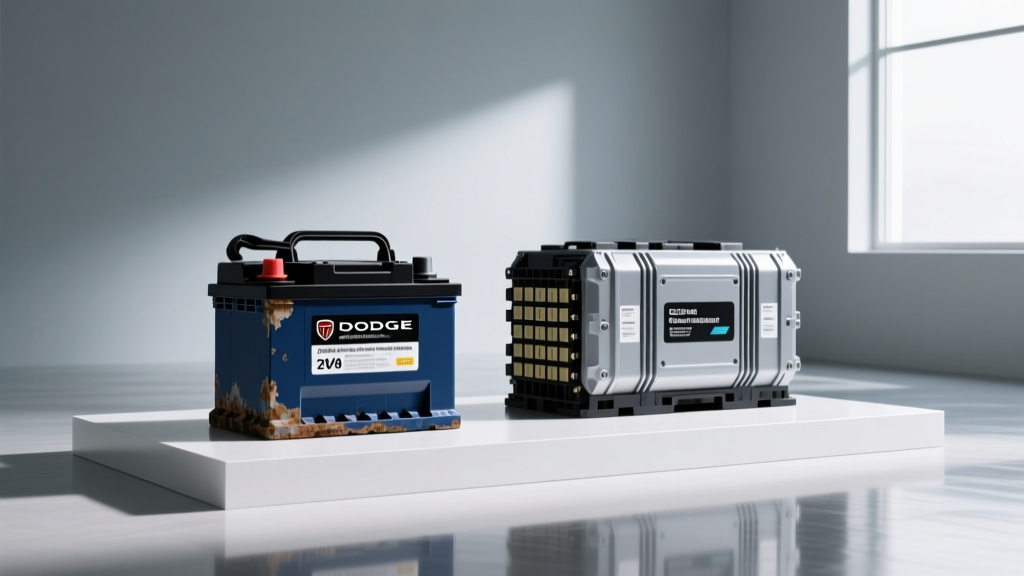
The 2019 Dodge Grand Caravan uses a conventional Group 34 or Group 48 lead-acid (or AGM) 12V battery to start its 3.6L Pentastar V6. This is not a hybrid or electrified vehicle. But as families upgrade from aging minivans to EVs like the Chrysler Pacifica PHEV, Kia EV9, or Tesla Model X, understanding traction battery longevity, degradation, and replacement economics becomes essential. This guide covers both worlds — the quick 12V swap you need today, and the high-voltage battery architecture that defines modern EV ownership.
Quick Reference: 2019 Dodge Grand Caravan 12V Battery
- Group Size: Group 34 or Group 48 (check owner's manual for your trim)
- Type: Flooded lead-acid or AGM (AGM recommended for start-stop and cold climates)
- Typical Cost: $130–$230 (parts only)
- Expected Lifespan: 3–5 years depending on climate and driving patterns
- CCA Rating: 700+ CCA recommended for reliable cold-weather starts
12V Starter Battery vs. High-Voltage EV Traction Battery: The Critical Distinction
The single most common point of confusion in battery discussions is conflating the 12V auxiliary battery with the high-voltage traction battery that powers an electric vehicle's motors. These are fundamentally different systems:
- 12V Auxiliary Battery: Found in every vehicle — gas, hybrid, and EV alike. It powers lights, infotainment, computers, and door locks. In a gas car like the 2019 Grand Caravan, it also cranks the starter motor. Replacement is routine and inexpensive.
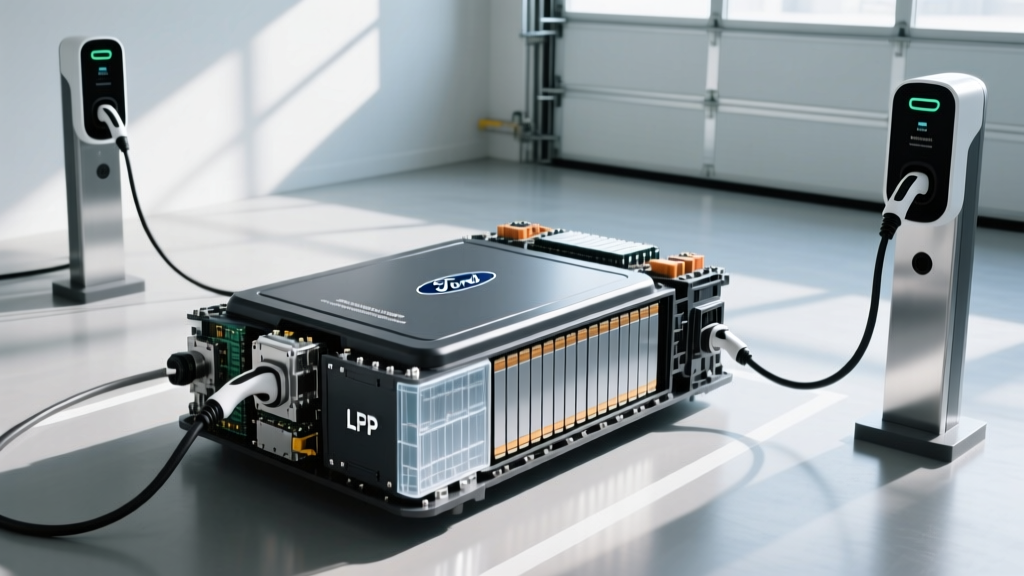
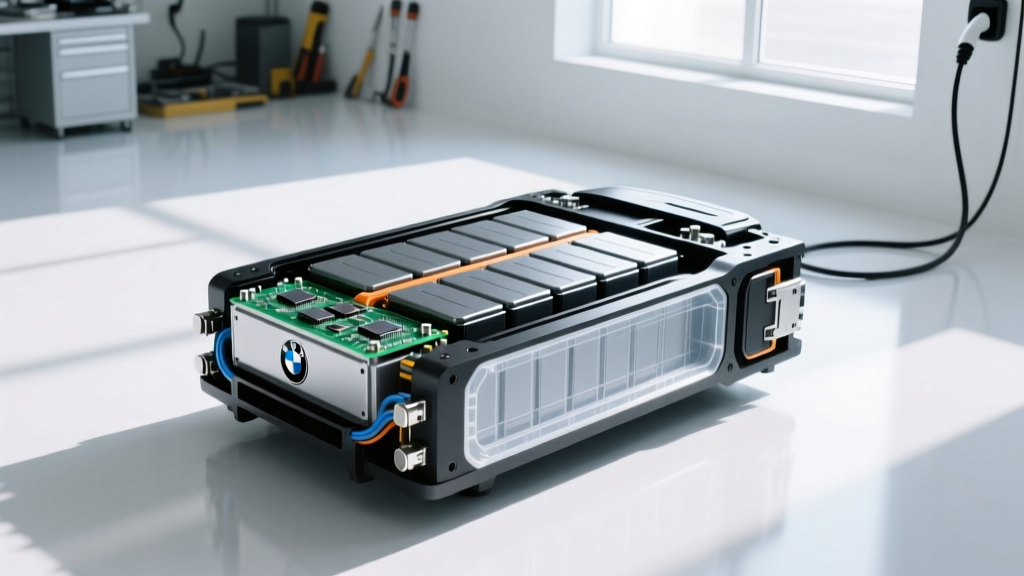
- High-Voltage Traction Battery: The large lithium-ion (or LFP) pack in an EV or PHEV that stores energy for propulsion. Capacities range from ~15 kWh in a PHEV to over 100 kWh in a long-range BEV. This is the battery that defines range, performance, and long-term ownership cost.
Even full EVs like the Tesla Model Y or Ford Mustang Mach-E carry a small 12V (or 16V lithium) auxiliary battery alongside the main pack. When buyers ask about "EV battery replacement," they're almost always concerned about the traction battery — and that's what the rest of this guide addresses with hard data.
EV Battery Chemistry: LFP vs. NMC/NCA Explained
Modern EV traction batteries use one of two dominant lithium-ion chemistries, each with distinct trade-offs. Understanding which chemistry your EV (or the EV you're considering) uses directly impacts longevity, range, charging behavior, and replacement cost.
| Attribute | LFP (Lithium Iron Phosphate) | NMC / NCA (Nickel Manganese Cobalt / Nickel Cobalt Aluminum) |
|---|---|---|
| Energy Density | Lower (~160 Wh/kg cell-level) | Higher (~250–300 Wh/kg cell-level) |
| Cycle Life | 3,000–5,000+ full cycles | 1,000–2,000 full cycles |
| Cold-Weather Performance | Reduced charge acceptance below 32°F; range loss ~30–40% | Better low-temp performance; range loss ~20–30% |
| Thermal Stability | Excellent — lower runaway risk | Good — requires more active thermal management |
| Cost (per kWh) | Lower — no cobalt or nickel | Higher — commodity-sensitive metals |
| Recommended Daily Charge | 100% OK (LFP tolerates full SoC well) | 80% preferred for daily; 100% for trips only |
| Common In (2026 Models) | Tesla Model 3/Y RWD, Ford Mustang Mach-E Select, Rivian Standard | Tesla Long Range, Hyundai Ioniq 5/6, Kia EV6/EV9, BMW iX, Lucid Air |
Which is better? It depends on your use case. LFP excels for daily commuters who want maximum cycle life and don't need the longest single-charge range. NMC/NCA delivers more range per pound, making it preferable for road-trip-heavy drivers and larger vehicles where weight matters. Neither chemistry is universally superior — the right choice depends on your mileage patterns, climate, and budget.
How Long Do EV Batteries Last? Real-World Degradation Data
The fear that EV batteries need frequent replacement is not supported by fleet data. According to analysis by Recurrent Auto and long-term owner datasets, most modern EV batteries retain 85–95% of their original capacity after 100,000 miles.
Typical EV Battery Degradation Curve
Based on aggregated fleet data across multiple manufacturers (Tesla, Chevrolet, Hyundai, BMW):
- Year 1 / 15,000 miles: ~2–5% capacity loss (initial formation loss)
- Year 3 / 45,000 miles: ~5–8% total loss
- Year 5 / 75,000 miles: ~7–10% total loss
- Year 8 / 120,000 miles: ~10–15% total loss
- Year 10+ / 150,000+ miles: ~12–20% total loss (varies significantly by chemistry and usage)
LFP batteries typically show slower degradation in the middle years due to superior cycle life, while NMC packs may lose capacity faster if routinely charged to 100% or exposed to extreme heat without preconditioning.
For context: a 2020 Tesla Model 3 Long Range (NMC, 75 kWh usable) with 80,000 miles might show an EPA-range reduction from the original 322 miles to roughly 285–295 miles — a noticeable but entirely livable decrease. The vehicle remains functional and under warranty.
EV Battery Warranty Terms: What's Actually Covered
Federal regulations mandate a minimum warranty of 8 years / 100,000 miles on EV batteries (10 years / 150,000 miles in CARB states like California, New York, and others). Most manufacturers exceed the minimum or match it with a capacity retention guarantee.
| Manufacturer | Warranty Term | Capacity Retention Threshold | Coverage Notes |
|---|---|---|---|
| Tesla (Model 3/Y) | 8 yr / 100,000 mi (LFP RWD); 8 yr / 120,000 mi (LR/AWD) | 70% minimum | Covers defects + excessive degradation below threshold |
| Hyundai / Kia | 10 yr / 100,000 mi | 70% minimum | Among the longest standard coverage |
| Ford (Mach-E, F-150 Lightning) | 8 yr / 100,000 mi | 70% minimum | Includes battery management system components |
| Chevrolet (Equinox EV, Blazer EV) | 8 yr / 100,000 mi | 70% minimum (60% on some commercial) | Transferable to second owner |
| BMW (iX, i4) | 8 yr / 100,000 mi | 70% minimum | Covers module-level replacement where possible |
| Rivian (R1T, R1S) | 8 yr / 175,000 mi | 70% minimum | Higher mileage threshold reflects truck use case |
What this means practically: If your battery drops below 70% of original capacity within the warranty period, the manufacturer must repair or replace it at no cost. In practice, most degradation-related warranty claims are rare — catastrophic defects are more common triggers than gradual capacity loss. Source: fueleconomy.gov for EV eligibility and warranty references.
How Much Does an EV Battery Replacement Cost?
Out-of-warranty battery replacement is the single biggest fear among prospective EV buyers — and the concern most often exaggerated without context. Here are real-world replacement cost ranges based on 2025–2026 service data:
| Vehicle / Pack Size | Battery Capacity | Replacement Cost Range | When Typically Needed |
|---|---|---|---|
| Tesla Model 3 RWD (LFP) | ~60 kWh | $8,000–$12,000 | Rarely before 200,000+ mi; most packs outlive the vehicle |
| Tesla Model Y Long Range (NMC) | ~75 kWh | $12,000–$16,000 | Same —极少 out-of-warranty failures |
| Hyundai Ioniq 5 (NMC) | ~77.4 kWh | $11,000–$15,000 | Module-level repair may reduce cost |
| Chevrolet Bolt EV (NMC) | ~65 kWh | $9,000–$14,000 (post-recall updated packs) | 2022+ replacement packs have improved chemistry |
| Ford F-150 Lightning Extended Range | ~131 kWh | $20,000–$30,000 | Largest consumer packs; mostly under warranty still |
| Chrysler Pacifica PHEV | ~16 kWh | $5,000–$8,000 | Smaller pack; PHEV degradation patterns differ |
The honest context most sources skip: The vast majority of EV batteries never need replacement during the vehicle's useful life. Data from Consumer Reports and fleet operators shows that fewer than 2–3% of EV batteries are replaced outside of recalls. Compare this to the 2019 Dodge Grand Caravan, where a transmission replacement can run $3,500–$5,000 — a far more common failure point in ICE vehicles that rarely generates the same anxiety.
For buyers upgrading from a Grand Caravan: the EV battery is not the ticking time bomb that forum rumors suggest. It's a warrantied, monitored, slowly-degrading component that, in most cases, will outlast the vehicle's body and interior.
Factors That Accelerate (or Preserve) Battery Health
Battery degradation is not random — it's driven by measurable factors you can control. Here's what the data shows:
Battery Care Best Practices (Backed by Data)
- Avoid sustained 100% SoC (NMC/NCA only): Store and daily-drive between 20–80%. Charge to 100% only when departing for a road trip. LFP batteries tolerate 100% well — Tesla recommends periodic full charges for LFP to recalibrate the BMS.
- Minimize DC fast charging in extreme heat: Repeated 150+ kW charging sessions in 95°F+ ambient temperatures without preconditioning accelerates degradation. Use scheduled departure preconditioning when possible.
- Don't let SoC sit at 0% or near-zero: Storing an EV below 10% SoC for weeks stresses the cells. If parking long-term, set charge limit to 50% and plug in.
- Cold-weather preconditioning matters: Using the vehicle's navigation to route to a DC fast charger triggers battery preconditioning, warming the pack for faster, safer charging. Skipping this in sub-30°F weather can slow charging by 40–60%.
- Moderate annual mileage is ideal: 10,000–15,000 miles/year keeps the battery in its optimal cycle range. Very low mileage (under 3,000/year with prolonged sitting) can be worse than high mileage.
How to Check Your EV Battery's State of Health (SoH)
State of Health (SoH) is the percentage of original capacity your battery currently retains. Unlike the 2019 Grand Caravan's 12V battery — where you'd need a load tester at an auto parts store — EV SoH is digitally monitored and accessible:
- In-vehicle display: Most EVs show estimated range and energy consumption, which indirectly reflects SoH. Some (like the Hyundai Ioniq 5 and BMW iX) display a battery health percentage in the service menu.
- OBD-II dongles and apps: Tools like OBD2 scanners with EV-specific software (e.g., ABRP-linked adapters, ScanGauge) can pull SoH data from the battery management system (BMS) via the CAN bus.
- Manufacturer service check: Dealerships can run a full diagnostic that reads individual cell voltages, internal resistance, and overall SoH. Request this during routine service or before purchasing a used EV.
- Third-party services: Companies like Recurrent Auto offer battery health reports based on connected-car data, particularly useful for used-EV buyers evaluating a specific VIN.
Pro tip for used-EV shoppers: Always request a battery health report before purchase. A 2022 EV with 40,000 miles and 94% SoH is a far better value than one at 86% SoH — even if the asking price is similar. This data is your equivalent of a compression test on a used gas engine.
What's Next: Solid-State and Silicon-Anode Batteries
The next generation of EV battery technology promises higher energy density, faster charging, and improved safety — but timelines remain firmly in the future:
- Solid-state batteries: Toyota, Samsung SDI, and QuantumScape are targeting limited production in 2027–2029. These replace the liquid electrolyte with a solid material, potentially offering 500+ mile ranges and 10-minute fast charges. However, manufacturing scalability and cost remain unsolved at volume. Not available in any production vehicle as of 2026.
- Silicon-anode batteries: Companies like Sila Nanotechnologies and Group14 are supplying silicon-dominant anode materials to Mercedes-Benz (G-Class EV) and others. These boost energy density by 20–40% over graphite anodes. Early production vehicles are appearing in 2025–2026, but widespread adoption is expected by 2028+.
- Sodium-ion batteries: CATL and BYD are deploying sodium-ion packs in lower-cost Chinese-market EVs. These trade energy density for dramatically lower material costs and better cold performance. US-market availability is uncertain and likely post-2027.
For buyers deciding today: current lithium-ion (LFP and NMC) technology is mature, well-warrantied, and proven over billions of fleet miles. Waiting for solid-state means waiting at least 3–5 years for meaningful consumer availability in the US market.
From Grand Caravan to EV: Making the Transition
If you're a 2019 Dodge Grand Caravan owner evaluating the switch to an electric or plug-in hybrid minivan or SUV, the battery economics actually favor electrification over time:
- 12V battery replacement (Grand Caravan): $130–$230 every 3–5 years — a known, manageable cost.
- EV traction battery: Warrantied for 8–10 years, likely lasting 15+ years with proper care. No routine replacement expected.
- Maintenance savings: No oil changes, no transmission fluid, no spark plugs, no exhaust system. EVs have roughly 40% fewer maintenance-related service visits per Consumer Reports data.
- Fuel cost: At $0.13/kWh national average and 3.5 miles/kWh efficiency, driving costs roughly $0.037/mile on electricity vs. $0.12–$0.15/mile on gasoline at $3.50/gallon and 20 MPG combined (realistic for a loaded Grand Caravan).
The battery in your next EV is not the liability it's often portrayed as. It's a warrantied, data-monitored component with a predictable degradation curve — far more transparent than the timing chain or transmission in the V6 minivan you're replacing.
Frequently Asked Questions
How long do EV batteries last in years and miles?
Most modern EV batteries last 15–20 years or 150,000–200,000+ miles before degrading below 70% of original capacity. Fleet data from Tesla, Chevrolet, and Hyundai shows median capacity retention of 85–90% at 100,000 miles. LFP-chemistry batteries often exceed 200,000 miles with minimal loss.
How much does an EV battery cost to replace?
Out-of-warranty replacement costs range from $5,000 for small PHEV packs (like the Pacifica PHEV's 16 kWh) to $20,000–$30,000 for large packs like the F-150 Lightning's 131 kWh. However, fewer than 3% of EV batteries require replacement outside of recalls. Most are covered under the 8-year/100,000-mile federal warranty minimum.
What does the EV battery warranty actually cover?
The standard warranty covers defects in materials and workmanship, plus excessive capacity loss — typically defined as dropping below 70% of original capacity within 8 years/100,000 miles (10 years/150,000 miles in CARB states). It does not cover damage from accidents, flooding, or unauthorized modifications. Check your specific manufacturer's warranty booklet for exact terms.
How do I check and maximize my EV battery health?
Check SoH through your vehicle's service menu, an OBD-II EV scanner, or a dealership diagnostic. Maximize longevity by keeping NMC batteries between 20–80% SoC for daily use, avoiding repeated DC fast charging in extreme heat, preconditioning in cold weather, and never storing the vehicle at 0% SoC for extended periods. LFP owners can charge to 100% regularly without concern.
LFP vs. NMC — which battery chemistry is better?
Neither is universally better. LFP offers longer cycle life (3,000–5,000 cycles vs. 1,000–2,000), lower cost, and superior thermal safety, but with lower energy density and worse cold-weather performance. NMC delivers more range per pound and better winter charging, making it ideal for long-range and performance models. For a daily commuter in a mild climate, LFP is often the smarter long-term bet. For road-trip-heavy drivers in cold regions, NMC provides practical advantages.
Should I replace the 12V battery in my 2019 Grand Caravan or upgrade to an EV?
If your Grand Caravan is otherwise reliable and your commute is short, a $150–$200 AGM battery replacement keeps it running for another 3–5 years at minimal cost. If you're spending increasingly on transmission, suspension, or fuel costs, the math shifts toward an EV or PHEV where the traction battery is warrantied and maintenance costs drop significantly. Test-drive a Chrysler Pacifica PHEV or Kia EV9 to compare family-hauler practicality firsthand.