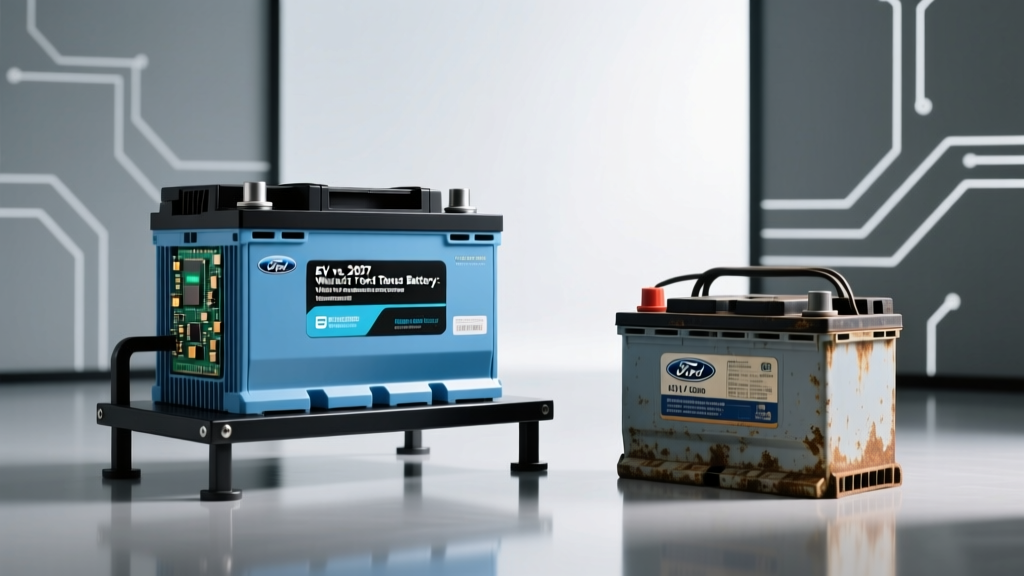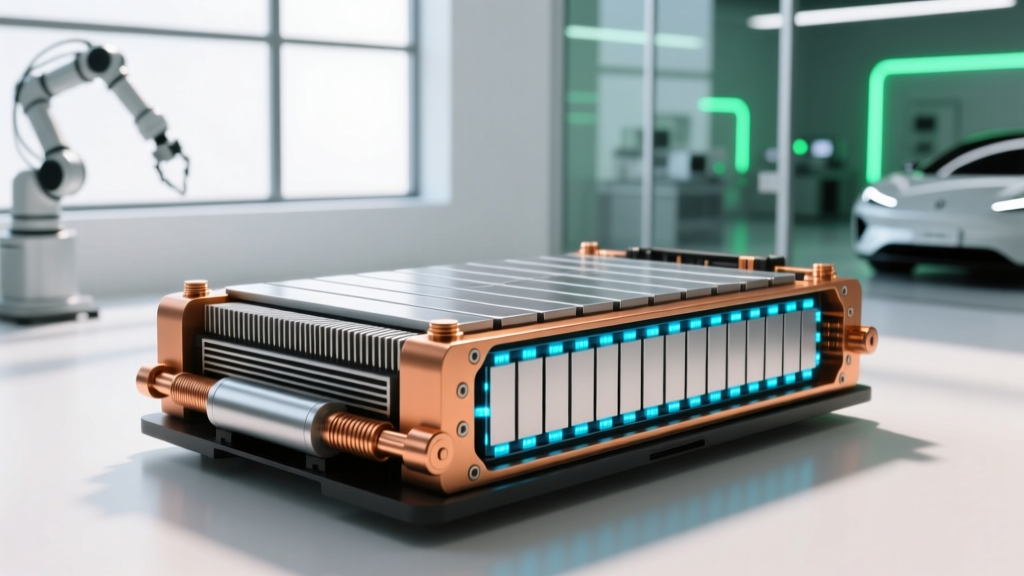
When you're evaluating a new EV battery — whether in a car you're about to buy or as a future replacement concern — the chemistry inside that pack dictates everything from daily range to decade-long durability. This guide breaks down exactly what powers today's electric vehicles, how long those packs actually last based on real fleet data, what warranties protect you, and what a replacement truly costs if the worst happens.
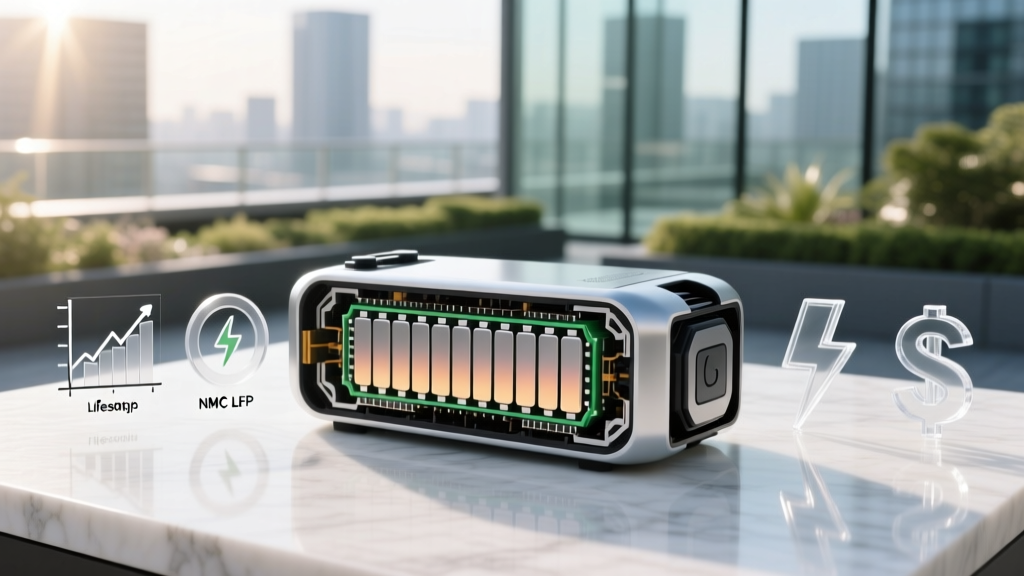
LFP vs NMC/NCA: The Chemistry Decision That Shapes Your EV
Every new EV battery on the market in 2026 uses one of three dominant lithium-ion chemistries: Lithium Iron Phosphate (LFP), Nickel Manganese Cobalt (NMC), or Nickel Cobalt Aluminum (NCA). The choice isn't just academic — it determines your energy density, charging habits, cold-weather performance, and long-term degradation trajectory.
LFP (Lithium Iron Phosphate) has become the standard for base-trim and standard-range models. Tesla uses LFP in Model 3 and Model Y Rear-Wheel Drive trims. Ford equipped the base F-150 Lightning with LFP. BYD's Blade Cell architecture is LFP-based. The chemistry offers a longer cycle life (3,000–5,000+ full cycles before significant degradation), superior thermal stability (virtually no fire risk from thermal runaway), and lower raw-material cost. The trade-off: roughly 15–25% lower energy density by weight compared to NMC, which means heavier packs for the same range, and noticeably worse performance in sub-freezing temperatures — expect 30–40% range loss at 20°F versus 20–30% for NMC.
NMC (Nickel Manganese Cobalt) and NCA (Nickel Cobalt Aluminum) dominate long-range and performance trims. The Hyundai Ioniq 5 (84 kWh usable, NMC), Kia EV6, BMW i4, and Tesla Model S/X (NCA variant from Panasonic) all rely on these chemistries. Higher energy density means lighter packs and longer range per kWh. Cold-weather performance is modestly better. The trade-offs: shorter cycle life (1,500–2,500 full cycles), higher material cost, and greater sensitivity to sustained high state-of-charge (SoC), which accelerates calendar aging.
| Attribute | LFP | NMC / NCA |
|---|---|---|
| Energy Density (Wh/kg, cell-level) | 160–200 | 220–300 |
| Cycle Life (to 80% capacity) | 3,000–5,000+ | 1,500–2,500 |
| Cold Performance (range loss at 20°F) | 30–40% | 20–30% |
| Thermal Stability | Excellent (no oxygen release) | Good (requires BMS management) |
| Recommended Daily Charge Limit | 100% (periodic full charges calibrate BMS) | 80–90% (100% for trips only) |
| Cost per kWh (pack-level, est.) | $100–$130 | $130–$170 |
| Typical Use | Standard-range, base trims, fleet | Long-range, performance, premium |
| Notable Examples (2026) | Tesla Model 3 RWD, Ford F-150 Lightning base, BYD Seal | Hyundai Ioniq 5, Kia EV6, BMW i4 eDrive40, Rivian R1T |
Which is better? Neither is universally superior. If you charge at home nightly, drive under 250 miles daily, and live in a temperate or warm climate, LFP is arguably the smarter choice — it will likely outlast the vehicle itself. If you need maximum range per charge, regularly drive in cold weather, or prioritize performance, NMC/NCA delivers where LFP cannot.
How Long Do EV Batteries Actually Last? Real Degradation Data
The fear that an EV battery will "die" at 100,000 miles is not supported by data. Most modern packs are engineered to retain 70–80% of original capacity after 150,000–200,000 miles or 10–15 years — and many exceed those benchmarks.
Here's what real-world fleet and owner data shows for degradation trajectories:
| Milestone | Average Capacity Retained | Notes |
|---|---|---|
| Year 1 / 15,000 mi | 95–97% | Initial "break-in" loss; steepest drop occurs early |
| Year 3 / 45,000 mi | 90–94% | Curve flattens significantly after year 2 |
| Year 5 / 75,000 mi | 87–92% | NMC slightly worse if charged to 100% daily; LFP holds better |
| Year 8 / 120,000 mi | 82–89% | Within warranty threshold for most manufacturers |
| Year 10 / 150,000 mi | 78–86% | Still functional; range reduction noticeable but manageable |
| Year 15 / 200,000+ mi | 70–82% | Many packs still in service; Tesla fleet data supports this range |
Tesla's 2025 Impact Report noted that Model S/X vehicles retained approximately 88% of battery capacity at 150,000 miles, while Model 3/Y (including LFP variants) showed similar or slightly better retention. Geotab's multi-year fleet study of over 10,000 EVs found an average annual degradation rate of approximately 1.8% per year, which projects to roughly 82% retention at 10 years — consistent with the figures above.
Key insight: Degradation is not linear. The largest capacity drop occurs in the first 12–24 months (typically 3–5%), after which the curve flattens considerably. A battery that has lost 5% in year one is not on track to lose 5% every year. The chemistry stabilizes, and the Battery Management System (BMS) actively manages cell balancing to slow further loss.
What Does the EV Battery Warranty Actually Cover?
Federal law in the United States mandates a minimum battery warranty of 8 years or 100,000 miles (whichever comes first). In California Air Resources Board (CARB) states — which include California, New York, Massachusetts, Oregon, Washington, and several others — the requirement extends to 10 years or 150,000 miles. Most automakers meet or exceed these minimums.
| Manufacturer | Warranty Period | Mileage Limit | Capacity Threshold |
|---|---|---|---|
| Tesla (Model 3/Y RWD – LFP) | 8 years | 100,000 mi | 70% retention |
| Tesla (Model 3/Y LR, S, X – NMC/NCA) | 8 years | 120,000 mi | 70% retention |
| Hyundai / Kia (Ioniq 5, EV6, EV9) | 10 years | 100,000 mi | 70% retention |
| Ford (F-150 Lightning, Mustang Mach-E) | 8 years | 100,000 mi | 70% retention |
| BMW (i4, iX, i7) | 8 years | 100,000 mi | 70% retention |
| Rivian (R1T, R1S) | 8 years | 120,000 mi | 70% retention |
| Chevrolet (Equinox EV, Blazer EV) | 8 years | 100,000 mi | 70% retention (60% for Bolt-era) |
What triggers a warranty claim? If your battery's State of Health (SoH) drops below the stated threshold — typically 70% of original usable capacity — within the warranty period, the manufacturer is obligated to repair or replace the pack to bring it back above that threshold. Note: the warranty does not guarantee a brand-new battery. A replacement pack may be a refurbished unit that meets the capacity threshold. Physical damage, flooding, unauthorized modifications, and use outside specified operating conditions are universally excluded.
Practical implication: A battery at 69% capacity on a 300-mile EPA range vehicle would deliver approximately 207 miles of range — still highly usable for most daily driving. The warranty protects against catastrophic failure, not the gradual and normal loss that all lithium-ion batteries experience.
EV Battery Replacement Cost: What You'll Actually Pay
This is the number that generates the most anxiety, so let's ground it in data. A full high-voltage traction battery replacement in 2026 typically ranges from $5,000 to $22,000+ depending on pack size, chemistry, and whether you're getting a new or refurbished unit. Labor adds $1,000–$3,000 on top.
| Vehicle / Pack Size | Chemistry | New Pack (est.) | Refurbished (est.) | Labor |
|---|---|---|---|---|
| Tesla Model 3 RWD (60 kWh LFP) | LFP | $7,000–$9,000 | $5,000–$6,500 | $1,200–$2,000 |
| Tesla Model Y LR (82 kWh NMC) | NMC | $12,000–$15,000 | $8,000–$11,000 | $1,500–$2,500 |
| Hyundai Ioniq 5 (84 kWh NMC) | NMC | $13,000–$16,000 | $9,000–$12,000 | $1,500–$2,500 |
| Ford F-150 Lightning Ext. Range (131 kWh NMC) | NMC | $18,000–$22,000 | $12,000–$16,000 | $2,000–$3,000 |
| Chevrolet Equinox EV (85 kWh NMC) | NMC | $11,000–$14,000 | $7,500–$10,000 | $1,500–$2,000 |
| Rivian R1T Large Pack (135 kWh NMC) | NMC | $18,000–$21,000 | $13,000–$16,000 | $2,000–$3,000 |
Context that matters: The vast majority of EV owners will never need a battery replacement. Data from Geotab's fleet study and manufacturer reports consistently show that battery failure rates are extremely low — well under 1–2% within the warranty period. Most degradation is gradual, and a pack at 75% capacity after 150,000 miles remains perfectly drivable. For comparison, a gasoline vehicle's engine or transmission replacement at high mileage can cost $4,000–$8,000, and those failures are statistically more common than EV battery failures.
When replacements are needed, they're most often due to manufacturing defects (covered under warranty) or physical damage (covered by insurance). Out-of-warranty replacements due to natural degradation are rare in vehicles under 10 years old.
Factors That Accelerate (or Slow) Battery Degradation
Your charging habits and operating environment have a measurable impact on how quickly your new EV battery loses capacity. Here are the five factors with the greatest influence, ranked by impact:
- 1. Sustained high state of charge (NMC/NCA): Keeping an NMC or NCA battery at 100% SoC for extended periods accelerates calendar aging through electrolyte oxidation. Set your daily charge limit to 80–90%. LFP batteries are the exception — Tesla and BYD recommend periodic 100% charges to keep the BMS calibrated, and LFP chemistry tolerates full charge far better.
- 2. Frequent DC fast charging: Repeated use of high-power DC fast chargers (150+ kW) generates heat and stresses cells. Occasional fast charging on road trips has negligible impact, but daily fast-charging as your primary method can add 1–3% additional degradation per year compared to Level 2 home charging. Preconditioning the battery (which most modern EVs do automatically when you navigate to a charger) mitigates this significantly.
- 3. Extreme heat exposure: Sustained ambient temperatures above 95°F, especially when combined with high SoC, accelerate degradation. If you live in Phoenix or Dubai, avoid parking in direct sun at 100% charge for days. Garage parking and thermal management systems (liquid cooling) substantially reduce this risk.
- 4. Deep discharge cycles: Regularly driving the battery below 10% SoC stresses cells. Try to keep the battery between 20–80% for daily use. Occasional deep discharges won't cause immediate damage, but habitual operation at the extremes shortens lifespan.
- 5. Cold-weather charging without preconditioning: Charging a cold battery (below 32°F) at high power can cause lithium plating on the anode, a form of permanent damage. Modern EVs with active thermal management precondition the pack before charging, but if you're using an older model or aftermarket setup, allow the battery to warm before initiating a fast charge.
How to Check and Monitor Your Battery's State of Health (SoH)
State of Health (SoH) is the percentage of your battery's current maximum capacity relative to its original capacity when new. A new battery starts at 100% SoH; a battery that can now store only 77 kWh out of its original 84 kWh is at approximately 91.7% SoH.
Built-in vehicle tools: Most 2026 EVs display battery health information through the infotainment system or companion app. Tesla's service menu (accessible via the software screen) shows a degradation graph. Hyundai/Kia's Bluelink/UVO connected services include battery health reports. BMW's iDrive system provides a battery health percentage under the vehicle status menu.
OBD-II diagnostic tools: Third-party devices like the OBDLink SX paired with apps such as EV Health or LeafSpy (originally for Nissan LEAF, now supporting multiple brands) can read the BMS-reported SoH directly. These tools typically cost $40–$120 and connect to the OBD-II port under the dashboard. Note: the BMS-reported SoH can differ slightly from a true measured capacity, as the BMS uses estimation algorithms.
Dealer diagnostic check: If you're buying a used EV or want a definitive reading, a dealership service department can run a full battery health diagnostic. This typically costs $100–$200 and provides a printout showing individual cell group voltages, total capacity, and SoH percentage. For a used-EV purchase, this is money well spent.
DIY range test: Charge to 100% (for LFP) or the vehicle's maximum displayed range, drive a known route under moderate conditions, and compare the actual miles achieved to the original EPA rating. This isn't perfectly precise (weather, terrain, and driving style affect results), but a significant shortfall — say, a 300-mile EPA vehicle now showing 210 miles at full charge — warrants a professional diagnostic.
Emerging Battery Technologies: Solid-State and Silicon Anodes
Several next-generation battery technologies are in active development, but none are commercially available in production consumer EVs as of 2026. Here's where things stand:
Solid-state batteries replace the liquid electrolyte with a solid material (ceramic, sulfide, or polymer), promising higher energy density (potentially 400+ Wh/kg at the cell level), faster charging, and improved safety. Toyota has announced a solid-state battery targeting 2027–2028 production in limited volumes, initially in Japan. Samsung SDI and QuantumScape are also advancing prototypes. However, manufacturing scalability, cost (currently estimated at 2–4x current lithium-ion costs), and cycle-life durability remain unresolved challenges. Realistic widespread availability: 2029–2032 at the earliest, likely debuting in premium models above $80,000 MSRP.
Silicon-dominant anodes replace graphite with silicon, which can store roughly 10x more lithium ions per gram. Companies like Sila Nanotechnologies and Group14 are producing silicon-carbon composite anodes already in limited use (the Mercedes G 580 EQ uses a silicon-anode battery from Sila). The limitation: silicon expands up to 300% during charging, causing mechanical stress. Current solutions use silicon as a minority blend (5–15% silicon content) rather than a full replacement. Expect incremental adoption through 2026–2030, improving energy density by 10–20% per generation.
Sodium-ion batteries use abundant sodium instead of lithium, offering lower cost and excellent cold-weather performance at the expense of lower energy density. CATL has begun production for Chinese-market vehicles. US-market availability remains uncertain and likely 2028+ for any significant presence. These may eventually appear in budget EVs or as range-extender packs.
Bottom line on future tech: If you're buying an EV in 2026, current lithium-ion (LFP and NMC) technology is mature, well-understood, and backed by extensive real-world data spanning over a decade. Waiting for solid-state means waiting 3–6+ years with no guarantee of affordable pricing. Today's batteries are not a compromise — they're a proven solution.
Frequently Asked Questions
How long do EV batteries last in years and miles?
Based on fleet data from Tesla, Geotab, and manufacturer reports, most modern EV batteries retain 78–86% of original capacity at 10 years / 150,000 miles and 70–82% at 15 years / 200,000 miles. The battery will likely outlast other major vehicle components. Total failure requiring replacement is rare — under 1–2% within the warranty period.
How much does it cost to replace an EV battery?
A full replacement in 2026 costs approximately $5,000–$22,000+ including labor, depending on pack size and chemistry. A Tesla Model 3 RWD (60 kWh LFP) replacement runs roughly $8,000–$11,000 total; a Ford F-150 Lightning Extended Range (131 kWh NMC) can reach $20,000–$25,000. Refurbished packs cost 30–45% less than new. Most owners never need a replacement — the pack is typically the most durable component in the vehicle.
What does the EV battery warranty cover?
Federal minimum is 8 years / 100,000 miles (10 years / 150,000 miles in CARB states). The warranty guarantees the battery will retain at least 70% of its original usable capacity (varies slightly by manufacturer). If SoH drops below that threshold within the warranty period, the manufacturer repairs or replaces the pack at no cost. Physical damage, unauthorized modifications, and misuse are excluded. Check IRS.gov for how battery sourcing may affect federal tax credit eligibility under §30D rules, which is separate from warranty coverage.
How do I check and maximize my EV battery health?
Check SoH through your vehicle's built-in diagnostics, a connected app (Tesla, Bluelink, iDrive), an OBD-II tool like LeafSpy, or a dealer diagnostic. To maximize longevity: set NMC/NCA daily charge limits to 80–90% (LFP can be charged to 100%), rely primarily on Level 2 home charging rather than daily DC fast charging, avoid prolonged exposure to extreme heat at high SoC, keep the battery between 20–80% for daily driving, and always precondition before fast charging in cold weather.
Is LFP or NMC better for a new EV battery?
It depends on your use case. Choose LFP if you charge at home, drive under 250 miles daily, live in a moderate-to-warm climate, want maximum cycle life (3,000–5,000+ cycles), and value lower cost. Choose NMC/NCA if you need maximum range per charge, regularly drive in cold weather (below 32°F), prioritize acceleration and performance, or take frequent long road trips where energy density matters. Both chemistries are proven and reliable — neither is a bad choice.
Does fast charging damage my EV battery?
Occasional DC fast charging (road trips, a few times per month) has minimal measurable impact on battery health. Daily fast charging as your primary method can add approximately 1–3% additional degradation per year compared to Level 2 charging, primarily due to heat generation. Modern EVs mitigate this through active thermal management and battery preconditioning. If you have reliable Level 2 home charging, use it as your default and save fast charging for when you genuinely need it.