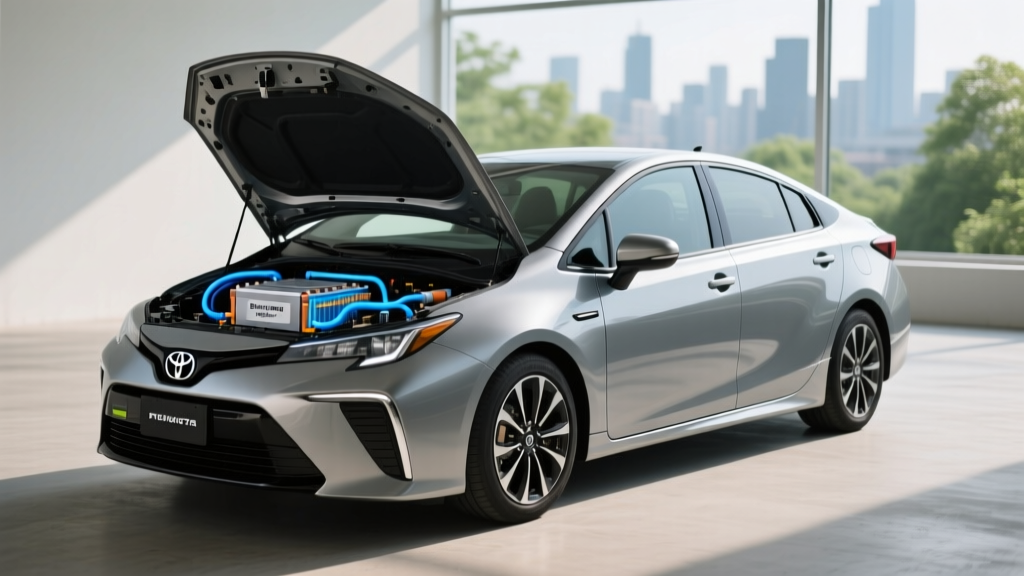
If you're researching electric vehicles, one question dominates the decision: what is battery life, really? Not the single-charge range on the EPA sticker, but the total usable lifespan of the high-voltage traction battery that powers the car. It's the single most expensive component in any EV, and its longevity directly determines long-term ownership costs, resale value, and whether the vehicle remains practical a decade from now.
The short answer, backed by fleet data and manufacturer warranties, is that modern EV batteries are engineered to last 15–20 years or 150,000–200,000+ miles before reaching a capacity threshold (typically 70–80% of original) that might prompt replacement. Most will outlast the vehicle itself. But the nuances — chemistry choice, charging habits, climate exposure — matter enormously. Here's the data-driven breakdown.
How Long Do EV Batteries Actually Last?
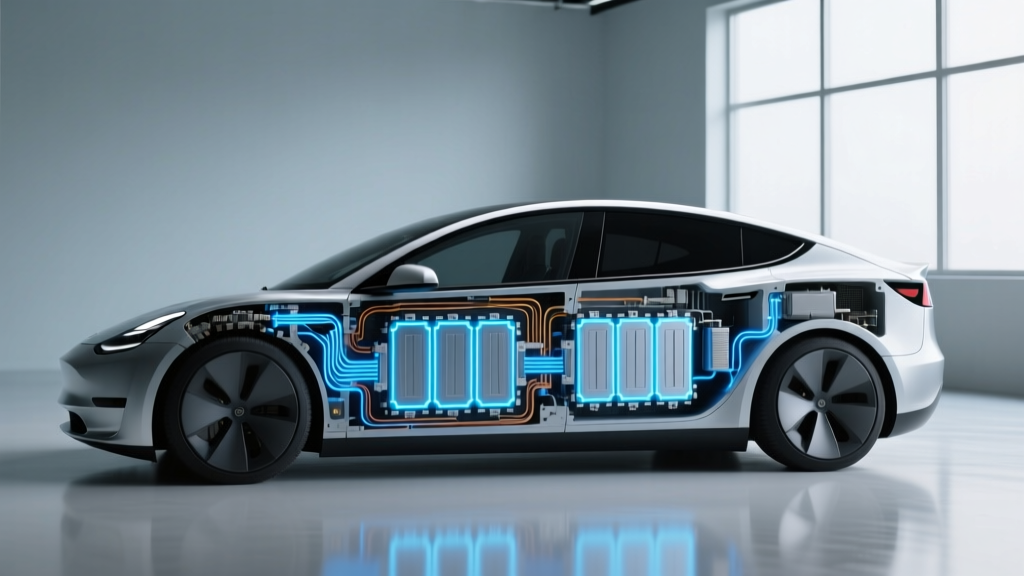
When engineers and owners talk about EV battery "life," they mean cycle life and calendar life — how many full charge-discharge cycles the pack can endure, and how many years it remains functional regardless of use. Unlike a smartphone battery that degrades noticeably in 2–3 years, EV traction batteries benefit from sophisticated thermal management systems, larger buffers, and more conservative charge windows.
Real-world data from multiple sources paints a consistent picture:
- Tesla's 2023 Impact Report showed Model S/X batteries retained approximately 88% of original capacity at 150,000 miles, with Model 3/Y (LFP variants in particular) tracking similarly or better.
- Geotab's fleet study of over 10,000 EVs found an average annual degradation rate of 1.8% per year across all brands — meaning a typical pack retains roughly 82% capacity after 10 years.
- Nissan Leaf (passive air-cooled, older chemistry) showed faster degradation at roughly 2–3% per year, highlighting the importance of active thermal management.
Typical Degradation Curve (NMC Battery with Active Thermal Management):
Year 1: ~3–5% loss (initial formation period)
Years 2–5: ~1.5–2% per year (linear phase)
Years 6–10: ~1–1.5% per year (plateau phase)
Years 10–15: Gradual taper; most packs remain above 75% State of Health
Note: LFP batteries typically show slower degradation in the linear phase, often 1–1.5% per year after initial settling.
The critical takeaway: a well-managed battery in a moderate climate will likely retain 75–85% of its original capacity at the 150,000-mile mark. At 70–80% capacity, the vehicle is still fully drivable — you simply have reduced range. A 300-mile EPA vehicle at 80% health still delivers ~240 miles, adequate for most daily driving.
LFP vs NMC: Which Chemistry Lasts Longer?
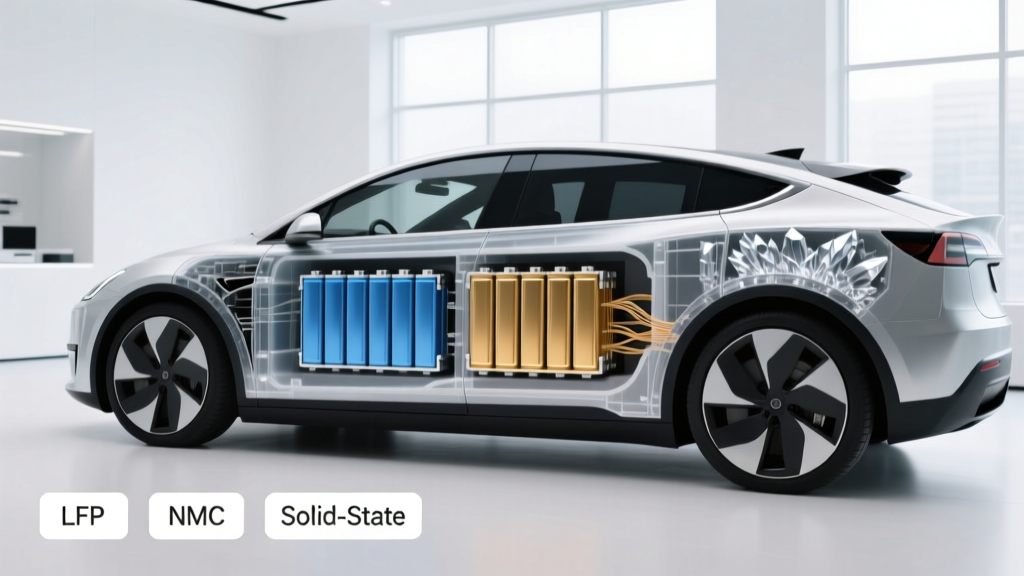
The two dominant lithium-ion chemistries in 2026 EVs are LFP (Lithium Iron Phosphate) and NMC/NCA (Nickel Manganese Cobalt / Nickel Cobalt Aluminum). The choice affects not just energy density and range, but cycle life, cost, cold-weather behavior, and how you should manage daily charging.
| Attribute | LFP (Lithium Iron Phosphate) | NMC / NCA (Nickel-based) |
|---|---|---|
| Cycle Life | 3,000–5,000+ cycles | 1,000–2,500 cycles |
| Energy Density | Lower (~160 Wh/kg cell-level) | Higher (~250–300 Wh/kg cell-level) |
| Typical Range Impact | Slightly less range for same pack weight | More range per kWh of battery mass |
| Daily Charging to 100% | Recommended — no degradation penalty | Best kept at 80% daily; 100% for trips only |
| Cold-Weather Performance | Weaker — greater range loss below 32°F | Better cold-weather retention |
| Cost | Lower (no cobalt/nickel) | Higher (commodity-linked) |
| Thermal Stability | Excellent — very low thermal runaway risk | Good with active management |
| Common In (2026) | Tesla Model 3 RWD, Model Y RWD, Ford Mustang Mach-E Select, BYD models | Tesla Long Range/Performance, Hyundai Ioniq 5/6, Kia EV6/EV9, BMW iX, Rivian |
Which is better? It depends on your use case. If you want maximum cycle life, lower cost, and don't mind slightly less range or worse cold-weather performance, LFP is the longevity champion. If you need maximum range, tow frequently, or live in a cold climate, NMC/NCA delivers higher energy density and better winter behavior — at the cost of more careful charge management and somewhat shorter cycle life.
What Does the EV Battery Warranty Actually Cover?
Federal law in the United States mandates that EV batteries carry a minimum warranty of 8 years / 100,000 miles. In California Air Resources Board (CARB) states — which include California, Colorado, Maine, Massachusetts, New York, Oregon, Vermont, Virginia, Washington, and others adopting CARB standards — the mandate extends to 10 years / 150,000 miles.
Most manufacturers meet or exceed these minimums. Here's how the major brands stack up:
| Manufacturer | Warranty Period | Capacity Retention Threshold |
|---|---|---|
| Tesla | 8 yr / 100,000–120,000 mi (varies by model) | 70% |
| Hyundai / Kia | 10 yr / 100,000 mi | 70% |
| Ford | 8 yr / 100,000 mi | 70% |
| General Motors (Chevrolet, Cadillac) | 8 yr / 100,000 mi | 70% (some models 60% on propulsion components) |
| BMW | 8 yr / 100,000 mi | 70% |
| Rivian | 8 yr / 120,000 mi | 70% |
Key detail: The warranty threshold of 70% means the manufacturer will repair or replace the battery if its State of Health (SoH) drops below 70% of original capacity within the warranty period. This is not a guarantee that the battery will fail at that point — it's a floor. Most batteries will remain well above 70% throughout the warranty period under normal use.
Warranties typically cover defects in materials and workmanship, as well as abnormal degradation. They generally do not cover damage from accidents, flooding, improper modifications, or use of non-approved charging equipment. Always read the specific warranty booklet for your vehicle.
How Much Does an EV Battery Replacement Cost?
This is the question that generates the most anxiety — and the most misinformation. Let's separate the data from the fear.
| Vehicle / Battery Size | Approximate Replacement Cost (2026) | Notes |
|---|---|---|
| Tesla Model 3 RWD (~60 kWh LFP) | $8,000–$12,000 | Refurbished packs available at lower cost |
| Tesla Model Y Long Range (~75 kWh NMC) | $12,000–$16,000 | Out-of-warranty full replacement |
| Hyundai Ioniq 5 (~77 kWh NMC) | $10,000–$15,000 | Module-level repair may reduce cost |
| Ford F-150 Lightning Extended (~131 kWh) | $20,000–$30,000 | Large pack; highest replacement cost tier |
| Chevrolet Bolt EV (~65 kWh NMC) | $9,000–$14,000 | Recall replacement was free; out-of-warranty costs apply now |
| BMW iX xDrive50 (~111 kWh) | $18,000–$25,000 | Premium segment; higher labor rates |
The critical context most coverage omits: Battery replacement is rarely needed during the typical ownership period. According to data from Geotab's fleet analysis, fewer than 2% of EVs required battery replacement within the first 10 years of service, and most of those were due to manufacturing defects covered under warranty, not end-of-life degradation.
When replacements are needed, they're increasingly done at the module level rather than replacing the entire pack. A battery pack contains dozens of individual modules; if one or two degrade disproportionately, a technician can swap just those modules for a fraction of the full-pack cost. This is becoming standard practice at manufacturer-certified service centers.
Battery costs have also declined dramatically. According to BloombergNEF, average lithium-ion pack prices fell from over $1,200/kWh in 2010 to approximately $115/kWh by late 2025. This trend continues to make replacements more affordable over time.
Factors That Accelerate (or Preserve) Battery Life
Not all miles are equal when it comes to battery wear. The following factors have measurable impact on how quickly your pack degrades:
Charging Habits
For NMC/NCA batteries, routinely charging to 100% and leaving the vehicle at full state of charge accelerates degradation. The optimal daily window is 20–80%. LFP batteries are the exception: manufacturers like Tesla and BYD recommend charging to 100% at least weekly to maintain accurate state-of-charge calibration, and LFP chemistry tolerates full charge with minimal degradation penalty.
DC Fast Charging Frequency
Occasional DC fast charging (1–2 times per week) has negligible impact on modern batteries with active thermal management. However, exclusive reliance on DC fast charging — particularly at rates above 150 kW in hot weather — does measurably increase degradation. A 2022 study by Idaho National Laboratory found that vehicles charged exclusively on DC fast chargers showed approximately 5–8% more degradation over 40,000 miles compared to vehicles charged primarily on Level 2. The practical takeaway: use Level 2 at home for daily charging, and reserve DC fast charging for road trips.
Extreme Temperatures
Heat is the primary enemy of lithium-ion longevity. Sustained exposure to ambient temperatures above 95°F (35°C), especially at high states of charge, accelerates chemical degradation. Vehicles with active liquid cooling (Tesla, Hyundai E-GMP, GM Ultium, Ford, BMW) manage this far better than passively cooled packs (older Nissan Leaf). Cold temperatures primarily reduce range temporarily rather than causing permanent damage, though charging at sub-freezing temperatures without battery preconditioning can cause lithium plating — a form of permanent degradation. Always use your vehicle's preconditioning feature before charging in cold weather.
Depth of Discharge
Shallow cycles (e.g., charging from 40% to 70%) are gentler on the battery than deep cycles (10% to 90%). You don't need to obsess over this, but avoiding routine discharges below 10% is beneficial for NMC packs.
Battery Care Best Practices
- NMC/NCA: Set daily charge limit to 80%. Charge to 100% only when departing on a trip.
- LFP: Charge to 100% at least once per week. Daily 100% is acceptable.
- Home charging: Install a Level 2 charger (7–11 kW) for daily use. This is the gentlest, most cost-effective charging method.
- Fast charging: Use DC fast charging for road trips, not as your primary charging method.
- Hot climates: Avoid leaving the vehicle at 100% SoC in extreme heat. Park in shade or a garage when possible.
- Cold climates: Always enable battery preconditioning before DC fast charging. Plug in when possible to let the thermal system use grid power.
- Long-term storage: If storing for weeks, leave the battery at approximately 50% SoC and plugged in if possible.
How to Check Your Battery's State of Health
State of Health (SoH) is the percentage of original capacity your battery currently holds. A new battery is at 100% SoH; one that has degraded to hold only 77 kWh of its original 84 kWh is at roughly 91.7% SoH.
Manufacturer tools: Some brands provide SoH data directly. Tesla displays battery health information in the service menu (accessible via the touchscreen). BMW's iDrive system includes a battery health indicator. Hyundai and Kia can report SoH through dealer diagnostic tools upon request.
OBD-II diagnostics: For a more detailed look, an OBD-II dongle paired with apps like OBD2 EV, Car Scanner, or LeafSpy (Nissan-specific) can read battery management system (BMS) data including SoH, cell voltage variance, and degradation estimates. These tools typically cost $30–$80 for the hardware.
Third-party testing: Companies like Geotab and some independent EV shops offer battery health reports. If you're buying a used EV, requesting a dealer SoH printout is a smart pre-purchase step — analogous to a compression test on a used gas car.
Range-based estimation: A rough SoH proxy is comparing your actual range (at a known state of charge, on a familiar route, in moderate temperatures) to the original EPA rating. If your 300-mile EPA vehicle consistently delivers only 240 miles at full charge in similar conditions, your SoH is approximately 80%. This method is imprecise but directionally useful.
What's Next: Solid-State and Silicon Anode Batteries
Several next-generation battery technologies promise further improvements in lifespan, energy density, and charging speed. It's important to separate what's in production from what remains in development:
Silicon-dominant anodes: Companies like Sila Nanotechnologies and Group14 are producing silicon-composite anode materials that increase energy density by 20–40% over graphite. These are entering production in limited applications in 2025–2026 (notably in the Mercedes G-Class EV and select consumer electronics). Expect broader automotive adoption by 2028–2029. Cycle life data is still maturing.
Solid-state batteries: Toyota, Samsung SDI, and QuantumScape have announced solid-state prototypes promising 500+ mile range, 10-minute charging, and improved safety. Toyota has stated a target of limited commercial production by 2027–2028, but at very high initial cost and low volume. Mass-market solid-state EVs remain unlikely before 2030 at the earliest. These are announced/preliminary technologies — not available in any production vehicle as of 2026.
Sodium-ion batteries: CATL and BYD have begun producing sodium-ion packs for lower-cost, shorter-range applications (city cars, energy storage). These offer excellent cycle life and low cost but significantly lower energy density. Expect to see these in budget EVs and as range-extender supplements, not as replacements for long-range packs.
For buyers today, the practical advice is straightforward: current lithium-ion technology (both LFP and NMC) is mature, well-understood, and proven to last the life of the vehicle. Waiting for solid-state means waiting years for technology that will debut at premium pricing.
Frequently Asked Questions
How long do EV batteries last in years and miles?
Most modern EV batteries with active thermal management last 15–20 years or 150,000–200,000+ miles before degrading to 70–80% of original capacity. At that point, the vehicle remains fully functional with reduced range. Fleet data from fueleconomy.gov and Geotab confirms that catastrophic battery failure is rare — under 2% in the first decade.
How much does it cost to replace an EV battery?
Out-of-warranty replacement costs range from approximately $8,000 for a smaller pack (60 kWh, Tesla Model 3 RWD) to $30,000 for a large pack (131 kWh, F-150 Lightning Extended Range). Module-level repairs, where available, can reduce costs to $2,000–$5,000. Battery prices continue to decline year over year. The vast majority of owners never need a replacement — the battery outlasts the car.
What does the EV battery warranty cover?
Federal law requires a minimum 8-year/100,000-mile warranty on EV batteries. CARB states mandate 10 years/150,000 miles. The warranty covers defects and abnormal degradation below a capacity threshold (typically 70% of original). It does not cover accident damage, flooding, or unauthorized modifications. Check your specific manufacturer warranty booklet for exact terms.
LFP vs NMC — which battery chemistry is better for longevity?
LFP (Lithium Iron Phosphate) offers superior cycle life (3,000–5,000+ cycles vs. 1,000–2,500 for NMC), tolerates daily 100% charging, costs less, and has excellent thermal stability. NMC/NCA provides higher energy density (more range per pound), better cold-weather performance, and faster DC charging speeds. For pure longevity and low-maintenance ownership, LFP wins. For maximum range and cold-climate usability, NMC is the better choice.
Does fast charging damage my EV battery?
Occasional DC fast charging (1–2 sessions per week) causes negligible additional degradation in modern EVs with active thermal management. Exclusive reliance on DC fast charging, particularly in hot weather, can add 5–8% more degradation over 40,000 miles compared to Level 2 charging. Use Level 2 at home for daily needs; reserve fast charging for road trips.
How do I check my EV's battery health?
Some manufacturers display State of Health (SoH) in the vehicle's service menu or mobile app. For a detailed reading, use an OBD-II dongle with an EV-specific app (OBD2 EV, Car Scanner, LeafSpy). When buying used, request a dealer SoH diagnostic report. You can also estimate SoH by comparing actual range at full charge to the original EPA rating under similar conditions.
Will my EV battery need replacing before I sell the car?
Statistically, no. With average American driving at ~13,500 miles per year and modern batteries lasting 150,000–200,000+ miles, most original owners will sell or trade the vehicle long before the battery reaches end-of-life. The battery warranty (8–10 years) also transfers to subsequent owners, supporting resale value.