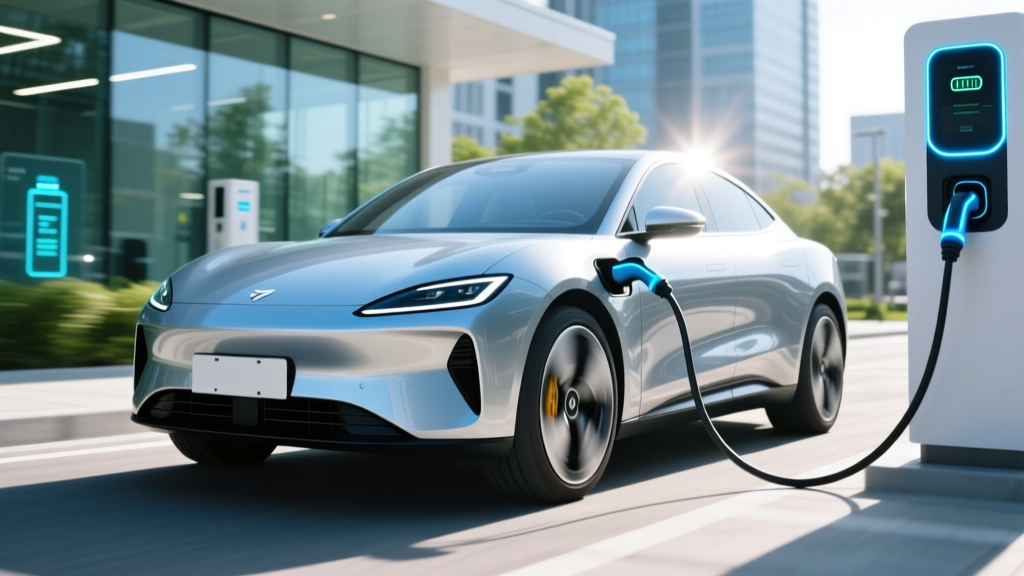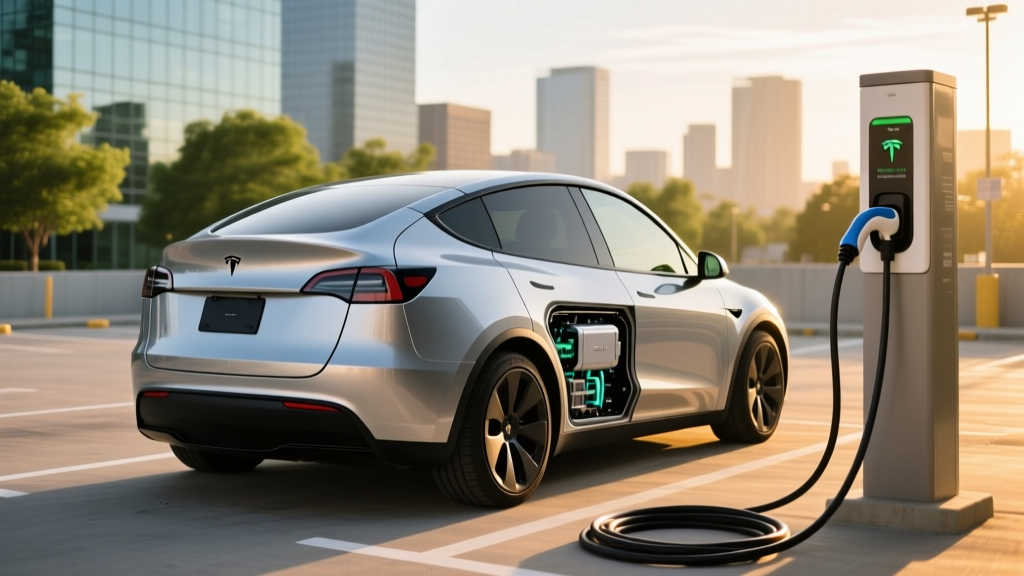
When EV shoppers hear about new lithium processing plants, the natural question is: does this affect the car I'm buying? The Mangrove Lithium BC facility — a lithium refining operation based in British Columbia, Canada — has drawn attention as North America pushes to localize its battery supply chain. For buyers, understanding where battery materials come from matters not just for geopolitics, but for §30D federal tax credit eligibility, which now requires critical minerals sourced from the U.S. or free-trade-agreement partners.
This guide connects the dots between upstream lithium supply (like the Mangrove Lithium BC facility) and what actually sits under your EV's floor: the chemistry, degradation behavior, warranty coverage, and replacement economics of modern traction batteries.
Why the Mangrove Lithium BC Facility Matters for EV Buyers
Mangrove Lithium operates a demonstration and scaling facility in British Columbia focused on refining spodumene concentrate into battery-grade lithium chemicals. The company's process targets faster conversion times and lower environmental impact compared to traditional roasting methods. For the North American EV market, facilities like this serve two practical purposes:
- Supply chain localization: Canada is a U.S. free-trade-agreement partner, meaning lithium refined at the Mangrove Lithium BC facility can count toward the critical-minerals requirement under IRS §30D, helping more vehicles qualify for up to $7,500 in federal EV tax credits.
- Chemistry availability: The type of lithium output (lithium hydroxide vs. lithium carbonate) influences which cathode chemistries automakers can produce domestically — directly affecting whether your next EV uses NMC, NCA, or LFP cells.
The facility is part of a broader Canadian lithium corridor that includes mining operations in Quebec and Ontario, positioning the region as a key node in the North American battery material pipeline. For buyers, the practical takeaway is that vehicles sourcing critical minerals from Canadian refiners are more likely to maintain tax-credit eligibility as sourcing rules tighten.
Battery Chemistry Explained: LFP vs. NMC vs. NCA
Not all EV batteries are the same. The cathode chemistry determines energy density, cycle life, cold-weather performance, and cost. Here's how the three dominant chemistries compare in 2026 production vehicles:
| Attribute | LFP (Lithium Iron Phosphate) | NMC (Nickel Manganese Cobalt) | NCA (Nickel Cobalt Aluminum) |
|---|---|---|---|
| Energy Density | Lower (~160-180 Wh/kg cell-level) | Higher (~220-260 Wh/kg cell-level) | Highest (~250-280 Wh/kg cell-level) |
| Cycle Life | 3,000-5,000+ cycles | 1,500-2,500 cycles | 1,000-2,000 cycles |
| Cold-Weather Performance | Moderate (more range loss below 32°F) | Better (less range loss in cold) | Better (less range loss in cold) |
| Cost per kWh | Lowest ($80-100/kWh at cell level) | Higher ($110-140/kWh at cell level) | Higher ($115-145/kWh at cell level) |
| Cobalt Content | None | Varies (5-20%) | Low (~5%) |
| Typical Use | Standard-range models (Tesla Model 3 RWD, Ford Mustang Mach-E Select) | Long-range / performance models | Tesla long-range, premium EVs |
| Charging to 100% OK? | Yes — recommended periodically for BMS calibration | No — 80% daily recommended | No — 80% daily recommended |
The practical choice: If you drive under 200 miles daily and can charge at home, LFP offers superior longevity and lower cost. If you need maximum range for road trips or live in a cold climate, NMC/NCA delivers more miles per kWh — at a higher upfront cost and somewhat faster degradation.
How Long Do EV Batteries Actually Last?
The short answer: most EV traction batteries outlast the vehicle they're installed in. But "last" needs definition — batteries don't suddenly die; they gradually lose capacity.
Typical Degradation Curve (Based on Real-World Fleet Data):
- Year 1 / 15,000 miles: 2-5% capacity loss (initial "break-in" drop)
- Year 3 / 45,000 miles: 5-8% total loss
- Year 5 / 75,000 miles: 8-12% total loss
- Year 8 / 120,000 miles: 10-18% total loss (depending on chemistry and usage)
- Year 10 / 150,000 miles: 12-22% total loss (NMC/NCA); 8-14% (LFP)
Source: Recurrent Auto battery degradation studies, aggregating data from over 15,000 EVs in real-world use.
Key insight: degradation is not linear. Most batteries experience a steeper drop in the first 1-2 years, then plateau into a slow, predictable decline. An NMC battery at 80% State of Health (SoH) at 100,000 miles is performing normally — not failing.
For context, the average U.S. vehicle is scrapped at around 150,000-180,000 miles (BTS data). Most EV batteries retain 78-88% capacity at that mileage, meaning the battery will likely still be functional when the rest of the car reaches end-of-life.
Battery Warranty Terms: What's Actually Covered
Federal law mandates a minimum 8-year / 100,000-mile warranty on EV battery packs for emissions-related compliance, but most manufacturers exceed this baseline. Here's how major warranties compare:
| Manufacturer | Warranty Period | Capacity Retention Threshold | What Triggers a Claim |
|---|---|---|---|
| Tesla (Model 3/Y) | 8 years / 120,000 miles (LR) or 100,000 miles (RWD) | 70% | SoH drops below 70% within warranty period |
| Hyundai / Kia | 10 years / 100,000 miles | 70% | SoH drops below 70% |
| Ford (Mach-E, F-150 Lightning) | 8 years / 100,000 miles | 70% | SoH drops below 70% |
| GM (Ultium-based) | 8 years / 100,000 miles | 70% | SoH drops below 70% |
| BMW | 8 years / 100,000 miles | 70% | SoH drops below 70% |
Important nuance: The warranty covers capacity loss, not just catastrophic failure. If your 82 kWh pack can only hold 55 kWh (below 70%) at 60,000 miles, that's a valid claim. However, normal degradation to 75% at 90,000 miles is considered expected wear — not a warranty event.
Most warranties also cover defects in materials and workmanship, including individual module failures. Some manufacturers (like Tesla) may replace with a refurbished pack of equivalent capacity rather than a brand-new unit.
EV Battery Replacement Costs: When and How Much
Battery replacement is the single biggest fear among prospective EV buyers. Here's the reality in 2026:
| Vehicle / Pack Size | Battery Capacity | Estimated Replacement Cost (2026) | When Typically Needed |
|---|---|---|---|
| Tesla Model 3 RWD (LFP) | 60 kWh | $8,000 - $12,000 | Rarely before 200,000+ miles |
| Tesla Model Y Long Range (NMC) | 82 kWh | $12,000 - $16,000 | Rarely before 180,000+ miles |
| Hyundai Ioniq 5 (NMC) | 77.4 kWh | $11,000 - $15,000 | Rarely before 180,000+ miles |
| Ford F-150 Lightning Extended | 131 kWh | $18,000 - $25,000 | Rarely before 150,000+ miles |
| Chevrolet Bolt EV (NMC) | 65 kWh | $9,000 - $14,000 | Rarely before 180,000+ miles |
Key context: These costs are declining roughly 8-12% annually as cell prices fall and refurbishment options expand. By 2030, replacement costs for a mid-size pack are projected to be in the $6,000-$10,000 range. Additionally, independent shops are increasingly offering module-level repairs (replacing individual bad cells rather than the entire pack) for $2,000-$5,000.
The honest assessment: most first-owner EV buyers will never need a battery replacement. The vehicles most likely to need one — high-mileage fleet vehicles or 10+ year-old cars — will benefit from the continued decline in cell pricing.
What Affects Battery Life (And What You Can Control)
Battery degradation is driven by three primary stressors: heat, high State of Charge (SoC), and high charge/discharge rates. Here's how each factor plays out and what owners can do:
Daily Charging Habits
- NMC/NCA batteries: Set daily charge limit to 80%. Only charge to 100% when departing on a road trip. Avoid leaving the car at 100% SoC for more than a few hours.
- LFP batteries: Charge to 100% at least once per week — this is required for the BMS to accurately calibrate. LFP tolerates full charges better than NMC.
- Don't baby it excessively: The difference between 70% and 80% daily limits is marginal. The big wins are avoiding 100% storage and extreme heat.
Fast Charging Strategy
- DC fast charging (150-350 kW) generates significant heat. Occasional use (road trips, 1-2x per week) has minimal impact on long-term health.
- Daily DC fast charging accelerates degradation by an estimated 1-3% over the battery's life compared to Level 2 home charging.
- Always precondition the battery before fast charging — this brings the pack to optimal temperature and reduces stress.
Temperature Management
- Parked in extreme heat (100°F+) for extended periods: partial SoC (40-60%) reduces calendar degradation.
- Cold weather doesn't degrade the battery permanently, but it temporarily reduces available range by 20-40% below 20°F. This recovers when temperatures rise.
- Vehicles with active thermal management (Tesla, Hyundai E-GMP, GM Ultium) protect the battery far better than passively cooled packs.
How to Check Your Battery's State of Health (SoH)
State of Health (SoH) is the percentage of original capacity your battery can still hold. A new 82 kWh pack at 90% SoH can store approximately 73.8 kWh.
Methods for checking SoH:
- In-vehicle display: Tesla shows battery health in the service menu (Settings → Service → Battery Health). Some Hyundai/Kia models display this in the EV settings. BMW iDrive includes SoH in the battery info screen.
- OBD2 diagnostics: Apps like Leaf Spy (Nissan), Scan My Tesla, or Car Scanner ELM OBD2 can read SoH directly from the BMS via an OBD2 dongle ($20-$40 hardware).
- Dealer assessment: A service center can pull a full battery health report, including individual module voltage variance — useful before buying a used EV.
- Third-party services: Companies like Recurrent Auto offer battery health reports based on telematics data, often included with fleet or subscription services.
When to be concerned: If SoH drops more than 3% in a single year after the initial break-in period, or if individual cell variance exceeds 0.2V, it may indicate a failing module. A single bad module can often be replaced for $500-$1,500 without replacing the entire pack.
Emerging Battery Technologies: Solid-State and Silicon Anodes
Several next-generation battery technologies are in development. Here's where they stand realistically in 2026:
- Solid-state batteries: Toyota, Samsung SDI, and QuantumScape have demonstrated prototype cells with 400+ Wh/kg energy density and 10-minute fast-charging capability. However, manufacturing scale-up remains the bottleneck. Realistic timeline for consumer vehicles: 2028-2032 for limited production; mainstream availability not expected before 2032-2035.
- Silicon anode technology: Companies like Sila Nanotechnologies and Group14 are replacing graphite anodes with silicon composites, boosting energy density by 20-40%. This is already appearing in limited production (Mercedes-Benz G-Class EV uses silicon-anode cells from Group14). Realistic timeline: gradual rollout 2025-2028 across premium segments.
- Sodium-ion batteries: CATL and BYD have begun producing sodium-ion cells for low-cost, short-range applications. Lower energy density (~120-140 Wh/kg) but extremely cheap and cobalt-free. Realistic timeline: available now in Chinese-market micro-EVs; U.S. market entry uncertain before 2028.
- LMFP (Lithium Manganese Iron Phosphate): An evolution of LFP that adds manganese for ~15-20% higher energy density while retaining LFP's safety and longevity advantages. Realistic timeline: entering production 2026-2027, likely in Tesla and Chinese OEM vehicles first.
The honest assessment: today's NMC and LFP batteries are mature, well-understood technologies with proven track records. Next-gen chemistries will offer genuine improvements, but not for several years and not at mass-market price points initially. Buying an EV today does not mean buying obsolete technology.
Supply Chain, Tax Credits, and the Mangrove Lithium BC Connection
The IRS §30D clean vehicle credit requires that a growing percentage of critical minerals in the battery be sourced from the United States or a country with which the U.S. has a free trade agreement. Canada qualifies.
2026 §30D Requirements (Battery & Sourcing)
- Critical minerals: Increasing percentage must be extracted or processed in the U.S. or an FTA partner (Canada, Australia, South Korea, Japan, etc.). Facilities like the Mangrove Lithium BC facility directly contribute to meeting this threshold.
- Battery components: Increasing percentage must be manufactured or assembled in North America.
- MSRP caps: Vans, SUVs, and pickups: $80,000 max. Sedans and other vehicles: $55,000 max.
- Buyer income caps: $300,000 (married filing jointly), $225,000 (head of household), $150,000 (single).
- Point-of-sale transfer: Eligible buyers can transfer the credit to the dealer at purchase, reducing the purchase price directly.
- FEOC exclusion: Vehicles with battery components from a "foreign entity of concern" (primarily Chinese companies) are disqualified.
For buyers, this means vehicles using lithium processed at Canadian facilities like Mangrove's BC plant are positioned to maintain credit eligibility as sourcing requirements tighten through 2026 and beyond. When researching a specific vehicle, check the manufacturer's official §30D eligibility list — it updates quarterly as supply chains shift.
Frequently Asked Questions
How long do EV batteries last in years and miles?
Most modern EV batteries retain 78-88% of original capacity at 150,000 miles (roughly 10-12 years of average driving). LFP chemistries tend to outlast NMC/NCA. Complete failure before 200,000 miles is rare in vehicles with active thermal management.
How much does it cost to replace an EV battery?
In 2026, replacement costs range from $8,000-$12,000 for a 60 kWh pack (Tesla Model 3 RWD) to $18,000-$25,000 for a 131 kWh pack (F-150 Lightning Extended Range). Costs are declining 8-12% annually. Module-level repairs ($2,000-$5,000) are increasingly available as an alternative to full-pack replacement.
What does the EV battery warranty actually cover?
Standard warranties cover capacity loss below 70% of original capacity within 8 years / 100,000 miles (10 years for Hyundai/Kia). This includes both gradual degradation and defects. The warranty does not cover damage from accidents, flooding, or unauthorized modifications.
How do I check and maximize my EV battery health?
Check SoH via your vehicle's service menu, an OBD2 scanner app, or a dealer diagnostic. To maximize longevity: charge NMC/NCA to 80% daily, charge LFP to 100% weekly for calibration, avoid prolonged storage above 90% SoC, precondition before DC fast charging, and use Level 2 home charging as your primary method.
LFP vs. NMC — which battery chemistry is better for me?
Choose LFP if: you drive under 200 miles daily, prioritize maximum battery lifespan, want the lowest cost per kWh, and can charge at home. Choose NMC/NCA if: you need maximum EPA range for road trips, live in a consistently cold climate, or are buying a performance-oriented model. Neither is objectively "better" — they serve different use cases.
Does the Mangrove Lithium BC facility affect which EV I should buy?
Indirectly, yes. Vehicles sourcing lithium from Canadian refiners like Mangrove Lithium are more likely to qualify for the §30D federal tax credit as critical-mineral sourcing requirements tighten. However, credit eligibility depends on the entire supply chain, not a single facility. Check the manufacturer's official eligibility status rather than tracing individual material sources.