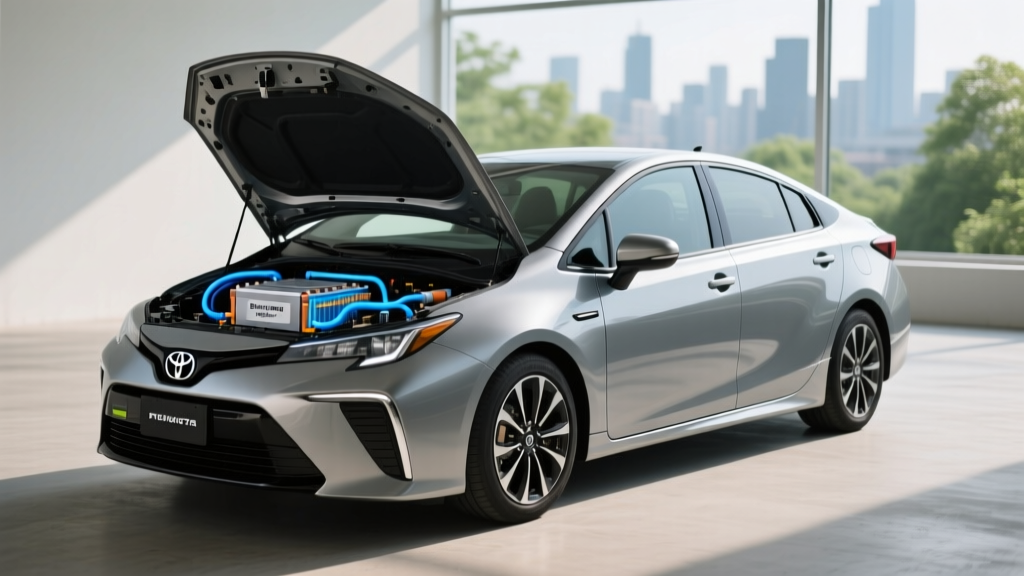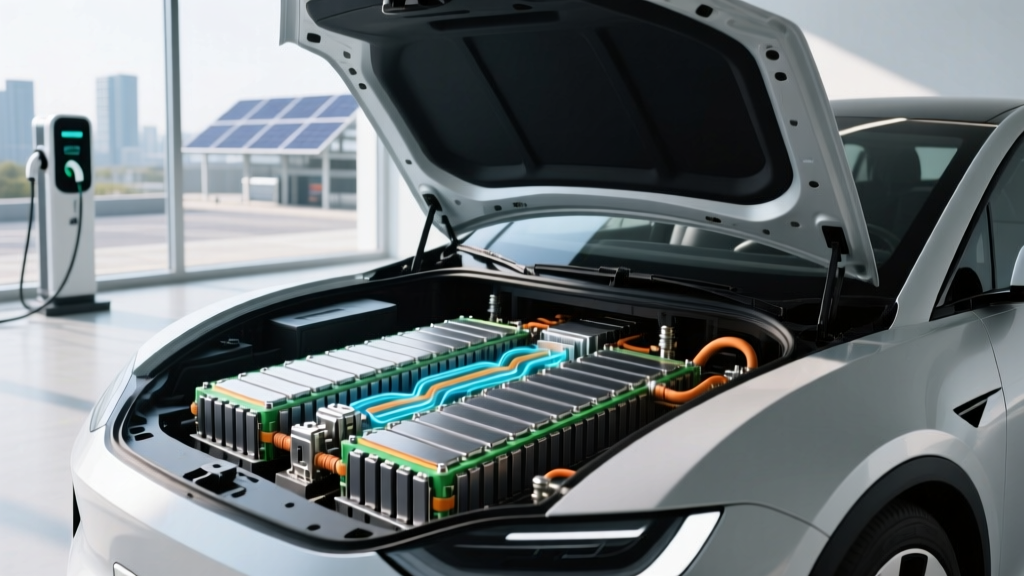
Ask any prospective EV buyer what worries them most and the answer is almost always the battery. Will it last? How much does a replacement cost? And on a practical level, how do you charge batteries that power a 4,000-pound vehicle day after day without destroying them? This guide answers those questions with real data — not marketing copy — covering the chemistry inside your pack, the degradation curves observed across millions of miles, and the daily habits that meaningfully extend battery life.
We'll also clarify a critical distinction up front: when we say "battery" here, we mean the high-voltage traction battery (typically 50–120 kWh) that propels the car. Every EV also carries a small 12V auxiliary battery for lights, computers, and door locks, but that's a conventional lead-acid or lithium unit with its own separate maintenance cycle. This guide is about the big one.
LFP vs NMC vs NCA: Which Chemistry Is in Your EV?
Not all EV batteries are built alike. The cathode chemistry determines energy density, cycle life, cold-weather behavior, and cost. In 2026, the two dominant families in the U.S. market are LFP (lithium iron phosphate) and NMC/NCA (nickel manganese cobalt / nickel cobalt aluminum). Understanding which one your vehicle uses is the single most important factor in how you should charge and care for it.
NMC and NCA chemistries dominate long-range and performance vehicles. They pack more energy per kilogram, which translates to greater range in a given physical package. Most Tesla Model 3 Long Range, Hyundai Ioniq 5, Ford Mustang Mach-E Extended Range, and Chevrolet Silverado EV packs use NMC variants. The trade-off: they degrade faster when held at 100% state of charge (SoC) for extended periods, and the cobalt content makes them more expensive and supply-chain-sensitive.
LFP has surged in popularity for standard-range and cost-optimized models. Tesla's Model 3 and Model Y RWD, the base Ford Mustang Mach-E Select, and several Chinese-market imports use LFP. It offers lower energy density (meaning a heavier or smaller-range pack), but dramatically longer cycle life, superior thermal stability, and the ability to charge to 100% daily without accelerated degradation. Tesla and Ford explicitly recommend periodic 100% charges for their LFP vehicles to allow the battery management system (BMS) to recalibrate.
| Attribute | LFP (Lithium Iron Phosphate) | NMC / NCA (Nickel-based) |
|---|---|---|
| Energy Density | Lower (~140–170 Wh/kg cell-level) | Higher (~220–300 Wh/kg cell-level) |
| Typical Cycle Life | 3,000–5,000+ cycles to 80% SoH | 1,000–2,500 cycles to 80% SoH |
| 100% SoC Charging | Recommended periodically for BMS calibration | Avoid holding at 100% for extended periods |
| Cold-Weather Performance | More range loss below freezing (~35–40%) | Moderately better cold retention (~25–35% loss) |
| Thermal Stability | Excellent — higher runaway threshold | Good — requires robust thermal management |
| Cost (cell-level) | Lower — no cobalt or nickel | Higher — commodity-linked metals |
| Common 2026 Applications | Tesla Model 3/Y RWD, Ford Mach-E Select, BYD models | Tesla LR, Ioniq 5/6, Mach-E ER, Rivian, Silverado EV |
How Long Do EV Batteries Actually Last?
The short answer: longer than most buyers assume. Data aggregated by fueleconomy.gov, manufacturer warranty filings, and fleet operators like Tesla's impact reports consistently show that modern liquid-cooled EV batteries lose roughly 5–10% of total capacity in the first 100,000 miles, after which the degradation curve flattens significantly.
Here's what real-world data points look like across popular platforms:
- Tesla Model 3/Y (NMC, 2019–2023): ~8–12% loss at 100,000 miles; ~12–15% at 200,000 miles per Tesla's 2024 Impact Report fleet data.
- Hyundai Ioniq 5 (NMC, 77.4 kWh): Owner-reported averages of ~6–8% loss at 60,000 miles; thermal management system keeps cells in optimal range.
- Chevrolet Bolt EV/EUV (NMC, 65 kWh): Earlier-generation packs showed ~10–12% at 80,000 miles; post-recall replacement packs (2023+) show improved curves.
- Tesla Model 3 RWD (LFP, 60 kWh): Projected <5% loss at 100,000 miles based on LFP cycle-life data; long-term fleet data still maturing.
Translate that to years: the average American drives ~13,500 miles per year (FHWA data). A battery losing 10% over 100,000 miles will take roughly 7–8 years to reach that point. At 15 years and 200,000 miles, most NMC packs retain 80–85% of original capacity. LFP packs are projected to retain 90%+ at the same mileage. In practical terms, the battery will very likely outlast the rest of the vehicle's economic life.
How Do You Charge Batteries Without Accelerating Degradation?
Charging habits are the single biggest variable you control. Here's the physics: lithium-ion cells degrade fastest at the extremes — very high and very low state of charge — and at elevated temperatures. Every charging session generates heat; DC fast charging generates substantially more. Here's how to think about each charging level:
Level 1 (120V, ~1.4–1.9 kW): Adds 3–5 miles of range per hour. Gentle on the battery due to low current, but impractically slow for most daily needs. Fine for PHEVs with small batteries or overnight trickle for low-mileage drivers.
Level 2 (240V, 7–19.2 kW): The daily workhorse. A 48-amp Level 2 station (11.5 kW) adds roughly 35–45 miles per hour depending on vehicle efficiency. This is how the vast majority of EV owners charge at home, and it generates minimal thermal stress. If you have home Level 2 access, this should be 90%+ of your charging.
DC Fast Charging (50–350 kW): Essential for road trips but stressful on cells. A 250 kW charger can take an Ioniq 5 from 10% to 80% in ~18 minutes, but peak rates only sustain for a portion of the session (the charge curve tapers significantly above 60–70% SoC). Frequent exclusive reliance on DCFC — multiple times per week with no Level 2 breaks — has been correlated with slightly higher degradation in fleet studies. Use it when you need it; don't use it exclusively when you don't.
Daily Battery Care Checklist
- NMC/NCA owners: Set daily charge limit to 80%. Charge to 100% only when you'll drive immediately (road trips, long commutes).
- LFP owners: Charge to 100% at least once per week to let the BMS balance cells. Daily 100% is acceptable.
- All chemistries: Avoid letting SoC drop below 10% for extended periods. If storing the vehicle for weeks, leave it at ~50% SoC.
- Cold weather: Use preconditioning (scheduled departure or app-initiated warming) before fast charging. A cold battery charges much slower and sustains more stress.
- Hot weather: Park in shade or a garage when possible. Thermal management runs even when parked if the battery is hot — this uses energy but protects cells.
- DC fast charging: Perfectly fine for road trips. If it's your only option (no home/work Level 2), try to charge to 80–90% rather than 100% at DCFC stations to reduce time at high-SoC high-temperature conditions.
What Does the Battery Warranty Actually Cover?
Federal law mandates that EV battery warranties cover at least 8 years / 100,000 miles. California and states that follow CARB standards extend this to 10 years / 150,000 miles. But the critical detail is the capacity retention threshold — the point at which the manufacturer must replace or repair the pack.
Most manufacturers set this threshold at 70% of original capacity, meaning your battery could lose 30% before the warranty obligates a replacement. Some are more generous. Here's how major 2026 warranties compare:
| Manufacturer | Warranty Term | Capacity Threshold | Notes |
|---|---|---|---|
| Tesla | 8 yr / 120,000 mi (Model 3/Y); 8 yr / 150,000 mi (S/X) | 70% | Covers defects and capacity below threshold |
| Hyundai / Kia | 10 yr / 100,000 mi | 70% | Among the longest calendar terms in the U.S. |
| Ford | 8 yr / 100,000 mi | 70% | Covers battery components and capacity loss |
| General Motors (Ultium) | 8 yr / 100,000 mi | 70% (estimated, varies by model) | Modular pack allows partial replacement |
| Rivian | 8 yr / 175,000 mi | 70% | Higher mileage cap for adventure-use vehicles |
| Volkswagen (MEB) | 8 yr / 100,000 mi | 70% | Standard across ID.4, ID.7 lineup |
The key takeaway: these warranties are designed to protect against catastrophic failure or severe degradation, not normal wear. A battery at 78% capacity after 9 years and 95,000 miles is performing normally and would not trigger a warranty claim. This is why understanding realistic degradation curves matters — most batteries never reach the 70% threshold within the warranty period.
How Much Does an EV Battery Cost to Replace?
This is the question that generates the most anxiety, so let's anchor it in data. Out-of-warranty traction battery replacement costs in 2026 range from roughly $5,000 to $22,000 depending on pack size, chemistry, and vehicle architecture. But context matters enormously: the vast majority of EVs will never need a full pack replacement. When replacements do occur under warranty, the cost to the owner is $0.
| Vehicle | Pack Size | Chemistry | Estimated Replacement Cost | Typical Replacement Trigger |
|---|---|---|---|---|
| Tesla Model 3 RWD | ~60 kWh | LFP | $8,000–$12,000 | Physical damage, rare BMS failure |
| Tesla Model Y LR | ~75 kWh | NMC | $12,000–$16,000 | Cell module failure, crash damage |
| Hyundai Ioniq 5 | 77.4 kWh | NMC | $10,000–$15,000 | Module-level failure (partial replacement possible) |
| Ford F-150 Lightning ER | ~131 kWh | NMC | $18,000–$22,000 | Large pack, highest raw material cost |
| Chevrolet Bolt EV (post-recall) | 65 kWh | NMC | $7,000–$10,000 | Smaller pack, lower cell count |
| Rivian R1T (Large Pack) | ~135 kWh | NMC | $18,000–$20,000 | Adventure-use damage, module service |
Several factors are pushing replacement costs downward: cell prices have fallen from ~$140/kWh in 2022 to roughly $90–100/kWh in 2026 (BloombergNEF data). Modular pack architectures (GM's Ultium, VW's MEB) allow technicians to replace individual modules rather than the entire pack, potentially cutting costs by 60–70% for localized failures. And the growing EV salvage market provides refurbished pack options at significant discounts.
When is replacement typically needed? Almost never due to gradual degradation alone. Most out-of-warranty replacements stem from physical damage (flood, crash, ground strike), manufacturing defects that appear late, or cooling-system failures that damage cells. A battery simply wearing out from normal use within 15 years is extremely rare with modern liquid-cooled packs.
How to Monitor Your Battery's State of Health (SoH)
State of Health (SoH) is the percentage of original capacity your battery can still hold. A new battery is 100% SoH; one that holds 60 kWh of its original 75 kWh is at 80% SoH. Monitoring this number helps you understand real-world degradation and plan for the vehicle's long-term usability.
Native vehicle tools: Most 2026 EVs display estimated range, which indirectly reflects SoH. Some offer more direct metrics — Tesla's service mode shows battery health percentage, Hyundai's infotainment includes an EV battery diagnostics page, and GM's Ultium vehicles provide a battery health indicator in the driver information center.
OBD-II scanners and apps: Third-party tools like OBD2 dongles paired with apps such as EV Health, Scan My Tesla, or Car Scanner can read detailed BMS data including cell voltage spread, pack SoH, charge cycle count, and individual module temperatures. These provide far more granular insight than the dashboard display.
Dealer diagnostics: During scheduled service, dealerships can run a full battery health report. Request this if you're approaching a warranty mileage threshold and want documentation of capacity retention. Some owners proactively request annual battery reports to establish a paper trail.
What to watch for: A sudden drop in estimated range (not explained by cold weather), a significant increase in cell voltage deviation (visible via OBD apps, ideally under 20–30 mV at rest), or charging speeds that have dropped markedly without a software update explanation. These can signal a failing module that may be covered under warranty.
Factors That Accelerate Battery Degradation
Understanding the enemies of lithium-ion longevity helps you avoid them. Research from the National Renewable Energy Laboratory (NREL) and real-world fleet data identify these primary accelerants:
- Sustained high SoC: Holding NMC cells at 100% for days or weeks accelerates electrolyte decomposition. This is why daily charge limits of 80% are standard advice for NMC owners.
- Extreme heat: Battery temperatures above 95°F (35°C) sustained over time cause permanent capacity loss. Liquid cooling mitigates this significantly, but parking in direct desert sun repeatedly still matters. Preconditioning and garage parking help.
- Frequent DC fast charging: The high currents generate substantial heat. Tesla's own data shows vehicles that DCFC more than 90% of the time exhibit slightly higher degradation (~2–3% more over 100k miles) than those primarily using Level 2. Not catastrophic, but measurable.
- Deep discharges: Regularly driving to 0% or near-0% stresses cells. The BMS maintains a buffer (typically 2–5% at the bottom that you can't access), but repeatedly hitting that buffer is not ideal.
- Calendar aging: Batteries degrade even when not driven. A vehicle sitting at 100% SoC in a hot garage for months will lose more capacity than one stored at 50% SoC in mild temperatures.
Emerging Battery Tech: Solid-State and Silicon Anodes
The next frontier in EV battery technology includes solid-state batteries (replacing the liquid electrolyte with a solid conductor) and silicon-dominant anodes (replacing graphite to boost energy density). Both promise meaningful improvements — but neither is available in production EVs sold in the U.S. as of 2026.
Solid-state batteries: Toyota, Samsung SDI, and QuantumScape have demonstrated prototype cells with 500+ mile range potential, faster charging, and improved safety. Toyota has announced limited production for select models in Japan around 2027–2028, with broader availability projected for 2030+. These timelines have slipped multiple times and should be viewed as forward-looking estimates, not commitments.
Silicon anode batteries: Companies like Sila Nanotechnologies and Group14 are supplying silicon-carbon anode materials to manufacturers including Mercedes-Benz and Panasonic. Early applications are in premium models with incremental energy density gains (~10–20% improvement). Broader adoption is expected through 2027–2029 as manufacturing scales.
Sodium-ion batteries: CATL and BYD have begun deploying sodium-ion packs in smaller, budget Chinese-market EVs. These eliminate lithium entirely, trading energy density for dramatically lower cost and better cold performance. U.S. availability is unlikely before 2028 and would initially target entry-level models.
For buyers in 2026, current LFP and NMC chemistries are mature, well-understood, and backed by extensive real-world data. Waiting for solid-state means waiting years with no guaranteed pricing or availability. Today's batteries, properly cared for, are more than capable of delivering 200,000+ miles of reliable service.
Frequently Asked Questions
How long do EV batteries last in years and miles?
Most modern liquid-cooled EV batteries retain 80–90% of original capacity at 200,000 miles or 15 years. LFP chemistries are projected to last even longer. The battery will very likely outlast the vehicle's economic lifespan. Federal warranty minimums cover 8 years/100,000 miles, with CARB states extending to 10 years/150,000 miles.
How much does an EV battery cost to replace?
Out-of-warranty replacement costs range from ~$5,000 for smaller packs (Chevrolet Bolt) to $22,000 for large packs (Ford F-150 Lightning ER). However, most EVs never need a full pack replacement — failures are typically covered under warranty, and gradual degradation alone almost never renders a pack unusable within the vehicle's life. Cell prices continue to decline, pushing replacement costs lower each year.
What does the battery warranty cover?
EV battery warranties cover manufacturing defects and capacity loss below a specified threshold — typically 70% of original capacity — within 8 years/100,000 miles (or 10/150,000 in CARB states). They do not cover damage from accidents, flooding, or unauthorized modifications. Normal gradual degradation above the threshold is expected wear, not a warranty event.
How do I check and maximize my battery's health?
Monitor SoH through your vehicle's native diagnostics, OBD-II apps (like Scan My Tesla or Car Scanner), or dealer battery reports. Maximize longevity by charging NMC to 80% daily (LFP can go to 100%), preconditioning before DC fast charging, avoiding prolonged storage at extreme SoC levels, and minimizing exclusive reliance on DCFC. Park in shade or a garage in hot climates.
LFP vs NMC — which chemistry is better?
Neither is universally better; they serve different needs. Choose NMC/NCA if you need maximum range in a lighter package (long-range trims, towing, cold climates). Choose LFP if you prioritize longevity, lower cost, and the convenience of daily 100% charging (standard-range trims, predictable commutes, warmer climates). Both are proven, safe chemistries with extensive real-world track records.
Does fast charging damage my EV battery?
DC fast charging generates more heat than Level 2, which accelerates degradation slightly. Tesla's fleet data shows ~2–3% additional capacity loss at 100,000 miles for vehicles that DCFC almost exclusively versus primarily Level 2. Modern thermal management systems mitigate this significantly. Use DCFC freely on road trips; rely on Level 2 for daily charging when possible.
How do you charge batteries in cold weather?
Cold batteries charge much slower and accept less current. Always use preconditioning — either scheduled departure or app-initiated warming — before a DC fast charging session in cold weather. This brings the battery to optimal temperature (~70–80°F internally), enabling peak charge rates. Without preconditioning, a cold battery at a DCFC station may charge at a fraction of its rated speed. Expect 25–40% range reduction in sustained sub-freezing driving depending on chemistry and whether you use a heat pump.
Understanding how to charge batteries properly, what chemistry your vehicle uses, and what the real data shows about degradation transforms EV ownership from an anxiety-driven gamble into a predictable, manageable part of daily life. The technology is mature, the warranties are strong, and the replacement-cost fears — while understandable — don't match what we observe in millions of real-world miles. Charge smart, monitor your SoH periodically, and let the battery do what it was engineered to do: outlast the car around it.