Why Auto Battery Removal Rarely Happens — But Every EV Owner Should Understand It
Search for "auto battery removal" and you'll mostly find advice for 12V lead-acid batteries in gas cars. But if you own or are shopping for an electric vehicle, the high-voltage traction battery is a fundamentally different component — and its removal is a specialized, high-cost procedure that most EV owners will never need. The data supports this: the vast majority of EV batteries outlast the vehicles they power.
That said, understanding when removal becomes necessary, what it costs, and how to maximize your battery's lifespan is essential for any informed EV buyer. This guide covers degradation data, warranty protections, chemistry trade-offs, and the realistic scenarios where a traction battery actually gets replaced.
How Long Do EV Batteries Last? Real Degradation Data
Modern EV batteries are engineered for longevity far beyond early-generation packs. Based on fleet data and manufacturer reports, most current lithium-ion traction batteries retain 85-95% of their original capacity after 100,000 miles. Here's what the numbers show:
Typical EV Battery Degradation Curve (NMC and LFP Chemistry)
| Mileage / Timeframe | Avg. Capacity Retained (NMC) | Avg. Capacity Retained (LFP) | Real-World Impact |
|---|---|---|---|
| 1 year / 15,000 mi | 96-98% | 97-99% | Negligible range loss |
| 3 years / 45,000 mi | 92-95% | 94-97% | 5-15 mi less range on a 300-mi pack |
| 5 years / 75,000 mi | 88-93% | 91-95% | Noticeable but manageable range reduction |
| 8 years / 120,000 mi | 82-90% | 87-93% | Warranty threshold territory |
| 10 years / 150,000 mi | 78-87% | 84-91% | Reduced but still functional daily driver |
| 15 years / 200,000+ mi | 70-82% | 78-88% | Potential replacement consideration |
Sources: Geotab fleet battery health study, Tesla Impact Reports, manufacturer warranty data. Individual results vary based on climate, charging habits, and chemistry.
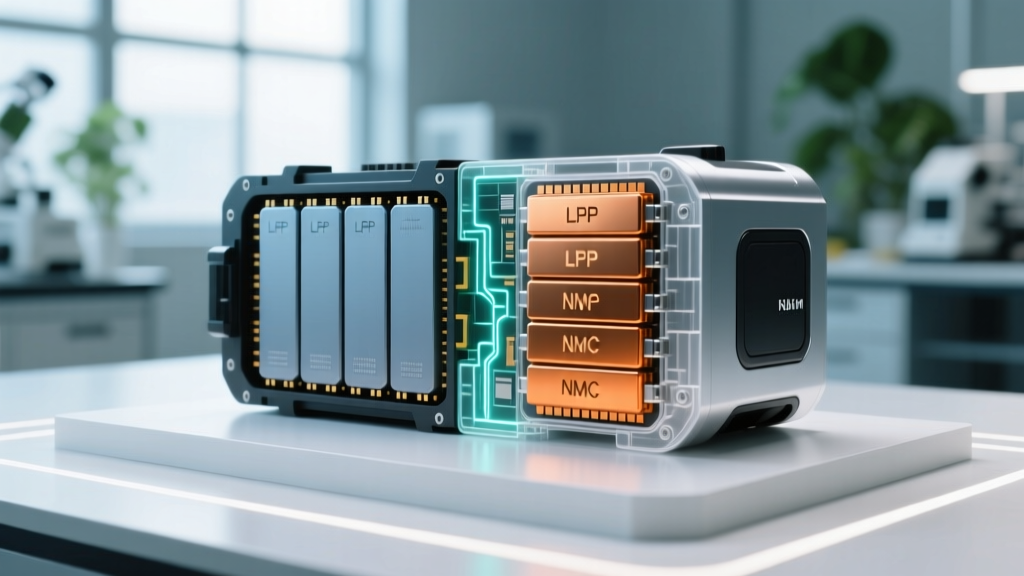
The key takeaway: the steepest degradation occurs in the first 1-2 years (typically 2-5% loss), after which the curve flattens significantly. LFP (lithium iron phosphate) chemistry generally degrades more slowly than NMC/NCA, though it trades off energy density and cold-weather performance.
LFP vs NMC/NCA: Which Battery Chemistry Is Better?
The two dominant chemistries in 2026 EV batteries serve different use cases. Neither is universally "better" — the right choice depends on your driving patterns, climate, and budget.
| Factor | LFP (Lithium Iron Phosphate) | NMC / NCA (Nickel-based) |
|---|---|---|
| Energy Density | Lower (~160-180 Wh/kg cell-level) | Higher (~220-300 Wh/kg cell-level) |
| Cycle Life | 3,000-5,000+ cycles to 80% SoH | 1,000-2,000 cycles to 80% SoH |
| Cold-Weather Performance | More range loss in freezing temps (15-30%) | Better cold performance (10-20% loss) |
| Cost | Lower — no nickel or cobalt | Higher — nickel/cobalt commodity pricing |
| Charging to 100% | Recommended regularly for SoC calibration | Better kept at 80% daily; 100% for trips only |
| Typical Use | Standard-range models (Tesla Model 3 RWD, base Model Y) | Long-range and performance models |
| Thermal Stability | Superior — lower thermal runaway risk | Good with active thermal management |
Choose LFP if: You want maximum battery longevity, mostly drive in moderate climates, and don't need the absolute longest single-charge range. LFP packs are also cheaper to replace if the unlikely need arises.
Choose NMC/NCA if: You regularly take long road trips, live in a cold climate, or need maximum range from a given battery size. The energy density advantage means more miles per kWh of pack weight.
What Does the EV Battery Warranty Actually Cover?
Federal law mandates a minimum 8-year / 100,000-mile warranty on EV battery packs, but manufacturers often exceed this. Here's how major warranties compare in the 2026 model year:
| Manufacturer | Warranty Period | Capacity Retention Threshold | Notes |
|---|---|---|---|
| Tesla (Model 3/Y LFP) | 8 yr / 120,000 mi | 70% | Longer mileage on LFP trims |
| Tesla (Model 3/Y LR/Perf) | 8 yr / 120,000 mi | 70% | NMC/NCA packs |
| Hyundai / Kia | 10 yr / 100,000 mi | 70% | Among the longest coverage |
| Ford (Mustang Mach-E, F-150 Lightning) | 8 yr / 100,000 mi | 70% | Module-level replacement when possible |
| GM (Ultium-based) | 8 yr / 100,000 mi | 70% | Modular pack allows partial replacement |
| Rivian | 8 yr / 175,000 mi | 70% | Highest mileage threshold in segment |
| BMW / Mercedes | 8 yr / 100,000 mi | 70% | Some offer 8 yr / unlimited mi in other markets |
What triggers a warranty claim: If your battery's State of Health (SoH) drops below the stated threshold (typically 70% of original capacity) within the warranty period, the manufacturer will repair or replace the pack — often by swapping individual modules rather than the entire battery. This is significant: module-level repair dramatically reduces cost and downtime.
What's NOT covered: Cosmetic damage, damage from accidents or flooding, degradation from consistently ignoring manufacturer charging guidelines (though this is rarely enforced), and capacity loss within the normal threshold.
EV Battery Replacement Cost: When Auto Battery Removal Becomes Necessary
Out-of-warranty battery replacement is the scenario that generates the most anxiety. Here are realistic 2026 replacement costs, including labor for removal and installation:
| Vehicle / Pack Size | Battery Chemistry | Approx. Replacement Cost (Parts + Labor) | Typical Replacement Trigger |
|---|---|---|---|
| Tesla Model 3 RWD (~60 kWh) | LFP | $12,000 - $16,000 | Post-warranty failure or collision damage |
| Tesla Model Y Long Range (~82 kWh) | NMC | $15,000 - $20,000 | Same — extremely rare under normal use |
| Hyundai Ioniq 5 (~77.4 kWh) | NMC | $14,000 - $18,000 | Module failure; partial replacement often possible |
| Ford F-150 Lightning Ext. Range (~131 kWh) | NMC | $20,000 - $28,000 | Largest consumer packs cost the most |
| Chevrolet Bolt EV (~65 kWh) | NMC | $10,000 - $14,000 | Post-recall replacement packs; smaller pack = lower cost |
| Rivian R1T / R1S (~135 kWh) | NMC | $22,000 - $30,000 | Large pack; modular design may allow partial swap |
Critical context on these numbers: These costs sound high in isolation, but the vast majority of EV batteries never need replacement. Consumer Reports estimates that modern EV batteries are designed to last 200,000+ miles (roughly 15-20 years of average driving). When replacement does occur, it's most often due to:
- Collision damage — covered by auto insurance, not your pocket
- Manufacturing defects — covered under warranty
- Extreme age/mileage — at 200,000+ miles, the vehicle's residual value is typically low enough that replacement economics are evaluated against buying a newer vehicle
- Catastrophic cell failure — exceedingly rare with modern thermal management systems
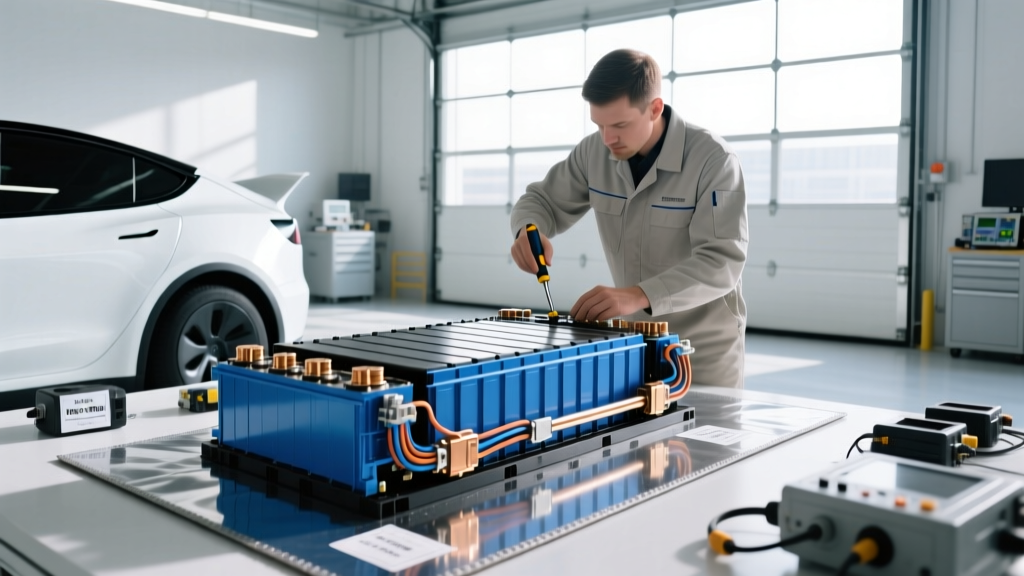
The auto battery removal process itself requires a certified high-voltage technician, specialized lift equipment, and typically 4-8 hours of labor. This is not a DIY procedure — high-voltage systems carry 400V-800V and can be lethal without proper training and equipment.
Factors That Accelerate Battery Degradation
While modern battery management systems (BMS) do an excellent job protecting the pack, owner behavior still influences long-term health. Here's what the data shows matters most:
Battery Longevity: What Helps and What Hurts
- ✅ DO charge to 80% daily (NMC/NCA): Keeping state of charge between 20-80% for daily use significantly slows degradation. LFP owners can and should charge to 100% regularly for cell balancing.
- ✅ DO use Level 2 home charging as your primary method: Slow, steady charging generates less heat stress than repeated DC fast charging.
- ✅ DO precondition your battery: Using your vehicle's preconditioning feature before fast charging or in cold weather optimizes the pack temperature and reduces stress.
- ✅ DO park in shade or a garage in hot climates: Sustained high ambient temperatures (above 95°F/35°C) accelerate chemical degradation. Active thermal management helps but isn't a complete solution.
- ⚠️ LIMIT frequent DC fast charging: Occasional road-trip fast charging is fine. But daily reliance on 150+ kW DC charging correlates with 1-3% additional capacity loss over 100,000 miles versus primarily Level 2 charging.
- ⚠️ AVOID storing at 100% or near 0% SoC: If leaving your EV unused for weeks, set the charge limit to 50-60%. Extended storage at extreme SoC states stresses the cells.
- ⚠️ AVOID repeated deep discharges below 10%: The BMS maintains a buffer (typically 2-5 kWh below "0%" displayed), but habitually running the pack very low adds cumulative stress.
- ❌ DON'T fast-charge a cold battery without preconditioning: Charging a frozen pack at high power can cause lithium plating — a permanent, irreversible form of degradation.
How to Check Your EV Battery's State of Health (SoH)
Monitoring your battery's health doesn't require a dealership visit. Here are the primary methods available to EV owners in 2026:
1. In-vehicle diagnostics: Some manufacturers (Tesla via the service menu, Hyundai/Kia via the infotainment system, BMW through iDrive) provide a battery health percentage or degradation estimate directly in the car's interface. Check your owner's manual for the specific path.
2. OBD-II scanner apps: Third-party apps like Scan My Tesla, Leaf Spy (Nissan), or Car Scanner ELM OBD2 can read the BMS-reported SoH, cell voltage variance, and pack temperature data through the OBD-II port. These tools typically cost $15-50 for the app plus a $20-40 Bluetooth OBD-II dongle.
3. Dealer or service center check: A full battery health report from the manufacturer provides the most authoritative SoH reading, including individual module balance. This is typically free during warranty-period service visits.
4. Third-party EV inspection services: Companies like Recurrent Auto offer battery health reports that compare your pack's degradation against a fleet of identical vehicles — valuable context when buying or selling a used EV.
What SoH numbers mean in practice: A battery at 90% SoH with a 300-mile EPA rating effectively delivers about 270 miles of range when new-equivalent conditions apply. Most owners don't notice degradation day-to-day because it occurs gradually over months and years.
Emerging Battery Technology: What's Coming (and When)
Several next-generation battery technologies are in development, but none are available in production consumer EVs as of 2026. Here's a realistic timeline:
Solid-state batteries: Promising 30-50% higher energy density and faster charging, solid-state cells replace the liquid electrolyte with a solid material. Toyota, Samsung SDI, and QuantumScape have announced pilot production, but industry analysts project meaningful consumer availability no earlier than 2028-2030, initially in limited-production or luxury vehicles.
Silicon-dominant anodes: Replacing graphite anodes with silicon can boost energy density by 20-40%. Companies like Sila Nanotechnologies and Group14 are supplying early production cells, with broader adoption expected in the 2027-2029 timeframe.
Sodium-ion batteries: Lower cost and no lithium or cobalt required, but significantly lower energy density. CATL has begun production for Chinese-market vehicles. US availability remains uncertain and is more likely targeted at stationary storage and budget city cars.
For current buyers, these technologies are forward-looking context, not purchase factors. Today's lithium-ion batteries — both LFP and NMC — are mature, well-understood, and backed by extensive warranty coverage.
Frequently Asked Questions
How long do EV batteries last in years and miles?
Most modern EV batteries are designed to last 15-20 years or 200,000+ miles before degrading to a point where replacement might be considered. Real-world fleet data from Geotab shows average annual degradation of about 1.8-2.3% for liquid-cooled packs, meaning a 300-mile EV would still offer roughly 240-260 miles of range after 10 years of average use.
How much does it cost to replace an EV battery?
Full pack replacement costs range from approximately $10,000 for smaller packs (Chevrolet Bolt-class, ~65 kWh) to $28,000-$30,000 for the largest consumer packs (Ford F-150 Lightning extended range, Rivian R1T, ~130+ kWh). However, most replacements involve individual module swaps at a fraction of full-pack cost, and the overwhelming majority of batteries never need replacement during the vehicle's useful life.
What does the EV battery warranty cover?
Federal law requires a minimum 8-year/100,000-mile battery warranty. Most manufacturers guarantee that the battery will retain at least 70% of its original capacity during this period. If SoH drops below the threshold, the manufacturer repairs or replaces the pack at no cost. Some brands, like Hyundai/Kia, extend coverage to 10 years, and Rivian covers up to 175,000 miles.
Is LFP or NMC better for battery longevity?
LFP chemistry generally offers superior cycle life (3,000-5,000+ cycles vs. 1,000-2,000 for NMC) and better thermal stability, making it the longevity winner. However, NMC provides higher energy density (more range per pound) and better cold-weather performance. For owners prioritizing maximum battery lifespan in moderate climates, LFP is the stronger choice. For those needing maximum range or living in cold regions, NMC remains preferable.
Can I replace an EV battery myself?
No. High-voltage traction batteries operate at 400V-800V and can be lethal without proper training, insulated tools, and safety protocols. Auto battery removal for an EV requires a certified high-voltage technician. This is fundamentally different from swapping a 12V auxiliary battery in a conventional car.
Does fast charging damage my EV battery?
Occasional DC fast charging has minimal impact on battery health. However, exclusive reliance on high-power DC charging (150+ kW) without Level 2 charging correlates with slightly accelerated degradation — roughly 1-3% additional capacity loss over 100,000 miles. Modern BMS and thermal management systems mitigate much of this risk, but daily fast charging isn't optimal for long-term health.
How do I know if my EV battery needs to be replaced?
Signs include: SoH dropping below 70% (visible via OBD-II apps or dealer diagnostics), a sudden significant range drop not explained by weather, visible physical damage to the battery enclosure, or a manufacturer-initiated recall. In most cases, individual module replacement resolves the issue without requiring a full pack swap.