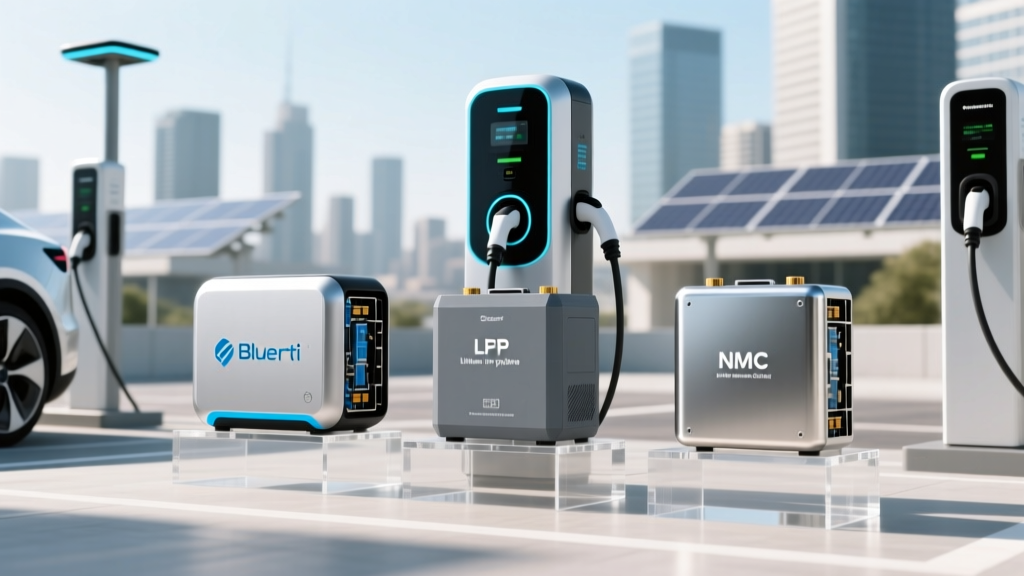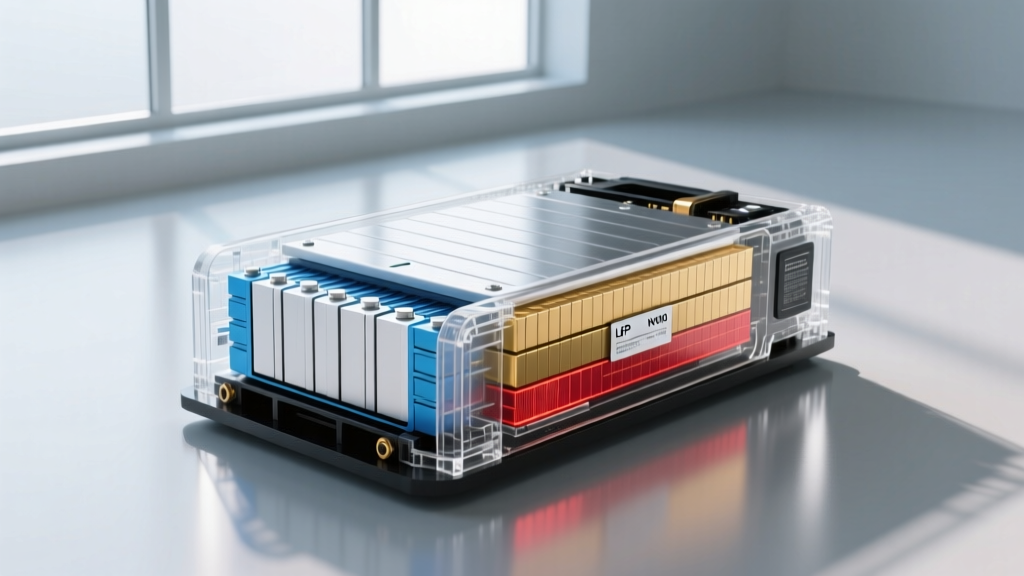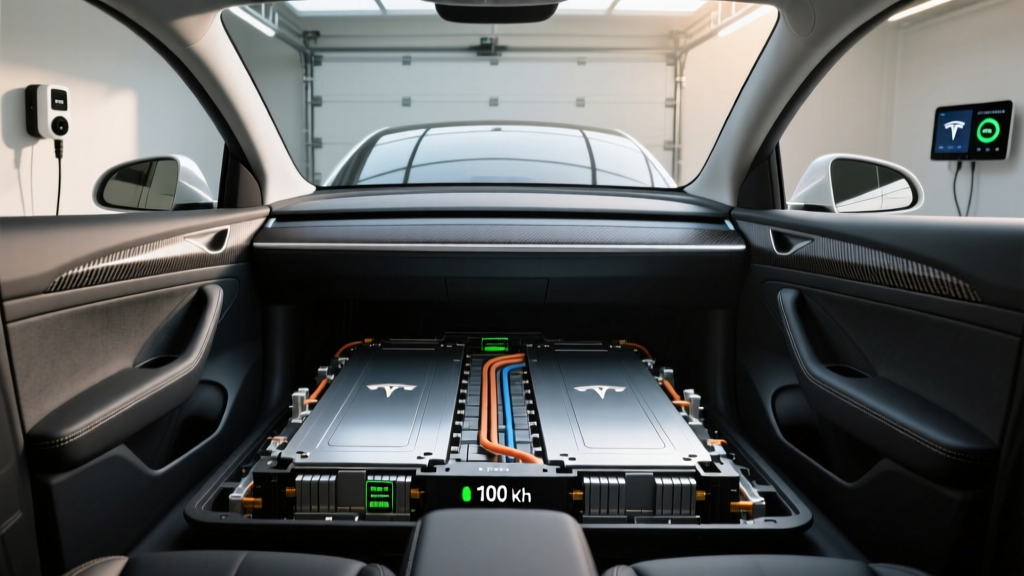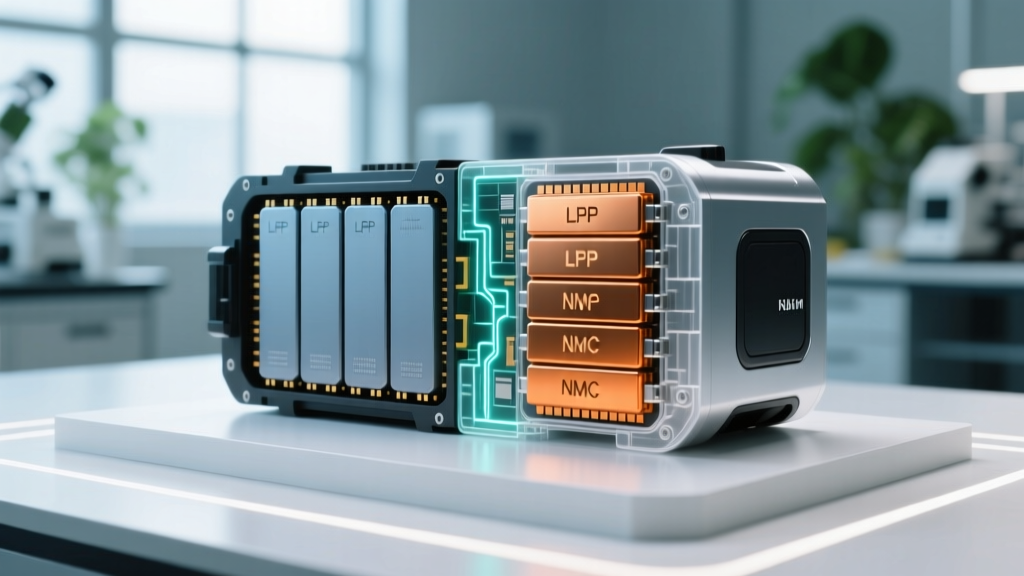
Every Tesla sold in 2025 and 2026 uses one of two high-voltage traction battery chemistries: lithium iron phosphate (LFP) or nickel-based (NMC/NCA). Which battery cell Tesla installs in your specific vehicle depends on the model, trim, and where it was built — and that choice affects everything from daily charging habits to long-term degradation and eventual replacement cost. This guide breaks down the exact chemistries, real-world degradation data, warranty terms, and ownership costs so you can buy and maintain a Tesla with confidence.
Tesla Battery Cell Chemistries: LFP vs NMC/NCA Explained
Tesla sources battery cells from multiple suppliers — primarily CATL (LFP cells), Panasonic (NCA/NMC cylindrical cells), and LG Energy Solution (NMC pouch cells). The chemistry inside each cell determines the pack's energy density, cycle life, thermal stability, and cost.
LFP (Lithium Iron Phosphate): Used in the Model 3 and Model Y Standard Range (Rear-Wheel Drive) variants. LFP cells contain no nickel or cobalt, making them cheaper to produce and more ethically straightforward to source. They offer a longer cycle life — often exceeding 3,000 full charge cycles before significant capacity loss — and superior thermal stability, meaning they are less prone to thermal runaway. The trade-off is lower energy density: LFP packs are heavier for the same kWh capacity, which is why Tesla reserves them for shorter-range trims.
NCA (Nickel Cobalt Aluminum) / NMC (Nickel Manganese Cobalt): Used in Long Range and Performance variants of the Model 3, Model Y, Model S, and Model X. Panasonic's 4680 NCA cells (produced at Tesla's Austin Gigafactory) and LG's NMC pouch cells deliver higher energy density, enabling 300+ mile EPA ranges without excessive pack weight. However, nickel-based chemistries degrade faster under sustained high states of charge and extreme heat, and they carry a higher per-kWh cost.
| Attribute | LFP (CATL Prismatic) | NCA/NMC (Panasonic 4680 / LG Pouch) |
|---|---|---|
| Models Using | Model 3 RWD, Model Y RWD | Model 3 LR/Perf, Model Y LR/Perf, Model S, Model X |
| Energy Density | ~160 Wh/kg (cell-level) | ~260-300 Wh/kg (cell-level) |
| Cycle Life | 3,000-5,000 cycles | 1,000-2,000 cycles |
| Cold-Weather Performance | Moderate; slower charging below 32°F | Better low-temp conductivity |
| Daily Charge Recommendation | 100% OK (Tesla recommends periodic 100%) | 80% daily; 100% for trips only |
| Thermal Stability | Excellent (less thermal runaway risk) | Good (requires active thermal management) |
| Cost per kWh | Lower (~$80-100/kWh cell-level) | Higher (~$120-150/kWh cell-level) |
| Cobalt Content | None | Low (NCA) to moderate (NMC) |
Real-World Degradation: What the Data Actually Shows
Battery degradation — the gradual, irreversible loss of usable capacity — is the single biggest concern for EV buyers. Fortunately, real-world data from Tesla's own fleet and third-party aggregators paints a reassuring picture.
According to Tesla's 2024 Impact Report, the average Model 3 and Model Y battery pack retains approximately 85% of its original capacity after 200,000 miles. That translates to roughly 15% degradation over the typical lifetime of the vehicle. For a Long Range Model Y with a 330-mile EPA range, 85% retention means roughly 280 miles of range at 200,000 miles — still highly usable.
Independent data from Teslanomics by Teslanomics and Recurrent Auto shows a characteristic degradation curve: the steepest loss occurs in the first 20,000-30,000 miles (typically 3-5%), after which the curve flattens significantly. Many owners report losing only 1-2% per year after the initial settling period.
Typical Tesla Battery Degradation Curve (NMC/NCA Long Range Packs):
- 0-30,000 miles: 3-5% capacity loss (initial settling)
- 30,000-100,000 miles: Additional 3-5% loss (gradual, ~0.5-1%/year)
- 100,000-200,000 miles: Additional 3-7% loss (slow linear decline)
- 200,000+ miles: Total ~12-18% loss depending on usage patterns
LFP packs in Standard Range models show a flatter curve, often retaining 90%+ capacity at 100,000 miles due to the chemistry's inherently longer cycle life.
Factors that accelerate degradation include:
- Frequent DC fast charging — Sustained use of 250 kW Superchargers generates heat that stresses cells. Occasional Supercharging is fine; daily DCFC will increase degradation rates by 1-3% over the pack's life.
- High state of charge storage — Leaving an NMC/NCA pack at 100% SoC for days, especially in hot climates, accelerates calendar aging. LFP packs tolerate 100% storage better.
- Extreme temperatures — Battery chemistry degrades faster when cells are repeatedly exposed to temperatures above 95°F or below 10°F without preconditioning.
- Deep discharge cycles — Regularly driving below 10% SoC stresses both chemistries.
Tesla Battery Warranty: What's Covered and for How Long
Tesla's battery and drive unit warranty is one of the most comprehensive in the EV industry. Coverage varies by model and trim, but the structure is consistent: a fixed number of years or miles (whichever comes first) with a minimum capacity retention threshold.
| Model / Trim | Warranty Duration | Mileage Limit | Minimum Capacity Retention |
|---|---|---|---|
| Model 3 RWD (LFP) | 8 years | 100,000 miles | 70% |
| Model 3 Long Range / Performance | 8 years | 120,000 miles | 70% |
| Model Y RWD (LFP) | 8 years | 100,000 miles | 70% |
| Model Y Long Range / Performance | 8 years | 120,000 miles | 70% |
| Model S | 8 years | 150,000 miles | 70% |
| Model X | 8 years | 150,000 miles | 70% |
If your battery falls below 70% capacity within the warranty period, Tesla will replace or refurbish the pack at no cost. In practice, out-of-warranty failures are rare — data from Recurrent Auto shows that only about 1.5% of EV batteries across all brands have required replacement under warranty as of 2024.
The warranty covers manufacturing defects and abnormal capacity loss. It does not cover damage from accidents, flooding, fire, or unauthorized modifications. It also does not cover the 12V auxiliary battery (a separate, conventional lead-acid or lithium-ion unit that powers accessories and electronics).
Battery Replacement Costs: When and How Much
Most Tesla battery packs outlast the vehicles they're installed in. The average age of a scrapped passenger car in the U.S. is roughly 12 years, and at 12,000-15,000 miles per year, that's 144,000-180,000 miles — well within the range where Tesla packs retain 80%+ capacity. That said, if a pack does fail outside of warranty or sustains physical damage, replacement is expensive.
| Model | Pack Size (Usable kWh) | Chemistry | Estimated Replacement Cost |
|---|---|---|---|
| Model 3 RWD | ~57 kWh | LFP | $8,000 - $12,000 |
| Model 3 Long Range | ~75 kWh | NCA/NMC | $12,000 - $16,000 |
| Model Y RWD | ~57 kWh | LFP | $8,000 - $12,000 |
| Model Y Long Range | ~75 kWh | NCA/NMC | $12,000 - $16,000 |
| Model S | ~95 kWh | NMC | $15,000 - $22,000 |
| Model X | ~95 kWh | NMC | $15,000 - $22,000 |
These figures include the pack and labor but vary by service center, region, and whether Tesla installs a new, refurbished, or remanufactured unit. Refurbished packs (cells tested and re-balanced) are commonly used for out-of-warranty replacements and cost 20-30% less than new packs. Third-party EV repair shops are beginning to offer module-level repairs — replacing only the degraded cell modules rather than the entire pack — for $3,000-$7,000, though this option remains limited.
Context matters: a $14,000 battery replacement sounds alarming, but consider that a comparable gasoline engine or transmission replacement on an ICE vehicle can cost $4,000-$8,000, and EV owners save $6,000-$10,000 in fuel and maintenance over 150,000 miles according to fueleconomy.gov data. The battery replacement is a tail-risk event, not an expected ownership cost.
Maximizing Battery Health: A Practical Care Checklist
Tesla's battery management system (BMS) handles most of the heavy lifting — active thermal management, cell balancing, and charge/discharge limits are all automated. But owner habits still influence long-term health.
- Set the right daily charge limit: For NMC/NCA packs (Long Range, Performance), set daily charging to 80%. For LFP packs (RWD), Tesla's in-car software recommends charging to 100% at least once per week to keep the BMS calibration accurate.
- Use Scheduled Charging and Departure: Set your Tesla to finish charging just before you leave. This minimizes time spent at high SoC, which is when calendar aging accelerates.
- Precondition before Supercharging: Navigate to a Supercharger using the car's built-in navigation — this triggers battery preconditioning, warming the pack to optimal temperature for faster charging and reduced cell stress.
- Limit DC fast charging frequency: For daily commuting, rely on Level 2 home charging (7-11 kW). Reserve Supercharging (170-250 kW) for road trips. Studies suggest that packs charged primarily via Level 2 degrade 2-4% less over 100,000 miles compared to packs charged predominantly via DCFC.
- Avoid prolonged storage at extremes: If storing the vehicle for more than two weeks, leave it plugged in with the charge limit set to 50% (NMC/NCA) or 50-60% (LFP). The BMS will maintain the pack within a safe window.
- Don't baby it too much: Modern Tesla BMS systems are sophisticated. Driving the car normally — including occasional acceleration and regen braking — is fine. The biggest risks are sustained high SoC + high heat, not spirited driving.
Checking Battery Health: State of Health (SoH) Monitoring
Tesla does not display a dedicated "battery health percentage" on the in-car screen the way some competitors do. Instead, owners can estimate State of Health using these methods:
1. Range Comparison Method: Charge to 100% (or your known charge limit) and note the projected range displayed. Compare this to the original EPA-rated range for your trim. For example, if your Model Y Long Range originally showed 330 miles at 100% and now shows 305 miles, your estimated SoH is roughly 305/330 = 92%. This method has a margin of error of ±2-3% because the displayed range is an estimate based on recent driving efficiency, not a direct capacity measurement.
2. Third-Party Apps: Apps like Tessie, TeslaFi, and Stats (iOS) log detailed charge session data and can calculate SoH more precisely by comparing energy added during a known charge session (kWh in) against the SoC percentage change. A full 10-100% charge on a 75 kWh pack that draws 68 kWh from the wall (accounting for ~5% charging losses) suggests roughly 64.6 kWh of usable capacity, or about 86% SoH.
3. Tesla Service Diagnostic: If you suspect abnormal degradation, Tesla Service can run a remote or in-person battery health diagnostic. This is typically free during the warranty period and provides a more authoritative capacity reading.
Emerging Battery Technology: What's Next for Tesla Cells
Tesla's battery roadmap extends beyond current LFP and NCA/NMC chemistries, though timelines remain uncertain and should be treated as forward-looking estimates rather than near-term purchasing factors.
4680 Cell Scaling: Tesla's in-house 4680 cylindrical cells (produced at Giga Texas) use a dry electrode manufacturing process intended to lower cost per kWh and increase energy density. As of early 2026, 4680 cells are in select Model Y vehicles built at Austin, but production volumes remain limited. Full-scale 4680 deployment across the fleet is expected no earlier than 2027.
Silicon Anode Cells: Replacing graphite anodes with silicon can theoretically increase energy density by 20-40%. Tesla has invested in silicon anode startups, but commercial-scale production faces cycle-life and swelling challenges. Realistic availability in production vehicles: 2028-2030 at the earliest.
Solid-State Batteries: Solid-state cells replace the liquid electrolyte with a solid material, promising higher energy density, faster charging, and improved safety. Toyota, Samsung SDI, and QuantumScape are the most visible developers. Tesla has not announced a solid-state program. Industry consensus places solid-state EV batteries in limited production vehicles around 2029-2032, with mainstream cost parity likely not until the mid-2030s. Treat any "solid-state is coming next year" claims with skepticism.
For buyers shopping today, current LFP and NMC/NCA chemistries are mature, well-understood, and backed by extensive real-world data. Waiting for next-generation cells means waiting years — and missing out on current tax credits and fuel savings in the interim.
LFP vs NMC: Which Tesla Battery Cell Is Better for You?
There is no universally "better" chemistry — the right choice depends on your driving patterns, charging access, and budget.
Choose LFP (Model 3/Y RWD) if:
- You charge primarily at home and can charge to 100% daily without worry
- Your daily commute is under 200 miles round-trip
- You want the longest possible cycle life and lowest degradation rate
- You want the lowest purchase price (~$5,000-$8,000 less than Long Range)
- You live in a moderate climate (LFP's cold-weather charging penalty matters less if you garage and precondition)
Choose NMC/NCA (Model 3/Y Long Range or Performance) if:
- You regularly drive 250+ miles between charges or take frequent road trips
- You need the fastest Supercharging speeds and best cold-weather range retention
- You want all-wheel drive (AWD is standard on Long Range, optional on RWD depending on model year)
- You value the additional performance (Long Range Model Y: 0-60 in 4.8 seconds vs. 6.6 seconds for RWD)
- You're willing to manage charge limits (80% daily) to maximize longevity
Frequently Asked Questions
How long do Tesla batteries last in years and miles?
Based on fleet data, most Tesla battery packs retain 80-85% of their original capacity at 200,000 miles, which typically corresponds to 13-17 years of average driving. Catastrophic failure (sudden, total loss of function) is extremely rare — under 1.5% of packs across the EV industry. Most Tesla batteries will outlast the vehicle's body, interior, and suspension components.
How much does it cost to replace a Tesla battery?
Out-of-warranty replacement costs range from approximately $8,000 for a Model 3 RWD (LFP, ~57 kWh) to $22,000 for a Model S or Model X (~95 kWh NMC). These costs include the pack and labor. Refurbished packs and module-level repairs can reduce costs by 20-40%. Under warranty, replacement is free if capacity drops below 70% within the coverage period (8 years / 100,000-150,000 miles depending on model).
What does the Tesla battery warranty cover?
The warranty covers manufacturing defects and abnormal capacity degradation — specifically, if the battery retains less than 70% of its original capacity within 8 years or the applicable mileage limit (100,000 miles for RWD, 120,000 miles for Long Range/Performance, 150,000 miles for Model S/X). It does not cover damage from collisions, flooding, unauthorized modifications, or the separate 12V auxiliary battery.
How do I check my Tesla's battery health?
Charge to 100% and compare the displayed projected range to the original EPA rating for your trim. For more precision, use third-party apps like Tessie or TeslaFi to log charge sessions and calculate State of Health based on kWh delivered vs. SoC change. Tesla Service can also run an official diagnostic upon request.
Is it bad to Supercharge my Tesla every day?
Daily Supercharging is not catastrophic — Tesla's BMS manages thermal loads during DC fast charging — but it does accelerate degradation slightly. Fleet data suggests that vehicles charged primarily via Level 2 (home charging at 7-11 kW) degrade 2-4% less over 100,000 miles compared to vehicles charged predominantly via DCFC. For daily use, Level 2 is ideal. Supercharging is designed for road trips and occasional top-ups.
Does cold weather damage my Tesla battery?
Cold weather temporarily reduces range and charging speed but does not cause permanent damage. Tesla's thermal management system actively warms the battery during charging and driving. However, attempting to DC fast charge a cold-soaked pack (below 32°F) without preconditioning can cause lithium plating, which does cause permanent degradation. Always navigate to a Supercharger using the car's built-in nav to trigger preconditioning, and garage your vehicle when possible in winter.
Will solid-state batteries make my Tesla obsolete?
Not anytime soon. Solid-state battery technology remains in pre-commercial stages across the industry. Even optimistic timelines place mainstream solid-state EV batteries in limited production around 2029-2032, with cost parity not expected until the mid-2030s. Current LFP and NMC/NCA batteries are mature, reliable, and will remain the standard for the foreseeable future.
Sources: Tesla 2024 Impact Report; fueleconomy.gov; Recurrent Auto battery degradation research; Tesla owner's manuals and warranty documentation.