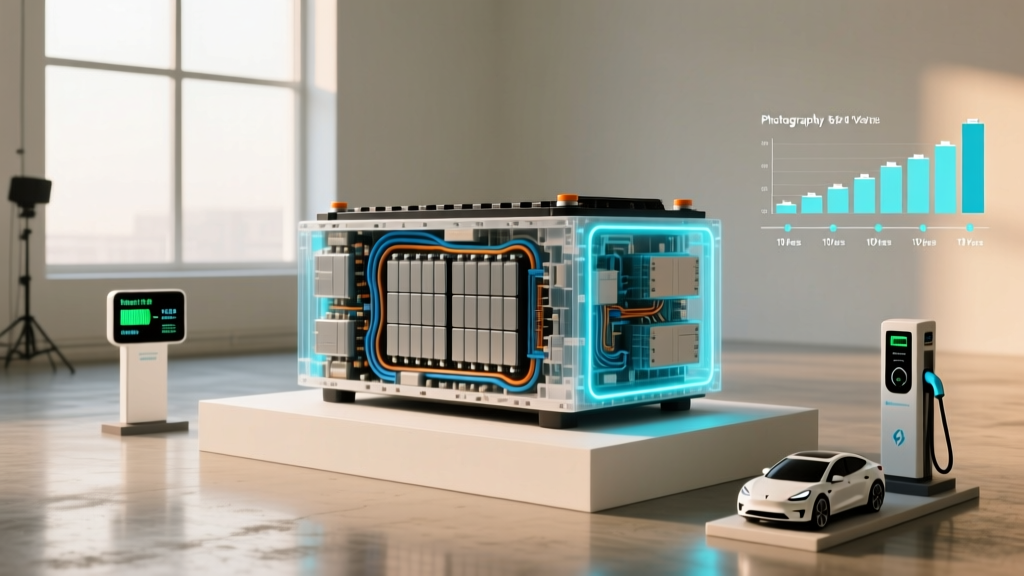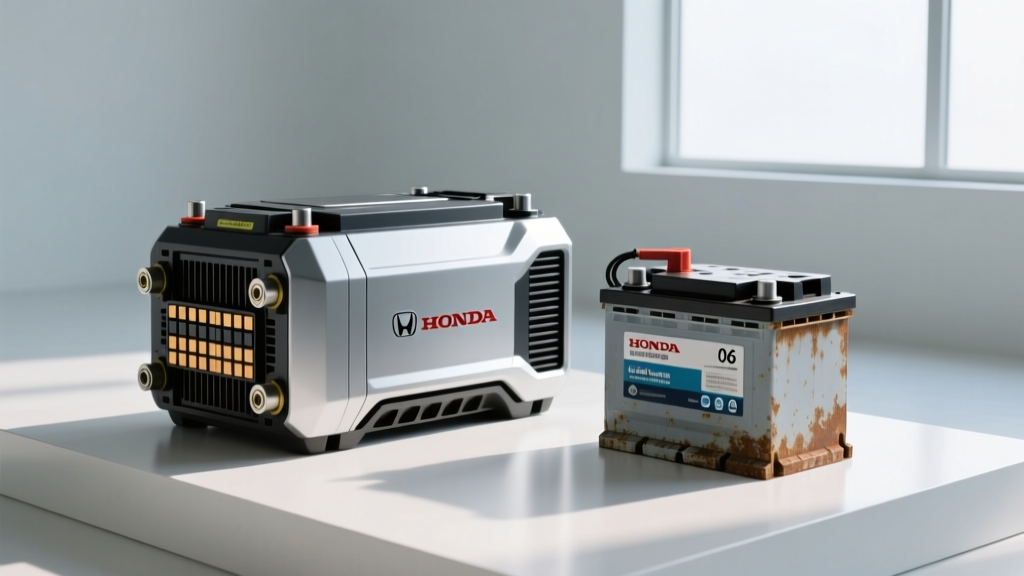
If you've ever searched for a 06 Honda Odyssey battery, you were probably dealing with a familiar scenario: a dead 12-volt lead-acid battery on a cold morning, a $150-$220 replacement at an auto parts store, and ten minutes of wrench work in the driveway. That's the world most drivers know. But if you're now considering an electric vehicle — or already own one — the "battery" conversation changes entirely. EVs rely on high-voltage lithium-ion traction batteries that store 60 to 120+ kWh of energy, cost thousands to replace, and are engineered to last the life of the vehicle. Understanding the difference isn't just academic; it's the single biggest factor in EV ownership confidence.
This guide breaks down EV traction battery technology from a 2026 ownership perspective: chemistry trade-offs, real degradation data, warranty coverage, replacement economics, and the daily habits that maximize longevity. We'll also address why that 06 Honda Odyssey battery comparison is actually a useful mental model for understanding what makes EV batteries fundamentally different.
The 12V Auxiliary Battery vs. the High-Voltage Traction Battery
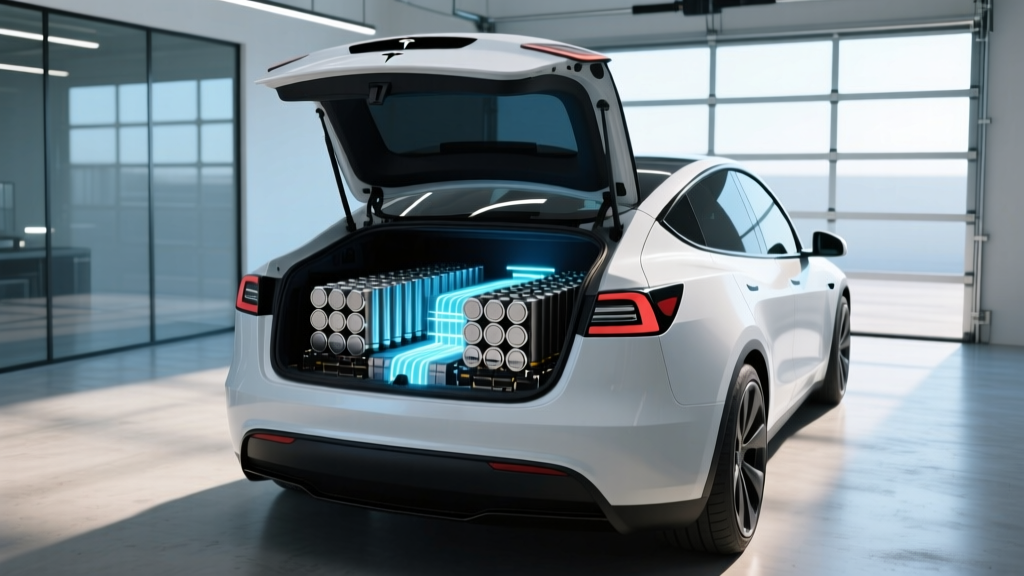
Let's clear up the most common confusion first. Every EV sold in the US still carries a conventional 12V auxiliary battery — similar in concept to the one in your 2006 Honda Odyssey — that powers lights, infotainment, door locks, and the computers that manage the main battery. When EV owners talk about "the battery," they mean the high-voltage traction battery: a massive lithium-ion pack (typically 400V or 800V architecture) that stores the energy to actually drive the wheels.
The 12V battery in a 2006 Honda Odyssey is a Group 24F or 35 lead-acid unit rated around 550-650 cold cranking amps (CCA). It stores roughly 0.7 kWh of energy, weighs about 35-40 lbs, and needs replacement every 3-5 years. An EV traction battery, by contrast, stores 60-130 kWh, weighs 800-1,500 lbs, is liquid-cooled, and is warrantied for 8 years/100,000 miles minimum by federal mandate. The two batteries share a name and almost nothing else.
EV Battery Chemistry: LFP vs. NMC vs. NCA
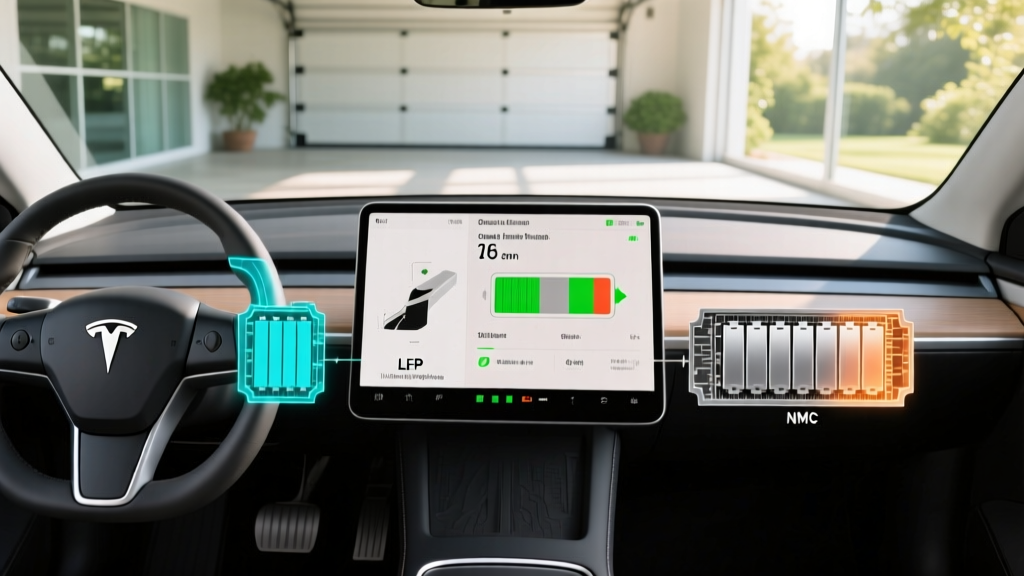
Not all lithium-ion batteries are built the same. The cathode chemistry determines energy density, cycle life, cost, and cold-weather behavior. In 2026, two chemistries dominate the US EV market: NMC (nickel manganese cobalt) and LFP (lithium iron phosphate). Tesla also uses NCA (nickel cobalt aluminum) in some models, which behaves similarly to NMC from an owner's perspective.
Here's how they compare on the metrics that matter to buyers:
| Attribute | LFP (Lithium Iron Phosphate) | NMC / NCA |
|---|---|---|
| Energy Density | Lower (~160-180 Wh/kg cell-level) | Higher (~220-280 Wh/kg cell-level) |
| Typical Range Impact | Slightly less range for same pack weight | More range per kg; preferred for long-range trims |
| Cycle Life | 3,000-5,000+ full cycles | 1,500-2,500 full cycles |
| Cold-Weather Performance | More range loss in freezing temps (~35-40% loss at 20°F) | Better cold retention (~25-30% loss at 20°F) |
| Charging to 100% Daily | Recommended — LFP benefits from regular full charges | Not recommended — 80% daily limit preserves longevity |
| Cobalt Content | Zero cobalt | Contains cobalt (supply chain/sourcing concern) |
| Cost per kWh | Lower (~$80-100/kWh at pack level) | Higher (~$110-140/kWh at pack level) |
| Common In (2026) | Tesla Model 3/Y RWD, Ford Mustang Mach-E Select, Rivian Standard | Hyundai Ioniq 5/6, Tesla Long Range, BMW i4/iX, most luxury EVs |
The practical takeaway: If you can charge at home daily and don't need maximum range, LFP offers superior longevity and lower cost. If you need 320+ miles of EPA range, tow frequently, or live in a cold climate, NMC/NCA delivers better real-world performance. Neither is universally "better" — the right choice depends on your driving pattern.
How Long Do EV Batteries Actually Last? Degradation Data
The fear that an EV battery will "die" like a phone battery after two years is the most persistent myth in electric mobility. Real-world fleet data tells a different story. Lithium-ion traction batteries degrade slowly and predictably, with most modern packs retaining 85-92% of original capacity after 100,000 miles.
Here's what degradation looks like based on aggregated fleet data and manufacturer reports:
- Year 1 / 15,000 mi: ~2-4% capacity loss (initial formation loss)
- Year 3 / 45,000 mi: ~5-8% total loss
- Year 5 / 75,000 mi: ~7-11% total loss
- Year 8 / 120,000 mi: ~10-15% total loss
- Year 10 / 150,000 mi: ~12-18% total loss
Sources: Geotab fleet study (2024 update), Recurrent Auto battery health reports, Tesla Impact Report 2024.
The degradation curve is non-linear. Most capacity loss occurs in the first 12-24 months (the "formation" period), after which the curve flattens significantly. A 2024 study by Geotab analyzing over 10,000 EVs found an average annual degradation rate of just 1.8% after the first year. At that rate, a 300-mile EPA range EV would still offer roughly 255-270 miles after 10 years.
Compare that to the 06 Honda Odyssey battery paradigm: a lead-acid 12V battery delivers declining cranking power from day one, often fails catastrophically (stranding you), and requires replacement every 3-5 years at $150-$220 per cycle. The EV traction battery is engineered as a lifetime component, not a consumable.
Federal Warranty Mandate: What's Covered and for How Long
The US federal government mandates minimum battery warranty coverage under the Clean Air Act provisions that California's ZEV program extended. Every EV sold new in the US must carry a battery warranty of at least 8 years or 100,000 miles (whichever comes first). In California and states that follow CARB rules (including New York, Massachusetts, Colorado, and others as of 2026), the mandate extends to 10 years or 150,000 miles.
| Manufacturer | Warranty Period | Capacity Threshold | Notes |
|---|---|---|---|
| Tesla (Model 3/Y RWD — LFP) | 8 yr / 100,000 mi | 70% retention | LFP pack; unlimited Supercharging doesn't void |
| Tesla (Model 3/Y LR — NMC) | 8 yr / 120,000 mi | 70% retention | Long Range/Performance trims |
| Hyundai / Kia | 10 yr / 100,000 mi | 70% retention | Among the longest coverage in the industry |
| Ford (Mustang Mach-E, F-150 Lightning) | 8 yr / 100,000 mi | 70% retention | Transferable to second owner |
| GM (Ultium-based: Equinox EV, Blazer EV, Silverado EV) | 8 yr / 100,000 mi | 70% retention | Ultium packs modular; partial replacement possible |
| BMW | 8 yr / 100,000 mi | 70% retention | Some models offer extended battery lease programs |
| Rivian | 8 yr / 175,000 mi | 70% retention | 175k mi mileage cap is industry-leading |
What triggers a warranty claim? If your battery's usable capacity drops below the stated threshold (typically 70% of original) within the warranty period, the manufacturer must repair or replace it at no cost. In practice, this is rare. According to Recurrent Auto, fewer than 1.5% of EVs in their study cohort required a battery warranty claim. Most degradation is gradual and stays well above the threshold.
Warranties typically do not cover damage from accidents, flooding, improper modifications, or using non-approved charging equipment. They also don't cover normal degradation above the threshold — a battery at 72% capacity at 90,000 miles is technically "within spec" even though range is noticeably reduced.
EV Battery Replacement Cost: The Numbers Nobody Likes
When an EV battery does need replacement outside of warranty — typically at 150,000+ miles, if ever — the cost is significant. This is the number that fuels range-anxiety headlines, but context matters enormously.
| Vehicle / Pack Size | Battery Capacity | Estimated Replacement Cost | When Typically Needed |
|---|---|---|---|
| Nissan Leaf (40 kWh) | 40 kWh | $6,500 - $9,000 | 150,000+ mi (air-cooled; faster degradation) |
| Tesla Model 3 RWD (LFP, ~60 kWh) | ~60 kWh | $8,000 - $12,000 | 200,000+ mi (rare; LFP longevity) |
| Tesla Model Y LR (~82 kWh NMC) | ~82 kWh | $12,000 - $16,000 | 200,000+ mi |
| Hyundai Ioniq 5 (~77.4 kWh) | 77.4 kWh | $11,000 - $15,000 | 175,000+ mi |
| Ford F-150 Lightning Ext. Range (~131 kWh) | ~131 kWh | $18,000 - $25,000 | 200,000+ mi |
| GMC Hummer EV (~212 kWh) | ~212 kWh | $30,000 - $40,000 | 150,000+ mi (largest consumer pack) |
A few important realities temper these numbers:
- Most EVs never need a full battery replacement. Data from Recurrent Auto and Geotab shows that catastrophic battery failure is exceedingly rare in liquid-cooled packs. The majority of EVs will be retired or totaled in an accident before their battery reaches end-of-life.
- Module-level repair is increasingly common. Manufacturers like GM (Ultium), BMW, and Hyundai design packs with replaceable modules. A single degraded or failed module can be swapped for $1,500-$4,000 rather than replacing the entire pack.
- Used and refurbished packs are a growing market. Independent EV shops now offer refurbished packs at 40-60% of new-pack cost, particularly for high-volume models like the Tesla Model 3 and Nissan Leaf.
- Cost per kWh continues to decline. Pack-level pricing has fallen from ~$200/kWh in 2020 to approximately $100-130/kWh in 2026, and is projected to drop further as LFP adoption and manufacturing scale increase.
For comparison perspective: a 2006 Honda Odyssey's engine replacement runs $4,000-$7,000 at an independent shop and is a more common failure point at high mileage than an EV battery pack is. Every powertrain has a "worst-case" cost; the EV battery's is simply more visible.
What Actually Kills an EV Battery? Five Degradation Factors
Lithium-ion batteries don't just "wear out" from use — they're stressed by specific conditions. Understanding these factors lets you add years and miles to your pack's useful life:
- Limit DC fast charging to road trips. Frequent use of 150+ kW DC fast chargers accelerates degradation by 1-3% over the battery's life compared to primarily Level 2 home charging. The heat generated during high-C-rate charging stresses cells. If you can charge at home on a Level 2 (7-11 kW) overnight, do it.
- Avoid sustained 100% or 0% State of Charge. For NMC/NCA batteries, set your daily charge limit to 80% and only charge to 100% when you need the full range for a trip. LFP batteries are the exception — Tesla and Ford recommend periodic 100% charges to recalibrate the BMS. Never leave any EV sitting at 0% for extended periods.
- Precondition before fast charging. Modern EVs automatically precondition the battery (heat it to optimal temperature) when you navigate to a DC fast charger. This protects the cells and enables peak charge rates. In cold weather, preconditioning can be the difference between a 40 kW and a 200 kW charge rate.
- Park in shade or a garage when possible. Prolonged exposure to extreme heat (above 95°F ambient, especially with a high state of charge) accelerates calendar degradation. A battery sitting at 100% SoC in a 110°F Arizona parking lot is under maximum stress.
- Use scheduled charging. Set your EV to finish charging right before you leave in the morning rather than reaching full charge at 2 AM and sitting at that state for 6 hours. Minimizing time at high SoC reduces calendar aging.
Monitoring Battery Health: How to Check Your State of Health (SoH)
Unlike the 06 Honda Odyssey battery, which gives you almost no warning before failure (beyond slow cranking), EV batteries are continuously monitored by a sophisticated Battery Management System (BMS). Here's how you can access that data:
In-vehicle displays: Most EVs show estimated range, energy consumption (kWh/100mi or Wh/mi), and sometimes a battery health indicator in the settings menu. Tesla's app shows rated range vs. original, which serves as a proxy for SoH.
OBD-II diagnostic tools: Devices like the OBDLink MX+ paired with apps such as EV Health or LeafSpy (for Nissan Leaf) can read the BMS directly and report State of Health as a percentage. This is the most accurate consumer-accessible method.
Third-party battery reports: Services like Recurrent and some dealer service departments can generate battery health reports that compare your pack's current capacity to its original specification. These are increasingly used in used-EV transactions to establish battery condition, similar to a Carfax report.
Manufacturer apps: Hyundai, Kia, Ford, and BMW offer battery health status in their connected-car apps. If degradation approaches the warranty threshold, the app typically flags a recommendation to visit a service center.
As a general benchmark: if your EV's real-world range has dropped more than 15% from when it was new, and the vehicle is within the warranty period, it's worth scheduling a diagnostic check. That level of loss is unusual for a liquid-cooled pack under 100,000 miles.
What's Next: Solid-State Batteries and Silicon Anodes
If you follow EV news, you've seen headlines about solid-state batteries promising 600-mile range and 10-minute charging. Here's the realistic 2026 status:
Solid-state batteries replace the liquid electrolyte with a solid material (ceramic, sulfide, or polymer), enabling lithium-metal anodes that dramatically increase energy density. Toyota has announced limited production of solid-state EVs for 2027-2028, targeting 750 km (~465 miles) of range with 10-minute 10-80% charging. Samsung SDI and QuantumScape are also advancing prototypes. However, manufacturing scale, cost (currently 3-5x conventional lithium-ion per kWh), and cycle-life durability remain unsolved challenges for mass-market vehicles. Expect solid-state to debut in limited luxury or performance applications first, with mainstream availability likely in the 2030-2032 timeframe.
Silicon anode technology is closer to market. Companies like Sila Nanotechnologies and Group14 are supplying silicon-dominant anode materials that increase energy density by 20-40% over conventional graphite anodes. The Mercedes-Benz G-Class electric (2025) and select 2026 models from GM's Ultium lineup use silicon-anode cells. This is an incremental but meaningful improvement — not a revolution, but a real step forward in range-per-kg that's available now in limited applications.
Sodium-ion batteries are emerging as a low-cost alternative for entry-level EVs. CATL and BYD are producing sodium-ion packs at roughly $50-60/kWh — significantly cheaper than LFP. The trade-off is lower energy density (~120-140 Wh/kg), making them suitable for city EVs with 150-200 miles of range but not long-range applications. Expect these in budget EVs from Chinese manufacturers and potentially in US-market entry-level models by 2027-2028.
None of these technologies change the current buying equation. Today's lithium-ion batteries — LFP and NMC — are mature, well-understood, and backed by real-world data showing they outlast the vehicles they power in the vast majority of cases.
Frequently Asked Questions
How long do EV batteries last in years and miles?
Most modern liquid-cooled EV batteries retain 85-90% of their original capacity after 100,000 miles and 80-88% after 150,000 miles. In calendar years, that translates to reliable operation for 12-15 years for the average driver (12,000-15,000 miles/year). Fleet data from Geotab and Recurrent Auto shows that fewer than 2% of EV batteries require replacement before 150,000 miles. The battery is one of the most durable components in the vehicle.
How much does an EV battery cost to replace?
Full pack replacement costs range from approximately $6,500 for a small pack (Nissan Leaf 40 kWh) to $25,000-$40,000 for very large packs (Ford F-150 Lightning Extended Range, GMC Hummer EV). Most mainstream EVs (Tesla Model 3/Y, Hyundai Ioniq 5, Ford Mustang Mach-E) fall in the $8,000-$16,000 range. However, full replacement is rarely needed — module-level repair ($1,500-$4,000) handles most issues, and the vast majority of EVs are retired before their battery reaches end-of-life.
What does the EV battery warranty cover?
Federal law mandates a minimum of 8 years/100,000 miles of battery warranty coverage. CARB states extend this to 10 years/150,000 miles. The warranty covers capacity loss below a specified threshold (typically 70% of original capacity) and manufacturing defects. It does not cover damage from accidents, flooding, unauthorized modifications, or normal degradation above the threshold. Check your specific manufacturer's terms, as some (Rivian, Hyundai/Kia) offer coverage beyond the federal minimum.
LFP vs NMC — which battery chemistry is better for me?
Choose LFP if: you can charge at home daily, you drive less than 250 miles per day, you want maximum cycle life (3,000-5,000 cycles), you want to charge to 100% without worry, and cost is a priority. Choose NMC/NCA if: you need 300+ miles of EPA range, you live in a cold climate (better cold-weather retention), you tow frequently, or you regularly take long road trips where energy density matters. Neither is objectively superior — the right choice matches your driving pattern.
Can I jump-start an EV like I would a 06 Honda Odyssey?
You can jump-start the 12V auxiliary system of an EV using the same procedure as a gas car — the 12V battery still powers the computers and contactors that connect the high-voltage pack. But you cannot "jump" a depleted traction battery. If the main battery is at 0%, the vehicle must be plugged into a charger or towed to one. This is a key difference from the 06 Honda Odyssey battery world, where a dead battery was a $15 fix and a set of jumper cables.
Does fast charging really damage my EV battery?
Exclusively using DC fast charging (150+ kW) does accelerate degradation compared to primarily Level 2 home charging — but the effect is modest. Studies show an additional 2-4% capacity loss over 100,000 miles for vehicles that fast-charge daily versus those that use Level 2. Modern thermal management systems precondition the battery and taper charge rates to protect cells. Occasional fast charging on road trips has negligible impact; it's daily fast-charging as your only charging method that adds measurable wear.