The single biggest concern prospective EV buyers raise isn't range or performance — it's the battery. How long will it last? What happens when it degrades? And how should you charge it to make it last as long as possible? If you're figuring out how to charge a battery car for the first time, the answers depend heavily on the chemistry inside your pack, your daily habits, and the climate where you live.
This guide breaks down the data behind EV battery longevity: chemistry trade-offs, real-world degradation curves, warranty protections, replacement economics, and the specific charging behaviors that preserve — or destroy — your pack's State of Health (SoH) over a decade of ownership.
LFP vs NMC: Which Battery Chemistry Should You Choose?
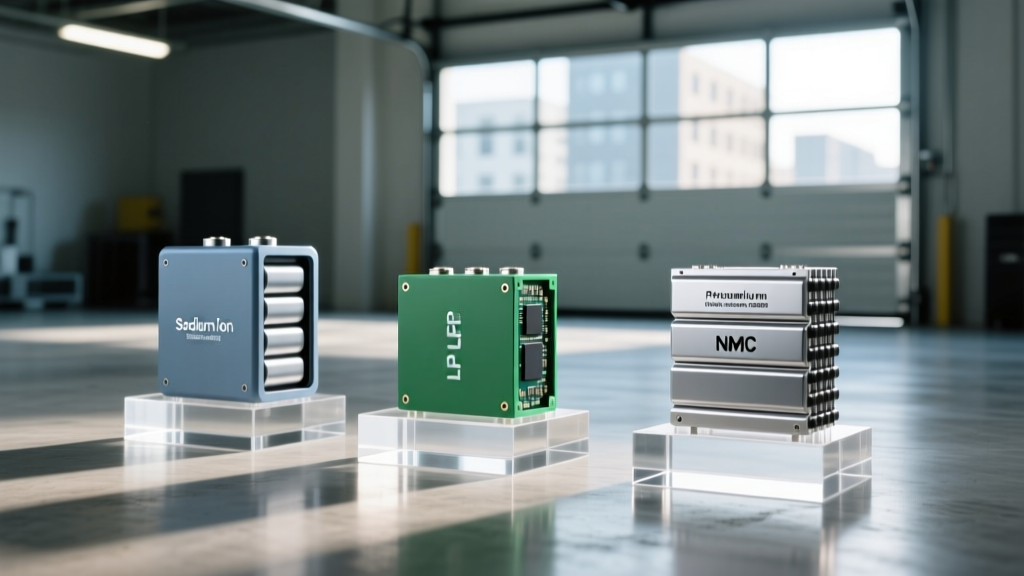
Not all EV batteries are built the same. The two dominant lithium-ion chemistries in 2026 passenger EVs are LFP (lithium iron phosphate) and NMC (nickel manganese cobalt) / NCA (nickel cobalt aluminum). Your choice between them affects range, longevity, cold-weather performance, and price.
LFP cells use iron and phosphate in the cathode. They sacrifice some energy density — meaning a heavier, physically larger pack for the same kWh — but gain substantially in cycle life, thermal stability, and cost. Tesla uses LFP in the Model 3 and Model Y Standard Range trims. BYD's entire passenger lineup is LFP-based. Ford has adopted LFP for the base Mustang Mach-E and F-150 Lightning Pro.
NMC/NCA cells pack more energy into a smaller, lighter footprint, which is why they're standard in long-range and performance trims (Tesla Long Range, Hyundai Ioniq 5 Long Range, Rivian R1S/R1T, BMW iX). The trade-off is a somewhat shorter cycle life and greater sensitivity to sustained high State of Charge (SoC).
| Attribute | LFP (Lithium Iron Phosphate) | NMC / NCA (Nickel-based) |
|---|---|---|
| Energy Density | ~160–180 Wh/kg (lower) | ~220–260 Wh/kg (higher) |
| Typical Cycle Life | 3,000–5,000+ cycles to 80% SoH | 1,500–2,500 cycles to 80% SoH |
| Cold-Weather Performance | Greater range loss below 32°F; slower charge acceptance | Better low-temp discharge; preconditioning helps |
| Daily Charging to 100% | Recommended — LFP needs periodic full charges for BMS calibration | Not recommended daily — 80% daily limit advised |
| Thermal Stability | Excellent — very resistant to thermal runaway | Good with active thermal management |
| Cost (cell-level) | ~$70–90/kWh (lower) | ~$100–130/kWh (higher) |
| Common Vehicles (2026) | Tesla Model 3/Y SR, BYD Seal, Ford Mach-E SR, F-150 Lightning Pro | Tesla LR, Ioniq 5/6 LR, Rivian R1S, BMW iX, Chevy Silverado EV |
Which is better? Neither is universally superior. If you commute short distances, charge at home nightly, and want a pack that will likely outlast the vehicle, LFP is the longevity champion. If you need maximum range per charge, tow frequently, or drive in extreme cold regularly, NMC/NCA's energy density and cold-weather edge make it the pragmatic pick. The right chemistry depends on your driving profile — not on which sounds more advanced.
How Long Do EV Batteries Actually Last?
The short answer: far longer than most buyers assume. Data from fleet operators, manufacturer warranty claims, and independent testing consistently shows that modern liquid-cooled EV batteries lose roughly 5–10% of original capacity over the first 100,000 miles, with degradation slowing substantially after the initial break-in period.
Here's what real-world data points look like across popular platforms:
- Tesla Model 3/Y (NMC Long Range): Tesla's 2025 Impact Report states the fleet averages approximately 12% degradation at 200,000 miles, with the curve flattening significantly after 50,000 miles.
- Tesla Model 3 (LFP Standard Range): Independent fleet data from Recurrent shows LFP packs retaining 92–95% SoH at 100,000 miles under normal use.
- Hyundai Ioniq 5 (NMC 77.4 kWh): Owner-reported data on Ioniq forums and Recurrent's dataset indicate ~6–8% loss at 80,000 miles with mixed Level 2 and DC fast charging.
- Chevrolet Bolt EV/EUV (NMC 65 kWh): Post-recall replacement packs show <5% degradation at 60,000 miles — though the Bolt lacks active liquid cooling, making it more sensitive to hot-climate degradation over the long term.
- Ford F-150 Lightning (extended range NMC): Fleet data from commercial operators shows ~8% loss at 90,000 miles, with heavier degradation in trucks used for frequent DC fast charging and towing.
For context, a 10% loss on a 300-mile EPA-rated vehicle means you'd still have approximately 270 miles of range — more than adequate for the vast majority of drivers. Most EV batteries will outlast the vehicle's body, suspension, and interior before reaching end-of-life capacity thresholds.
What Does the EV Battery Warranty Actually Cover?
Federal law mandates that EV battery warranties cover a minimum of 8 years / 100,000 miles (10 years / 150,000 miles in California Air Resources Board states). But the details — specifically the capacity retention threshold — vary by manufacturer and matter enormously.
| Manufacturer | Warranty Term | Capacity Retention Threshold | Notes |
|---|---|---|---|
| Tesla (Model 3/Y) | 8 yr / 120,000 mi (SR: 100,000 mi) | 70% | SR/LFP warranty is 8yr/100k; LR and Performance get 120k |
| Hyundai / Kia | 10 yr / 100,000 mi | 70% | Among the longest terms in the industry |
| Ford | 8 yr / 100,000 mi | 70% | Covers battery components and capacity loss |
| General Motors (Ultium) | 8 yr / 100,000 mi | 70% (some trims 60% for Bolt legacy) | Varies by platform — check specific model |
| BMW | 8 yr / 100,000 mi | 70% | Transferable to second owners |
| Rivian | 8 yr / 175,000 mi | 70% | Highest mileage threshold among consumer EVs |
| Volkswagen (MEB platform) | 8 yr / 100,000 mi | 70% | Standard across ID.4, ID.7 |
The critical number is the 70% capacity retention threshold. If your battery drops below 70% of its original capacity within the warranty period, the manufacturer must repair or replace it at no cost. In practice, warranty claims for capacity loss remain rare — most degradation stays well above this floor under normal ownership. According to fueleconomy.gov, battery degradation in modern liquid-cooled packs is gradual and typically stays within warranty bounds for the full term.
How Much Does an EV Battery Replacement Cost?
This is the question that generates the most anxiety — and the most misinformation. Let's put actual numbers to it.
| Vehicle | Battery Size | Chemistry | Estimated Replacement Cost (parts + labor) |
|---|---|---|---|
| Tesla Model 3 Standard Range | ~60 kWh | LFP | $10,000–$14,000 |
| Tesla Model Y Long Range | ~82 kWh | NMC | $14,000–$18,000 |
| Hyundai Ioniq 5 Long Range | 77.4 kWh | NMC | $13,000–$17,000 |
| Ford F-150 Lightning Extended Range | ~131 kWh | NMC | $22,000–$30,000 |
| Chevrolet Silverado EV | ~200 kWh | NMC (Ultium) | $30,000–$40,000 |
| BMW iX xDrive50 | ~105 kWh usable | NMC | $18,000–$25,000 |
When is replacement actually needed? Almost never during typical first-owner tenure. Battery replacement becomes a realistic conversation only when:
- A pack suffers a manufacturing defect (covered under warranty)
- Physical damage occurs from road debris or collision (covered by insurance)
- Capacity drops below usable levels after 200,000+ miles — at which point the vehicle is often 12–15 years old and the replacement decision becomes an economic calculation against the car's residual value
Cell-level pricing has continued to decline, dropping below $100/kWh for NMC and below $70/kWh for LFP at the manufacturing level by 2025–2026. Installed replacement costs remain higher due to labor, diagnostics, and dealer markup, but the trajectory favors future owners. Module-level repair (replacing individual degraded modules rather than the entire pack) is increasingly available and can cut costs by 50–70% on platforms that support it, such as GM's Ultium and VW's MEB.
How to Charge a Battery Car for Maximum Longevity
How you charge matters more than how often you charge. The following behaviors have the strongest evidence behind them for preserving State of Health over hundreds of thousands of miles:
- Set a daily charge limit of 80% for NMC/NCA packs. Sustained time at 100% SoC accelerates calendar degradation. Use your vehicle's scheduled charging or charge-limit feature (available in Tesla, Hyundai, Ford, BMW, and most 2026 EVs).
- LFP owners: charge to 100% at least once per week. LFP's flat voltage curve makes SoC estimation difficult for the battery management system (BMS). Periodic full charges recalibrate the BMS and prevent range-estimation drift.
- Minimize DC fast charging when possible. DCFC sessions generate significant heat. Occasional road-trip fast charging is fine — the thermal management system handles it. But daily DCFC as your primary charging method accelerates degradation. Level 2 home charging (7–11 kW) is the longevity sweet spot.
- Avoid leaving the vehicle at very low SoC (<10%) for extended periods. Deep discharge stresses lithium-ion cells. If you're traveling and leaving the car parked for weeks, set the charge limit to ~50% and leave it plugged in if possible.
- Precondition the battery before fast charging. Most 2026 EVs automatically precondition when you navigate to a DC fast charger. This warms the pack to the optimal temperature for charge acceptance, reducing stress and improving charge speed. If your vehicle offers manual preconditioning (Tesla, Porsche, Hyundai), use it in cold weather.
- Park in shade or a garage during extreme heat. Sustained high ambient temperatures (95°F+) accelerate calendar degradation, especially at high SoC. A garage or shaded spot meaningfully reduces thermal load on the pack.
- Don't obsess over regen braking settings. Regenerative braking does not meaningfully affect battery degradation — the currents involved are well within the pack's design tolerances.
The single most impactful habit is simple: install a Level 2 home charger and charge to 80% overnight (or 100% for LFP). This eliminates daily DCFC dependency and keeps the pack in its ideal SoC and temperature window. For a detailed breakdown of Level 2 installation costs and electrical requirements, see our home charging installation guide.
How to Monitor Your Battery's State of Health (SoH)
State of Health (SoH) is the percentage of your battery's original capacity that remains usable. A new EV starts at 100% SoH; a pack at 90% SoH holds 90% of its original kWh.
Here's how to check it across major platforms:
- Tesla: No native SoH readout in the app. Third-party tools like TeslaFi or Scan My Tesla (via OBD-II adapter) can estimate SoH by comparing actual energy delivered during a full charge against original capacity. Some service centers will run a battery health report on request.
- Hyundai / Kia: The infotainment system's EV diagnostics menu (on 2024+ models) displays a battery health percentage. The dealer can also pull a detailed SoH report via the KDS diagnostic tool.
- Ford: The FordPass app shows estimated battery health on Lightning and Mach-E models. Dealership diagnostics provide a more granular module-by-module report.
- BMW: The iDrive system includes a battery health indicator under the EV settings. BMW service centers can provide a certified SoH report — useful for resale.
- OBD-II third-party tools: Apps like OBD2 Scanner paired with compatible adapters (e.g., OBDLink MX+) can read battery management system data on many EVs, including individual cell voltages and pack-level SoH estimates.
For buyers considering a used EV, requesting a dealer SoH report before purchase is the single most valuable due-diligence step. A pack showing 94%+ SoH at 50,000 miles is a strong indicator of careful ownership and moderate charging habits.
Factors That Accelerate Battery Degradation
Not all miles are created equal. These conditions produce measurably faster capacity loss:
- Frequent DC fast charging: Packs charged primarily via DCFC (3–5 times per week) show 2–4% more degradation at 100,000 miles compared to packs charged primarily on Level 2, according to Recurrent's fleet analysis. The mechanism is heat-induced electrolyte decomposition at high charge rates.
- Extreme heat exposure: Vehicles regularly parked in 100°F+ environments (Arizona, Texas, Middle East markets) without garage storage show elevated calendar degradation, particularly if stored at high SoC. LFP chemistry handles heat somewhat better than NMC.
- Sustained 100% SoC storage: Leaving an NMC pack at full charge for days or weeks — especially in warm weather — is one of the fastest ways to degrade capacity. Calendar aging at 100% SoC and 86°F is roughly 4× faster than at 50% SoC and 68°F.
- Cold-weather fast charging without preconditioning: Charging a frozen pack at high power causes lithium plating on the anode — a permanent, irreversible capacity loss mechanism. Always precondition in sub-freezing temperatures.
- High-mileage towing: Trucks like the F-150 Lightning and Rivian R1T that regularly tow heavy loads at highway speeds generate sustained high-current discharge, which elevates pack temperature and accelerates wear over time.
Emerging Battery Technology: What's Coming and When
Several next-generation battery technologies are in development, but none are available in production passenger EVs as of 2026. Here's a realistic timeline:
- Solid-state batteries: Toyota has announced pilot production for limited-run vehicles in the 2027–2028 timeframe, targeting 750+ km (WLTP) range and 10-minute fast charging. Samsung SDI and QuantumScape are also progressing toward commercialization. However, cost, manufacturing scale, and durability validation remain significant hurdles. Realistic mass-market availability: 2029–2032. Do not delay a purchase waiting for solid-state.
- Silicon-dominant anodes: Companies like Sila Nanotechnologies and Group14 are supplying silicon-composite anode materials that increase energy density by 10–20% over graphite. These are beginning to appear in limited applications (e.g., Mercedes-Benz G-Class electric) but are not yet widespread. Expect broader adoption in 2027–2029 model-year vehicles.
- Sodium-ion batteries: CATL and BYD have begun deploying sodium-ion cells in low-cost Chinese-market EVs. Energy density is lower than LFP, making them suitable for city cars and short-range applications. US-market availability remains uncertain and is likely 2028+ for any volume models.
- Structural battery packs: Tesla's 4680 cell integrated into a structural pack (used in Model Y from the Austin factory) reduces weight and parts count. This is a packaging and manufacturing innovation rather than a chemistry breakthrough, but it improves vehicle efficiency and may reduce future repair complexity.
The practical takeaway: today's LFP and NMC batteries are mature, well-understood technologies with proven longevity data. Waiting for next-generation chemistry is not a sound purchase strategy — the batteries in 2026 EVs will serve most owners reliably for 15+ years.
Frequently Asked Questions
How long do EV batteries last in years and miles?
Most modern liquid-cooled EV batteries retain 85–92% of original capacity at 150,000 miles and 10–12 years of age. Many will exceed 200,000 miles before dropping below the 70% warranty threshold. LFP chemistry packs often outlast NMC in cycle-life terms, though NMC degrades more gracefully in cold climates.
How much does it cost to replace an EV battery?
Full pack replacement costs range from approximately $10,000 for a compact LFP pack (Tesla Model 3 SR) to $30,000–$40,000 for large trucks (Silverado EV, F-150 Lightning extended range). However, most batteries never need replacement during normal ownership. Module-level repair, where available, can reduce costs by 50–70%.
What does the battery warranty cover?
Federally mandated minimum coverage is 8 years / 100,000 miles (10/150,000 in CARB states). The warranty covers capacity loss below a defined threshold (typically 70% of original capacity) as well as defects in materials and workmanship. It does not cover damage from accidents, misuse, or unauthorized modifications. Check your specific manufacturer's warranty document for exact terms.
Should I charge my EV to 100% every day?
For NMC/NCA batteries: no. Set your daily charge limit to 80% and charge to 100% only when you need the full range for a trip. For LFP batteries: yes, periodic 100% charges are recommended (at least weekly) to keep the BMS calibrated. Your vehicle's charge-limit setting makes this automatic.
Does fast charging damage my EV battery?
Occasional DC fast charging (road trips, a few times per month) causes negligible additional degradation thanks to modern thermal management. Daily DCFC as your primary charging method does measurably accelerate wear — roughly 2–4% more capacity loss at 100,000 miles versus Level 2 charging. For daily use, a home Level 2 charger (7–11 kW) is the best approach for longevity.
How do I check my EV's battery health before buying used?
Request a State of Health (SoH) report from an authorized dealer. On some models (Hyundai, Kia, BMW), you can view a battery health estimate in the infotainment system. Third-party OBD-II tools can also estimate SoH by measuring actual energy delivered during a controlled charge cycle. An SoH reading above 92% at under 60,000 miles indicates a well-maintained pack.