The recent CATL Hyperstrong sodium battery deal has drawn attention across the EV industry, signaling that sodium-ion chemistry is moving from lab curiosity to commercial scale. Contemporary Amperex Technology Co. Limited (CATL), the world's largest battery manufacturer, has been scaling sodium-ion production for automotive applications, and this latest commercial agreement underscores a third viable chemistry option joining the established lithium iron phosphate (LFP) and nickel manganese cobalt (NMC/NCA) families.
For EV buyers and owners, the practical question is straightforward: how does this affect battery longevity, replacement costs, and the vehicle you'll drive in the next few years? To answer that, we need to ground the conversation in hard data on current chemistries, degradation curves, warranty structures, and real-world ownership economics.
Current EV Battery Chemistries: LFP vs NMC vs Sodium-Ion
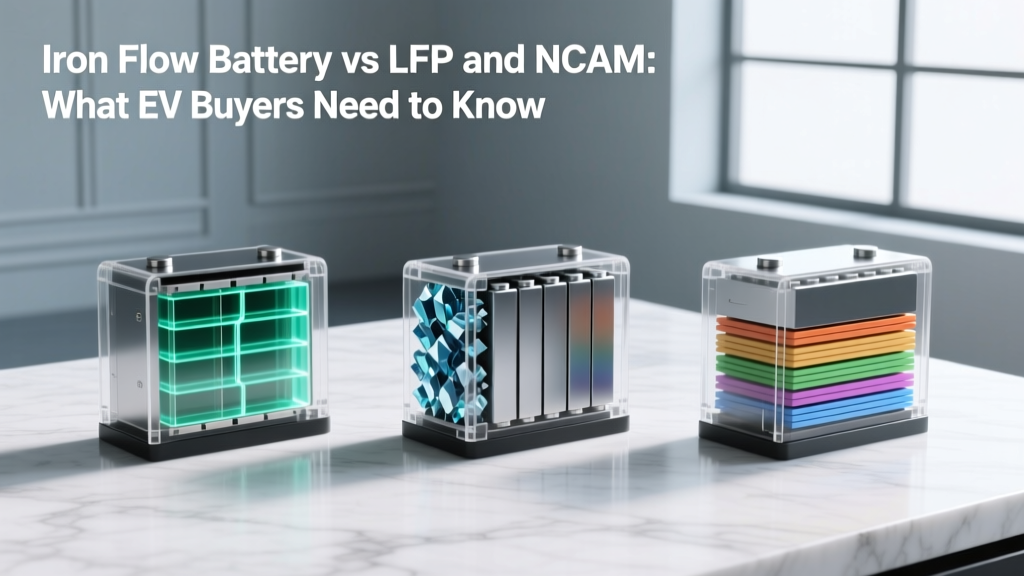
Before assessing what CATL's sodium-ion push means, it's essential to understand the trade-offs between the chemistries already on the road. Most EVs sold in the US today use either NMC/NCA or LFP cells. Sodium-ion is entering as a cost-optimized alternative, primarily targeting entry-level and urban-focused models.
| Attribute | NMC / NCA | LFP | Sodium-Ion (CATL Hyperstrong) |
|---|---|---|---|
| Energy Density (cell-level) | 250–300 Wh/kg | 160–180 Wh/kg | ~160 Wh/kg (announced) |
| Cycle Life (to 80% SoH) | 1,000–2,000 cycles | 3,000–5,000+ cycles | ~3,000+ cycles (projected) |
| Cold Performance (-20°C) | Moderate loss (~20-30%) | Significant loss (~30-40%) | Better retention (~10-15% loss claimed) |
| Raw Material Cost | High (Ni, Co) | Low (Fe, P) | Very low (Na abundant) |
| Thermal Stability | Good | Excellent | Excellent |
| Typical US Applications (2026) | Tesla Model Y LR, Hyundai Ioniq 5, Ford F-150 Lightning | Tesla Model 3 RWD, Ford Mustang Mach-E SR | Not yet in US-market vehicles |
NMC/NCA delivers the highest energy density, which translates to longer EPA range in a given pack size. That's why it dominates long-range and performance trims. LFP sacrifices some energy density but gains substantially in cycle life and thermal safety — it's the chemistry of choice for standard-range models where cost and longevity matter more than maximizing range.
Sodium-ion, as positioned by the CATL Hyperstrong sodium battery deal, targets the cost floor. Sodium is orders of magnitude more abundant than lithium, and the cell manufacturing process can leverage existing LFP production lines with modifications. The trade-off is energy density roughly comparable to LFP but with a claimed advantage in cold-weather performance — a genuine pain point for EV owners in northern climates.
How Long Do EV Batteries Actually Last?
The fear that EV batteries need replacing every few years is not supported by fleet data. Most modern EV batteries are engineered to outlast the vehicle's economic life.
Typical degradation trajectory (fleet-averaged data):
- Year 1: 2–4% capacity loss (initial formation loss)
- Years 2–5: ~1–2% per year (linear degradation phase)
- Years 6–10: ~0.5–1.5% per year (plateau phase)
- At 150,000 miles: Most NMC packs retain 85–92% State of Health (SoH); LFP packs often retain 90–95%
- At 200,000 miles: Typical SoH is 80–90% depending on chemistry and usage patterns
Sources: Recurrent Auto fleet data (2025), recurrentauto.com; Tesla Impact Report degradation curves.
LFP's superior cycle life means it degrades more slowly under repeated charge-discharge cycles, which is why Tesla and others have shifted standard-range models to LFP. NMC's higher energy density comes with a slightly steeper degradation curve, though modern thermal management systems have narrowed this gap considerably.
For sodium-ion, CATL has claimed cycle life in the range of 3,000+ cycles to 80% capacity retention — comparable to LFP. However, independent long-term fleet data does not yet exist for automotive sodium-ion packs, since the technology has only recently entered volume production in China. Treat projected longevity figures as preliminary until verified by third-party testing.
Battery Warranty Terms: What's Actually Covered
Federal law mandates a minimum 8-year/100,000-mile warranty on EV battery packs for emissions-related compliance, and most manufacturers meet or exceed this baseline. Here's how major warranties compare:
| Manufacturer | Warranty Period | Mileage Cap | Capacity Retention Threshold |
|---|---|---|---|
| Tesla (Model 3/Y LFP) | 8 years | 120,000 miles | 70% |
| Tesla (Model 3/Y NMC LR) | 8 years | 120,000 miles | 70% |
| Hyundai / Kia | 10 years | 100,000 miles | 70% |
| Ford (Mach-E, F-150 Lightning) | 8 years | 100,000 miles | 70% |
| GM (Ultium platform) | 8 years | 100,000 miles | 70% |
| Volkswagen (ID.4) | 8 years | 100,000 miles | 70% |
The critical detail is the retention threshold. A warranty guaranteeing 70% capacity over 8 years means the manufacturer will replace or repair the pack only if it degrades below 70% of original capacity within that window. Given the degradation data above, most packs never approach this threshold under normal use — warranty claims are statistically rare and typically involve defective cells or thermal management failures, not gradual wear.
EV Battery Replacement Costs: The Real Numbers
When a pack does need replacement outside warranty — usually due to physical damage, manufacturing defect discovery, or extreme high-mileage degradation — costs are substantial but declining.
| Vehicle / Pack Size | Chemistry | Replacement Cost (Parts + Labor) | Typical Trigger |
|---|---|---|---|
| Tesla Model 3 RWD (~60 kWh) | LFP | $12,000–$16,000 | Out-of-warranty defect, collision |
| Tesla Model Y LR (~82 kWh) | NMC | $15,000–$20,000 | Out-of-warranty defect, collision |
| Hyundai Ioniq 5 (~77.4 kWh) | NMC | $14,000–$18,000 | Cell imbalance, coolant intrusion |
| Ford F-150 Lightning Ext. (~131 kWh) | NMC | $22,000–$30,000 | Collision damage, rare thermal event |
| Chevrolet Bolt EV (~65 kWh) | NMC | $14,000–$16,000 | Recall-related (2022 battery replacement program) |
Context matters here. According to data from the Insurance Information Institute, the average age of vehicles on US roads is over 12 years. Most EV batteries will never need replacement during typical ownership. The vehicles most likely to face out-of-warranty replacement are high-mileage fleet vehicles or those with collision damage — not the average commuter car.
If sodium-ion chemistry reaches US-market vehicles, the cost trajectory should be favorable. Sodium raw materials are dramatically cheaper than lithium, and CATL's manufacturing scale suggests cell-level costs could undercut LFP by 20–30% at volume. That would translate to lower pack replacement costs and potentially lower vehicle MSRP for entry-level models.
Factors That Accelerate or Slow Battery Degradation
Battery longevity is not purely a function of time — usage patterns materially affect how quickly capacity declines.
Habits that preserve battery health:
- Daily charging to 80% (NMC/NCA): Keeping State of Charge (SoC) between 20–80% for daily use reduces stress on nickel-based cells. LFP can be charged to 100% regularly without significant penalty — Tesla recommends periodic 100% charges for LFP to support battery management system (BMS) calibration.
- Minimize DC fast charging frequency: Occasional fast charging is fine; daily reliance on 150+ kW DCFC accelerates degradation by generating sustained high temperatures. Research from the Idaho National Laboratory showed that exclusive DCFC use increased degradation by approximately 10–15% over 50,000 miles compared to Level 2 charging.
- Precondition before fast charging: Modern EVs precondition the battery (warming it to ~30–40°C) when a DCFC stop is navigated to. This optimizes the charge curve and reduces lithium plating risk. Always use the vehicle's built-in navigation to charging stops to trigger preconditioning.
- Avoid prolonged storage at 100% or near 0%: If storing an EV for weeks, target 50% SoC. Extreme SoC at rest accelerates calendar degradation.
- Use scheduled charging: Setting your EV to finish charging just before departure minimizes time spent at high SoC.
Habits that accelerate degradation:
- Frequent charging to 100% on NMC/NCA packs for non-trip days
- Regularly depleting below 10% SoC
- Exclusive reliance on DC fast charging without Level 2 supplementation
- Parking in extreme heat (above 100°F ambient) at high SoC for extended periods
- Ignoring thermal management system warnings or coolant service intervals
How to Monitor Your Battery's State of Health
State of Health (SoH) is the percentage of original capacity your battery can still hold. A new pack is 100% SoH; a pack that can only store 85 kWh of its original 100 kWh is at 85% SoH.
Most EVs don't display SoH directly on the dashboard, but there are reliable methods to track it:
- Manufacturer apps: Tesla's app shows estimated range at 100% charge, which indirectly reflects degradation. Some Hyundai/Kia models display SoH percentage in the infotainment service menu.
- OBD-II diagnostics: Tools like the OBDLink MX+ paired with apps such as Leaf Spy (Nissan), Scan My Tesla, or Car Scanner can read BMS-reported SoH directly from the vehicle's CAN bus.
- Third-party services: Companies like Recurrent Auto offer free battery health reports by connecting to your vehicle's telematics data, providing SoH trends and comparing your pack against fleet averages.
- Dealership diagnostics: Any authorized service center can pull a battery health report during routine service visits. Request this specifically if you're approaching warranty mileage thresholds.
For used-EV buyers, a pre-purchase battery health check is essential. Request the SoH reading and compare it against the expected degradation curve for that model's chemistry and mileage. A 2022 Tesla Model 3 RWD (LFP) at 40,000 miles should show 93–97% SoH; anything below 90% warrants investigation.
What the CATL Sodium-Ion Push Means for the Market
The CATL Hyperstrong sodium battery deal is significant not because sodium-ion will replace LFP or NMC in long-range vehicles — it won't, given the energy density gap — but because it creates a viable chemistry for the most price-sensitive EV segments. In China, CATL has already begun supplying sodium-ion packs to vehicles like the Chery iCAR and Jianghuayi (JAC) models, targeting the sub-$20,000 EV market.
For the US market, sodium-ion's arrival depends on several factors:
- IRA battery sourcing rules: The §30D federal tax credit requires that battery components and critical minerals meet domestic-sourcing or free-trade-agreement thresholds. Sodium-ion's supply chain is currently China-dominant, which could complicate credit eligibility for vehicles using these cells. Check current IRS guidance on clean vehicle credits for the latest sourcing requirements.
- Energy density improvements: CATL has stated a roadmap toward 200 Wh/kg for sodium-ion cells, which would make the chemistry competitive with LFP for mid-range vehicles (250–300 mile EPA range). That milestone is projected for the late 2020s.
- US manufacturing partnerships: CATL's licensing deal with Ford for a Michigan LFP plant suggests a potential pathway for sodium-ion production in the US, though no sodium-ion facility has been announced domestically as of early 2026.
If sodium-ion reaches US-market vehicles, expect it first in urban-focused, fleet, and entry-level models where daily range requirements are modest (150–200 miles) and low purchase price is the primary purchase driver.
Emerging Battery Technologies: Realistic Timelines
Beyond sodium-ion, several next-generation technologies are in development. It's important to distinguish between announced research and commercially available products:
- Solid-state batteries: Toyota, Samsung SDI, and QuantumScape are pursuing solid-state cells that promise 350–500 Wh/kg energy density and faster charging. Toyota has announced a 2027–2028 production target, but at limited scale and likely in premium vehicles first. Expect meaningful US-market availability no earlier than 2029–2030.
- Silicon-dominant anodes: Companies like Sila Nanotechnologies and Group14 are replacing graphite anodes with silicon to boost energy density by 20–40%. These are entering production in select 2025–2026 models (e.g., Mercedes-Benz G-Class EV) but at premium pricing.
- Lithium manganese iron phosphate (LMFP): An evolution of LFP that adds manganese for ~15–20% higher energy density while retaining LFP's safety and cycle-life advantages. CATL and Gotion are scaling LMFP production, with vehicles expected in China in 2026 and potentially in the US by 2027–2028.
None of these technologies are currently available in US-market EVs at scale. Any vehicle marketed with these chemistries should be verified against manufacturer spec sheets and EPA certification data before purchase.
Frequently Asked Questions
How long do EV batteries last in years and miles?
Most modern EV batteries retain 80–90% of original capacity at 200,000 miles and 10–15 years of service. LFP chemistry typically outlasts NMC in cycle life, though both are designed to exceed the vehicle's practical lifespan. Fleet data from Recurrent Auto confirms that catastrophic battery failure is rare — under 2% of vehicles in their dataset required full pack replacement.
How much does an EV battery cost to replace?
Out-of-warranty replacement costs range from approximately $12,000 for a 60 kWh LFP pack (Tesla Model 3 RWD) to $30,000 for a 131 kWh NMC pack (F-150 Lightning Extended Range). However, most batteries never need replacement during typical ownership. Warranty coverage (8–10 years / 100,000–120,000 miles at 70% retention) handles the rare premature failures.
What does the EV battery warranty actually cover?
Manufacturer warranties guarantee that the battery will retain at least 70% of its original capacity for 8–10 years or 100,000–120,000 miles (whichever comes first). Coverage includes cell defects, BMS failures, and excessive degradation below the threshold. Warranties do not cover damage from collisions, modifications, or improper charging equipment. Check your specific manufacturer's warranty terms, as details vary.
How do I check and maximize my EV battery health?
Monitor SoH through OBD-II diagnostic tools, manufacturer apps, or third-party services like Recurrent Auto. To maximize longevity: charge NMC/NCA to 80% for daily use (LFP to 100% is fine), minimize exclusive DCFC reliance, precondition before fast charging, avoid prolonged storage at extreme SoC levels, and keep up with coolant system maintenance.
LFP vs NMC — which battery chemistry is better?
Neither is universally superior; the right choice depends on your priorities. NMC/NCA offers higher energy density (more range per kWh of pack weight), making it better for long-range and performance vehicles. LFP offers superior cycle life, better thermal stability, and lower cost, making it ideal for daily commuters who charge at home and prioritize longevity. If you drive 250+ miles regularly, NMC is the practical choice. If you drive under 150 miles daily and charge at home, LFP is likely the better long-term value.
Will sodium-ion batteries be available in US EVs?
Not in the near term. The CATL Hyperstrong sodium battery deal targets the Chinese market initially. US availability depends on IRA sourcing compliance, domestic manufacturing partnerships, and energy density improvements. Expect sodium-ion in US-market vehicles no earlier than 2028, likely in entry-level and fleet-oriented models.