The Real Story Behind Tesla's Battery Pack
When prospective buyers ask about batteries in Tesla vehicles, the conversation usually centers on two fears: how fast the pack will degrade, and what happens when it eventually needs replacement. The reality, backed by millions of cumulative fleet miles, is far less dramatic than forum speculation suggests. Tesla's current battery packs — spanning the 2026 Model 3, Model Y, Model S, Model X, and Cybertruck — use two distinct chemistries that behave differently in daily use, and understanding which one sits beneath your floor pan is the single most important factor in how you should charge, drive, and maintain your vehicle over a decade or more.
This guide breaks down exactly what Tesla is putting in its cars right now, how those packs hold up with real mileage data, what the warranty actually covers, and what replacement looks like if you ever need one. We'll also look at where battery technology is heading — with honest timelines, not vaporware promises.
LFP vs NMC/NCA: Which Chemistry Is in Your Tesla?
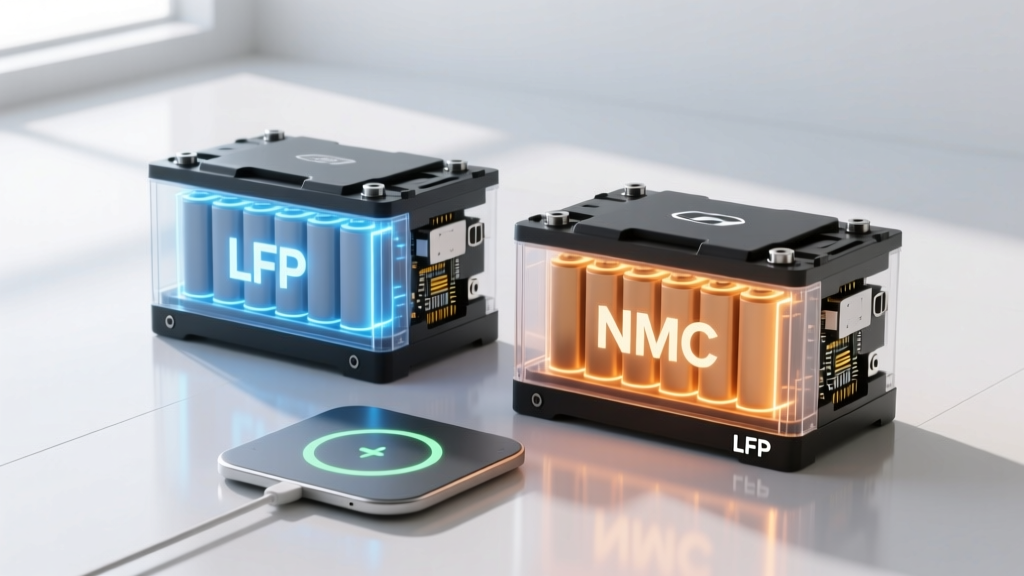
Tesla currently uses two primary battery chemistries across its lineup. Neither is universally "better" — they optimize for different priorities, and knowing which one you have changes how you should treat the pack.
| Attribute | LFP (Lithium Iron Phosphate) | NMC / NCA (Nickel Manganese Cobalt / Nickel Cobalt Aluminum) |
|---|---|---|
| Models using it | Model 3 RWD, Model Y RWD (Standard Range) | Model 3 Long Range/Performance, Model Y LR/Perf, Model S, Model X, Cybertruck |
| Typical usable capacity | 57–60 kWh | 75–100 kWh |
| Energy density | Lower (~160 Wh/kg cell-level) | Higher (~250–270 Wh/kg cell-level) |
| Cycle life (to 80% SoH) | 3,000–5,000+ cycles | 1,500–2,500 cycles |
| Cold-weather performance | Moderate range loss (~30–35% at 20°F) | Better cold retention (~20–25% loss at 20°F) |
| Recommended daily charge limit | 100% (Tesla recommends periodic full charges) | 80–90% daily; 100% for trips only |
| Cost per kWh (cell-level) | Lower (~$80–100/kWh) | Higher (~$110–140/kWh) |
| Cobalt content | Zero | Present (supply chain / ethical considerations) |
The key trade-off is straightforward: LFP trades range and cold-weather punch for exceptional longevity and a lower price tag. Tesla explicitly tells LFP owners to charge to 100% regularly — the chemistry tolerates full states of charge far better than NMC. NMC/NCA packs deliver the longest EPA ranges (up to 402 miles in the 2026 Model S Long Range) and stronger DC fast-charging curves, but they prefer living between 20% and 80% state of charge for maximum lifespan.
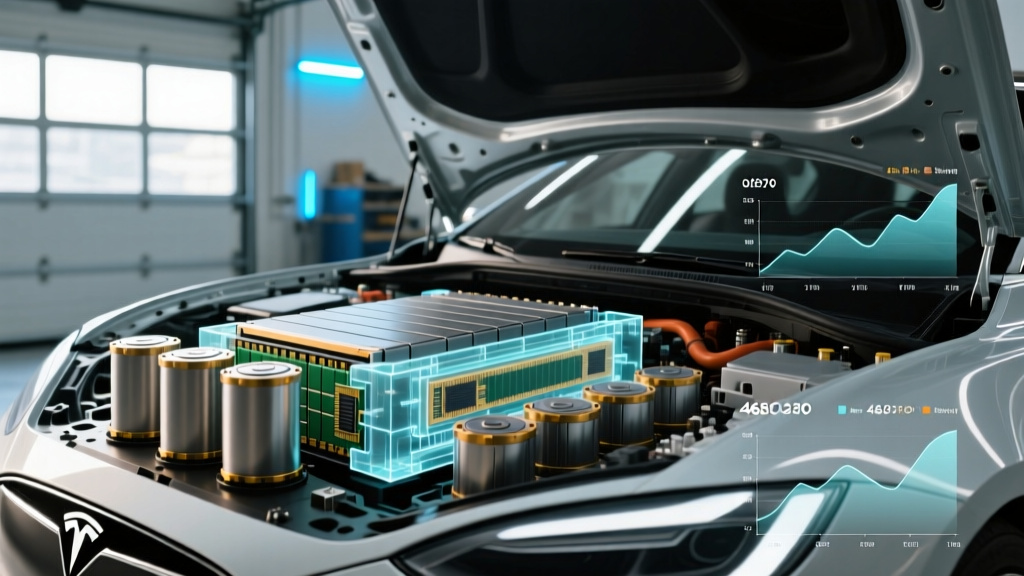
Tesla sources LFP cells primarily from CATL (prismatic form factor) and NMC/NCA cells from Panasonic (cylindrical 4680 and 2170 formats) and, for some packs, LG Energy Solution. The 4680 cell, now in volume production at Tesla's Austin and Shanghai gigafactories, uses a structural battery pack design where cells are bonded directly into the vehicle floor, improving stiffness and reducing weight but complicating individual module replacement.
How Long Do Tesla Batteries Actually Last?
Tesla publishes fleet degradation data periodically, and independent researchers have corroborated the trend. Here's what the numbers show:
Tesla Fleet Degradation Curve (NMC/NCA Packs)
- Year 1 / ~15,000 miles: ~2–4% capacity loss (initial formation drop)
- Year 3 / ~45,000 miles: ~5–7% total loss
- Year 5 / ~75,000 miles: ~7–10% total loss
- Year 8 / ~120,000 miles: ~10–14% total loss (still above warranty threshold)
- Year 10 / ~150,000 miles: ~12–17% total loss (projected from fleet extrapolation)
Source: Tesla Impact Reports; independent data from Teslanorth community fleet tracking and Recurrent Auto research.
LFP packs show even slower degradation in early data, with many Model 3 RWD owners reporting less than 5% loss at 60,000 miles. The chemistry's inherently stable olivine crystal structure resists the cathode cracking that drives NMC wear. The trade-off appears at extreme cold temperatures, where LFP's internal resistance rises more sharply, temporarily reducing available range and peak regenerative braking force.
For context, the average American drives roughly 14,000 miles per year according to the Federal Highway Administration. A Tesla NMC pack losing 12% over 150,000 miles still delivers roughly 88% of its original range — a Model Y Long Range with a 330-mile EPA rating would still offer around 290 miles at that mileage. Most packs will outlast the vehicle's useful economic life.
Tesla Battery Warranty: What's Covered and What Isn't
Tesla's battery warranty is among the strongest in the industry, but the details matter — particularly the capacity retention threshold and what constitutes a valid claim.
| Model / Trim | Warranty Period | Mileage Cap | Minimum Capacity Retention |
|---|---|---|---|
| Model 3 RWD (LFP) | 8 years | 100,000 miles | 70% |
| Model 3 Long Range / Performance | 8 years | 120,000 miles | 70% |
| Model Y RWD | 8 years | 100,000 miles | 70% |
| Model Y Long Range / Performance | 8 years | 120,000 miles | 70% |
| Model S / Model X | 8 years | 150,000 miles | 70% |
| Cybertruck (AWD / Cyberbeast) | 8 years | 120,000 miles | 70% |
The warranty covers defects in materials or workmanship and capacity loss below the 70% threshold. It does not cover:
- Gradual degradation above 70% — this is considered normal wear
- Damage from accidents, flooding, fire, or improper modifications
- Packs that have been opened or serviced by unauthorized third parties
- Cosmetic issues or minor range fluctuations from software updates
If a warranty claim is approved, Tesla may replace the pack with a new or remanufactured unit of equivalent or greater capacity. Remanufactured packs are common and typically perform identically to new ones. The warranty does not reset upon replacement — the original 8-year/mileage clock continues.
Tesla Battery Replacement Cost: What to Budget (and When)
Outside of warranty, battery replacement is the scenario Tesla owners worry about most. Here's the current cost landscape for out-of-warranty replacements in 2026:
| Model | Battery Size (Usable) | Chemistry | Parts + Labor Estimate |
|---|---|---|---|
| Model 3 RWD | ~57 kWh | LFP | $12,000–$14,000 |
| Model 3 Long Range | ~75 kWh | NMC | $14,000–$17,000 |
| Model Y Long Range | ~75 kWh | NMC | $14,000–$18,000 |
| Model S (current gen) | ~95 kWh | NMC | $18,000–$22,000 |
| Model X (current gen) | ~95 kWh | NMC | $19,000–$23,000 |
| Cybertruck | ~123 kWh | NMC (4680) | $20,000–$25,000 |
These figures include the pack, labor for removal and installation (typically 4–8 hours at a Tesla Service Center), coolant refill, and software calibration. Third-party EV repair shops may offer lower labor rates, but Tesla's structural battery packs in the 4680-equipped vehicles (Model Y Austin-built, Cybertruck) require specialized equipment and adhesives, limiting independent options.
When is replacement actually needed? In practice, very few Tesla packs require full replacement due to degradation alone. The more common scenarios are:
- Manufacturing defect — typically caught within the first 2–3 years and covered under warranty
- Physical damage — from a collision, ground strike, or flooding (insurance usually covers this)
- Cell imbalance or module failure — on older non-structural packs (pre-2021 Model S/X), individual modules can sometimes be replaced rather than the full pack, reducing cost to $3,000–$6,000
The structural 4680 packs do not allow individual module replacement — it's a full-pack swap or nothing. This is a design trade-off: the structural pack is lighter, stiffer, and cheaper to manufacture, but less serviceable. Keep this in mind when choosing between Austin-built (structural) and Fremont/Shanghai-built (modular) Model Y vehicles.
Factors That Accelerate (or Preserve) Battery Health
Battery degradation isn't purely a function of time and miles. How you charge, store, and drive your Tesla has a measurable impact on long-term state of health (SoH). Here's the hierarchy of factors, ranked by impact:
Battery Care Priorities (Highest Impact First)
- Avoid sustained high state of charge (NMC only): Storing an NMC pack at 100% for days or weeks accelerates cathode degradation. Set your daily charge limit to 80% and only charge to 100% immediately before a long trip. LFP owners can ignore this — charge to 100% freely.
- Minimize DC fast charging when possible: Frequent Supercharging (150–250 kW) generates sustained high temperatures inside cells. Tesla's thermal management system handles this well, but data from Recurrent Auto shows that vehicles that fast-charge more than 90% of the time exhibit 2–3% more degradation at 75,000 miles versus those that primarily use Level 2 home charging. Use Level 2 (7–11.5 kW) for daily needs; Supercharge for road trips.
- Avoid extreme SoC in extreme temperatures: Charging to 100% in 100°F+ heat or letting the pack sit below 10% in sub-freezing weather compounds stress. In winter, use Tesla's scheduled departure preconditioning to warm the battery before driving and charging.
- Don't let the pack sit at 0%: Deep discharge can damage cells irreversibly. If storing the vehicle for more than a week, leave it plugged in with the charge limit set to 50% (NMC) or 70–80% (LFP). Tesla's "vampire drain" typically consumes 1–3 miles of range per day while parked.
- Use regenerative braking wisely: In cold weather, Tesla limits regen power until the battery warms up. This is protective — don't override it by force-charging the battery with aggressive downhill regen when the pack is cold.
One often-overlooked factor: calendar aging. Even a garage-kept Tesla driven 3,000 miles per year will lose capacity over time due to chemical reactions inside the cells. Calendar aging accounts for roughly 1.5–2.5% loss per year regardless of mileage, and it's accelerated by high average state of charge and high ambient temperatures. This is why a 10-year-old Tesla with 40,000 miles may show similar degradation to one with 100,000 miles.
How to Check Your Tesla's Battery Health (SoH)
Tesla doesn't expose a direct "State of Health" percentage in the vehicle's touchscreen the way some competitors do. Here are the methods owners use, ranked from simplest to most precise:
Method 1: Range Comparison (Quick Estimate)
Charge your Tesla to 100% (LFP) or 90% (NMC, then extrapolate) and note the displayed estimated range. Compare this to the original EPA rating for your trim. A 2024 Model Y Long Range that originally displayed 330 miles at 100% but now shows 300 miles has experienced roughly 9% degradation. This method is approximate because displayed range is influenced by recent driving behavior and temperature.
Method 2: Tesla Service Mode (Built-in Diagnostic)
Tesla's Service Mode (accessible via the software menu on most 2023+ vehicles) includes a battery health test that measures actual usable capacity by comparing energy drawn from the pack against the vehicle's energy consumption model. This provides a more accurate SoH figure than the range display alone. Access: Controls → Software → tap the model name 3 times → enter "service" as the access code.
Method 3: Third-Party Apps and OBD-II Tools
Apps like Tessie and Stats (for Tesla) pull detailed battery telemetry via Tesla's API, including nominal full-pack capacity versus current usable capacity. These provide the closest thing to a real-time SoH percentage. Some owners also use OBD-II Bluetooth dongles paired with apps like Scan My Tesla to read raw BMS (Battery Management System) data, including individual cell voltages and internal resistance — useful for spotting a failing module before it triggers a warning.
Method 4: Tesla Service Center Diagnostic
If you suspect abnormal degradation (e.g., a sudden range drop or a warranty claim), a Tesla Service Center can run a full battery diagnostic that reads cell-level data and provides an official SoH report. This is the document used for warranty claims.
What's Next: Solid-State, Silicon Anodes, and Realistic Timelines
The next generation of battery technology is real, but timelines matter. Here's where things stand as of 2026:
Silicon-dominant anodes: Tesla's 4680 cells already incorporate a silicon-carbon composite anode, improving energy density by roughly 5–8% over pure graphite. Incremental improvements here will continue through 2027–2028. This is not future tech — it's in production now.
Semi-solid-state batteries: Companies like QuantumScape and Solid Power are shipping prototype cells to automotive partners, but volume production for consumer vehicles remains 2028–2030 at the earliest. Tesla has not announced adoption of solid-state cells for any upcoming model. These cells promise 30–40% higher energy density and faster charging, but manufacturing yield and cost remain significant hurdles.
Sodium-ion batteries: CATL and BYD are producing sodium-ion cells for lower-range, lower-cost EVs (primarily in China). These could theoretically appear in a future ultra-affordable Tesla model, but sodium-ion's lower energy density (~120 Wh/kg) makes it unsuitable for long-range applications. Watch for this in a potential sub-$25,000 Tesla compact, if it materializes.
Dry electrode manufacturing: Tesla acquired Maxwell Technologies in 2019 for its dry electrode coating process, which promises to cut cell manufacturing energy use by ~10x and reduce cost. Tesla has been gradually scaling this process for 4680 production. Full deployment across all cell lines is expected by 2027–2028 and would meaningfully reduce pack costs — potentially bringing replacement prices down over time.
None of these technologies will require current Tesla owners to feel they bought at the wrong time. Battery chemistry improvements are incremental, and today's NMC and LFP packs are already good enough to last the life of the vehicle for the vast majority of owners.
Frequently Asked Questions
How long do Tesla batteries last in real-world use?
Based on fleet data, most Tesla NMC/NCA packs retain 85–90% of original capacity at 100,000 miles (roughly 7 years of average driving). LFP packs in Model 3 RWD and Model Y RWD show even slower degradation, often retaining 93–95% at 60,000 miles. Full replacement due to degradation alone is rare — the vast majority of packs outlast the vehicle's economic life.
How much does it cost to replace a Tesla battery out of warranty?
Out-of-warranty replacement costs range from roughly $12,000 for a Model 3 RWD (LFP, ~57 kWh) to $22,000+ for a Model S or Cybertruck (95–123 kWh NMC). These costs include parts, labor, coolant, and calibration. However, actual out-of-warranty replacements due to degradation are uncommon; most replacements are covered under warranty or insurance (for physical damage).
What does Tesla's battery warranty cover?
Tesla covers the battery pack and drive unit for 8 years, with mileage caps varying by model (100,000 miles for Standard Range, 120,000 for Long Range/Performance, 150,000 for Model S/X). The warranty guarantees the pack will retain at least 70% of its original capacity. If it drops below 70% within the warranty period, Tesla will replace or refurbish the pack at no cost. The warranty does not cover gradual degradation above 70%.
Should I charge my Tesla to 100% every day?
It depends on your chemistry. If you have an LFP pack (Model 3 RWD, Model Y RWD), Tesla recommends charging to 100% at least once per week to allow the BMS to recalibrate cell voltages. If you have an NMC/NCA pack (Long Range, Performance, Model S, Model X, Cybertruck), set your daily charge limit to 80% and reserve 100% charges for right before a road trip. Sustained 100% SoC accelerates NMC degradation.
Does frequent Supercharging damage my Tesla's battery?
Tesla's thermal management system actively cools the pack during DC fast charging, keeping cell temperatures in a safe range. That said, data from Recurrent Auto shows that vehicles fast-charging more than 90% of the time show 2–3% additional degradation at 75,000 miles compared to vehicles primarily using Level 2 home charging. The practical recommendation: use Level 2 (home or workplace) for daily charging, and Supercharge freely for road trips. Occasional Supercharging will not meaningfully harm your pack.
LFP vs NMC — which Tesla battery is better for me?
Choose LFP if: you prioritize longevity over maximum range, you want the simplicity of charging to 100% daily, you live in a mild climate, and you want the lowest purchase price. Choose NMC/NCA if: you need maximum range (300+ miles), you regularly drive in cold weather, you want the fastest DC charging speeds, or you're buying a Model S, Model X, or Cybertruck (which only come with NMC). Neither chemistry is fragile — both will comfortably last 150,000+ miles with reasonable care.
Can I check my Tesla's battery health myself?
Yes. The simplest method is to charge to a known state of charge and compare displayed range to the original EPA rating. For a more precise measurement, use Tesla's built-in Service Mode battery health test or a third-party app like Tessie that pulls BMS data via Tesla's API. If you suspect abnormal degradation, a Tesla Service Center can run an official diagnostic suitable for warranty claims.