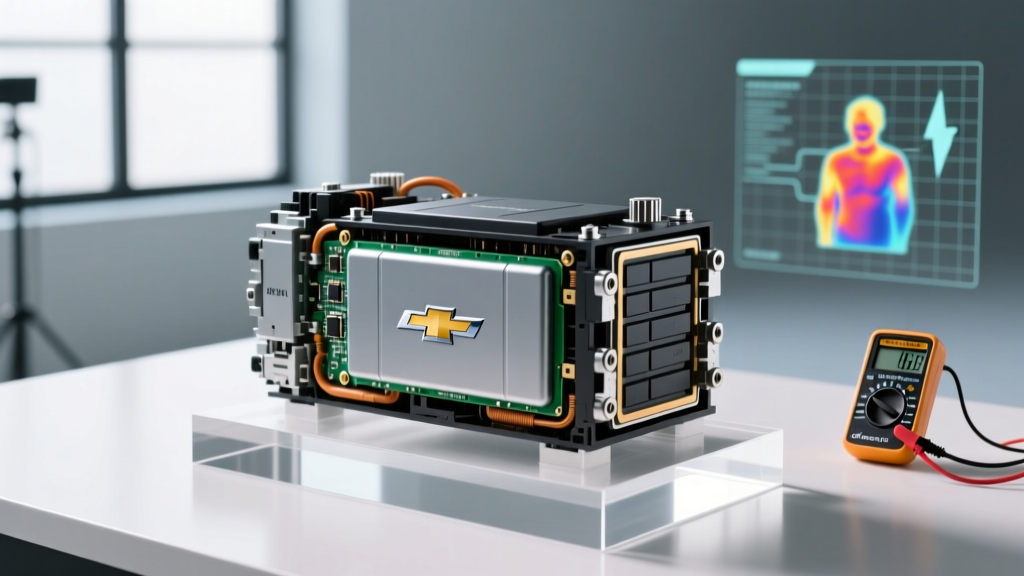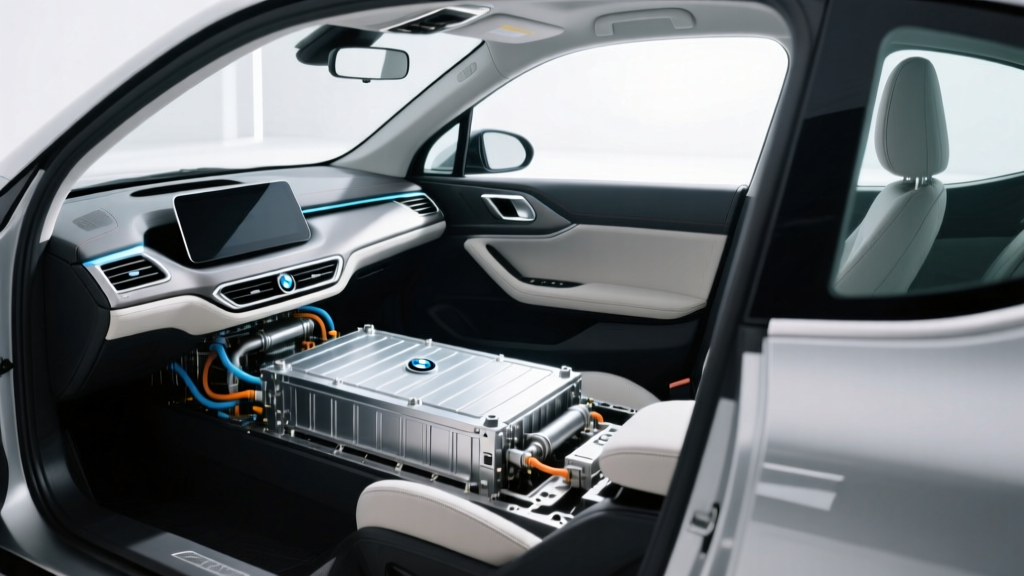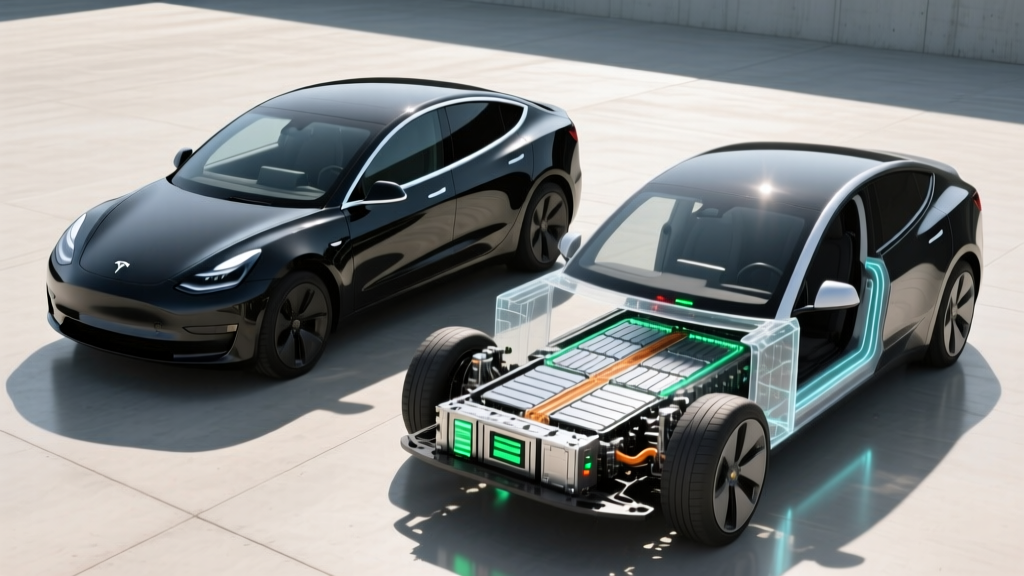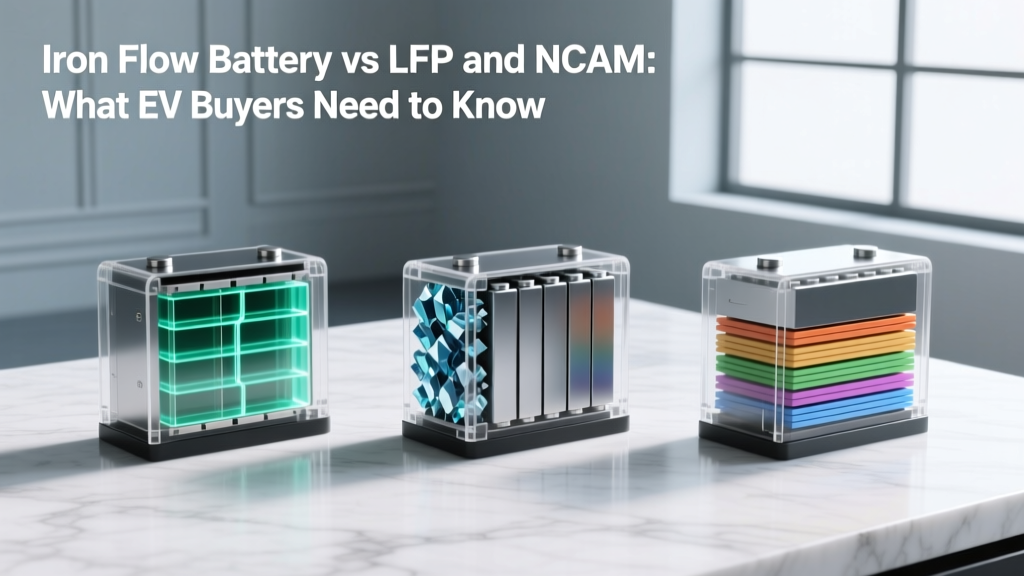
If you have been following energy-storage headlines, you have probably seen the term iron flow battery surface in conversations about the future of electrification. Flow batteries — and iron-based variants in particular — promise ultra-long cycle life, abundant raw materials, and low degradation. But are they heading into your next electric vehicle, or do they belong to a different part of the energy ecosystem entirely?
This guide puts iron flow battery technology side by side with the two chemistries that actually power today's EVs: lithium iron phosphate (LFP) and nickel manganese cobalt (NMC/NCA). Along the way, we will cover real degradation data, federal warranty requirements, replacement costs, and the care habits that keep a traction battery healthy for 200,000 miles or more.
Iron Flow Batteries Explained: Grid Storage, Not (Yet) EV Traction
A flow battery stores energy in liquid electrolyte tanks that are pumped through an electrochemical cell. An iron flow battery uses iron-based electrolyte — typically ferrous/ferric salts dissolved in water — making it one of the cheapest and most abundant-chemistry options available. Companies like ESS Inc. have commercialized iron flow batteries for stationary grid storage and commercial microgrids, where their strengths shine:
- Cycle life exceeding 20,000 cycles with minimal capacity loss — far beyond any lithium-ion cell.
- Non-flammable, water-based electrolyte with no thermal runaway risk.
- Decoupled power and energy: you add more tanks to increase kWh capacity without redesigning the cell stack.
- Abundant, inexpensive materials: iron is the most produced metal on Earth.
The trade-off is energy density. Iron flow batteries currently deliver roughly 15–25 Wh per liter at the system level, compared to 250–400+ Wh/L for NMC lithium-ion packs. A flow battery large enough to store 80 kWh — a typical midsize EV pack — would weigh several thousand pounds and occupy far more volume than a vehicle chassis allows. For now, iron flow batteries remain a stationary-storage technology, not a candidate for passenger-vehicle traction packs.
That does not make them irrelevant to EV owners. As grid-scale iron flow installations expand, they help stabilize the electricity that charges your car, especially on solar- and wind-heavy grids. But when you shop for an EV in 2026, the chemistry decision comes down to LFP versus NMC/NCA.
LFP vs NMC/NCA: The Chemistry Trade-Offs That Matter
Every EV sold in the U.S. today uses one of two dominant lithium-ion chemistries. Understanding the difference is the single most important battery decision you will make as a buyer.
| Attribute | LFP (Lithium Iron Phosphate) | NMC / NCA (Nickel-based) |
|---|---|---|
| Energy density (cell-level) | ~160–180 Wh/kg | ~230–300 Wh/kg |
| Typical cycle life | 3,000–6,000+ cycles | 1,000–2,500 cycles |
| Cold-weather performance | Moderate; slower charging below 32°F | Better low-temp charge acceptance |
| Thermal stability | Excellent; very low runaway risk | Good; requires more active management |
| Cobalt / nickel content | None | Significant (supply-chain and ethical concerns) |
| Cost per kWh (2026 pack-level) | ~$90–$110 | ~$120–$150 |
| Common in | Tesla Model 3/Y RWD, Ford Mustang Mach-E Select (LFP option), Rivian Standard, BYD models | Long-range / performance trims, Hyundai Ioniq 5/6, BMW iX, GM Ultium platforms |
| Recommended daily charge limit | 100% (periodic full charges help BMS calibration) | 80–90% daily; 100% only before long trips |
Choose LFP if: you want maximum cycle life, lower cost, and can accept slightly less range per pound. LFP is ideal for daily commuters who charge at home and do not routinely need the absolute longest single-charge trip range.
Choose NMC/NCA if: you need the longest possible range in the lightest package, regularly drive in very cold climates, or prioritize fast DC charging performance in low temperatures.
Both chemistries are proven and widely available. The gap in real-world ownership experience is narrower than the spec sheet suggests, because pack-level engineering — thermal management, buffer sizing, and BMS logic — matters as much as cell chemistry.
How Long Do EV Batteries Actually Last?
The short answer: most EV traction batteries outlast the vehicles they power. Data from fleets, long-term owners, and independent testing labs paints a consistent picture.
Observed Degradation Data Points
- Tesla 2025 Impact Report: Model 3/Y packs retain approximately 85% of original capacity at 150,000 miles, based on fleet telemetry (source).
- Geotab fleet study (2024, 10,000+ vehicles): average annual degradation of ~1.8% per year across all chemistries, meaning a typical EV retains roughly 82% capacity after 10 years.
- Recurrent Auto data (2025): Nissan Leaf (passive-cooled NMC) showed higher degradation in hot climates — up to 3.5%/year — while liquid-cooled packs from Tesla, GM, and Hyundai held closer to 1.5%/year.
- LFP-specific data: BYD Blade cells and Tesla LFP packs show less than 10% degradation at 200,000 miles in taxi and rideshare fleet samples, consistent with LFP's higher cycle-life rating.
A critical nuance: degradation is not linear. Most packs experience a slightly steeper drop in the first 10,000–20,000 miles (roughly 2–3%) as the solid electrolyte interface (SEI) layer forms, then settle into a slow, steady decline. This means a battery that has passed the early-drop phase with good health is likely to remain serviceable for well over 200,000 miles.
What Does the Federal Battery Warranty Cover?
Under current U.S. regulations, EV manufacturers selling vehicles eligible for the §30D federal clean vehicle credit must provide a battery warranty of at least 8 years / 100,000 miles. Many go further.
| Manufacturer | Warranty Period | Capacity Retention Threshold |
|---|---|---|
| Tesla (Model 3/Y LFP) | 8 yr / 120,000 mi | 70% |
| Tesla (Model 3/Y Long Range / Performance) | 8 yr / 120,000 mi | 70% |
| Hyundai / Kia (E-GMP platform) | 10 yr / 100,000 mi | 70% |
| GM (Ultium-based: Equinox EV, Blazer EV, Cadillac Lyriq) | 8 yr / 100,000 mi | 70% (some trims 60% for fleet) |
| Ford (Mustang Mach-E, F-150 Lightning) | 8 yr / 100,000 mi | 70% |
| Rivian (R1T / R1S) | 8 yr / 175,000 mi | 70% |
| BMW (iX, i4) | 8 yr / 100,000 mi | 70% |
The warranty threshold matters: if your pack falls below 70% State of Health (SoH) within the warranty window, the manufacturer must repair or replace it at no cost. In practice, very few owners hit this threshold under normal use. The warranty protects against defective or prematurely degraded packs — not against the slow, normal loss of 1–2% per year.
EV Battery Replacement Cost: When and How Much
Full traction battery replacement is rare. Most packs remain functional well beyond 150,000 miles, and many outlive the vehicle's economic life. When replacement is necessary — usually due to physical damage, manufacturing defect outside warranty, or extreme degradation in an older vehicle — costs vary significantly by pack size and chemistry.
| Vehicle / Pack Size | Chemistry | Replacement Cost (Parts + Labor) |
|---|---|---|
| Tesla Model 3 RWD (~57 kWh) | LFP | $8,000–$12,000 |
| Tesla Model Y Long Range (~75 kWh) | NMC | $12,000–$16,000 |
| Hyundai Ioniq 5 (~77.4 kWh) | NMC | $13,000–$18,000 |
| Ford F-150 Lightning Extended (~131 kWh) | NMC | $20,000–$30,000 |
| Chevrolet Equinox EV (~85 kWh) | NMC (Ultium) | $14,000–$19,000 |
| Nissan Leaf (40 kWh) | NMC (passive-cooled) | $6,500–$9,000 |
A few important notes on these figures:
- Module-level repair is increasingly common. Many packs allow individual module replacement rather than a full pack swap, reducing cost to $2,000–$5,000 per module.
- Refurbished packs are becoming available from OEM and third-party suppliers at 40–60% of new-pack cost.
- Insurance may cover battery damage from collisions, flooding, or road debris — check your policy's EV-specific terms.
- Most owners never pay for a replacement. The pack either stays healthy through the vehicle's life or is covered under warranty.
Five Factors That Accelerate Battery Degradation
Battery chemistry sets the ceiling, but your habits determine how close you get to it. Research from the National Renewable Energy Laboratory (NREL) and fleet operators identifies five primary degradation accelerators:
What Hurts Your Battery
- Exclusive DC fast charging: Packs that rely solely on 150+ kW DC fast charging degrade roughly 0.5–1.0% faster per year than those primarily charged on Level 2. The heat generated at high C-rates stresses cell internals. Recommendation: use DCFC for road trips, Level 2 for daily needs.
- Sustained high State of Charge: Storing an NMC pack at 100% for days or weeks accelerates electrolyte oxidation. LFP tolerates 100% storage far better. For NMC, set your daily charge limit to 80% and only charge to 100% immediately before a long drive.
- Deep discharges below 10%: Repeatedly draining the pack to near-zero stresses the anode. Try to plug in before you drop below 15–20%.
- Extreme heat exposure: Ambient temperatures above 95°F combined with high SoC are the worst-case scenario. Park in shade or a garage when possible, and avoid leaving the car at 100% in a hot driveway for extended periods.
- Cold charging without preconditioning: Charging a frozen NMC pack at high power causes lithium plating on the anode — a permanent capacity loss mechanism. Always use your vehicle's battery preconditioning feature (Tesla, Hyundai, GM, and Ford all offer this) before DC fast charging in cold weather.
What Helps Your Battery
- Level 2 home charging at 7–11 kW as your primary routine.
- Moderate SoC range: 20–80% for NMC; 10–100% is fine for LFP.
- Thermal preconditioning before fast charging.
- Garage or shaded parking in hot climates.
- Driving the car regularly — long idle periods at high SoC are worse than moderate daily use.
How to Monitor Your Battery's State of Health
State of Health (SoH) is the percentage of original capacity your pack can still hold. A new battery is 100% SoH; a pack that held 75 kWh when new and now holds 67.5 kWh is at 90% SoH.
Manufacturer tools:
- Tesla: The in-app battery health indicator (introduced in 2024) provides a percentage-based SoH estimate. Service mode also displays detailed pack data.
- Hyundai / Kia: The EV-specific menu in the infotainment system shows battery health as a percentage, and the Bluelink/Kia Connect app provides remote SoH monitoring.
- GM (Ultium): The myChevrolet/myCadillac app includes a battery health screen showing estimated SoH.
- Ford: The FordPass app provides battery state-of-health data for Mach-E and F-150 Lightning owners.
Third-party tools:
- OBD-II scanners with EV PIDs (e.g., OBDLink SX + apps like ABRP or Leaf Spy for Nissan Leaf) can read real-time cell voltage, pack temperature, and SoH directly from the BMS.
- Recurrent Auto offers a free battery health report that compares your pack's degradation to a fleet of identical vehicles.
- AVILOO provides an independent, certified battery health certificate based on a standardized discharge test — useful when buying or selling a used EV.
Check your SoH every 6–12 months or before any long road trip. A sudden drop (more than 2–3% in a short period) warrants a dealer diagnostic visit, as it may indicate a faulty module rather than normal wear.
Emerging Battery Tech: Solid-State, Silicon Anode, and Beyond
While iron flow batteries serve the grid, next-generation EV cell chemistries are in active development. Here is a realistic assessment of what is coming and when:
- Solid-state batteries: Toyota, Samsung SDI, and QuantumScape target limited production in 2027–2029 vehicles. Solid-state cells promise 350–500 Wh/kg energy density and faster charging, but manufacturing scale-up remains the bottleneck. Expect initial deployment in premium models at high cost before any trickle-down to mainstream EVs.
- Silicon-dominant anodes: Companies like Sila Nanotechnologies and Group14 are already supplying silicon-enhanced anodes to manufacturers including Mercedes-Benz (for the G-Class EV). Silicon anodes boost energy density by 20–40% over graphite, and are commercially available now in limited applications.
- Sodium-ion batteries: CATL and BYD have begun producing sodium-ion cells for low-cost, short-range EVs in China. Energy density (~140 Wh/kg) limits them to city cars and micro-vehicles. U.S. availability is not expected before 2028 at the earliest.
- LFP improvements: CATL's second-generation LFP cells (2025–2026) push energy density to ~190 Wh/kg and support 4C charging (10–80% in ~15 minutes), narrowing the gap with NMC on both range and charge speed.
None of these technologies are available in a vehicle you can buy today. They are worth tracking, but purchasing decisions in 2026 should be based on the proven LFP and NMC platforms already on dealer lots.
Where Iron Flow Batteries Fit in the EV Ecosystem
To bring the conversation full circle: iron flow batteries are not competing with LFP or NMC inside your car. They are competing with lithium-ion grid storage, compressed air, and pumped hydro at the utility scale. Their value to EV owners is indirect but real:
- Grid stabilization: Iron flow installations paired with solar farms smooth out intermittency, meaning more of your charging electrons come from clean sources.
- Time-of-use arbitrage: Utilities can store cheap off-peak power in flow batteries and release it during peak demand, keeping your EV charging rates lower.
- Long-duration storage: With 8–12 hour discharge durations and near-zero degradation over 20+ years, iron flow batteries address a gap that lithium-ion grid storage cannot fill economically.
If you see a headline about an "iron flow battery breakthrough," it is almost certainly about grid storage, not your next car. And that is perfectly fine — a cleaner, more stable grid makes every EV on the road a little greener.
Frequently Asked Questions
How long do EV batteries last in years and miles?
Most modern liquid-cooled EV batteries last 15–20 years or 200,000+ miles before dropping below 70% capacity. Fleet data from Tesla, Geotab, and Recurrent Auto consistently shows average annual degradation of 1.5–2.0% for well-maintained packs. LFP chemistries often exceed 3,000 full charge cycles, which translates to well over 300,000 miles of driving.
How much does an EV battery cost to replace?
Out-of-warranty replacement costs range from $6,500 for a small pack (Nissan Leaf 40 kWh) to $30,000 for a large pack (Ford F-150 Lightning Extended Range 131 kWh). Most owners never pay this — the pack either remains healthy through the vehicle's life or is covered under the 8-year/100,000-mile minimum warranty. Module-level repairs can reduce costs to $2,000–$5,000.
What does the EV battery warranty actually cover?
Federal law requires a minimum 8-year / 100,000-mile warranty for EV batteries on §30D-eligible vehicles. The warranty covers capacity loss below a threshold (typically 70% SoH) and defects in materials or workmanship. It does not cover damage from collisions, flooding, or modifications. Some manufacturers, like Hyundai and Rivian, extend coverage to 10 years or higher mileage.
How do I check and maximize my EV battery health?
Monitor SoH through your vehicle's app or an OBD-II scanner every 6–12 months. To maximize longevity: prioritize Level 2 home charging over DCFC, keep NMC packs between 20–80% SoC for daily use (LFP can be charged to 100%), precondition the battery before cold-weather fast charging, and avoid leaving the car at full charge in extreme heat.
LFP vs NMC — which is better for my situation?
Neither is universally better. LFP wins on cost, cycle life, and safety, and is ideal for daily commuters who charge at home. NMC/NCA wins on energy density and cold-weather performance, and is better for long-range drivers in cold climates. Both are proven, warrantied, and will serve most owners well past 150,000 miles.
Will iron flow batteries ever be used in EVs?
Not in the foreseeable future. Iron flow batteries have energy densities roughly 10–20x lower than lithium-ion cells and require liquid electrolyte tanks and pumps that are impractical in a vehicle form factor. Their role is grid-scale stationary storage, where they excel at long-duration, high-cycle applications.
Sources: fueleconomy.gov (EPA range and efficiency data), IRS §30D Clean Vehicle Credit (warranty and eligibility rules), NREL (battery degradation research).