BYD's original Blade Battery redefined what lithium iron phosphate (LFP) could do in a mass-market EV. The Blade Battery 2.0, announced for rollout across BYD's 2026 model lineup, pushes that architecture further — targeting higher energy density, faster charging, and broader adoption beyond BYD's own vehicles. But what does that actually mean for buyers weighing LFP against nickel-manganese-cobalt (NMC) packs?
This guide breaks down the Blade Battery 2.0 in the context of everything EV owners need to know about battery technology: chemistry trade-offs, real degradation data, warranty coverage, replacement economics, and how to monitor and maximize the pack you already have.
What Is the BYD Blade Battery 2.0?
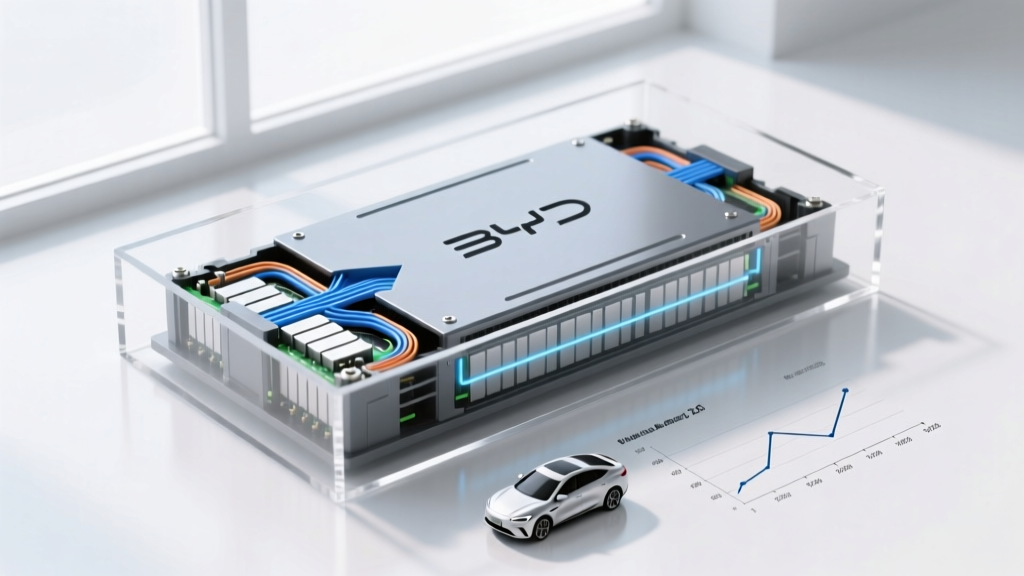
The Blade Battery is BYD's proprietary cell-to-pack (CTP) design that uses long, thin LFP prismatic cells arranged in an array that doubles as a structural component. The original Blade, introduced in 2020, achieved roughly 140 Wh/kg at the pack level — competitive for LFP at the time but well behind NMC packs that routinely hit 180–210 Wh/kg.
Blade Battery 2.0 targets a pack-level energy density approaching 160–170 Wh/kg by refining cell geometry, reducing inactive material, and improving the packing ratio. BYD has indicated the new generation will support DC fast-charging rates up to 200 kW peak (up from roughly 120–150 kW on Gen 1), with a 10–80% charge time in the range of 22–25 minutes depending on pack size. The chemistry remains LFP — no cobalt, no nickel — which matters for cost, longevity, and supply-chain resilience.
As of early 2026, Blade Battery 2.0 is rolling into BYD's Seal, Atto 3 (known as the Yuan Plus in some markets), and Dolphin nameplates for international markets. In the U.S., BYD passenger vehicles remain unavailable due to tariff barriers, but the technology is relevant because BYD supplies LFP cells to other automakers, including Toyota for the bZ3 sedan sold in China.
LFP vs NMC/NCA: Chemistry Trade-Offs Explained
Understanding Blade Battery 2.0 requires understanding the fundamental LFP-versus-NMC divide. These are not minor variations — they dictate how your EV ages, charges, and performs across seasons.
| Attribute | LFP (e.g., BYD Blade 2.0) | NMC / NCA (e.g., CATL, LG, Panasonic) |
|---|---|---|
| Energy density (pack-level) | ~150–170 Wh/kg | ~180–230 Wh/kg |
| Cycle life (to 80% SoH) | 3,000–5,000+ cycles | 1,500–2,500 cycles |
| Cobalt / nickel content | None | Yes — supply-chain and ethical concerns |
| Thermal stability | Excellent — resistant to thermal runaway | Good, but requires more active cooling |
| Cold-weather performance | Weaker — 25–40% range loss below 20°F | Better — 15–30% range loss below 20°F |
| Cost per kWh (cell-level) | ~$70–85 | ~$100–120 |
| State-of-charge estimation | Flat voltage curve makes SoC harder to gauge | Steeper voltage curve — easier SoC read |
| Recommended daily SoC | Can charge to 100% regularly | Best kept at 80–90% daily; 100% for trips only |
The practical takeaway: LFP wins on longevity, safety, and cost. NMC wins on energy density and cold-weather range. If you live in Phoenix and charge at home nightly, LFP is arguably the better long-term bet. If you commute in Minneapolis winters and need maximum range per kWh, NMC still has the edge. Blade Battery 2.0 narrows the energy-density gap but doesn't eliminate the cold-weather disadvantage inherent to LFP chemistry.
Real Degradation Data: How EV Batteries Age Over Time
Battery degradation is non-linear. Most packs lose capacity fastest in the first year or two, then settle into a slow, predictable decline. Here's what aggregated fleet data tells us:
| Milestone | Typical NMC Pack (SoH) | Typical LFP Pack (SoH) | Source Context |
|---|---|---|---|
| 1 year / 15,000 mi | 96–98% | 97–99% | Recurrent Auto fleet data, 2025 |
| 3 years / 45,000 mi | 91–95% | 94–97% | Recurrent Auto fleet data, 2025 |
| 5 years / 75,000 mi | 86–92% | 90–95% | Geotab fleet analysis, 2024–2025 |
| 8 years / 120,000 mi | 80–88% | 85–93% | Projected from Geotab/Recurrent curves |
| 10 years / 150,000 mi | 75–85% | 82–91% | Extrapolated — limited real-world 10-yr data |
LFP packs, including BYD's Blade architecture, consistently show slower degradation than NMC equivalents. According to fleet data from Recurrent Auto, LFP vehicles in their network averaged roughly 1–2% less degradation at the 3-year mark compared to NMC vehicles. Blade Battery 2.0's structural advantages — better thermal distribution across the cell array — may further reduce hot-spot degradation, though independent long-term data on Gen 2 specifically is not yet available.
EV Battery Warranty Coverage: What's Actually Protected
Federal law in the U.S. mandates a minimum of 8 years / 100,000 miles for EV battery warranties (10 years / 150,000 miles in California Air Resources Board states). But the details vary significantly between automakers:
| Automaker | Warranty Period | Capacity Retention Threshold | Notes |
|---|---|---|---|
| BYD (international) | 8 yr / 100,000 mi (160,000 km) | 70% SoH | Blade Battery; replacement or repair at BYD discretion |
| Tesla (Model 3 RWD — LFP) | 8 yr / 100,000 mi | 70% SoH | LFP pack; transferable to second owner |
| Hyundai / Kia | 10 yr / 100,000 mi | 70% SoH | Among the longest coverage in the U.S. market |
| Ford (Mustang Mach-E) | 8 yr / 100,000 mi | 70% SoH | NMC packs; covers excessive degradation only |
| Rivian | 8 yr / 175,000 mi | 70% SoH | Higher mileage cap benefits high-mileage drivers |
The critical detail is the capacity retention threshold. Most warranties only trigger if your pack falls below 70% of original capacity. A pack at 72% SoH after 90,000 miles — which still means noticeable range loss — is not a warranty claim. Read your owner's manual carefully: some warranties cover only manufacturing defects, not gradual degradation, while others explicitly cover degradation below the stated threshold.
EV Battery Replacement Cost: What It Actually Takes
The fear of a $20,000 battery swap haunts many prospective EV buyers. Here's the reality in 2026:
| Battery Size / Vehicle Class | Replacement Cost Range (Parts + Labor) | When Typically Needed |
|---|---|---|
| 40–55 kWh (compact EV, e.g., Nissan Leaf, BYD Dolphin) | $7,000 – $11,000 | Rarely within vehicle lifespan; 15+ years if at all |
| 60–80 kWh (mid-size, e.g., Tesla Model 3, BYD Seal) | $10,000 – $16,000 | Uncommon before 150,000+ mi; most vehicles scrapped for other reasons first |
| 85–110 kWh (large SUV/truck, e.g., F-150 Lightning, Rivian R1T) | $15,000 – $22,000 | Very rare; typically only after physical damage or manufacturing defect |
Most EV batteries outlast the vehicles they're in. According to data aggregated by Geotab, the average EV battery loses roughly 1.8% of capacity per year under typical use. At that rate, a pack would still hold ~82% after a decade — well above the threshold where replacement is necessary. Full replacements are overwhelmingly due to collision damage, coolant intrusion, or rare manufacturing defects, not end-of-life degradation.
For context, a conventional vehicle's transmission replacement averages $4,000–$7,000, and an engine rebuild can exceed $8,000. EV drivetrains eliminate both of those failure points entirely.
Factors That Accelerate (or Slow) Battery Degradation
Not all miles are created equal when it comes to pack health. Here's what actually moves the needle:
- DC fast-charging frequency: Occasional road-trip fast charging is fine. Daily reliance on 150+ kW DCFC accelerates degradation by an estimated 1–3% over 5 years compared to Level 2 home charging. The heat generated at high charge rates is the primary culprit.
- State of charge habits: For NMC packs, sitting at 100% SoC for extended periods (days or weeks) causes calendar degradation. LFP packs tolerate 100% SoC much better — BYD and Tesla both recommend periodic 100% charges for LFP to recalibrate the BMS.
- Extreme heat exposure: Sustained ambient temperatures above 95°F with a high SoC is the worst-case scenario for any lithium-ion chemistry. Garage parking and preconditioning help significantly.
- Extreme cold charging: Charging an LFP pack in sub-freezing temperatures without preconditioning can cause lithium plating. Most modern BMS systems throttle charge rate in cold weather to prevent this, but it's why cold-weather DCFC sessions take longer.
- Depth of discharge: Frequently cycling from 100% to near 0% puts more stress on cells than shallow cycles (e.g., 30–80%). LFP chemistry handles deep cycles better than NMC, but shallower cycles still extend life.
- Storage practices: If storing an EV for weeks, aim for ~50% SoC for NMC or ~60–70% for LFP. Avoid leaving any pack at 100% or below 10% for extended periods.
How to Monitor and Maximize Battery Health (SoH)
State of Health (SoH) is the percentage of your battery's original capacity that remains usable. Here's how to check it and keep it high:
OBD-II diagnostic tools: Devices like the OBDLink SX paired with apps such as LeafSpy (Nissan), TeslaFi (Tesla), or Car Scanner (broad compatibility) can read SoH directly from the battery management system. This is the most accurate consumer-accessible method.
Manufacturer apps: Some automakers — including Hyundai, Kia, and BMW — display estimated battery health in their companion apps or the vehicle's infotainment system. BYD's DiLink system shows real-time energy flow but, as of 2026, does not expose a direct SoH percentage to the driver. Third-party OBD tools remain the best option for BYD vehicles.
Charging-log analysis: Services like Recurrent Auto analyze your charging patterns over time to estimate SoH without hardware. This is less precise than a direct BMS read but useful for trend tracking.
Manual range test: Charge to 100% (LFP) or your normal max (NMC), drive a known route under consistent conditions, and compare remaining range to the vehicle's original EPA sticker. A consistent 10–15% shortfall after 3–4 years is normal; a 25%+ shortfall warrants a dealer diagnostic.
Beyond Blade 2.0: Solid-State and Silicon Anode Timelines
Blade Battery 2.0 represents the current frontier of LFP — but the industry is pursuing two higher-potential technologies:
Solid-state batteries: These replace the liquid electrolyte with a solid material, promising energy densities above 350 Wh/kg, faster charging, and near-zero fire risk. Toyota has announced a limited production target for 2027–2028, while QuantumScape continues pilot production with Volkswagen backing. Realistic mass-market availability remains 2029–2032. Cost is the primary barrier — current solid-state cells are estimated at 3–5x the cost of equivalent LFP cells.
Silicon anode technology: Companies like Sila Nanotechnologies and Group14 are replacing graphite anodes with silicon-dominant materials, boosting energy density by 20–40% within existing NMC architectures. Mercedes-Benz's next-generation G-Class EV is expected to feature silicon anode cells. This technology is closer to scale — initial production vehicles are arriving in 2025–2026 — but it complements rather than replaces LFP. Silicon anodes are most relevant for NMC packs where maximum energy density is the goal.
Neither technology will displace Blade Battery 2.0 or similar LFP architectures in the near term. LFP's cost advantage — roughly 30–40% cheaper per kWh than NMC, and far cheaper than solid-state — makes it the default for affordable EVs through at least 2030.
Blade Battery 2.0 and the U.S. Market: Availability and Tax Credits
As of 2026, BYD does not sell passenger vehicles in the United States, and significant tariffs on Chinese-manufactured EVs and batteries make near-term entry unlikely. However, Blade Battery 2.0 technology is relevant to U.S. buyers in two ways:
Supply chain influence: BYD supplies LFP cells to Toyota, and the global shift toward LFP in affordable EV segments means the technology benchmark BYD sets affects pricing and specs across all automakers, including those selling in the U.S.
Federal §30D tax credit implications: Under current IRS rules, the $7,500 federal EV tax credit requires battery components and critical minerals to meet North American sourcing thresholds that increase annually. LFP batteries — whose supply chain is heavily concentrated in China — face particular challenges meeting these requirements. Buyers should verify credit eligibility for any specific model year and trim before purchasing, as sourcing rules tighten each year through 2030.
How long do EV batteries last in real-world use?
Most modern EV batteries retain 80–90% of original capacity after 8–10 years of typical driving (12,000–15,000 miles/year). LFP packs like BYD's Blade architecture tend to degrade more slowly, often retaining 85–93% at the 8-year mark. Full replacement is rarely needed within the vehicle's practical lifespan.
How much does it cost to replace an EV battery?
Out-of-warranty replacement costs range from roughly $7,000 for a small pack (40–55 kWh) to $22,000 for a large truck/SUV pack (85–110+ kWh). However, the vast majority of EV batteries never need replacement — most outlast the vehicle's body, suspension, and interior.
What does the EV battery warranty actually cover?
U.S. federal law requires a minimum 8-year/100,000-mile battery warranty. Most automakers guarantee the pack will retain at least 70% of its original capacity during that period. If degradation falls below that threshold, the manufacturer will repair or replace the battery at no cost. Physical damage and misuse are excluded.
How do I check my EV's battery health?
The most reliable method is an OBD-II diagnostic tool that reads State of Health (SoH) directly from the battery management system. Apps like LeafSpy, TeslaFi, or Car Scanner can display this data. Some manufacturer apps also provide estimated health readings. Tracking your real-world range over time compared to the original EPA estimate provides a useful secondary check.
LFP vs NMC — which battery chemistry is better for me?
Choose LFP (like BYD Blade) if you prioritize longevity, can charge at home, live in a moderate climate, and value lower cost. Choose NMC if you need maximum range per kWh, frequently drive in very cold weather, or want the lightest possible pack for performance applications. Neither is universally superior — it depends on your driving patterns and climate.
Is Blade Battery 2.0 available in the United States?
Not directly. BYD does not sell passenger vehicles in the U.S. as of 2026. However, LFP technology pioneered by BYD influences the broader market, and LFP packs from CATL and other suppliers are used in U.S.-market vehicles like the Tesla Model 3 RWD and Ford Mustang Mach-E standard-range trims.