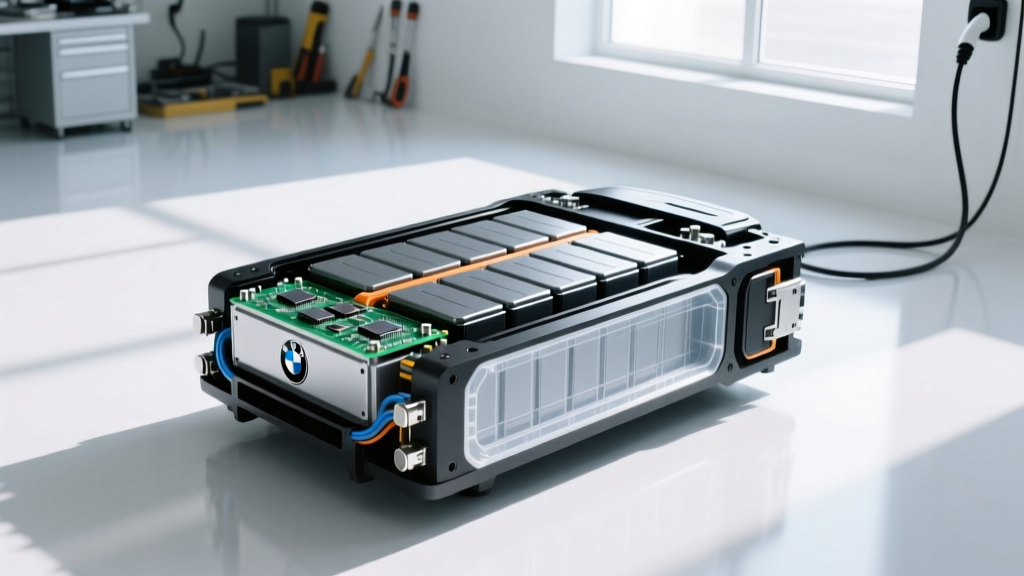
The BMW i3 was one of the first mass-market EVs to prove that city-focused electric mobility could work. Produced from 2014 through 2021 (with the final U.S. model year being 2021), the i3 came with three distinct high-voltage traction battery generations: a 22 kWh pack (2014–2016), a 33 kWh pack (2017–2018), and a 42.2 kWh pack (2019–2021). As these vehicles age, owners and prospective used buyers are increasingly searching for a replacement battery for BMW i3 — and the answers aren't straightforward.
This guide covers the real-world cost of replacing an i3 battery, what degradation data tells us about longevity, how BMW's warranty applies, and whether a battery swap makes financial sense on a vehicle that now trades for $10,000–$18,000 on the used market.
BMW i3 Battery Generations and Chemistry
Every BMW i3 uses NMC (Nickel Manganese Cobalt) lithium-ion cells supplied primarily by Samsung SDI. NMC chemistry was chosen for its favorable energy density — critical in the i3's compact, lightweight carbon-fiber-reinforced plastic (CFRP) chassis where packaging space is at a premium.
Here's how the three generations compare:
| Generation | Model Years | Gross kWh | Usable kWh | EPA Range | Cell Supplier |
|---|---|---|---|---|---|
| 60 Ah (22 kWh) | 2014–2016 | 22.0 | ~18.8 | 81 mi | Samsung SDI (NMC) |
| 94 Ah (33 kWh) | 2017–2018 | 33.2 | ~27.2 | 114 mi | Samsung SDI (NMC) |
| 120 Ah (42.2 kWh) | 2019–2021 | 42.2 | ~37.9 | 153 mi | Samsung SDI (NMC) |
The 120 Ah (42.2 kWh) generation is the most common candidate for battery replacement decisions today, as the earlier 22 kWh models are now 9–12 years old and often retired or converted to secondary uses.
How Long Does a BMW i3 Battery Actually Last?
Based on aggregated fleet data, owner reports on forums like BMW i3 Forum and Speak EV, and independent testing by organizations such as Geotab, NMC batteries in the i3 degrade at a rate that generally follows this trajectory:
- Years 1–3: ~2–3% capacity loss (initial settling)
- Years 4–6: ~1–1.5% per year (linear degradation phase)
- Years 7–10: ~1–2% per year (gradual taper)
- Year 10+: Variable; most packs retain 75–85% of original capacity
For the 120 Ah (42.2 kWh) i3, that means a 2020 model in 2026 is approximately six years old and likely retains ~88–92% State of Health (SoH), translating to roughly 135–140 miles of real-world range versus the original 153 EPA-rated miles.
For the earliest 22 kWh models (2014–2016), now 10–12 years old, many packs measure between 70–80% SoH, yielding roughly 57–65 miles of range from an already modest 81-mile EPA baseline. This is where replacement conversations become most relevant.
LFP vs NMC: Understanding the i3's Chemistry in Context
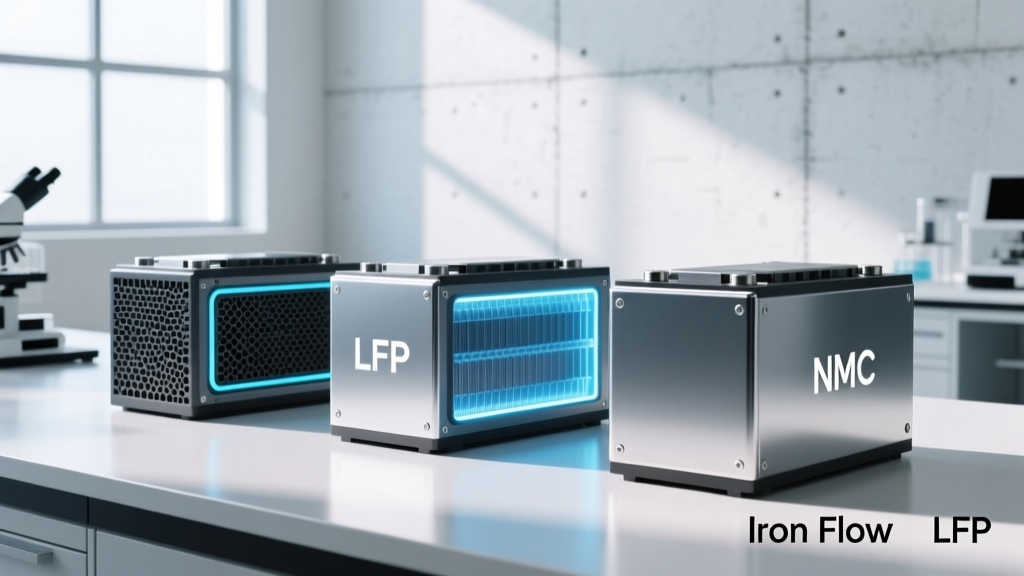
The BMW i3 exclusively uses NMC chemistry. You won't find an LFP (Lithium Iron Phosphate) i3 — BMW never offered one. But understanding the trade-offs matters if you're comparing the i3 to newer EVs or considering why replacement options are limited.
| Factor | NMC (i3's chemistry) | LFP (e.g., Tesla Model 3 RWD, BYD) |
|---|---|---|
| Energy Density | Higher (~200–260 Wh/kg cell-level) | Lower (~140–180 Wh/kg cell-level) |
| Cycle Life | ~1,000–2,000 full cycles to 80% SoH | ~3,000–5,000+ full cycles to 80% SoH |
| Cold Performance | Better low-temp discharge capability | More range loss below 32°F |
| Cost (per kWh) | Higher ($120–$160/kWh at pack level, 2026) | Lower ($80–$110/kWh at pack level, 2026) |
| Recommended SoC | Daily: 80%; avoid sustained 100% | 100% regularly is fine (and recommended for calibration) |
| Thermal Runaway Risk | Higher (mitigated by BMS and pack design) | Significantly lower |
For the i3, NMC was the right choice: the car's small footprint demanded high energy density. But it also means the battery is more sensitive to charging habits and temperature extremes than an LFP-equipped vehicle would be.
Replacement Battery for BMW i3: Cost Breakdown
Replacement costs vary significantly depending on battery generation, source (OEM vs refurbished vs third-party), and labor rates. Here's what the market looks like as of 2026:
| Battery Generation | OEM New (BMW Dealer) | Refurbished / Remanufactured | Third-Party / Used Pack | Labor (Estimated) |
|---|---|---|---|---|
| 22 kWh (60 Ah) | ~$10,000–$13,000 | ~$5,000–$7,500 | ~$2,500–$4,500 | $1,500–$3,000 |
| 33 kWh (94 Ah) | ~$12,000–$16,000 | ~$6,500–$9,000 | ~$3,500–$5,500 | $1,500–$3,000 |
| 42.2 kWh (120 Ah) | ~$14,000–$18,000 | ~$8,000–$11,000 | ~$4,500–$7,000 | $1,500–$3,000 |
Critical context: A 2014–2016 BMW i3 with a degraded 22 kWh pack has a current resale value of roughly $8,000–$12,000 depending on condition and mileage. An OEM battery replacement at $12,000–$16,000 installed frequently exceeds the vehicle's value. This is the core economic dilemma i3 owners face.
BMW does offer a module-level repair option for some battery issues. The i3's battery pack consists of 8 modules (22/33 kWh) or 8 modules (42.2 kWh, different cell count per module). If only one or two modules have failed or degraded disproportionately, a BMW specialist can replace individual modules for approximately $1,000–$2,500 per module including labor — a far more economical option than a full pack swap.
BMW i3 Battery Warranty: What's Covered
BMW's high-voltage battery warranty for the i3 follows the federal mandate minimum, with some model-year variations:
| Coverage Item | Terms |
|---|---|
| Duration | 8 years / 80,000 miles (whichever comes first) |
| Capacity Retention Threshold | Below 70% of original usable capacity |
| What's Covered | Defects, premature degradation below 70% SoH, module/pack failure |
| What's NOT Covered | Normal degradation above 70%, damage from accidents, improper charging equipment, modifications |
| Transferable? | Yes — warranty follows the vehicle, not the original owner |
For 2026, this means:
- 2014–2016 models: Warranty has fully expired (8 years elapsed by 2022–2024)
- 2017–2018 models: Warranty expired in 2025–2026
- 2019–2021 models: Warranty expires between 2027–2029 — still potentially active
If you own a 2019–2021 i3 and your battery measures below 70% SoH (roughly below 26.5 usable kWh on the 42.2 pack), you may still qualify for a warranty replacement. Have a BMW dealer or certified EV shop perform a formal capacity test.
Factors That Accelerate i3 Battery Degradation
The i3's battery management system (BMS) is competent but not class-leading. Unlike vehicles with active liquid cooling and heating loops connected to the battery at all times (Tesla, Hyundai E-GMP), the i3 relies on a simpler thermal management approach. This makes owner habits more impactful on longevity:
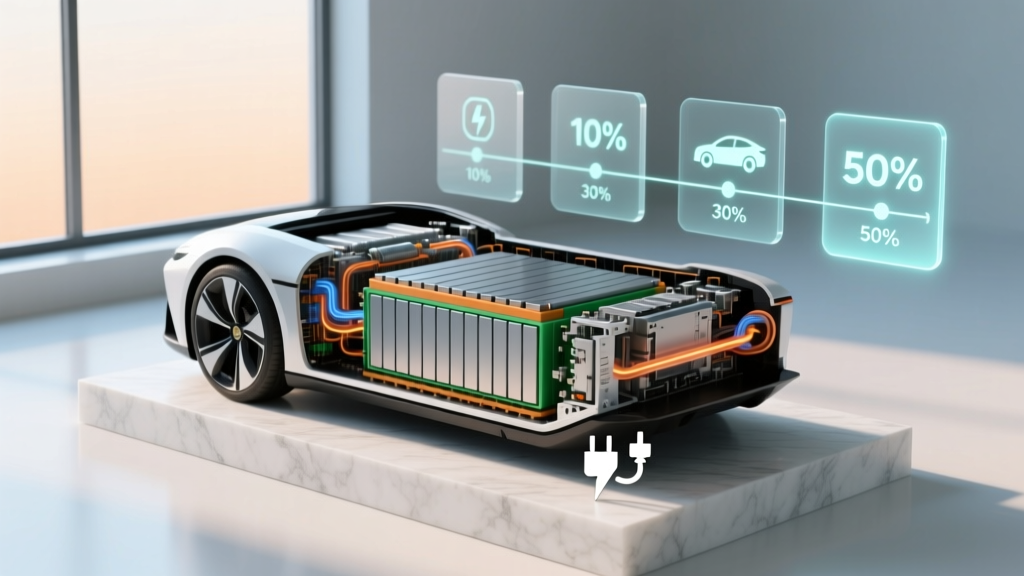
- Avoid sustained 100% SoC: NMC cells degrade faster when held at full charge. Set your charge limit to 80–85% for daily use; use 100% only before long trips.
- Minimize DC fast charging: The i3 maxes out at 50 kW DCFC — modest by 2026 standards — but frequent use still accelerates wear. Aim for Level 2 (7.4 kW) as your primary charging method.
- Don't let the pack sit below 10% SoC: Extended storage at very low charge causes copper dissolution in the anode. If storing, leave at ~50% SoC.
- Precondition in cold weather: Use the i3's preconditioning feature (via the BMW Connected app or iDrive timer) to warm the battery while still plugged in before driving.
- Avoid extreme heat exposure: Parking in direct sun repeatedly in hot climates (Arizona, Texas, SoCal) with a high SoC accelerates calendar degradation.
- Drive it regularly: Batteries that cycle moderately (20–80% SoC swings) tend to age more gracefully than those that sit idle for weeks.
How to Check Your BMW i3 Battery Health (SoH)
BMW doesn't expose a battery health percentage directly on the iDrive display, which frustrates many owners. Here are the reliable methods:
1. BMW Dealer Diagnostic (Most Accurate): A BMW service center can pull the battery's internal State of Health reading via the ISTA diagnostic system. This gives you a precise percentage (e.g., 87.3% SoH). Expect to pay $150–$250 for this diagnostic if out of warranty.
2. OBD-II Scanner with EV-Specific Software: Tools like Carly for BMW, BimmerCode/BimmerLink, or more advanced options like LeafSpy-equivalent apps can read battery module voltages, capacity estimates, and SoH from the OBD-II port. A quality Bluetooth OBD-II adapter (e.g., OBDLink SX) costs $50–$80.
3. Manual Range Calculation: Charge to 100%, note the iDrive's predicted range, and compare to the original EPA figure. If your 42.2 kWh i3 shows 120 miles at 100% (vs. 153 EPA), you're at roughly ~78% SoH. This method is imprecise — range estimates fluctuate based on recent driving patterns — but it's free and directionally useful.
4. Charging Data Analysis: If you use a smart Level 2 charger (ChargePoint, Emporia, Wallbox), track how many kWh are delivered during a 10%–100% charge session. For a 42.2 kWh (37.9 usable) pack, a 10–100% session on a healthy battery should draw approximately 34–36 kWh from the wall (accounting for ~8–10% charging losses). If you're only seeing 25–28 kWh, degradation is significant.
Is Replacing the i3 Battery Worth It? A Decision Framework
Replace the battery if:
- You own a 2019–2021 (120 Ah) model and the pack is under warranty — pursue a warranty claim first
- The car is otherwise in excellent condition (low miles, no structural issues, REx engine runs well if equipped) and you plan to keep it 5+ more years
- A module-level repair (1–2 modules) resolves the issue for under $4,000
- You use the i3 as a daily commuter and the reduced range materially impacts your routine
Do NOT replace the battery if:
- You own a 2014–2016 (22 kWh) model and the replacement cost exceeds the car's $8,000–$12,000 resale value
- The vehicle has other aging components (suspension, REx engine issues, interior wear) that will need investment
- You can upgrade to a newer, longer-range EV for a similar total outlay (a used 2022–2023 Chevy Bolt EV with 259 miles of range trades for $16,000–$20,000)
- The battery is still functional but just degraded — 70–80% SoH on a 120 Ah i3 still gives you 100+ real-world miles, adequate for city driving
Looking Ahead: Solid-State Batteries and the i3's Legacy
BMW has been vocal about its solid-state battery development, partnering with Solid Power. However, as of 2026, solid-state cells remain in pre-production validation — BMW's first production vehicles with solid-state packs are expected no earlier than 2028–2030, and these will debut in new models (likely the Neue Klasse lineup), not as retrofit replacements for discontinued vehicles like the i3.
Silicon-anode technology (used in part by companies like Sila Nanotechnologies) is closer to commercialization and appears in some 2025–2026 EVs in hybrid anode configurations, offering ~10–20% energy density gains. But again, these cells will not be backward-compatible with the i3's pack architecture.
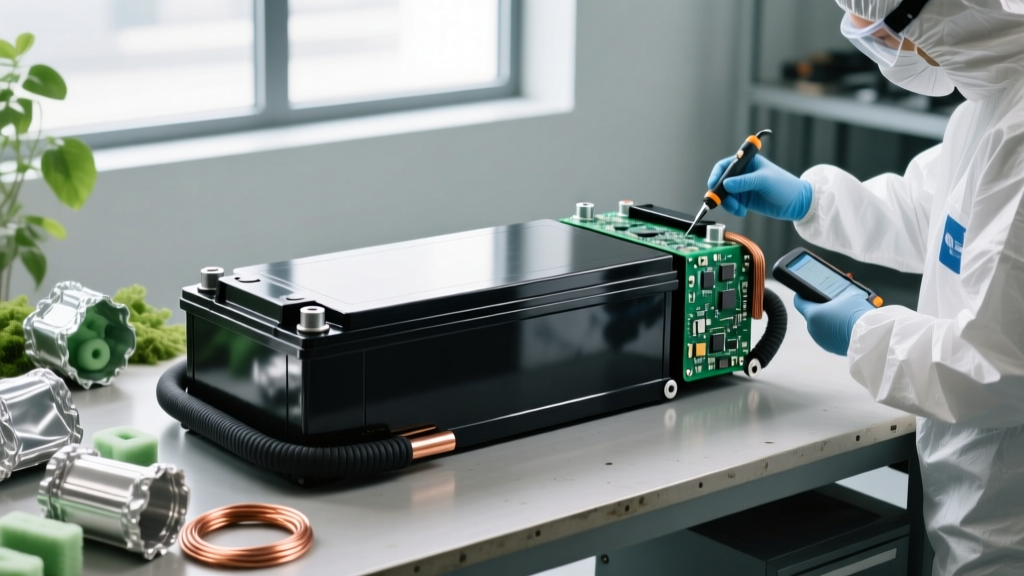
For i3 owners, the practical reality is that replacement options will remain Samsung SDI NMC cells in the original form factor — either new-old-stock from BMW, refurbished packs, or used pulls from salvage vehicles. The aftermarket for i3 batteries is maturing, with several independent EV shops in the U.S. and Europe offering module-level repairs and full-pack refurbishments at lower cost than OEM dealer pricing.
Frequently Asked Questions
Can I upgrade my 22 kWh BMW i3 to the 42.2 kWh battery?
Technically, some specialists in Europe have performed 22-to-33 kWh or 22-to-42 kWh conversions, but this requires extensive BMS reprogramming, wiring harness modifications, and software coding. In the U.S., this is not a straightforward or widely supported procedure, and it will void any remaining warranty. The cost typically exceeds $8,000–$12,000. Most owners are better served by selling the 22 kWh model and purchasing a 120 Ah i3 directly.
Does the BMW i3 have a 12V battery too, and does that need replacing?
Yes, the i3 has a standard 12V auxiliary battery that powers lights, infotainment, and the BMS control systems. This is separate from the high-voltage traction battery. The 12V battery typically needs replacement every 4–6 years and costs $150–$300 installed. A dead 12V battery can prevent the car from starting even if the main traction battery is fully charged — but this is a routine maintenance item, not a major repair.
How does i3 battery degradation compare to other EVs from the same era?
According to Geotab's fleet degradation study, the BMW i3's degradation curve is roughly average for its era. Early Nissan Leafs (passive air cooling) degraded faster, especially in hot climates. Tesla Model S/X batteries from the same period showed similar or slightly better longevity due to more aggressive liquid thermal management. The i3's simpler thermal system is its main vulnerability — it performs best in moderate climates.
Will BMW continue supporting i3 battery replacements?
BMW is obligated to maintain parts availability for a minimum period after discontinuation (typically 10–15 years depending on market). As of 2026, BMW still lists i3 battery modules as available parts. However, full pack availability may become limited by 2030+. Third-party and refurbished options will likely fill the gap for owners who need replacements beyond that window.
What's the cheapest way to extend my i3 battery's life?
The single most impactful change is limiting DC fast charging to road trips only and relying on a home Level 2 charger (7.4 kW, 32A) set to charge to 80% for daily use. Combined with preconditioning in cold weather and avoiding parking at 100% SoC in summer heat, this approach can keep your i3 battery above 80% SoH for 10+ years based on observed fleet data.