The Real Question Behind EV Battery Disposal
When EV owners search for where to dispose of car batteries, they're usually asking one of two very different things. Most often, they need to replace a failing 12-volt auxiliary battery — the small lead-acid or lithium unit that powers lights, screens, and computers. Less frequently but far more consequentially, they're asking about the high-voltage traction battery: the 400V–800V, 50–150 kWh pack that actually propels the vehicle.
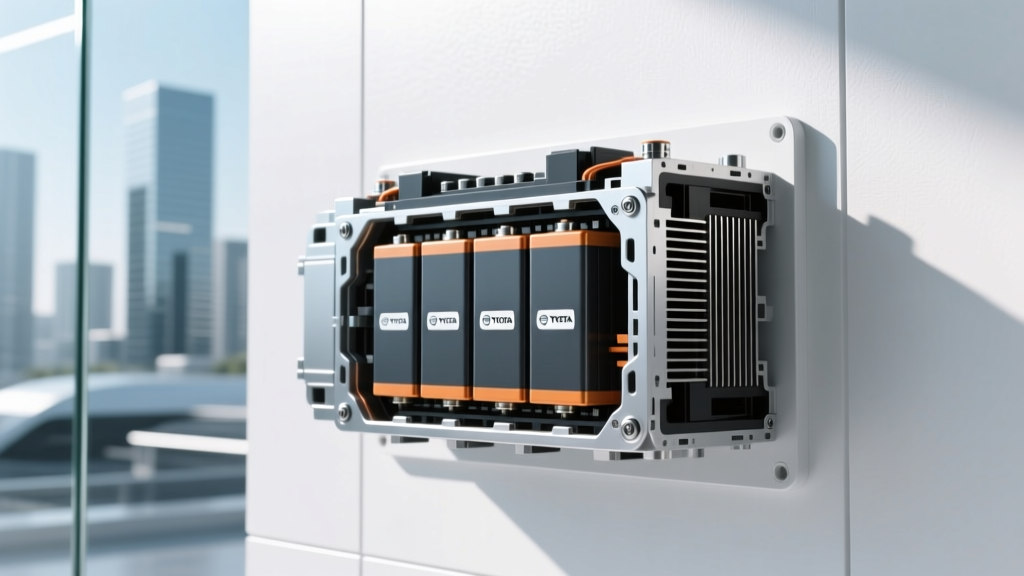
This guide addresses the traction battery — the expensive, heavy, chemically complex component that defines EV ownership economics. Spoiler: you almost never "dispose" of it in the traditional sense. EV traction batteries are recycled, repurposed for stationary storage, or refurbished. Landfilling them is both environmentally irresponsible and, in many states, illegal. But understanding when replacement is needed, what it costs, and where the old pack goes is essential for any EV buyer or owner in 2026.
How Long Do EV Traction Batteries Actually Last?
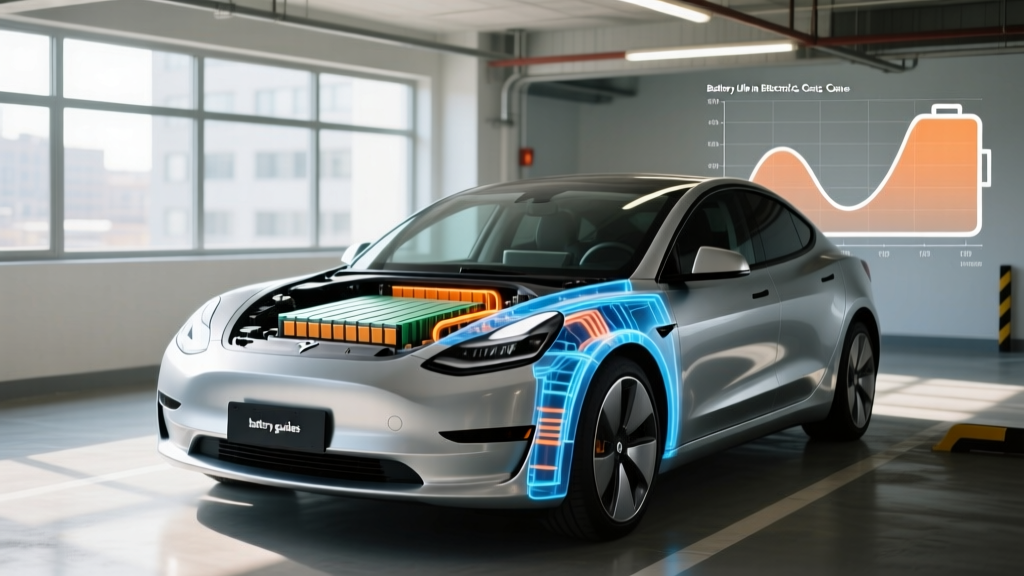
The fear that EV batteries need replacement every few years is not supported by data. According to fueleconomy.gov, most modern EV batteries are designed to last the life of the vehicle — typically 150,000 to 200,000 miles before degradation necessitates replacement, and many exceed that.
Real-world degradation data from fleet operators and owner surveys shows:
- Year 1–2: 2–5% capacity loss (initial settling, varies by chemistry)
- Year 3–5: ~1–2% loss per year (linear phase)
- Year 6–10: Continued gradual decline; most packs retain 80–90% of original capacity
- 150,000+ miles: Many packs still functional at 75–85% State of Health (SoH)
Tesla's 2025 Impact Report stated that Model 3/Y battery packs retain approximately 85% of original capacity at 200,000 miles. Hyundai and Kia report similar figures for their E-GMP platform vehicles. Geotab's large-scale fleet study of over 10,000 EVs found average annual degradation of 1.8% across all chemistries, with LFP packs showing slower long-term fade.
Translation: for a 300-mile EPA-rated EV, expect roughly 255–270 miles of real-world range at 100,000 miles, and 240–255 miles at 200,000 miles. Annoying but not debilitating.
LFP vs NMC/NCA Chemistry: What's Inside Your Pack
Not all EV batteries are the same. The two dominant lithium-ion chemistries in 2026 passenger EVs are Lithium Iron Phosphate (LFP) and Nickel Manganese Cobalt (NMC) or Nickel Cobalt Aluminum (NCA). Your chemistry affects energy density, cycle life, cold-weather performance, cost, and even how recyclable the pack is.
| Attribute | LFP (Lithium Iron Phosphate) | NMC/NCA (Nickel-based) |
|---|---|---|
| Energy Density | Lower (~140–160 Wh/kg cell-level) | Higher (~220–260 Wh/kg cell-level) |
| Cycle Life | 3,000–6,000+ cycles | 1,000–2,500 cycles |
| Cold Performance | Weaker below 32°F; greater range loss | Better cold-weather retention |
| Cost per kWh | ~$80–$100/kWh (2026 pack-level) | ~$110–$140/kWh (2026 pack-level) |
| State of Charge Tolerance | Can charge to 100% daily safely | Best kept 20–80% for longevity |
| Typical Vehicles | Tesla Model 3 RWD, Model Y RWD, Ford Mustang Mach-E Select (LFP option), BYD models | Tesla Long Range/Performance, Hyundai Ioniq 5/6, Kia EV6/EV9, Rivian, Lucid |
| Recyclability | Lower material value (no cobalt/nickel); harder economics | Higher material recovery value; established recycling streams |
Which is better? It depends on your use case. If you drive moderate daily distances, have home charging, and live in a temperate or warm climate, LFP offers superior longevity and lower cost. If you need maximum range per charge, frequently drive in cold weather, or tow regularly, NMC/NCA delivers better performance. Neither is universally superior — but LFP's share of the US market has grown substantially since 2023 due to cost advantages and cobalt-free sourcing that simplifies §30D tax credit compliance.
EV Battery Warranty Terms: What's Covered and for How Long
Federal law mandates a minimum 8-year/100,000-mile warranty on EV battery packs (10 years/150,000 miles in California and states adopting CARB standards). Most manufacturers meet or exceed this baseline. Here's what major brands cover in the 2026 model year:
| Manufacturer | Warranty Term | Capacity Retention Threshold |
|---|---|---|
| Tesla (Model 3/Y RWD, LFP) | 8 yr / 100,000 mi | 70% |
| Tesla (Model 3/Y LR, Model S/X) | 8 yr / 120,000 mi | 70% |
| Hyundai / Kia (E-GMP) | 10 yr / 100,000 mi | 70% |
| Ford (Mach-E, F-150 Lightning) | 8 yr / 100,000 mi | 70% |
| GM (Ultium platform) | 8 yr / 100,000 mi | 70% (60% for Bolt EV/EUV legacy) |
| Rivian | 8 yr / 175,000 mi | 70% |
| BMW (i4, iX, i7) | 8 yr / 100,000 mi | 70% |
What triggers a warranty claim? If your battery's State of Health drops below the stated threshold (typically 70% of original capacity) within the warranty period, the manufacturer must repair or replace the pack — usually by swapping defective modules rather than the entire assembly. Note that the warranty covers defects and abnormal degradation, not range loss from extreme temperatures or normal aging within the threshold.
EV Battery Replacement Costs: When and How Much
Out-of-warranty traction battery replacement is expensive but rarely needed within a vehicle's practical lifespan. Here's the current cost landscape:
| Vehicle / Pack Size | Battery Capacity | Replacement Cost Range (2026) | When Typically Needed |
|---|---|---|---|
| Tesla Model 3 RWD (LFP) | ~60 kWh | $8,000–$12,000 | 200,000+ mi or physical damage |
| Tesla Model Y Long Range | ~75 kWh | $12,000–$16,000 | 200,000+ mi or physical damage |
| Hyundai Ioniq 5 / Kia EV6 | ~77.4 kWh | $10,000–$15,000 | 200,000+ mi |
| Ford F-150 Lightning Ext. Range | ~131 kWh | $18,000–$25,000+ | Rarely; module-level repair more common |
| Chevrolet Silverado EV | ~200 kWh | $22,000–$35,000 | Rarely; modular Ultium design allows partial replacement |
| Lucid Air (large pack) | ~112 kWh | $16,000–$22,000 | 200,000+ mi |
Context that matters: Most EV batteries never need full replacement. When failures occur within the warranty period, the manufacturer covers it. When failures occur outside warranty, module-level repair (replacing individual defective cell modules rather than the full pack) often costs $2,000–$6,000. Full pack replacement is usually only necessary after catastrophic physical damage (collision, flood submersion) or extreme abuse.
The more realistic economic scenario: by the time a 2026 EV's battery needs out-of-warranty replacement at 200,000+ miles, the vehicle's residual value will likely be low enough that replacement isn't economically justified — the car gets retired or the pack gets refurbished. This mirrors the transmission-replacement economics of ICE vehicles.
Factors That Accelerate Battery Degradation
Not all miles are equal for battery health. These factors measurably accelerate capacity loss:
Battery Care Checklist — Maximize Your Pack's Lifespan
- Limit DC fast charging frequency: Occasional road-trip fast charging is fine. Daily reliance on 150+ kW DCFC accelerates degradation by ~0.5–1% annually vs. Level 2 home charging. The heat and high C-rates stress cell chemistry.
- Avoid extreme State of Charge: For NMC/NCA packs, keeping SoC between 20–80% for daily use reduces stress. LFP packs tolerate 100% daily charging better — in fact, periodic 100% charges help BMS cell-balancing. Never leave any pack at 100% for extended periods in hot weather.
- Manage temperature extremes: Battery degradation accelerates above 95°F ambient and below 15°F. Garage parking and preconditioning (warming the battery before driving/charging in cold) measurably extend pack life. Vehicles with active thermal management (Tesla, Hyundai E-GMP, GM Ultium) handle this better than passively cooled packs.
- Don't store at 0% or 100%: If leaving your EV parked for weeks, set the charge limit to ~50%. Deep discharge during storage can cause irreversible cell damage.
- Use regenerative braking wisely: In cold weather, precondition the battery before enabling high-regen mode. Cold cells accepting high regen current causes lithium plating — a permanent degradation mechanism.
How to Check Your Battery's State of Health (SoH)
State of Health (SoH) represents your battery's current maximum capacity as a percentage of its original capacity. A new EV starts at 100% SoH; a pack at 80% SoH holds 80% of its original kWh.
How to check SoH in 2026:
- In-vehicle displays: Tesla, Hyundai/Kia, BMW, and Mercedes now include battery health indicators in the infotainment or service menus. Tesla's "Battery Health" screen (added in 2024 software updates) shows estimated SoH percentage.
- OBD-II diagnostic tools: Devices like the OBDLink MX+ paired with apps such as EV Health or LeafSpy (for Nissan) can read BMS-reported capacity data.
- Dealer diagnostics: Any authorized service center can pull a full battery health report showing individual module voltage variance, internal resistance, and calculated SoH.
- Third-party services: Companies like Recurrent Auto offer free battery health reports based on telematics data, comparing your pack's degradation to a fleet baseline of similar vehicles.
What to watch for: A sudden drop in SoH (more than 3–4% in a month) or significant module-to-module voltage variance suggests a defective cell group — a warranty-covered issue. Gradual, linear decline is normal.
Where EV Batteries Actually Go: Recycling, Repurposing, and Disposal
So — where do you dispose of a high-voltage EV traction battery? The short answer: you don't handle it yourself. Here's the actual chain of custody:
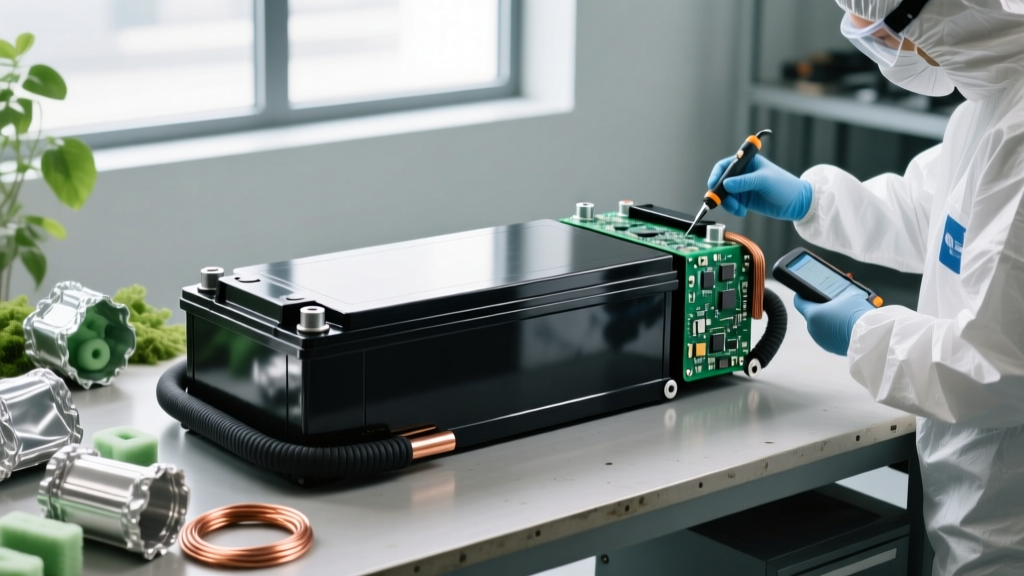
1. Dealer or authorized service center removal. Traction batteries require certified high-voltage technicians, specialized lifts, and insulated tools. No consumer should attempt removal. When a pack is flagged for replacement, the service center de-energizes and extracts it.
2. Manufacturer take-back programs. Every major EV manufacturer has contractual agreements with battery recyclers. Tesla partners with Redwood Materials (founded by former Tesla CTO JB Straubel). GM works with Li-Cycle. Hyundai/Kia uses a combination of Li-Cycle and Cirba Solutions. Ford has agreements with Redwood Materials. The manufacturer or its recycler arranges transport — you don't need to find a facility.
3. Second-life applications. Packs that have degraded below automotive thresholds (typically 70–80% SoH) but retain functional cells are frequently repurposed for stationary energy storage — solar farm buffering, commercial peak-shaving, or residential Powerwall-style backup. This extends the battery's useful life by 5–10 additional years.
4. Material recovery. End-of-life packs are shredded and processed. Hydrometallurgical recycling (used by Redwood Materials and Li-Cycle) recovers 90–95% of nickel, cobalt, lithium, and copper. These materials re-enter the battery supply chain. Per the IRS §30D tax credit critical-mineral sourcing requirements, domestically recycled battery materials now qualify as "US-sourced" — creating economic incentive for robust recycling infrastructure.
What about the 12V battery? If you actually need to dispose of a conventional 12V auxiliary battery (lead-acid or lithium), any auto parts store (AutoZone, Advance Auto Parts, O'Reilly) accepts them for recycling — often with a $10–$20 core credit. This is the same process as a gas car's 12V battery. Do not confuse this with the traction battery.
Emerging Battery Technology: What's Next
Several next-generation battery technologies promise to reshape EV ownership economics, but realistic timelines matter:
- Solid-state batteries: Toyota, Samsung SDI, and QuantumScape are targeting limited production in 2027–2028, initially in premium vehicles. Expected benefits: 30–40% higher energy density, faster charging, improved safety. Mass-market availability is realistically 2030+. These are announced, not available.
- Silicon-dominant anodes: Companies like Sila Nanotechnologies and Group14 are replacing graphite anodes with silicon composites, boosting energy density 15–25%. Early production deployments began in 2025–2026 (Mercedes G-Class EV uses Sila cells). This technology is scaling now but remains limited to specific models.
- Sodium-ion batteries: CATL and BYD are deploying sodium-ion packs in Chinese-market vehicles — lower cost, zero lithium/cobalt, but ~30% lower energy density. US availability is uncertain and likely limited to commercial/fleet applications initially.
- Improved LFP variants: LMFP (lithium manganese iron phosphate) adds manganese to boost energy density ~15% while retaining LFP's cost and longevity advantages. Expected in US-market vehicles by 2027.
For buyers today: current NMC and LFP batteries are mature, well-understood technologies with proven longevity data. Waiting for solid-state means waiting years — and today's packs will likely outlast your ownership period regardless.
Frequently Asked Questions
Can I throw an EV battery in the trash?
No. High-voltage traction batteries are classified as hazardous waste and contain recoverable critical minerals. They must be handled by certified technicians and processed through manufacturer-affiliated recycling channels. Most states prohibit landfill disposal of lithium-ion batteries above a certain size.
How much does it cost to replace a Tesla Model 3 battery out of warranty?
As of 2026, a Tesla Model 3 Long Range battery replacement costs approximately $12,000–$16,000 including labor at a Tesla Service Center. The RWD (LFP) pack is less, around $8,000–$12,000. However, most Model 3 packs reach 200,000+ miles before needing replacement, and Tesla's 8-year warranty covers premature degradation below 70% SoH.
Does frequent DC fast charging ruin my battery?
It accelerates degradation modestly but doesn't "ruin" the battery. Data from Recurrent Auto and Geotab shows that vehicles that primarily DC fast-charge lose approximately 0.5–1% more capacity per year compared to those that primarily use Level 2 home charging. Over 10 years, that's roughly 5–10% additional loss. Occasional fast charging for road trips has negligible impact.
Is LFP better than NMC for battery longevity?
For pure cycle life, yes. LFP cells can endure 3,000–6,000+ charge cycles vs. 1,000–2,500 for NMC. In practical terms, an LFP pack could theoretically last 500,000+ miles before reaching 80% SoH — far beyond the vehicle's structural lifespan. However, LFP has lower energy density (less range per pound) and worse cold-weather performance. Choose LFP for longevity and cost; choose NMC for maximum range and cold-climate capability.
What happens if my EV battery degrades to 60% capacity?
At 60% SoH, a 300-mile EPA-rated EV delivers roughly 180 miles of range. The vehicle remains drivable, but range is significantly reduced. If this occurs within the warranty period (8 years/100,000 miles for most brands), the manufacturer must replace or repair the pack. Outside warranty, you face the replacement costs outlined above — or retire the vehicle. In practice, reaching 60% SoH typically requires 250,000+ miles or a defective pack.
Where can I recycle my EV's 12V auxiliary battery?
Any auto parts retailer — AutoZone, Advance Auto Parts, O'Reilly Auto Parts, NAPA — accepts 12V batteries for recycling. Many offer a core credit ($10–$25) toward a new battery. This is identical to recycling a conventional car battery and is entirely separate from the high-voltage traction battery system.
Sources: fueleconomy.gov — EV Technology, IRS §30D Clean Vehicle Credits, manufacturer warranty documentation (Tesla, Hyundai, Ford, GM 2026 model year).