If you've been researching home energy storage or portable power stations in 2026, you've likely encountered the Bluetti sodium-ion battery lineup and wondered: does this chemistry have a future in electric vehicles? Sodium-ion (Na-ion) is generating serious attention as a lower-cost, more sustainable alternative to lithium-based cells — and while it hasn't yet reached mainstream EV traction packs, understanding how it compares to the LFP and NMC chemistries already powering millions of EVs is critical for any buyer planning their next electrified purchase or home-energy investment.
This guide breaks down every major EV battery chemistry available today, pairs them with real degradation data and warranty terms, and puts sodium-ion's promise — exemplified by Bluetti's consumer products — into honest, spec-driven context.
EV Battery Chemistries Explained: NMC, NCA, LFP, and Sodium-Ion
Every EV on the road today uses one of a handful of lithium-ion cathode chemistries, with a new challenger emerging on the horizon. Here's what each abbreviation means and why it matters for your wallet and your daily drive.
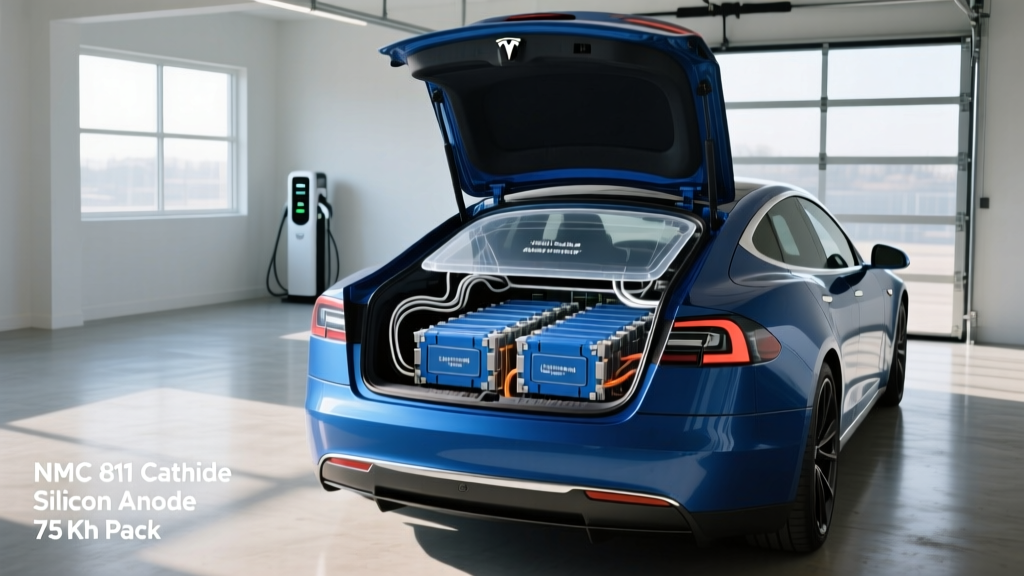
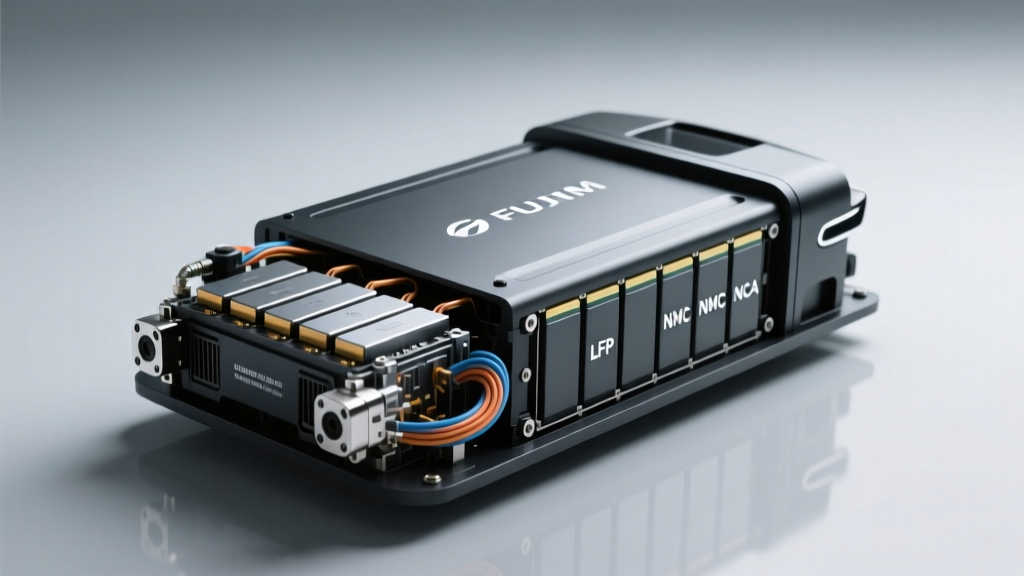
NMC (Nickel Manganese Cobalt) and NCA (Nickel Cobalt Aluminum) dominate long-range EVs. Their high energy density — typically 220–260 Wh/kg at the cell level — lets automakers pack more kWh into a given physical space. Tesla's Model 3 Long Range, Hyundai Ioniq 5, and most premium EVs rely on NMC or NCA. The trade-off: cobalt is expensive and ethically fraught, cycle life is moderate (roughly 1,000–1,500 full cycles before significant degradation), and thermal stability requires sophisticated battery management systems.
LFP (Lithium Iron Phosphate) sacrifices some energy density (140–180 Wh/kg) for dramatically longer cycle life (3,000–5,000+ cycles), superior thermal stability, and zero cobalt. Tesla's Standard Range Model 3 and Model Y, the Ford Mustang Mach-E Select, and most BYD vehicles use LFP. You'll see slightly less range per kilogram, but the battery will likely outlast the car itself.
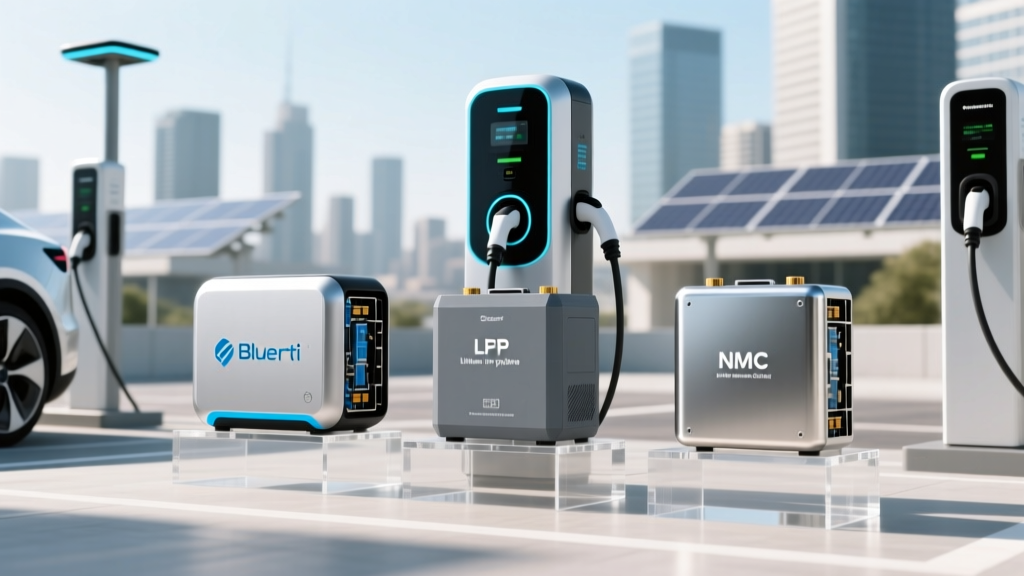
Sodium-Ion (Na-ion) replaces lithium entirely with abundant, cheap sodium. Energy density currently sits around 120–160 Wh/kg — lower than LFP — but raw material costs drop significantly. Bluetti has been an early mover, integrating Na-ion cells into portable power stations and home battery systems, touting excellent cold-weather performance and thousands of cycles. CATL began shipping first-generation Na-ion cells to select Chinese-market EVs in 2024–2025, but no mainstream US-market EV currently uses sodium-ion in its traction battery.
| Attribute | NMC/NCA | LFP | Sodium-Ion |
|---|---|---|---|
| Energy Density (cell-level) | 220–260 Wh/kg | 140–180 Wh/kg | 120–160 Wh/kg |
| Cycle Life (to 80% capacity) | 1,000–1,500 | 3,000–5,000+ | 3,000–5,000+ (est.) |
| Cold Performance (-20°C) | Moderate loss (~30%) | Moderate loss (~25%) | Strong (~10–15% loss) |
| Thermal Stability | Good (needs active BMS) | Excellent | Excellent |
| Raw Material Cost | High (Ni, Co) | Moderate (Fe, P) | Low (Na abundant) |
| Current US EV Adoption | Widespread | Growing (Tesla, Ford, BYD) | None in traction packs |
| Consumer Products | N/A | Home storage (e.g., Tesla Powerwall) | Bluetti portable/home units |
LFP vs NMC — Which Is Better and Why?
There's no universal winner — the right chemistry depends on your driving profile.
Choose NMC/NCA if: You prioritize maximum range in a single charge, regularly drive 300+ miles between charges, or need the lightest possible pack for performance applications. The Hyundai Ioniq 5 Long Range (84 kWh usable, NMC) delivers an EPA-estimated 305 miles; an equivalent LFP pack would weigh significantly more for the same range.
Choose LFP if: You charge at home daily, don't need 300+ miles of range, and want a battery that will show minimal degradation over 10–15 years. LFP also tolerates regular 100% charging — something NMC owners should avoid for daily use. Tesla recommends charging LFP-equipped vehicles to 100% at least weekly to keep the BMS calibrated.
The practical split: If your daily commute is under 80 miles and you have Level 2 home charging, LFP is the more durable, lower-anxiety choice. If you road-trip frequently and need every mile of EPA range, NMC/NCA still holds the energy-density crown.
How Long Do EV Batteries Last? Real Degradation Data
The short answer: far longer than most buyers fear. According to data aggregated by Recurrent Auto, the average EV battery retains roughly 90–95% of original capacity after 5 years and 85–92% after 8 years / 100,000 miles. Catastrophic failure requiring full replacement is rare — under 2% of EVs in large fleet studies have needed out-of-warranty battery swaps.
Typical Degradation Curve (NMC, liquid-cooled):
- Year 1: ~2–3% loss (initial formation drop)
- Years 2–5: ~0.5–1% per year (linear phase)
- Years 6–10: ~0.5% per year (gradual, slow decline)
- Expected capacity at 150,000 miles: 85–90%
LFP batteries tend to show even flatter curves — Tesla's LFP Model 3 fleet data suggests many units retain 92%+ after 100,000 miles.
Sodium-ion promises similar or better cycle life, but long-term automotive field data doesn't yet exist. Bluetti's Na-ion home batteries are rated for 3,000+ cycles, which in daily-cycling home storage translates to roughly 8–10 years — promising, but EV traction packs face far more demanding thermal and power-delivery profiles.
What Does the Battery Warranty Cover?
Federal law mandates that EV battery warranties cover a minimum of 8 years / 100,000 miles (10 years / 150,000 miles in CARB states like California, New York, and Massachusetts). Most manufacturers guarantee the battery will retain at least 70% of original capacity over that period — though some go higher.
| Vehicle | Chemistry | Warranty Term | Capacity Threshold |
|---|---|---|---|
| Tesla Model 3 LR (AWD) | NMC | 8 yr / 120,000 mi | 70% |
| Tesla Model 3 RWD | LFP | 8 yr / 100,000 mi | 70% |
| Hyundai Ioniq 5 | NMC | 10 yr / 100,000 mi | 70% |
| Ford Mustang Mach-E | NMC/LFP (trim-dependent) | 8 yr / 100,000 mi | 70% |
| Rivian R1T / R1S | NMC | 8 yr / 175,000 mi | 70% |
| Chevrolet Equinox EV | NMC (Ultium) | 8 yr / 100,000 mi | 60% |
Critical nuance: warranty coverage applies to defects and abnormal degradation, not normal wear. If your battery drops from 100% to 72% over 8 years, that's considered normal and is not covered. Coverage kicks in only when capacity falls below the stated threshold.
How Much Does an EV Battery Cost to Replace?
Out-of-warranty replacement remains the biggest fear for used-EV buyers. Here's what the numbers actually look like in 2026:
| Vehicle / Pack Size | Estimated Cost | Notes |
|---|---|---|
| Tesla Model 3 (75 kWh) | $12,000–$16,000 | Refurbished packs available for ~$8,000–$10,000 |
| Hyundai Ioniq 5 (77.4 kWh) | $14,000–$18,000 | Module-level repair sometimes possible |
| Ford F-150 Lightning (131 kWh ER) | $20,000–$28,000 | Largest consumer packs cost the most |
| Chevrolet Bolt EV (65 kWh) | $9,000–$13,000 | Post-recall replacement packs widely available |
| Nissan LEAF (40 kWh) | $6,500–$9,000 | Passive air cooling; higher degradation risk |
Context that matters: fewer than 2% of EV batteries require replacement during their usable life, and costs continue declining. BloombergNEF reported average pack prices at roughly $115/kWh in late 2025, down from $140/kWh the prior year. For most owners, the battery will outlive the car's body, suspension, and interior.
Factors That Accelerate (or Preserve) Battery Life
Battery longevity isn't random — it's largely determined by how you charge, store, and drive. Here are the variables with the greatest measured impact:
- State of Charge (SoC) habits: For NMC/NCA, keep daily SoC between 20–80%. Storing at 100% for extended periods accelerates electrolyte decomposition. LFP is an exception — Tesla recommends periodic 100% charges for BMS calibration.
- DC fast-charging frequency: Occasional fast charging is fine; daily 150+ kW sessions add cumulative stress. Data from Recurrent shows Teslas that fast-charge >90% of the time degrade ~2–3% more over 4 years than those primarily using Level 2.
- Extreme temperatures: Sustained exposure above 95°F or below 10°F without preconditioning increases degradation. Garage parking in hot climates measurably extends pack life.
- Preconditioning: Using your EV's battery preconditioning feature before fast charging (Tesla's navigation-to-Supercharger, Hyundai's winter mode) warms the cells to optimal temperature, reducing lithium plating risk.
- Depth of discharge: Shallow cycles (30–70%) are gentler than full 0–100% swings. This is why plug-in hybrids with small batteries sometimes show faster relative degradation — they cycle through a larger percentage of total capacity daily.
How to Check and Monitor Battery Health (SoH)
State of Health (SoH) is the percentage of original capacity your battery currently holds. Here's how to check it:
Built-in vehicle tools: Some EVs display SoH directly. The Nissan LEAF shows battery health bars on the dash (though the scale is imprecise). Hyundai/Kia models accessible via the dealer diagnostic tool can pull exact SoH figures.
OBD-II dongles + apps: Devices like the OBDLink MX+ paired with apps such as EVNotify, LeafSpy (Nissan), or TeslaFi can read the BMS-reported SoH directly. This is the most reliable method for used-EV shoppers.
Manual calculation: Charge to 100%, note the displayed range, and compare it to the original EPA rating adjusted for the vehicle's efficiency. If your 300-mile EPA Model 3 shows 270 miles at 100% (accounting for temperature), your SoH is roughly 90%. This method is approximate but directionally useful.
Third-party certifications: Companies like Recurrent now offer battery health reports that some dealerships and used-EV marketplaces include in listings — a valuable trust signal for buyers.
Emerging Tech: Solid-State, Silicon Anode, and Sodium-Ion's EV Timeline
The next generation of battery technology is real — but timelines matter more than headlines.
Solid-state batteries promise 300–400 Wh/kg energy density and faster charging by replacing the liquid electrolyte with a solid conductor. Toyota has announced a 2027–2028 production timeline for a limited run; QuantumScape continues testing with Volkswagen but has not reached mass production. This technology is not available in any consumer EV as of 2026.
Silicon-dominant anodes (from companies like Sila Nanotechnologies and Group14) increase energy density 15–25% over conventional graphite anodes. These are beginning to appear in premium applications — the Mercedes G-Class 580e uses a silicon-anode pack — but cost remains a barrier for mainstream vehicles.
Sodium-ion for EVs: CATL's first-generation Na-ion cells power the Chery QQ Ice Cream (a small city car sold in China). For US-market EVs, sodium-ion's lower energy density means it's best suited for affordable, shorter-range models or as part of a hybrid AB-pack architecture (CATL's approach: pairing Na-ion and LFP modules in the same pack). Bluetti's sodium-ion batteries — while not EV traction packs — demonstrate that the supply chain and consumer confidence in Na-ion are maturing. Expect the first US-market EV with Na-ion cells no earlier than 2028–2029, likely in a budget-oriented compact.
Forward-looking caution: Solid-state, silicon-anode, and sodium-ion technologies for EV traction batteries remain in pre-production or limited-market stages. Any article or advertisement presenting these as currently available in US-market EVs is ahead of the facts. For 2026 buyers, NMC and LFP are your proven, warrantied options.
Frequently Asked Questions
How long do EV batteries last in years and miles?
Most modern liquid-cooled EV batteries (NMC or LFP) retain 85–92% capacity after 8 years / 100,000 miles based on fleet data from Recurrent Auto. Many will outlast 15 years / 150,000 miles before dropping below the 70% threshold that triggers warranty coverage. Catastrophic failure is statistically rare — under 2% of packs require replacement.
How much does an EV battery cost to replace?
Out-of-warranty replacement ranges from roughly $6,500 (smaller packs like the Nissan LEAF 40 kWh) to $28,000 (large packs like the F-150 Lightning Extended Range 131 kWh). Refurbished and module-level repairs can reduce costs 30–50%. Pack prices continue declining — BloombergNEF reports average cell pricing around $115/kWh as of late 2025.
What does the EV battery warranty cover?
Federal minimum is 8 years / 100,000 miles with a capacity retention threshold — typically 70% of original capacity. In CARB states, coverage extends to 10 years / 150,000 miles. The warranty covers defects and abnormal degradation, not normal capacity loss that stays above the threshold. Check your specific manufacturer's terms, as thresholds vary (Chevrolet uses 60% on some models).
How do I check and maximize my EV battery health?
Monitor SoH via OBD-II apps (EVNotify, LeafSpy, TeslaFi), built-in dash displays, or third-party battery health reports. Maximize longevity by keeping NMC/NCA packs between 20–80% daily SoC, minimizing DC fast-charging frequency, preconditioning before fast charges, and avoiding prolonged storage at 100% or in extreme heat. LFP owners can charge to 100% regularly without concern.
LFP vs NMC — which is better for my EV?
LFP wins on longevity (3,000–5,000+ cycles vs. 1,000–1,500), thermal safety, and cobalt-free sourcing. NMC wins on energy density (220–260 Wh/kg vs. 140–180 Wh/kg), delivering more range per kilogram. If you charge at home daily and don't need 300+ miles of range, LFP is the more durable choice. If you road-trip often and need maximum range, NMC still holds the edge.
Does the Bluetti sodium-ion battery technology apply to EVs?
Not directly — Bluetti uses Na-ion cells in portable power stations and home energy storage, not in vehicle traction packs. However, Bluetti's adoption validates Na-ion's cycle-life and cold-weather claims at the consumer level. CATL is the primary automotive Na-ion supplier, with limited deployment in Chinese-market EVs. US-market EVs with Na-ion traction batteries are not expected before 2028–2029.