If you've searched for a battery for Toyota RAV4 2013, you're almost certainly looking for a 12-volt auxiliary battery — the standard lead-acell unit that starts the accessories, powers the ECU, and cranks the gas engine in Toyota's compact SUV. But if you're cross-shopping a used 2013 RAV4 against a modern EV or hybrid, or you've heard alarming stories about EV battery replacement costs, you need a clear picture of what high-voltage traction batteries actually cost, how long they last, and what chemistry is inside them.
This guide bridges both worlds. We'll confirm exactly which 12V battery the 2013 RAV4 takes, then pull back the curtain on EV traction battery technology — from LFP vs. NMC chemistry to real-world degradation data, warranty coverage, and the solid-state batteries on the horizon. Whether you're keeping your RAV4 running or weighing an upgrade to a RAV4 Prime PHEV or a full BEV, the numbers below will ground your decision in data, not marketing.
The 2013 Toyota RAV4 Battery: What You're Actually Buying
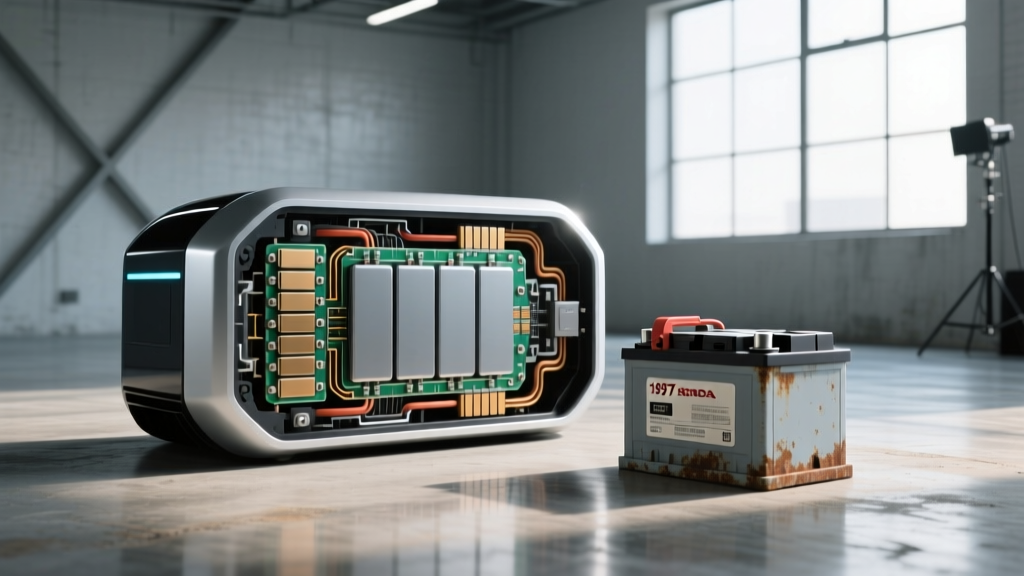
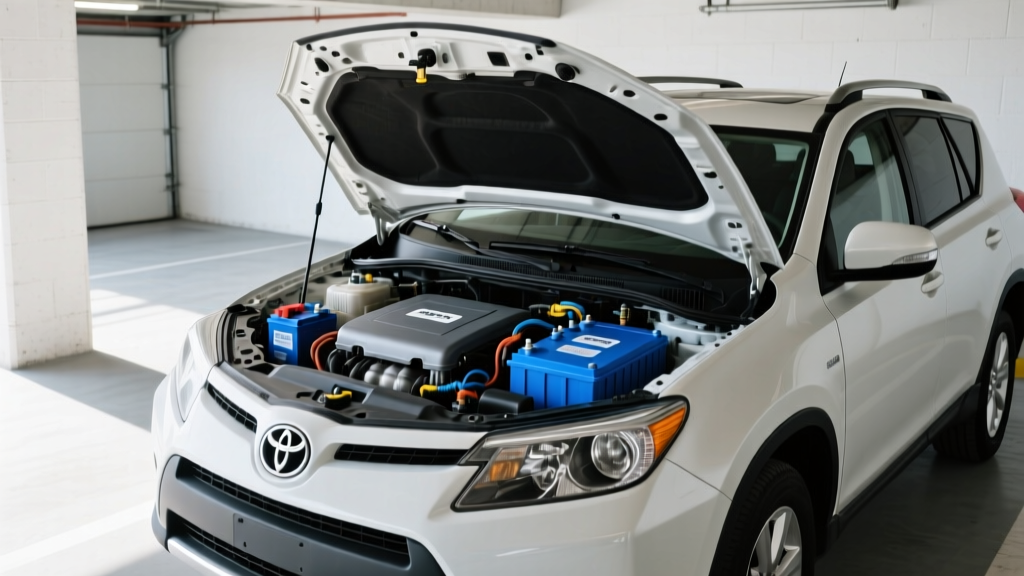
The 2013 Toyota RAV4 (fourth generation, gasoline-only in the U.S.) uses a conventional Group 35 (also called 24F in some catalogs) 12V lead-acid battery. This is a flooded or AGM cell rated around 550–650 cold cranking amps (CCA) with roughly 55–65 Ah of capacity. It has nothing in common with the high-voltage lithium-ion traction batteries found in EVs and PHEVs.
Typical replacement cost for this 12V battery: $130–$220 installed at an auto parts store, or $80–$140 for a DIY unit from Interstate, Optima, or DieHard. Expect a 3–5 year lifespan depending on climate and driving habits.
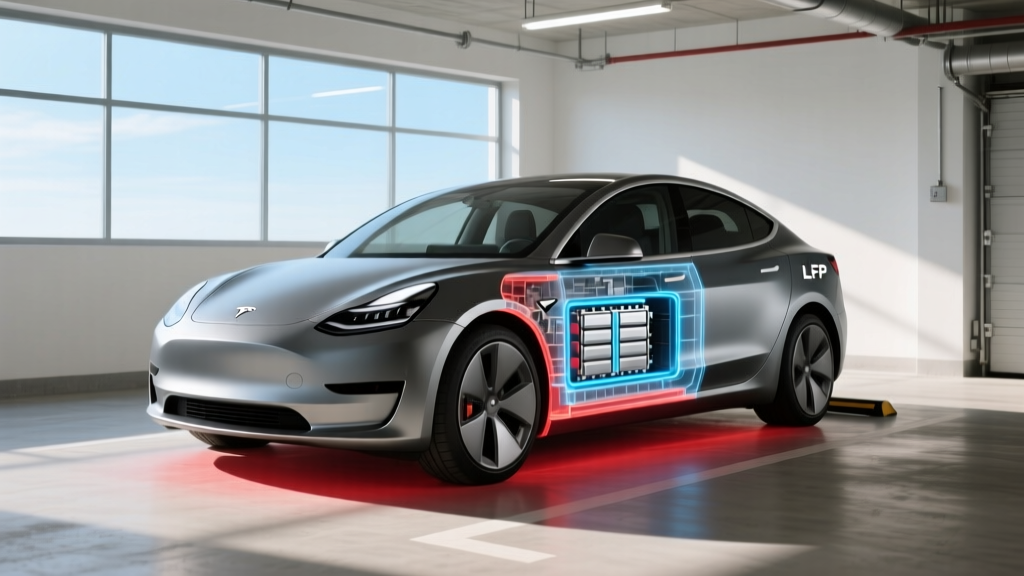
EV Traction Battery Chemistry: LFP vs. NMC/NCA Explained
Modern EVs use one of two dominant lithium-ion chemistries in their traction packs. Understanding the trade-offs matters whether you're buying a Tesla Model 3, a Ford Mustang Mach-E, or evaluating a future RAV4 Prime upgrade.
| Attribute | LFP (Lithium Iron Phosphate) | NMC / NCA (Nickel Manganese Cobalt / Nickel Cobalt Aluminum) |
|---|---|---|
| Energy density | ~160–180 Wh/kg (lower) | ~220–300 Wh/kg (higher) |
| Cycle life | 3,000–5,000+ cycles | 1,000–2,000 cycles |
| Cold-weather performance | Weaker; loses more range below 32°F | Better low-temp discharge |
| Cost per kWh | ~$80–$100 (lower) | ~$110–$140 (higher) |
| Recommended SoC for daily use | 100% (benefits from full charges) | 80% (stress above 90% accelerates degradation) |
| Thermal stability / safety | Superior; very resistant to thermal runaway | Good with management systems; more reactive chemistry |
| Notable vehicles (2025–2026) | Tesla Model 3/Y RWD, Ford Mustang Mach-E Select (LFP option), BYD models | Tesla LR/Performance, Hyundai Ioniq 5/6, Rivian, BMW iX, most PHEVs incl. RAV4 Prime |
Which is better? It depends on your use case. LFP wins on longevity and cost — ideal for daily commuters who charge at home and don't need maximum range. NMC/NCA wins on energy density and cold-weather performance — better for long road trips, cold climates, and vehicles where packaging space is tight. The Toyota RAV4 Prime, for instance, uses an NMC-based 18.1 kWh pack (usable ~14.5 kWh) to deliver 42 miles of EPA electric range in a compact crossover footprint where LFP's lower density would sacrifice cargo space.
How Long Do EV Batteries Last? Real Degradation Data
The fear that EV batteries "die" at 100,000 miles is not supported by fleet data. Here's what real-world tracking shows:
Degradation Benchmarks from Fleet and Owner Data
- Tesla Model 3/Y (NMC/NCA): Median ~12% capacity loss at 150,000 miles (Tesla 2023 Impact Report). Most packs retain 85–90% at 100,000 miles.
- Nissan LEAF (early NMC, passive cooling): Higher degradation — 20–30% loss by 80,000–100,000 miles in hot climates, per fueleconomy.gov and owner surveys. A cautionary tale about thermal management.
- Chevrolet Bolt EV (NMC, liquid-cooled): ~5–8% loss at 80,000 miles, per Recurrent Auto fleet data.
- LFP packs (Tesla Model 3 RWD): Early data suggests <5% loss at 100,000 miles, though the sample is still young (LFP Teslas only began wide U.S. delivery in 2022).
- Toyota PHEV/Hybrid NiMH and Li-ion packs: Toyota's hybrid Synergy Drive batteries (Prius, RAV4 Hybrid) routinely exceed 200,000 miles with minimal capacity loss, per iFixit and taxi fleet teardowns.
Bottom line: A modern liquid-cooled EV traction battery should retain 80–90% of original capacity through 150,000 miles. Most will outlast the vehicle's body and suspension.
What Does the EV Battery Warranty Actually Cover?
Federal law mandates a minimum 8 years / 100,000 miles warranty on EV and PHEV traction batteries (California and CARB-adopting states extend this to 10 years / 150,000 miles). Here's how major manufacturers structure coverage:
| Manufacturer | Coverage Period | Capacity Retention Threshold | Notes |
|---|---|---|---|
| Tesla | 8 yr / 100,000–120,000 mi (varies by model) | 70% | Covers defects + degradation below 70% |
| Hyundai / Kia | 10 yr / 100,000 mi | 70% | Among the longest coverage in the industry |
| Ford | 8 yr / 100,000 mi | 70% | Covers F-150 Lightning, Mach-E packs |
| Toyota (RAV4 Prime / bZ4X) | 8 yr / 100,000 mi (hybrid battery: 10 yr / 150,000 mi) | 70% (traction); varies (hybrid) | Toyota's hybrid battery warranty is notably generous |
| GM (Chevrolet, Cadillac) | 8 yr / 100,000 mi | 60–70% (model-dependent) | Ultium packs covered; Bolt recall replacement covered separately |
What triggers a warranty claim? If your battery's State of Health (SoH) drops below the stated threshold (typically 70% of original capacity) within the warranty period, the manufacturer will repair or replace the pack — usually by swapping failed modules rather than the entire assembly. Normal gradual degradation above the threshold is not covered, but it also rarely renders the vehicle undrivable.
EV Battery Replacement Cost: What the Numbers Actually Show
This is the single biggest source of EV anxiety, so let's anchor it in real invoices and manufacturer data rather than worst-case headlines:
| Vehicle / Pack Size | Full Pack Replacement Cost | Module-Level Repair | When Typically Needed |
|---|---|---|---|
| Nissan LEAF (40 kWh) | $6,500–$9,000 | $2,000–$4,000 (module swap) | 100k–150k mi (early passive-cooled packs) |
| Chevrolet Bolt EV (65 kWh) | $14,000–$16,000 | $3,000–$6,000 | Rare; most covered under recall/warranty |
| Tesla Model 3 (75 kWh NMC) | $12,000–$16,000 | $3,500–$7,000 | 200k+ mi; very low out-of-warranty failure rate |
| Tesla Model S/X (100 kWh) | $18,000–$22,000 | $5,000–$9,000 | 150k–250k mi (early packs more failure-prone) |
| Ford F-150 Lightning (131 kWh) | $20,000–$28,000 (estimated) | Not yet widely documented | Too new for out-of-warranty data |
| Toyota RAV4 Prime (18.1 kWh PHEV) | $4,000–$6,500 | $1,500–$3,000 | 150k+ mi; Toyota hybrid pack longevity is excellent |
Context that matters: According to data from Recurrent Auto, fewer than 5% of EVs in their tracked fleet of 15,000+ vehicles have needed a battery replacement — and the vast majority of those were covered under warranty. The average gasoline engine replacement or transmission rebuild costs $4,000–$8,000 and is far more common. EV battery replacement is a real cost, but it is neither imminent nor inevitable for most owners.
Factors That Accelerate (or Preserve) Battery Health
Lithium-ion degradation is driven by chemistry, temperature, and electrical stress. Here's what actually moves the needle:
Battery Care Best Practices
- Avoid chronic DC fast charging above 150 kW. Occasional road-trip fast charging is fine, but daily use of 250+ kW chargers increases cell temperature and accelerates electrolyte breakdown. Level 2 home charging (7–11 kW) is gentler.
- Keep State of Charge between 20–80% for NMC/NCA packs. Sitting at 100% for days stresses the cathode. LFP packs are the exception — Toyota and Tesla recommend periodic 100% charges to help the BMS calibrate.
- Minimize exposure to extreme heat. Parking in a garage in Phoenix matters more than any charging habit. Battery temperatures above 113°F (45°C) sustained for hours accelerate calendar degradation.
- Don't store at 0% or 100% for weeks. If leaving the vehicle for an extended trip, set SoC to ~50% and plug in to a Level 2 charger with a storage-mode setting.
- Use preconditioning before fast charging. Most modern EVs (Tesla, Hyundai, Ford) warm the battery to ~95°F before a DC fast session, which reduces internal resistance and protects cells. Navigate to a charger using the car's built-in routing to trigger this automatically.
- Cold-weather range loss is temporary, not degradation. A 20–30% range drop at 20°F is caused by increased internal resistance and cabin heating demand — capacity returns when temperatures rise.
How to Check Your EV Battery's State of Health (SoH)
State of Health (SoH) is the percentage of original capacity your pack can still hold. A new EV has 100% SoH; a pack at 85% SoH that originally held 75 kWh now holds ~63.75 kWh. Here's how to check it:
- In-vehicle displays: Some EVs (Nissan LEAF, some Hyundai/Kia models) show a battery health bar or SoH percentage in the settings menu. Tesla does not natively display SoH, but third-party apps like Tessie or Teslamate can estimate it from charge logs.
- OBD-II scanners and apps: Tools like OBDLink SX + Leaf Spy (Nissan), Scan My Tesla, or manufacturer-specific diagnostic modes can read pack voltage, cell imbalance, and SoH directly from the BMS.
- Dealer diagnostic report: Request a battery health check during service. Most manufacturers can print a SoH report — ask for this before buying a used EV.
- Charge-log estimation: Track how many kWh it takes to charge from 10% to 100% on Level 2. If your 75 kWh pack now draws only 64 kWh for a full charge, your SoH is approximately 85%.
- Recurrent, Geotab, and fleet telematics: If you participate in fleet or research programs, these platforms track SoH over time with high accuracy.
Emerging Battery Technology: What's Real and What's Not (Yet)
Headlines about "next-gen batteries" are constant, but timelines matter for purchase decisions:
- Solid-state batteries: Promise 30–50% higher energy density, faster charging, and improved safety by replacing the liquid electrolyte with a solid ceramic or polymer. Toyota has announced a solid-state pilot for limited production vehicles around 2027–2028, with mass production not expected before 2030. Samsung SDI and QuantumScape are targeting similar timelines. These are not available in any 2026 production vehicle.
- Silicon-dominant anodes: Companies like Sila Nanotechnologies and Group14 are replacing graphite anodes with silicon composites, boosting energy density 10–20%. Early production use is appearing in niche applications (Mercedes G-Class EV, 2025–2026), but mainstream adoption is expected around 2028–2030.
- Sodium-ion batteries: Cheaper, cobalt-free, and functional in extreme cold, but with ~30% lower energy density than LFP. CATL is producing these for budget Chinese-market EVs. U.S. availability in passenger vehicles remains unannounced as of 2026.
- Structural battery packs: Tesla's 4680 cells integrated into the vehicle chassis (structural pack) reduce weight and cost. Currently in production in Model Y at Giga Texas, with gradual rollout to other models.
Practical takeaway: If you need a vehicle in 2026, buy what's available. The chemistry in today's LFP and NMC packs is mature, well-warranted, and will serve you for well over a decade. Waiting for solid-state means waiting at least 3–4 years for limited, premium-priced production.
Frequently Asked Questions
How long do EV batteries last in years and miles?
Modern liquid-cooled EV traction batteries typically last 15–20 years or 200,000+ miles before dropping below 70% capacity. Data from Recurrent Auto and Tesla's fleet reports show median degradation of ~12% at 150,000 miles for NMC packs, and potentially less for LFP. Most EV batteries outlive the vehicle's other major components.
How much does an EV battery cost to replace?
Full pack replacement ranges from $6,500 (Nissan LEAF 40 kWh) to $28,000 (Ford F-150 Lightning 131 kWh), with most mid-size EVs in the $12,000–$18,000 range. Module-level repairs are typically $2,000–$7,000. However, fewer than 5% of EVs have required out-of-warranty battery replacement according to fleet data, and most failures are covered under the federally mandated 8-year/100,000-mile warranty.
What does the battery warranty cover?
EV traction battery warranties cover defects and capacity loss below a stated threshold (typically 70% of original capacity) for 8 years/100,000 miles (10 years/150,000 miles in CARB states). This means if your 75 kWh pack can only hold 50 kWh (67% SoH) at year 6, the manufacturer must repair or replace it. Normal gradual degradation above the threshold is expected and not covered.
How do I check and maximize my EV battery health?
Check SoH via your vehicle's settings menu, an OBD-II diagnostic app (Leaf Spy, Scan My Tesla), or a dealer diagnostic report. To maximize longevity: charge to 80% daily on NMC packs (100% is fine for LFP), minimize daily DC fast charging, avoid storing at 0% or 100% SoC for extended periods, use battery preconditioning before fast charging, and park in shade or a garage in hot climates.
LFP vs. NMC — which battery chemistry is better for me?
Choose LFP if: you charge at home daily, want maximum cycle life (3,000–5,000 cycles), prioritize lower cost, and live in a moderate climate. Choose NMC/NCA if: you need maximum range per charge, regularly drive in sub-freezing temperatures, take frequent long road trips, or need a lighter pack for towing. Neither is universally superior — the right choice depends on your driving patterns and climate.
Is the battery for a Toyota RAV4 2013 the same as an EV battery?
No. The 2013 RAV4 (gasoline model) uses a standard Group 35 / 24F 12V lead-acid battery costing $80–$220. This is entirely different from the high-voltage lithium-ion traction batteries in EVs and PHEVs, which cost $4,000–$28,000 to replace. The RAV4 Prime PHEV uses an 18.1 kWh NMC traction battery — a completely separate system from the 12V accessory battery that every vehicle, including EVs, also carries.