The Real State of EV Battery Technology in 2026
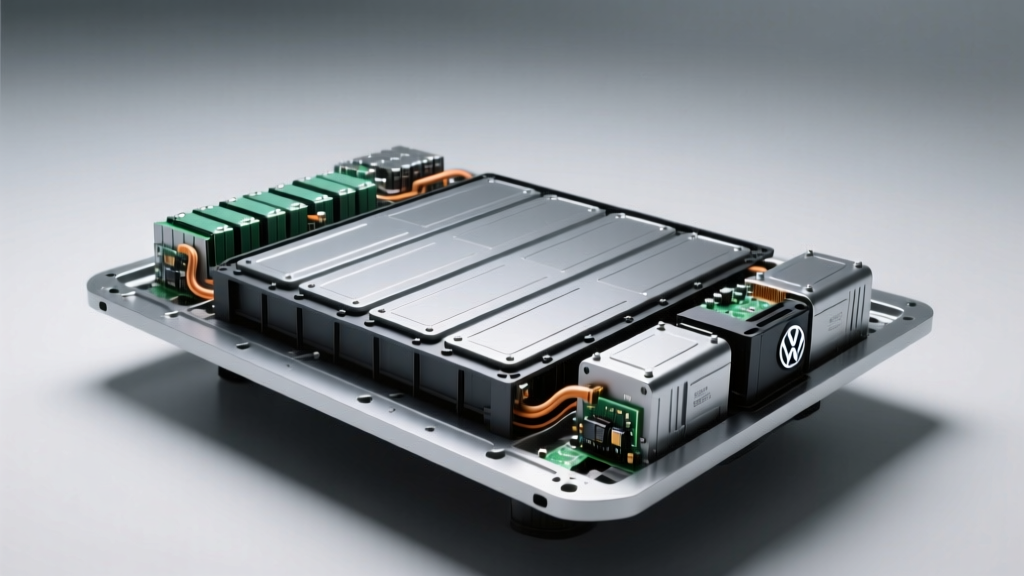
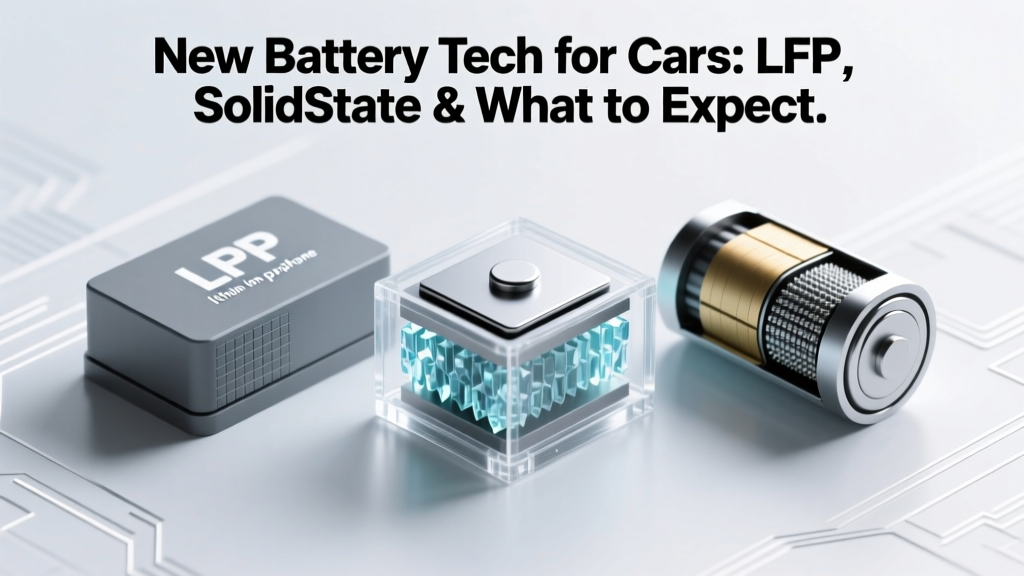
If you've been following the EV space, you've likely encountered a flood of headlines about new battery tech for cars — solid-state breakthroughs, silicon anodes, sodium-ion cells. The reality on showroom floors is more grounded. Today's production EVs rely on two dominant lithium-ion chemistries — LFP (lithium iron phosphate) and NMC/NCA (nickel manganese cobalt / nickel cobalt aluminum) — each with distinct trade-offs that directly affect your range, charging speed, longevity, and wallet.
This guide cuts through the hype with real numbers: degradation data from high-mileage fleets, warranty terms from every major automaker, replacement cost ranges, and a clear-eyed look at which emerging technologies are years away versus already in your driveway.
LFP vs NMC/NCA: The Chemistry Showdown
The single biggest battery decision you'll make when buying an EV in 2026 is chemistry. Most buyers don't realize they're making it, but it affects daily ownership more than almost any other spec.
| Attribute | LFP (Lithium Iron Phosphate) | NMC/NCA (Nickel-Based) |
|---|---|---|
| Energy Density | Lower (~160-180 Wh/kg cell-level) | Higher (~250-300 Wh/kg cell-level) |
| Typical EPA Range | 240-330 mi (smaller packs common) | 300-400+ mi (larger packs) |
| Cycle Life | 3,000-5,000+ cycles to 80% SoH | 1,000-2,000 cycles to 80% SoH |
| Cold-Weather Performance | More range loss (~30-40% at 20°F) | Better cold retention (~20-30% loss at 20°F) |
| DC Fast Charge Tolerance | Excellent — tolerates frequent 100% SoC | Degrades faster at sustained 100% SoC |
| Recommended Daily Charge Limit | 100% (manufacturer-recommended) | 80-90% for daily use |
| Cost per kWh (pack-level) | ~$90-110/kWh | ~$120-150/kWh |
| Common In 2026 Models | Tesla Model 3/Y RWD, Ford Mustang Mach-E Select, Rivian Standard | Hyundai Ioniq 5/6, Tesla Long Range, BMW iX, most PHEVs |
| Key Advantage | Longevity, cost, safety (thermal stability) | Range, cold performance, charge speed |
| Key Trade-Off | Heavier per kWh, weaker in freezing temps | Shorter cycle life, cobalt supply chain concerns |
Choose LFP if: You charge at home daily, live in a moderate climate, want maximum battery lifespan, and 250-300 miles of range covers your needs. LFP's ability to sit at 100% state of charge without accelerated degradation makes it ideal for daily commuters.
Choose NMC/NCA if: You need 300+ miles of EPA range, regularly drive in sub-freezing temperatures, take frequent road trips requiring fast DC charging, or tow heavy loads. The higher energy density and better cold performance justify the slightly shorter cycle life for these use cases.
How Long Do EV Batteries Actually Last?
This is the question that keeps potential EV buyers up at night. The data from hundreds of thousands of real-world vehicles tells a reassuring story — but with nuance.
Typical Degradation Curve (NMC/NCA Packs, Real-World Fleet Data):
- Year 1 / 15,000 mi: 2-4% capacity loss (initial formation drop)
- Year 3 / 45,000 mi: 6-9% total loss
- Year 5 / 75,000 mi: 8-12% total loss
- Year 8 / 120,000 mi: 12-17% total loss
- Year 10 / 150,000 mi: 15-22% total loss
Sources: Geotab fleet data analysis of 6,300+ EVs; Tesla Impact Reports; Recurrent Auto battery health database.
LFP packs degrade differently. They tend to lose less capacity overall (often 5-10% over 8 years) but can show more non-linear behavior — the battery management system (BMS) sometimes struggles with accurate state-of-charge estimation, leading to apparent "sudden" drops that are actually calibration issues rather than true degradation. Tesla recommends periodically charging LFP packs to 100% to allow the BMS to recalibrate.
The critical insight: Modern EV batteries rarely fail catastrophically. They gradually lose capacity. A 2026 Hyundai Ioniq 5 with an 84 kWh usable NMC pack rated at 305 miles EPA will likely still deliver ~260-275 miles at the 8-year mark — still entirely functional for most drivers. According to fueleconomy.gov, the vast majority of EV batteries outlast the vehicles they're installed in.
EV Battery Warranty Terms: What's Actually Covered
Federal law mandates a minimum 8-year/100,000-mile warranty on EV battery packs, but automakers define "failure" differently. Here's what the major brands commit to for 2026 models:
| Manufacturer | Warranty Term | Capacity Threshold | Notes |
|---|---|---|---|
| Tesla (Model 3/Y RWD - LFP) | 8 yr / 100,000 mi | 70% retention | Standard Range models |
| Tesla (Model 3/Y LR - NMC) | 8 yr / 120,000 mi | 70% retention | Long Range & Performance |
| Hyundai / Kia | 10 yr / 100,000 mi | 70% retention | Among the longest terms |
| Ford (Mach-E, F-150 Lightning) | 8 yr / 100,000 mi | 70% retention | Components + capacity |
| GM (Ultium platform) | 8 yr / 100,000 mi | 70% retention | Covers Bolt EV/EUV, Blazer EV, Silverado EV |
| BMW | 8 yr / 100,000 mi | 70% retention | i4, iX, i7 series |
| Rivian | 8 yr / 175,000 mi | 70% retention | Higher mileage cap for R1T/R1S |
| Volkswagen (ID.4) | 8 yr / 100,000 mi | 70% retention | MEB platform |
What the 70% threshold means in practice: If your 84 kWh pack drops below 58.8 kWh usable capacity within the warranty period, the manufacturer must repair or replace it. However, most packs never hit this threshold under normal use. The warranty covers defects and abnormal degradation — not damage from accidents, flooding, or unauthorized modifications.
Important caveat: Some warranties differentiate between the battery pack and individual modules. A module-level repair (replacing 1-2 of 4-12 modules) costs the manufacturer far less than a full pack swap, and that's usually what you'll get. This is still effective — you regain meaningful capacity without a full replacement.
EV Battery Replacement Cost: Numbers and Context
Out-of-warranty battery replacement is the specter haunting EV skeptics. Here's what it actually costs in 2026, and — more importantly — how often it's needed.
| Vehicle / Pack Size | Battery Capacity | Chemistry | Estimated Replacement Cost |
|---|---|---|---|
| Tesla Model 3 RWD | ~60 kWh | LFP | $8,000 - $12,000 |
| Tesla Model Y Long Range | ~75 kWh | NMC | $12,000 - $16,000 |
| Hyundai Ioniq 5 | 84 kWh | NMC | $13,000 - $18,000 |
| Ford F-150 Lightning Ext. Range | 131 kWh | NMC | $20,000 - $28,000 |
| Chevrolet Silverado EV | 200 kWh | NMC (Ultium) | $28,000 - $38,000 |
| BMW iX xDrive50 | ~105 kWh | NMC | $18,000 - $25,000 |
Context that matters: These costs are comparable to a major engine or transmission replacement on a gas vehicle. More importantly, full battery replacements are rare. Data from Recurrent Auto shows that fewer than 5% of EVs have needed battery replacement, and the vast majority of those were covered under warranty due to manufacturing defects, not age-related degradation.
Module-level repairs — replacing only the degraded sections of the pack — typically run $2,000-$6,000 and are becoming more common as independent EV shops develop this capability. By the time most 2026 EVs need out-of-warranty service (2034+), pack costs are projected to fall 30-40% further due to manufacturing scale and chemistry improvements.
Factors That Accelerate (or Protect) Battery Life
What degrades your EV battery faster:
- Frequent DC fast charging above 150 kW — occasional use is fine, but daily 350 kW sessions generate sustained heat that accelerates electrolyte breakdown. Expect 1-3% additional annual loss if you DCFC daily versus home L2 charging.
- Sustained 100% state of charge (NMC/NCA only) — sitting at full charge for days stresses nickel-based cathodes. LFP is immune to this concern.
- Deep discharges below 10% — regularly running the pack nearly empty causes copper dissolution in the anode current collector.
- Extreme heat exposure — parking in direct sun in 100°F+ climates for extended periods without thermal management active. Most modern EVs run their thermal systems while parked, but this draws from the pack.
- Track use / sustained high-C-rate discharge — repeated hard acceleration and high-speed driving generates internal cell temperatures above 45°C.
What protects your battery:
- Home Level 2 charging (7-11 kW) — gentle, slow charging generates minimal heat. This is the single best thing you can do for longevity.
- 20-80% SoC window (NMC/NCA) — keeping your daily charge between these limits can double cycle life versus 0-100% cycling.
- Preconditioning before DC fast charging — warming the pack to 25-35°C via navigation-routed preconditioning (Tesla, Hyundai, Ford) enables faster charging AND reduces stress.
- Moderate climates or garage parking — batteries happiest between 15-30°C ambient.
- Regular software updates — OEMs continuously refine BMS algorithms to optimize charge profiles and thermal management.
Monitoring Your Battery's State of Health (SoH)
State of Health (SoH) is the percentage of original capacity your battery retains. A new pack is 100% SoH; at 70% SoH, your 300-mile EV delivers roughly 210 miles. Here's how to track it:
Manufacturer Apps and In-Vehicle Displays
Most 2026 EVs provide a battery health indicator in the infotainment system or companion app. Tesla's service menu (accessible via the software screen) shows estimated range at 100% SoC, which you can compare to the original EPA figure. Hyundai's Bluelink app provides a battery health percentage. Ford's Pass app shows similar data for the Mach-E and Lightning.
Third-Party Diagnostics
Services like Recurrent Auto (free for most EVs) connect to your vehicle's telematics and provide monthly SoH reports benchmarked against similar vehicles. Geotab offers fleet-level health monitoring. For a one-time check, many independent EV shops can pull the BMS log via OBD-II and give you a precise SoH reading — typically a $50-$100 service.
The DIY Method
Charge to 100% (LFP) or your normal limit (NMC), note the displayed range, and compare it to what the car showed at the same SoC when new. If your Ioniq 5 displayed 305 miles at 100% when new and now shows 280 miles, your SoH is approximately 92%. This method isn't perfectly precise (displayed range factors in recent driving efficiency), but it's directionally accurate and free.
Emerging Battery Technologies: What's Real vs. What's Coming
The headlines promise revolution. Here's a grounded assessment of each technology's timeline and production readiness:
Solid-State Batteries
Status: Announced / Limited production. Not widely available in consumer EVs.
Solid-state cells replace the liquid electrolyte with a solid ceramic, polymer, or sulfide material, promising 30-50% higher energy density, faster charging, and improved safety. Toyota has announced solid-state-equipped EVs for 2027-2028 with an estimated 460-mile range and 10-minute 10-80% charging. Samsung SDI and QuantumScape are also advancing prototypes.
Realistic timeline: Limited-production vehicles in 2027-2028 at premium price points. Broad market availability (multiple affordable models) is more likely 2030-2032. Manufacturing yield and cost remain the primary hurdles — current solid-state cells cost 3-5x more per kWh than liquid lithium-ion.
Silicon Anode Technology
Status: Early production integration.
Replacing graphite anodes with silicon can boost energy density by 20-40%. Sila Nanotechnologies and Group14 are supplying silicon-composite anode materials to battery manufacturers. The 2026 Mercedes-Benz G-Class EV (announced) uses a silicon-anode pack from Sila. GM's partnership with SES AI targets 2027 production.
Realistic timeline: Appearing in premium models now, expanding to mainstream vehicles by 2028-2029 as silicon swelling issues are resolved at scale.
Sodium-Ion Batteries
Status: Production in China, not yet in US-market vehicles.
Sodium-ion cells eliminate lithium and cobalt entirely, using abundant sodium. Energy density is lower (~120-150 Wh/kg), making them best suited for city EVs and energy storage. CATL and BYD are producing them at scale in China. US-market availability depends on supply chain development and is likely 2028+ at the earliest.
Structural Battery Packs (Cell-to-Chassis)
Status: In production.
Tesla's 4680 structural pack (Model Y Austin-built) and BYD's Cell-to-Body technology integrate cells directly into the vehicle frame, reducing weight and parts count. This isn't a chemistry change but a packaging innovation that's already improving vehicle efficiency and reducing manufacturing cost in current models.
Frequently Asked Questions
How long do EV batteries last in years and miles?
Most modern EV batteries are designed to last 15-20 years or 150,000-200,000+ miles before dropping below 70-80% of original capacity. Fleet data from Geotab and Recurrent Auto shows median degradation rates of 1.5-2.3% per year for liquid-cooled packs. Many early Tesla Model S vehicles from 2013-2015 still retain 80-85% capacity at 150,000+ miles. The battery will almost certainly outlast the rest of the vehicle.
How much does an EV battery cost to replace?
Full pack replacement ranges from $8,000 for a 60 kWh LFP pack (Tesla Model 3 RWD) to $28,000-$38,000 for large packs like the 200 kWh Ultium in the Silverado EV. However, fewer than 5% of EVs ever need replacement, and most of those are covered under the 8-year/100,000-mile federal minimum warranty. Module-level repairs cost $2,000-$6,000. By the 2030s, replacement costs are projected to drop 30-40% further.
What does the EV battery warranty cover?
Every 2026 EV sold in the US carries a minimum 8-year/100,000-mile battery warranty (per IRS §30D requirements and federal mandate). Most manufacturers guarantee the pack will retain at least 70% of original capacity. This covers defects, abnormal degradation, and module failures. It does not cover accident damage, flood damage, or capacity loss from abuse (repeated deep discharges, unauthorized modifications). Hyundai/Kia leads with 10-year/100,000-mile coverage; Rivian offers 8 years/175,000 miles.
How do I check and maximize my EV battery health?
Check SoH via your manufacturer's app, third-party services like Recurrent Auto, or by comparing displayed range at full charge to the original EPA figure. Maximize longevity by: (1) charging primarily on Level 2 at home, (2) keeping NMC/NCA packs between 20-80% SoC for daily use (100% is fine for LFP), (3) using preconditioning before DC fast charging, (4) avoiding leaving the car at 100% or below 10% for extended periods, and (5) parking in shade or a garage in hot climates.
LFP vs NMC — which battery chemistry is better?
Neither is universally better — it depends on your use case. LFP wins on longevity (3,000-5,000+ cycles vs 1,000-2,000), cost ($90-110/kWh vs $120-150/kWh), and daily convenience (charge to 100% freely). NMC wins on range (higher energy density means 300-400+ miles), cold-weather performance (less range loss in freezing temps), and peak DC fast-charge speed. For a daily commuter in a temperate climate with home charging, LFP is the pragmatic choice. For a road-tripper in Minnesota, NMC is the better fit.
Will solid-state batteries make current EVs obsolete?
Not for years. Solid-state technology remains in limited production with significant manufacturing challenges. Realistic broad-market availability is 2030-2032. Current LFP and NMC packs already deliver 15-20 year lifespans, 250-400 mile ranges, and 15-25 minute fast charging. When solid-state arrives, it will be a meaningful improvement — not a reason to delay a purchase today. Your current EV will remain functional and competitive for its entire service life.