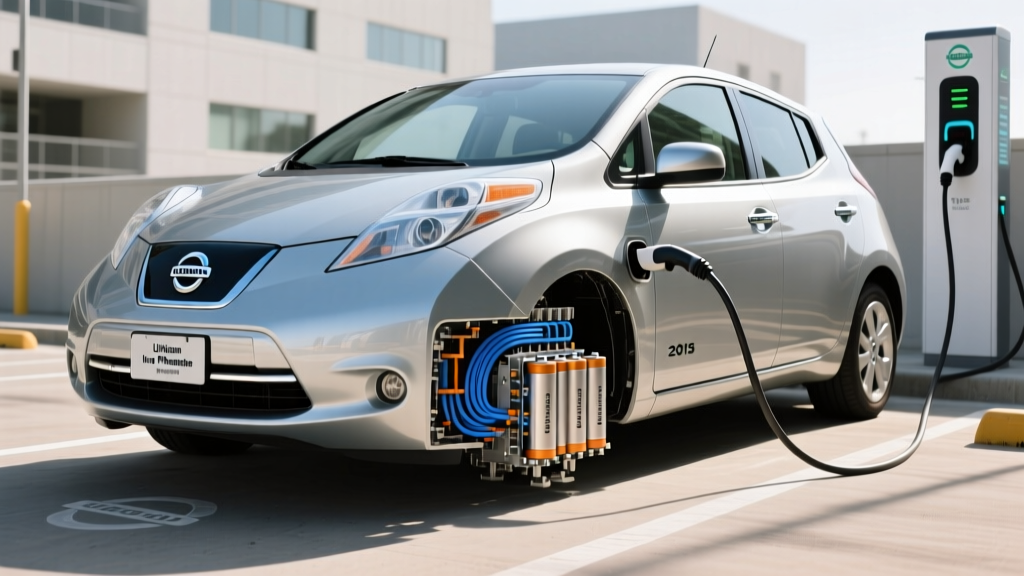
More than a decade after its debut, the 2013 Nissan Leaf remains one of the most popular used EVs on the road. But with age comes the inevitable question: what happens when the original 24 kWh lithium-ion pack loses too much capacity? If you own a 2013 Leaf — or are considering buying one — understanding replacement battery costs, degradation patterns, and chemistry trade-offs is essential for making an informed ownership decision.
This guide covers everything from real-world degradation data on Nissan's early NMC cells to current replacement pricing, warranty coverage, and how modern battery chemistries like LFP compare to the Leaf's original pack.
2013 Nissan Leaf Battery: Original Specs and Chemistry
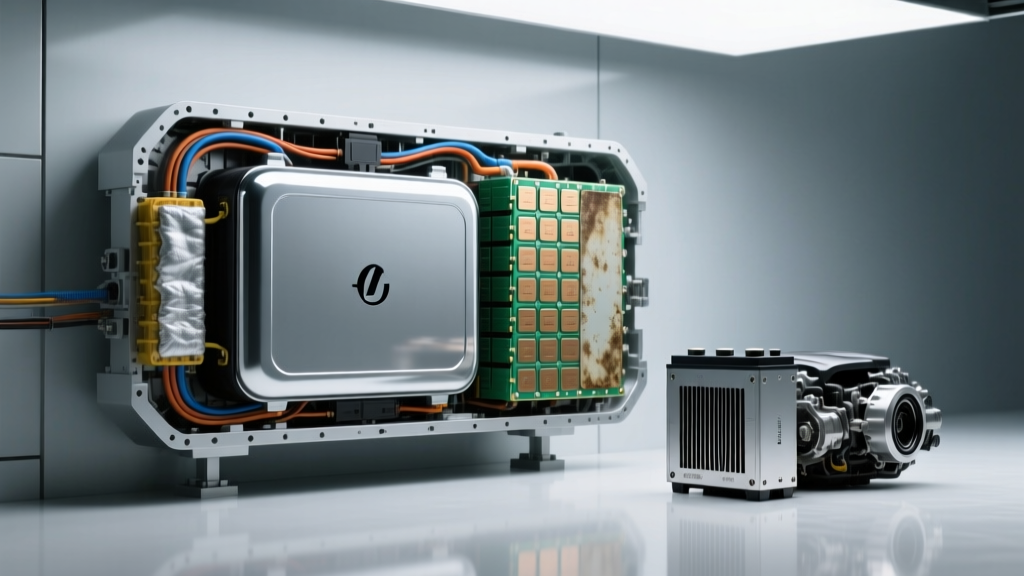
The 2013 Nissan Leaf shipped with a 24 kWh (usable capacity approximately 21.6 kWh) lithium-ion battery pack using NMC (Nickel Manganese Cobalt) chemistry — specifically, AESC-manufactured laminated cells. This was the dominant EV chemistry of the era, chosen for its high energy density relative to alternatives at the time.
Key original specifications:
- Usable capacity: ~21.6 kWh (from 24 kWh total)
- Chemistry: NMC (laminated pouch cells, AESC)
- EPA range (new): 75 miles
- Charge rate: 3.3 kW Level 2 onboard (6.6 kW optional); CHAdeMO DC fast charge up to ~50 kW
- Thermal management: Passive air cooling (no liquid thermal management)
That passive cooling system is critical context. Unlike modern EVs with liquid-cooled packs, the Leaf relies on ambient air to manage battery temperature. This design choice significantly impacts long-term degradation, especially in hot climates — a point we'll revisit with hard data.
EV Battery Chemistry: LFP vs NMC Trade-Offs
Understanding why the 2013 Leaf's NMC pack degrades the way it does requires a broader look at EV battery chemistry. Today's market primarily uses two lithium-ion variants: NMC/NCA (nickel-based) and LFP (lithium iron phosphate). Here's how they compare:
| Factor | NMC / NCA | LFP (Lithium Iron Phosphate) |
|---|---|---|
| Energy Density | Higher (~250 Wh/kg cell-level) | Lower (~170 Wh/kg cell-level) |
| Cycle Life | ~1,000–2,000 full cycles | ~3,000–5,000+ full cycles |
| Cold-Weather Performance | Better energy delivery below 32°F | Reduced range in extreme cold; needs preconditioning |
| Cost per kWh | Higher (cobalt/nickel supply chain) | Lower (~20-30% cheaper at cell level) |
| Thermal Stability | More prone to thermal runaway | Superior thermal/chemical stability |
| State of Charge Habit | Best kept 20-80% daily | Can charge to 100% regularly without significant harm |
| Common In (2026) | Long-range trims, performance models | Standard-range models (Tesla Model 3 RWD, BYD, base Ford Mustang Mach-E) |
The 2013 Leaf's NMC pack prioritized energy density — essential when 24 kWh was considered a generous pack. But NMC's trade-off is a shorter cycle life and greater sensitivity to heat and high state-of-charge stress. Modern LFP packs, like those in Tesla's base Model 3, trade some range per pound for dramatically longer lifespans and simpler ownership habits (charge to 100% freely).
How Long Do EV Batteries Last? Degradation Data
EV batteries don't "die" suddenly — they gradually lose capacity over time and charge cycles. The industry standard for end-of-life is when a pack falls below 70-80% of its original capacity. Here's what the data shows:
Typical Degradation Patterns (by chemistry and cooling):
- 2013-2017 Nissan Leaf (24/30 kWh, passive cooling, NMC): 10-25% capacity loss by year 8. Hot-climate vehicles (Arizona, Texas, Southern California) frequently see 20-30%+ loss. Data from Recurrent Auto shows Leaf packs losing capacity faster than liquid-cooled competitors.
- Liquid-cooled NMC (Tesla Model 3, Hyundai Ioniq 5): 5-10% loss over 8 years / 150,000 miles. Tesla's fleet data shows ~88% retention at 200,000 miles.
- LFP packs (Tesla Model 3 RWD, BYD): Early data suggests 5-8% loss over 10 years with regular 100% charging — significantly outlasting NMC under similar conditions.
For the 2013 Leaf specifically, Nissan's own warranty acknowledged the degradation risk by covering capacity below 9 bars (out of 12) on the dashboard capacity gauge — roughly equivalent to 75% State of Health — within 5 years/60,000 miles. Many 2013 Leafs in warm climates hit this threshold by year 5-6.
According to the U.S. Department of Energy, most modern EV batteries are designed to last 10-15 years or 150,000-200,000 miles before requiring replacement, though the 2013 Leaf's air-cooled design puts it on the shorter end of that spectrum.
2013 Nissan Leaf Replacement Battery Cost
If your 2013 Leaf's battery has degraded beyond acceptable levels, here's what replacement looks like in 2026:
| Replacement Option | Battery Size | Estimated Cost (Parts + Labor) | Notes |
|---|---|---|---|
| Nissan OEM 24 kWh (remanufactured) | 24 kWh | $6,500 – $8,500 | Restores original range; limited availability |
| Nissan OEM 40 kWh upgrade (2018+ pack) | 40 kWh | $8,000 – $10,500 | Requires compatible BMS; adds ~40-50 mi range |
| Aftermarket / rebuilt pack | 24 kWh | $4,500 – $7,000 | Quality varies; verify cell source and warranty |
| Used OEM pack (from salvaged Leaf) | 24-30 kWh | $3,000 – $5,500 | SoH varies; request LeafSpy report before purchase |
These costs include installation labor, which typically runs $500-$1,500 at a Nissan dealer or qualified EV shop. The 40 kWh upgrade is popular among owners who want more range, but it requires specific model-year compatibility — not all 2013 Leafs can accept the larger pack without additional module or software updates.
For context, a well-maintained 2013 Leaf in 2026 has a market value of roughly $5,000-$8,000 depending on mileage and condition. A replacement battery at $6,500-$9,000 can approach or exceed the vehicle's value, making the economic decision highly personal — especially compared to newer EVs where battery replacement is rarely needed within the first decade.
Nissan Leaf Battery Warranty Coverage
Nissan provided two layers of battery warranty for the 2013 Leaf:
| Warranty Type | Coverage Period | What It Covers | Threshold |
|---|---|---|---|
| Lithium-Ion Battery Capacity Coverage | 5 years / 60,000 miles | Capacity loss below 9 of 12 bars on dashboard gauge | ~75% of original capacity |
| Lithium-Ion Battery Defect Coverage | 8 years / 100,000 miles | Manufacturing defects, material/workmanship failures | Component failure, not gradual degradation |
Both warranties have long since expired for the 2013 model year. This means any battery replacement in 2026 is an out-of-pocket expense. For newer EVs, the industry standard has shifted to 8 years/100,000 miles with a 70% capacity retention guarantee — a significantly more robust commitment than what early Leaf owners received.
If you're shopping for a newer EV, look for warranty terms that specify a capacity retention percentage (e.g., "minimum 70% over 8 years/100,000 miles"). Vague "battery warranty" language without a defined threshold offers little real protection. Always check fueleconomy.gov for EPA-certified range data and manufacturer warranty documentation.
Factors That Accelerate (or Slow) Battery Degradation
Battery longevity isn't random — it's driven by measurable factors. Here's what matters most, ranked by impact:
High-Impact Factors (accelerate degradation):
- Heat exposure: Sustained battery temps above 95°F (35°C) cause the most damage. The Leaf's passive cooling makes this especially problematic in hot climates. Garage parking in summer is the single best thing a Leaf owner can do.
- Frequent DC fast charging: Repeated CHAdeMO sessions (especially in hot weather) stress NMC cells. Using DCFC more than 2-3 times per week consistently correlates with faster capacity loss.
- Sitting at 100% SoC: Storing a Leaf fully charged for days or weeks accelerates calendar degradation. The NMC chemistry is particularly sensitive to high-voltage stress.
- Deep discharges: Regularly draining below 10% SoC stresses cell chemistry. Try to keep daily use between 20-80%.
Best Practices (slow degradation):
- Charge to 80% for daily use; use 100% only before long trips
- Prefer Level 2 home charging over DC fast charging
- Park in shade or garages during hot months
- Drive the car regularly — batteries degrade faster when sitting idle for months
- In cold weather, precondition while plugged in to warm the pack using grid power, not battery energy
How to Check Battery Health on a 2013 Nissan Leaf
Leaf owners have two primary methods for monitoring State of Health (SoH):
Dashboard Capacity Bars: The instrument cluster displays 12 bars representing remaining battery capacity. A brand-new Leaf showed all 12 bars; a degraded pack may show 10 or fewer. However, this gauge is coarse — each bar represents roughly 6-8% of capacity, and it doesn't update in real time. Many owners report the gauge "sticking" at a number before dropping suddenly.
LeafSpy Pro (OBD-II app): This third-party tool, paired with a compatible OBD-II dongle (~$25-40), provides far more granular data:
- Exact State of Health percentage (e.g., 78.3%)
- Individual cell voltage readings (identifying weak cells)
- Battery temperature in real time
- Charge/discharge cycle count
- Estimated remaining range based on current SoH
For anyone buying a used 2013 Leaf, a LeafSpy report is non-negotiable. Request the SoH percentage before purchase. A pack below 70% SoH will deliver roughly 50 miles or less of real-world range — a significant reduction from the original 75-mile EPA rating.
Emerging Battery Tech: What's on the Horizon
While the 2013 Leaf's NMC pack represents early-generation technology, the industry is advancing rapidly. Here's what's in development — with realistic timelines:
Solid-State Batteries: These replace the liquid electrolyte with a solid material, promising higher energy density (~400+ Wh/kg), faster charging, and improved safety. Toyota and Nissan have announced solid-state prototypes targeting 2028-2030 production. However, manufacturing scale-up remains the primary bottleneck — expect initial deployment in premium models before reaching mainstream pricing.
Silicon Anode Cells: Companies like Sila Nanotechnologies and Group14 are replacing graphite anodes with silicon composites, boosting energy density by 20-40%. These are beginning to appear in limited production (Mercedes-Benz G 580 EQ in 2025-2026) and should reach broader availability by 2027-2028.
Sodium-Ion Batteries: CATL and BYD are producing sodium-ion packs for budget EVs in China, eliminating lithium and cobalt entirely. Energy density is lower (~140 Wh/kg), but cost is dramatically reduced. U.S. availability remains uncertain and likely post-2027.
None of these technologies will help a 2013 Leaf owner today. But they signal that replacement battery costs across all EVs should decline over the next decade as manufacturing scales and chemistry improves.
Frequently Asked Questions
How long do EV batteries typically last?
Most modern liquid-cooled EV batteries (2020 and newer) last 10-15 years or 150,000-200,000 miles before dropping below 70% capacity. The 2013 Nissan Leaf's air-cooled NMC pack has a shorter practical lifespan of 8-12 years depending on climate, with hot-region vehicles often needing replacement sooner.
How much does it cost to replace a 2013 Nissan Leaf battery?
A remanufactured OEM 24 kWh pack costs $6,500-$8,500 installed. A 40 kWh upgrade runs $8,000-$10,500. Aftermarket and used packs are cheaper ($3,000-$7,000) but carry more risk regarding remaining capacity and warranty coverage.
What does the Nissan Leaf battery warranty cover?
The original 2013 Leaf warranty covered capacity loss below ~75% (9 of 12 dashboard bars) for 5 years/60,000 miles, and manufacturing defects for 8 years/100,000 miles. Both have expired. Newer EVs typically offer 8 years/100,000 miles with a 70% retention guarantee.
How do I maximize my Leaf's battery lifespan?
Charge to 80% daily, avoid frequent DC fast charging, park in shade or a garage during hot weather, and don't let the car sit at 100% SoC for extended periods. Use LeafSpy Pro to monitor State of Health regularly.
LFP vs NMC — which is better?
It depends on priorities. NMC offers more range per pound (better for long-range vehicles), while LFP lasts longer, costs less, and tolerates 100% charging. For daily commuters who don't need maximum range, LFP is increasingly the smarter choice. The 2013 Leaf's NMC pack was appropriate for its era but would likely be LFP if designed today.
Is it worth replacing the battery in a 2013 Leaf?
Economically, it's borderline. The car's 2026 market value ($5,000-$8,000) is close to replacement cost. If the rest of the vehicle is in excellent condition and you need a short-range commuter, replacement can extend its life by another 8-10 years. If the car has other issues, investing in a newer used EV with a liquid-cooled pack may offer better long-term value.
For official EPA range data and efficiency figures, visit fueleconomy.gov's 2013 Nissan Leaf listing. For current federal EV tax credit rules on new purchases, consult the IRS Clean Vehicle Credit page.