The Real Cost of Replacing a 2015 Tesla Model S Battery in 2026
If you own a 2015 Tesla Model S — or are considering buying one on the used market — the high-voltage traction battery is likely your single biggest financial unknown. These early Model S vehicles (produced from 2012 through 2015) shipped with either a 60 kWh, 85 kWh, or 90 kWh battery pack, and many are now crossing the 100,000- to 150,000-mile mark where out-of-warranty replacement becomes a realistic conversation.
The short answer on 2015 Tesla Model S battery replacement cost: expect to pay between $12,000 and $22,000 in 2026, depending on whether you go with a refurbished pack, a Tesla-service replacement, or a third-party specialist. The vast majority of these batteries, however, never need a full swap — degradation data shows most 85 kWh packs retain 80–88% of original capacity after 150,000 miles.
| Option | Battery Size | Cost Range | Warranty | Notes |
|---|---|---|---|---|
| Tesla Service Center (remanufactured) | 85 kWh | $16,000 – $22,000 | 4 yr / 50,000 mi | OEM-spec, includes labor |
| Third-party EV specialist | 85 kWh | $12,000 – $16,000 | 1–3 yr / varies | Refurbished cells, quality varies |
| Module-level repair | 85 kWh (partial) | $3,000 – $7,000 | Varies | Replace only failed modules (16 modules in pack) |
| Used/salvage pack | 85 kWh | $8,000 – $12,000 | None / 30-day | High risk — SoH unknown |
| 60 kWh pack (if applicable) | 60 kWh | $10,000 – $15,000 | Varies | Lower capacity, lower cost |
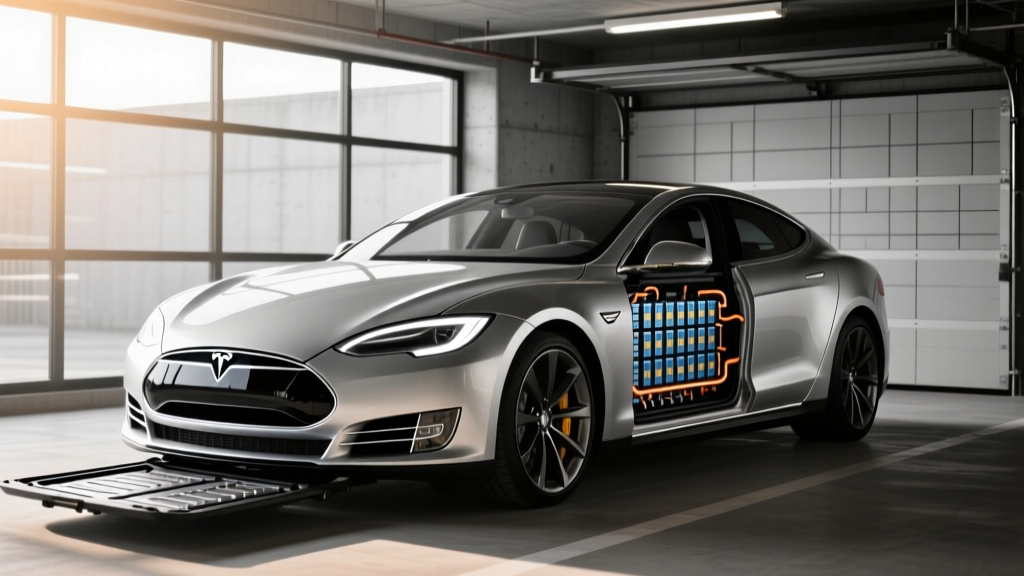
Labor typically accounts for $1,500 to $3,000 of the total. The Model S battery pack sits low in the chassis and requires a specialized lift procedure — this is not a DIY-friendly job. Always get a State of Health (SoH) diagnostic before committing to a full replacement; in many cases, a module-level repair can restore adequate function at a fraction of the cost.
How Long Do EV Batteries Actually Last? Degradation Data
The fear of a $20,000 battery bill keeps some buyers away from used EVs. The data tells a less dramatic story. Lithium-ion EV batteries don't "die" suddenly — they gradually lose capacity over time and charge cycles, much like a smartphone, but with far more robust thermal management.
Typical EV Battery Degradation Curve (NMC/NCA Chemistry):
- Year 1 / 15,000 mi: ~2–5% loss (initial drop as cells stabilize)
- Year 3 / 45,000 mi: ~6–9% total loss
- Year 5 / 75,000 mi: ~8–12% total loss
- Year 8 / 120,000 mi: ~10–16% total loss
- Year 10+ / 150,000+ mi: ~12–22% total loss (wide variance based on usage)
For the 2015 Model S specifically, Tesla's own fleet data and independent analysis from sources like Tesla's Impact Report indicate that Model S/X batteries retain approximately 88% of original capacity at 150,000 miles on average. That means an 85 kWh pack that originally delivered ~265 miles of EPA range would still provide roughly 230–235 miles — noticeable, but far from catastrophic.
The critical threshold is 70% capacity retention, which is the warranty benchmark used by Tesla and most other manufacturers. Very few packs hit this threshold under normal use. When they do, it's usually tied to a manufacturing defect or extreme usage patterns (frequent DC fast charging in hot climates, repeated deep discharges to 0%).
Battery Chemistry: LFP vs NMC/NCA — Which Is Better?
Understanding battery chemistry is essential when evaluating replacement options and long-term ownership. The 2015 Model S uses Nickel-Cobalt-Aluminum (NCA) cells supplied by Panasonic — a chemistry optimized for energy density and performance. Modern EVs now offer a choice between NMC/NCA and Lithium Iron Phosphate (LFP).
| Attribute | LFP (Lithium Iron Phosphate) | NMC/NCA (Nickel-based) |
|---|---|---|
| Energy Density | Lower (~160 Wh/kg cell-level) | Higher (~250–300 Wh/kg cell-level) |
| Range per kWh | Shorter range for same pack size | More range for same pack size |
| Cycle Life | 3,000–5,000+ cycles | 1,000–2,000 cycles |
| Calendar Life | Excellent — slower degradation | Good — moderate degradation |
| Cold Weather Performance | Weaker — more range loss below freezing | Better — less cold-weather penalty |
| Cost | Lower — no cobalt or nickel | Higher — commodity metal exposure |
| Charging to 100% | Recommended periodically for BMS calibration | Avoid sustained 100% SoC; 80% daily preferred |
| Common In | Tesla Model 3/Y RWD, Ford Mustang Mach-E Select | Tesla Model S/X/3 LR, most premium EVs |
Bottom line: NMC/NCA delivers the range and cold-weather performance that Model S buyers expect. LFP trades range for longevity and lower cost — ideal for standard-range daily drivers. If you're replacing a 2015 Model S pack, you'll almost certainly be getting NCA cells (or a remanufactured NCA pack), as LFP is not offered for this platform.
What Does the Tesla Battery Warranty Cover?
The 2015 Model S originally shipped with an 8-year / unlimited-mile battery and drive unit warranty — one of the most generous terms in the industry at the time. For a 2015 model, that warranty expired in 2023 at the latest.
| Model Year | Battery Warranty | Capacity Threshold | Status in 2026 |
|---|---|---|---|
| 2012–2015 Model S (60/85 kWh) | 8 yr / unlimited mi | 70% retention | Expired |
| 2016–2019 Model S (90/100 kWh) | 8 yr / 150,000 mi | 70% retention | Mostly expired |
| 2020–2026 Model S | 8 yr / 150,000 mi | 70% retention | Active (newer models) |
The warranty covers defects in materials or workmanship and capacity loss below the 70% threshold. It does not cover damage from accidents, flooding, improper charging equipment, or modifications. If your 2015 Model S battery has degraded to, say, 78% capacity — frustrating but above the 70% line — you would have been responsible for any replacement cost even while the warranty was active.
For replacement packs installed by Tesla Service after the original warranty expires, Tesla typically provides a 4-year / 50,000-mile warranty on the new or remanufactured pack. Third-party shops set their own warranty terms, ranging from 90 days to 3 years.
Factors That Accelerate (or Preserve) Battery Life
Not all 2015 Model S batteries age equally. A garage-kept, Level-2-charged example in Oregon may show 92% SoH at 120,000 miles, while one that lived in Phoenix and relied on daily Supercharging might be at 76%. Here's what drives the variance:
Battery Care Best Practices — What the Data Shows:
- Daily State of Charge: Set to 80% for NCA chemistry. Sustained 100% SoC accelerates electrolyte oxidation. Reserve 100% for road trips.
- Avoid Deep Discharge: Don't let the pack sit at 0–5% SoC for extended periods. Lithium plating risk increases at extreme low SoC.
- DC Fast Charging: Occasional Supercharging is fine. Daily use — especially at high ambient temperatures — adds measurable degradation. Tesla's thermal management helps, but heat is the enemy.
- Extreme Heat: Prolonged exposure to 100°F+ ambient temps (parking outdoors in desert climates) accelerates calendar degradation. Use a garage when possible.
- Extreme Cold: Cold doesn't permanently damage the battery, but charging a frozen pack without preconditioning can cause lithium plating. Always precondition before charging in sub-freezing weather.
- Mileage vs. Calendar Age: Batteries degrade from both cycling (miles driven) and calendar time. A low-mileage 2015 with 40,000 miles may still show 85–88% SoH purely from 11 years of calendar aging.
How to Check Your Model S Battery Health (SoH)
Before buying a used 2015 Model S or deciding whether to replace the pack, you need an accurate State of Health reading. Here are the methods, ranked by reliability:
1. Tesla Service Center Diagnostic
The most authoritative method. Tesla can pull a full battery health report showing individual module voltages, internal resistance, and overall capacity retention percentage. Cost: typically free if you're there for other service, or ~$100–$175 as a standalone diagnostic.
2. Onboard Energy Screen
Navigate to Controls > Energy > Consumption. Compare the projected range at 100% charge to the original EPA sticker (265 mi for the 85 kWh). A car showing 225 mi at 100% has roughly 85% SoH. This method is approximate — the BMS estimate can drift over time and may need a full charge-discharge cycle to recalibrate.
3. Third-Party OBD-II Tools
Apps like TeslaFi, Scan My Tesla, or EV Health Check can read the CAN bus data directly, pulling nominal full-pack kWh vs. original capacity. These require an OBD-II adapter (~$30–$50) and provide a more granular picture than the dashboard display.
4. Independent EV Shops
Specialized EV mechanics can perform load tests and module-level diagnostics. This is particularly useful if you suspect a single bad module rather than uniform degradation — a $3,000–$5,000 module repair vs. a $18,000 full replacement.
Emerging Battery Tech: What's on the Horizon?
If you're weighing whether to invest in a battery replacement or wait for next-generation technology, here's a realistic timeline for what's coming:
Solid-State Batteries: Companies like Toyota, QuantumScape, and Samsung SDI have demonstrated solid-state cells in lab settings with energy densities above 400 Wh/kg and faster charging. However, mass production at automotive scale remains challenging. Realistic availability: 2028–2032 for limited production vehicles, with broad market availability likely post-2032. These will not be retrofittable into a 2015 Model S.
Silicon Anode Batteries: Startups like Sila Nanotechnologies and Group14 are integrating silicon-dominant anodes to boost energy density by 20–40%. These are closer to commercialization — expect to see them in production EVs starting 2026–2028. Again, not applicable as a retrofit for existing Model S platforms.
Sodium-Ion Batteries: CATL and other Chinese manufacturers have begun producing sodium-ion cells for lower-cost, lower-range applications. Energy density is roughly 30% below NMC, making them suited for city cars and energy storage, not performance sedans. Timeline: 2026–2028 for budget EVs in select markets.
None of these technologies will reduce the cost of replacing your 2015 Model S battery. The NCA cells in your pack are a mature, well-understood technology, and replacement pricing will track with supply chain costs for nickel and cobalt rather than next-gen breakthroughs.
Is Replacing the Battery Worth It? The Economics
A 2015 Tesla Model S 85D in good condition carries a used-market value of roughly $14,000 to $22,000 in 2026, depending on mileage, condition, and trim. A $16,000–$22,000 battery replacement can approach or exceed the vehicle's value — which makes the economics uncomfortable.
Consider these decision factors:
- If SoH is above 75%: Most owners find the remaining range (roughly 195–210 miles for an 85 kWh pack) adequate for daily driving. Replacement is likely unnecessary.
- If SoH is 70–75%: The car is still functional but range is noticeably reduced. A module-level repair ($3,000–$7,000) may be a better investment than a full pack swap.
- If SoH is below 70% or there's a hard failure: Full replacement becomes necessary if you want to keep the car. Weigh the replacement cost against trading in for a newer EV — a 2023+ Model 3 Long Range starts around $42,000 and may qualify for the §30D federal tax credit of up to $7,500 (subject to income and MSRP caps).
- If you love the car: The Model S remains one of the most comfortable, spacious electric sedans ever built. A $15,000 battery investment in a car you plan to drive for another 5+ years can make sense — that's $3,000/year, competitive with depreciation on a new vehicle.
Frequently Asked Questions
How long do EV batteries last in years and miles?
Most modern EV batteries are designed to last 15–20 years and 200,000+ miles before degrading to 70% capacity. Data from fueleconomy.gov and manufacturer fleet reports show NMC/NCA packs averaging 85–90% retention at 150,000 miles. Calendar aging (time, not just miles) also plays a role — a 10-year-old pack with low miles will still show some degradation.
How much does it cost to replace a Tesla Model S battery?
In 2026, a full battery replacement for a 2015 Tesla Model S costs between $12,000 and $22,000 through Tesla Service or a qualified third party. Module-level repairs can reduce this to $3,000–$7,000 if only specific modules have failed. The 85 kWh NCA pack is the most common configuration for this model year.
What does the Tesla battery warranty cover?
Tesla's original battery warranty for the 2015 Model S covered 8 years with unlimited miles against defects and capacity loss below 70% retention. This warranty has now expired for all 2015 models. Replacement packs from Tesla Service carry a separate 4-year / 50,000-mile warranty.
How do I check my Tesla battery health?
The most reliable method is a Tesla Service Center diagnostic. You can also estimate SoH by comparing your 100%-charge range to the original EPA rating (265 mi for the 85 kWh), or use OBD-II apps like TeslaFi to read nominal pack capacity from the CAN bus. Always check SoH before purchasing a used Model S.
Is LFP better than NMC for battery longevity?
LFP chemistry offers superior cycle life (3,000–5,000+ cycles vs. 1,000–2,000 for NMC) and can be charged to 100% regularly without accelerated degradation. However, LFP has lower energy density and worse cold-weather performance. For a Model S replacement, NCA/NMC remains the standard — LFP is not available for this platform.
Does frequent Supercharging damage the battery?
Occasional DC fast charging has minimal impact. Daily Supercharging — especially combined with high ambient temperatures — measurably accelerates degradation over time. Tesla's liquid thermal management system mitigates this significantly, but heat remains the primary degradation driver. For daily charging, a home Level 2 charger (7–11.5 kW) at 80% SoC is optimal.
Can I upgrade to a larger battery when replacing?
In some cases, Tesla Service has upgraded older Model S vehicles from 60 kWh to 90 kWh or 100 kWh packs during replacement, but this depends on parts availability, vehicle configuration, and software compatibility. It's not guaranteed. Ask your Tesla Service advisor about current upgrade options for your specific VIN.