Why a 2010 Cadillac SRX Battery Search Leads to EV Questions
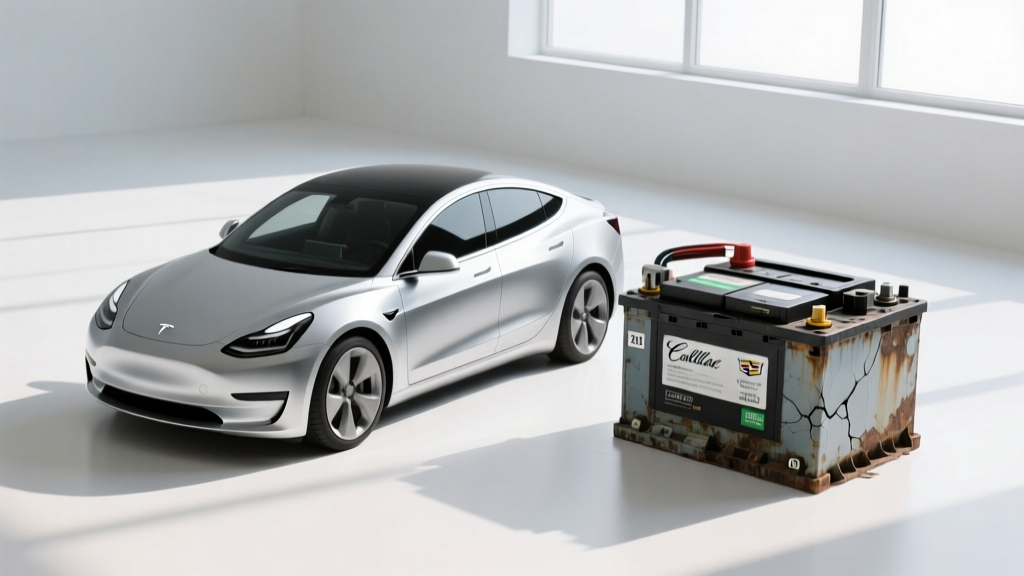
If you've searched for a 2010 Cadillac SRX battery, you're likely dealing with a familiar scenario: your luxury crossover won't start, the dash lights flicker, and you need a new 12V lead-acid group 48 battery — typically $150–$250 at any auto parts store. It's a straightforward swap.
But if that search brought you here, you may also be weighing your next vehicle purchase and wondering: how do electric vehicle batteries actually work, how long do they last, and what happens when they degrade? The contrast is stark. A 2010 SRX uses a simple 12V auxiliary battery to crank a 3.0L V6. A modern EV carries a high-voltage lithium-ion traction pack storing 60–100+ kWh of energy — the single most expensive component in the vehicle.
This guide breaks down everything current and prospective EV owners need to know about battery chemistry, degradation data, warranty coverage, replacement costs, and care — with hard numbers, not marketing claims.
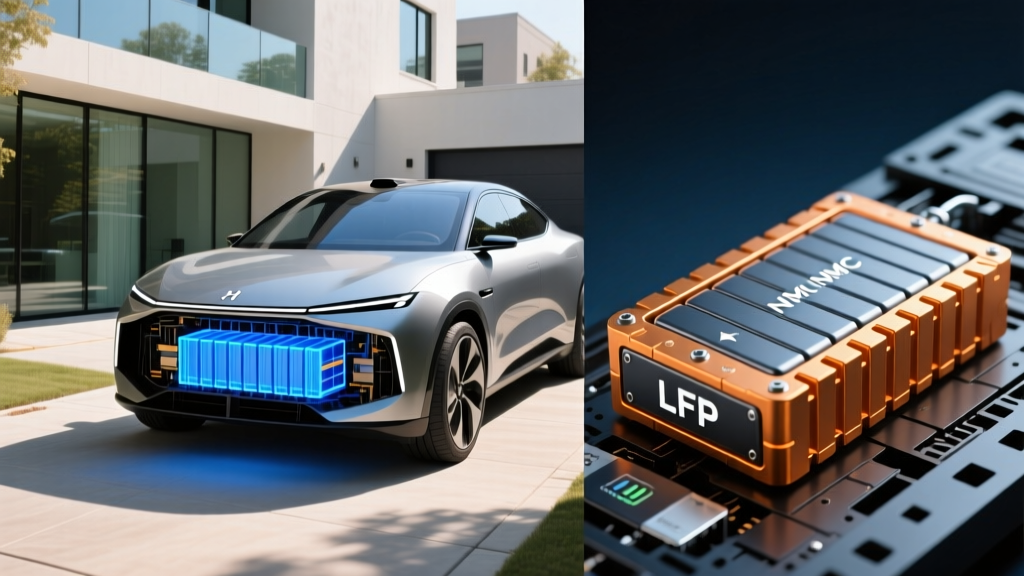
Battery Chemistry: LFP vs. NMC vs. NCA Explained
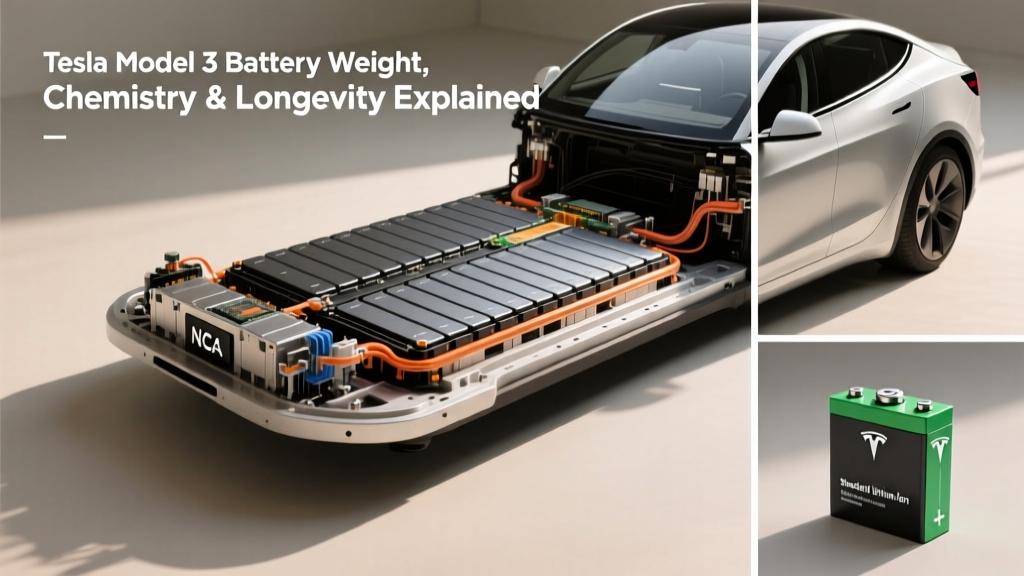
Not all EV batteries are the same. The two dominant chemistries in 2026 are lithium iron phosphate (LFP) and nickel manganese cobalt (NMC), with nickel cobalt aluminum (NCA) used primarily by Tesla and a few others. Each has measurable trade-offs.
| Attribute | LFP (Lithium Iron Phosphate) | NMC / NCA (Nickel-Based) |
|---|---|---|
| Energy Density | Lower (~160 Wh/kg cell-level) | Higher (~250–300 Wh/kg cell-level) |
| Typical Cycle Life | 3,000–5,000+ cycles | 1,000–2,000 cycles |
| Cold-Weather Performance | Weaker below 32°F; slower charging | Better low-temp discharge and charge acceptance |
| Cost per kWh | Lower (~$80–100/kWh at pack level) | Higher (~$120–150/kWh at pack level) |
| Thermal Stability | Excellent; very low thermal runaway risk | Good; requires more active thermal management |
| Recommended SoC for Daily Use | 100% is fine | 80% preferred for daily; 100% for trips only |
| Common Applications (2026) | Tesla Model 3/Y RWD, Ford Mustang Mach-E Select (LFP option), BYD models | Hyundai Ioniq 5/6, Kia EV6/EV9, Chevy Equinox EV, most long-range/AWD trims |
The practical takeaway: LFP wins on longevity and cost — ideal for standard-range models and drivers who want to charge to 100% daily without worry. NMC/NCA wins on range per pound, making it the choice for long-range and performance trims where packing maximum kWh matters. Neither is universally "better"; the right choice depends on your driving pattern and climate.
How Long Do EV Batteries Actually Last? Degradation Data
The most persistent fear among EV shoppers is premature battery failure. The data tells a reassuring story: most modern EV batteries are engineered to outlast the vehicle itself.
Typical Degradation Curve (aggregated fleet data, 2020–2025 models):
- Year 1: ~2–3% capacity loss (initial formation loss)
- Years 2–4: ~0.5–1% per year (linear slow phase)
- Years 5–8: ~0.5–1.5% per year depending on usage patterns
- Year 10 projection: ~85–92% State of Health (SoH) for most liquid-cooled packs
According to data aggregated by Recurrent Auto from over 15,000 EVs in real-world service, the median battery at 100,000 miles retains approximately 90% of its original capacity. Tesla's own 2024 Impact Report showed Model 3/Y batteries retaining ~88% capacity at 200,000 miles.
Compare that to the 2010 Cadillac SRX's original AC Delco 12V battery, which typically lasted 3–5 years before replacement. The EV traction pack is a fundamentally different engineering challenge — liquid-cooled, actively managed, and built for a 15–20 year service life.
Real-world range impact: If your EV started with an EPA-estimated 300 miles of range, expect roughly 270–285 miles at year five and 255–275 miles at year ten. Noticeable, but far from catastrophic.
What Does the Battery Warranty Actually Cover?
Federal law mandates that EV batteries carry a minimum warranty of 8 years / 100,000 miles (10 years / 150,000 miles in CARB states including California, New York, and others). Most manufacturers exceed the federal floor.
| Manufacturer | Warranty Period | Capacity Retention Threshold |
|---|---|---|
| Tesla (Model 3/Y LFP) | 8 yr / 120,000 mi | 70% minimum SoH |
| Tesla (Model S/X, LR/AWD) | 8 yr / 150,000 mi | 70% minimum SoH |
| Hyundai / Kia | 10 yr / 100,000 mi | 70% minimum SoH |
| General Motors (Ultium) | 8 yr / 100,000 mi | 70% minimum SoH (60% on some commercial) |
| Ford (Mustang Mach-E, F-150 Lightning) | 8 yr / 100,000 mi | 70% minimum SoH |
| Rivian | 8 yr / 175,000 mi (Max pack) | 70% minimum SoH |
Key detail: The warranty covers replacement or repair if your battery drops below the stated threshold (typically 70% SoH) within the warranty period. It does not cover gradual, normal degradation above that threshold. In practice, very few batteries fall below 70% within the warranty window based on current fleet data.
EV Battery Replacement Cost: What to Expect
When people hear "battery replacement," they imagine a $20,000 bill. That figure exists — but context matters enormously.
| Battery Size / Model Class | Replacement Cost Range (2026) | When Typically Needed |
|---|---|---|
| 40–60 kWh (standard range, e.g., base Model 3, Bolt EV) | $8,000 – $13,000 | Rarely before 200,000+ miles |
| 70–85 kWh (long range, e.g., Model Y LR, Ioniq 5) | $12,000 – $18,000 | Rarely before 200,000+ miles |
| 90–100+ kWh (large SUVs/trucks, e.g., F-150 Lightning Extended, Rivian Max) | $16,000 – $25,000+ | Rarely before 150,000+ miles |
| Module-level repair (partial pack replacement) | $2,000 – $7,000 | When isolated cell group fails |
Critical context: Full pack replacement is uncommon. Many service centers now perform module-level repairs — replacing only the degraded or failed cell modules rather than the entire pack. This dramatically reduces cost. Additionally, pack costs continue to decline; the $100/kWh pack-level threshold is approaching for several manufacturers.
For comparison, a 2010 Cadillac SRX owner might spend $3,000–$5,000 on a transmission rebuild over the vehicle's life. The EV equivalent — a battery replacement — is in a similar cost range but is needed far less frequently, if ever.
Factors That Accelerate (or Preserve) Battery Life
EV battery degradation is not random. Specific behaviors measurably speed it up or slow it down.
Practices That Accelerate Degradation
- Frequent DC fast charging above 150 kW — occasional use is fine, but daily 350 kW sessions generate sustained heat stress. Data from IDTechEx shows vehicles that fast-charge more than 3x/week degrade ~1–2% faster over 5 years.
- Sustained 100% SoC — sitting fully charged for days (especially in heat) stresses NMC/NCA cathodes. LFP is exempt from this concern.
- Deep discharge to 0% — regularly running the pack to empty stresses the anode. Keep above 10% for daily use.
- Extreme heat exposure — prolonged parking in 100°F+ sun without thermal management active accelerates electrolyte breakdown.
- Towing at high SoC in heat — sustained high-current discharge combined with high SoC and ambient temperature is the worst-case stress scenario.
Practices That Maximize Longevity
- Level 2 home charging as primary method — slower charging generates less heat; 7–11 kW overnight is ideal.
- 20–80% SoC window for NMC/NCA — set your charge limit to 80% for daily driving; use 100% only for road trips.
- 100% SoC is fine for LFP — in fact, periodic 100% charges help LFP cells with cell-balancing accuracy.
- Preconditioning before fast charging — warming the battery to optimal temperature (most EVs do this automatically when you navigate to a charger) reduces charging-induced stress.
- Garage parking in extreme climates — keeping the pack in a moderate temperature range when parked is the single most impactful passive habit.
How to Check and Monitor Battery Health (SoH)
State of Health (SoH) is the percentage of original capacity your battery retains. Unlike the 2010 Cadillac SRX, where you'd need a multimeter to test the 12V battery, modern EVs provide multiple ways to monitor pack health:
- In-vehicle displays: Tesla, Hyundai, and BMW offer battery health readouts in the service or energy menus. Not all manufacturers expose this directly.
- OBD-II diagnostic apps: Tools like Leaf Spy (Nissan Leaf), Scan My Tesla, or Car Scanner ELM OBD2 can read SoH, cell voltage variance, and cycle count from the battery management system (BMS).
- Dealer diagnostics: Any authorized service center can pull a full battery health report during routine service. Request this before purchasing a used EV.
- Third-party services: Companies like Recurrent Auto offer battery health reports tied to your vehicle's telematics data — often free for owners.
- Range-tracking method: If your EV consistently shows 240 miles at 100% SoC (down from an original 300 EPA miles), you're looking at roughly 80% SoH — though this is approximate and affected by temperature.
Buying a used EV? Always request a battery health report before purchase. A vehicle with 90%+ SoH at 50,000 miles is a strong indicator of careful ownership and predicts many years of reliable service.
What's Next: Solid-State and Silicon-Anode Batteries
The battery landscape is evolving, but timelines matter. Here's what's realistic from a 2026 perspective:
- Silicon-anode batteries: Already in limited production (e.g., Mercedes-Benz EQG, select Porsche applications). Silicon anodes increase energy density by 20–40% compared to graphite. Expect broader adoption in premium models by 2027–2028, with mainstream availability by 2029–2030.
- Solid-state batteries: Toyota, Samsung SDI, and QuantumScape have announced production timelines targeting 2027–2029 for initial vehicle integration. Solid-state promises higher energy density, faster charging, and improved safety. However, manufacturing scale-up remains the bottleneck — expect limited availability in premium models first, with mass-market penetration unlikely before 2030–2032.
- Sodium-ion batteries: CATL and BYD have begun deploying sodium-ion packs in lower-cost Chinese-market EVs. Energy density is lower than LFP, but cost and cold-weather performance are competitive. US-market availability remains unannounced as of 2026.
The practical advice: Don't delay an EV purchase waiting for solid-state. Current lithium-ion technology is mature, well-warrantied, and proven over billions of real-world miles. Next-generation chemistries will arrive incrementally and at premium prices first.
Frequently Asked Questions
How long do EV batteries last in years and miles?
Most modern liquid-cooled EV batteries are designed to retain 85–92% of original capacity at 10 years / 150,000 miles. Fleet data from Recurrent Auto shows median SoH above 90% at 100,000 miles. Full replacement before 200,000 miles is uncommon.
How much does an EV battery cost to replace?
Full pack replacement ranges from $8,000 to $25,000+ depending on pack size, but module-level repairs cost $2,000–$7,000. Most batteries never need replacement during typical ownership. Compare this to a 2010 Cadillac SRX battery at $150–$250 — different scale, but the EV pack lasts 5–10x longer than the vehicle's 12V battery would.
What does the EV battery warranty cover?
Federal minimum is 8 years / 100,000 miles, with CARB states requiring 10 years / 150,000 miles. Coverage applies if the battery falls below a stated capacity threshold (typically 70% SoH). Normal gradual degradation above that threshold is not covered but is also not a functional problem.
How do I maximize my EV battery's health?
Charge primarily on Level 2 at home, keep NMC/NCA batteries between 20–80% SoC for daily use, precondition before DC fast charging, avoid frequent 350 kW sessions, and garage-park in extreme heat. LFP owners can charge to 100% daily without concern.
LFP vs. NMC — which battery chemistry is better?
LFP offers longer cycle life (3,000–5,000 cycles), lower cost, and better thermal safety — ideal for standard-range models and daily commuting. NMC/NCA offers higher energy density and better cold-weather performance — ideal for long-range needs and cold climates. Neither is objectively superior; the right choice matches your driving pattern.
Can I check my EV's battery health myself?
Yes. Use OBD-II diagnostic apps (Scan My Tesla, Leaf Spy, Car Scanner), check in-vehicle battery health menus where available, or request a dealer diagnostic report. Tracking your range at 100% SoC over time also provides a rough SoH estimate.