Every EV owner eventually asks the same question: how long will the battery actually last, and what happens when it doesn't? The answer depends heavily on chemistry, charging habits, and climate — not just mileage. This guide breaks down the data behind EV battery longevity, what degradation really looks like over time, and how your approach to charging car batteries at home and on the road directly shapes the pack's usable life.
LFP vs NMC/NCA: The Chemistry Decision That Shapes Everything
Not all EV batteries are built the same. The two dominant lithium-ion chemistries in today's market — Lithium Iron Phosphate (LFP) and Nickel Manganese Cobalt (NMC) or Nickel Cobalt Aluminum (NCA) — trade off energy density, cycle life, cost, and cold-weather performance in ways that affect real ownership.
| Attribute | LFP (LiFePO₄) | NMC / NCA |
|---|---|---|
| Energy Density | Lower (~160 Wh/kg cell-level) | Higher (~250-300 Wh/kg cell-level) |
| Typical Cycle Life | 3,000-5,000+ cycles to 80% SoH | 1,000-2,000 cycles to 80% SoH |
| Cold-Weather Performance | Weaker; more range loss below 32°F | Better low-temp conductivity |
| Cost per kWh | Lower (no cobalt or nickel) | Higher (critical mineral exposure) |
| Thermal Stability | Excellent; lower runaway risk | Good; requires more active thermal management |
| Recommended Daily SoC | 100% is fine (BMS-friendly) | 80% for daily; 100% for trips only |
| Common in (2026 models) | Tesla Model 3/Y RWD, Ford Mustang Mach-E Select (LFP pack), BYD, Rivian Standard | Hyundai Ioniq 5/6, Kia EV6/EV9, Chevy Equinox EV, BMW iX, most long-range/AWD trims |
What this means for buyers: If you charge at home nightly and want a pack that can tolerate daily 100% fills without accelerated wear, LFP is the pragmatic choice — particularly in milder climates. If you need maximum range per kWh (long road trips, cold northern winters, towing), NMC/NCA still delivers the density advantage, but demands more deliberate charging habits.
How Long Do EV Batteries Actually Last?
The short answer: far longer than most buyers fear. Data from fleet operators, manufacturer warranty claims, and independent studies consistently show that modern liquid-cooled EV battery packs retain the vast majority of their capacity well past 150,000 miles.
Real-World Degradation Data Points:
- Tesla Impact Report (2023-2024 data): Model S/X packs retained ~88% capacity at 200,000 miles; Model 3/Y retained ~85% at 150,000 miles.
- Geotab fleet study (6,300+ EVs, 2024 update): Average annual degradation of 1.8% across all chemistries, meaning ~82% State of Health (SoH) at 10 years under typical use.
- Recurrent Auto (15,000-vehicle dataset, 2025): Chevy Bolt owners saw ~6-8% loss over 5 years / 60,000 miles; Hyundai Kona Electric owners averaged ~5% loss over the same period.
- Taxi/fleet data (Nissan Leaf, air-cooled, earlier generation): Higher degradation of 2-3% annually — illustrating why liquid thermal management matters.
For context, the average American drives roughly 13,500 miles per year (FHWA data). A modern pack losing 1.5-2% per year would still hold 75-85% of its original capacity at 10 years / 135,000 miles — well above the threshold most drivers notice in daily use.
What the Battery Warranty Actually Covers
Federal regulation mandates a minimum 8-year / 100,000-mile warranty on EV battery packs. California Air Resources Board (CARB) states extend that to 10 years / 150,000 miles. But the details matter — warranties don't guarantee zero degradation; they guarantee the pack stays above a defined capacity floor.
| Manufacturer | Warranty Term | Capacity Retention Threshold | Notes |
|---|---|---|---|
| Tesla (Model 3/Y RWD, LFP) | 8 yr / 100,000 mi | 70% | Standard range models |
| Tesla (Model 3 LR / Model S/X) | 8 yr / 120,000-150,000 mi | 70% | Varies by model |
| Hyundai / Kia | 10 yr / 100,000 mi | 70% | Among the longest terms |
| Ford (Mach-E, F-150 Lightning) | 8 yr / 100,000 mi | 70% | Covers battery & HV components |
| GM (Ultium-based: Equinox EV, Blazer EV, Silverado EV) | 8 yr / 100,000 mi | 70% | Modular pack allows partial replacement |
| Rivian | 8 yr / 175,000 mi | 70% | Higher mileage cap than most |
| BMW (i4, iX, i7) | 8 yr / 100,000 mi | 70% | Includes thermal management system |
Key takeaway: The 70% threshold is industry standard. If your 85 kWh pack drops below ~59.5 kWh of usable capacity within the warranty window, the manufacturer must repair or replace it — often with a refurbished or partial pack, not necessarily a brand-new one. Complete out-of-warranty failures are rare in liquid-cooled packs, but they're the scenario that drives replacement-cost anxiety.
EV Battery Replacement Costs: What the Numbers Say
Replacement cost is the single biggest fear in EV ownership — and the one most divorced from statistical reality. Most modern packs never need full replacement during the vehicle's life. But when they do (collision damage, manufacturing defect outside warranty, or extreme degradation in older air-cooled designs), here's what the numbers look like in 2026:
| Vehicle | Pack Size (usable kWh) | Chemistry | Estimated Replacement Cost |
|---|---|---|---|
| Tesla Model 3 RWD | ~57 kWh | LFP | $8,000 – $12,000 |
| Tesla Model Y Long Range | ~75 kWh | NMC | $12,000 – $16,000 |
| Hyundai Ioniq 5 | ~77.4 kWh | NMC | $11,000 – $15,000 |
| Ford F-150 Lightning Extended | ~131 kWh | NMC | $20,000 – $30,000 |
| Chevy Equinox EV | ~85 kWh | NMC (Ultium) | $12,000 – $18,000 (modular partial replacement may reduce cost) |
| Nissan Leaf (older, air-cooled) | 40-62 kWh | NMC | $6,500 – $9,000 (remanufactured packs available) |
These figures include parts and labor but vary by region and service center. Critically, cell prices have fallen from ~$400/kWh in 2010 to roughly $100-$130/kWh at the pack level in 2025-2026, and continue trending downward. Some manufacturers (GM's Ultium platform, Rivian) design packs with replaceable modules, meaning a single degraded module can be swapped for a fraction of the full-pack cost.
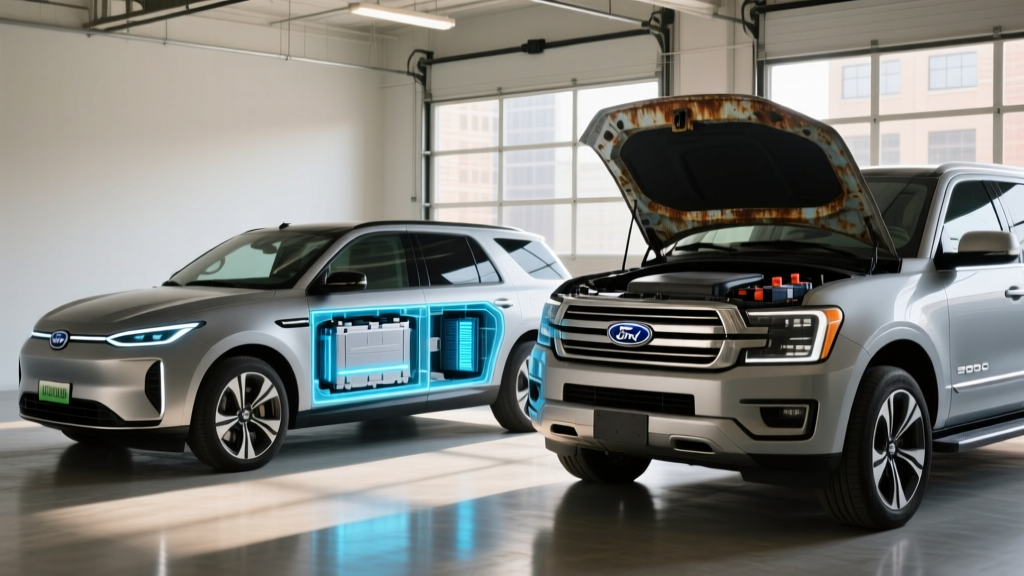
When is replacement typically needed? For liquid-cooled packs from 2020 onward, almost never during normal first-owner use. The vehicles most likely to need replacement are older air-cooled models (early Nissan Leafs, first-gen Kia Soul EVs) hitting 12-15 years of age. For current-generation EVs, the car's body, suspension, or interior will likely reach end-of-life before the pack does.
How Charging Habits Affect Battery Life
How you charge matters as much as what you drive. Lithium-ion cells degrade through three primary mechanisms: calendar aging (time), cycle aging (charge/discharge events), and stress from extreme states of charge and temperature. Here's what the data shows about each factor:
Fast-Charging Frequency
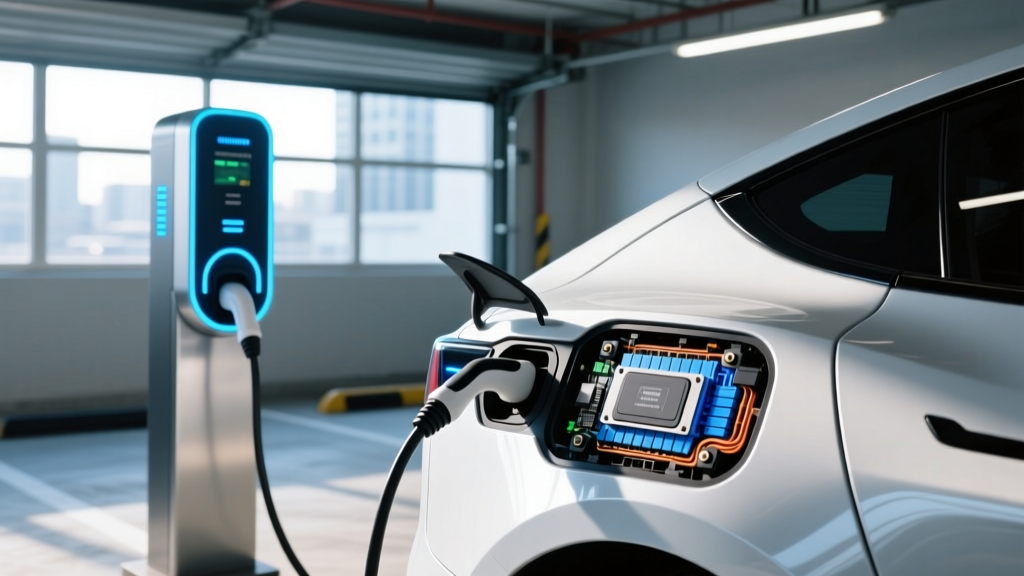
DC fast charging generates significant heat. Occasional road-trip fast charging has negligible impact on modern packs with active liquid cooling. However, exclusive reliance on DC fast charging — particularly at rates above 150 kW in hot climates — accelerates degradation by roughly 0.3-0.5% per year compared to Level 2 home charging, according to Geotab's fleet analysis. The recommendation: use Level 2 (240V, 7-19 kW) as your daily charging method and reserve DC fast charging for road trips.
State of Charge (SoC) Habits
Lithium-ion cells experience the most stress at the extremes — below 10% and above 90% SoC. For NMC/NCA packs, daily charging to 80% and avoiding drops below 10% is the longevity sweet spot. LFP packs are different: they tolerate (and even benefit from) regular 100% charges because their flatter voltage curve requires periodic full charges for the BMS to accurately calibrate cell balance.
Temperature Extremes
Battery packs prefer the same temperatures humans do — roughly 60-80°F. Prolonged exposure to ambient temperatures above 95°F (especially at high SoC) accelerates calendar aging. In sub-freezing weather, charging without preconditioning can cause lithium plating on the anode, a form of permanent damage. Most modern EVs precondition the pack automatically when you navigate to a charger — always use this feature in cold weather.
Battery Longevity Checklist for Daily Use:
- ✅ Set daily charge limit to 80% (NMC/NCA) or 100% (LFP) via the vehicle's app or scheduled charging
- ✅ Use Level 2 home charging as your primary method; minimize exclusive DC fast-charge reliance
- ✅ Precondition the battery before fast charging in cold weather (navigate to charger via built-in nav)
- ✅ Avoid leaving the vehicle at 100% SoC for extended periods (days/weeks) — especially in heat
- ✅ Don't let the pack sit below 10% SoC for more than a few hours
- ✅ If storing the vehicle for weeks, set SoC to 50-60% and leave it plugged in with a charge limit
- ✅ Park in shade or a garage during summer; use a block heater or preconditioning in deep winter
Monitoring Battery Health: How to Check State of Health (SoH)
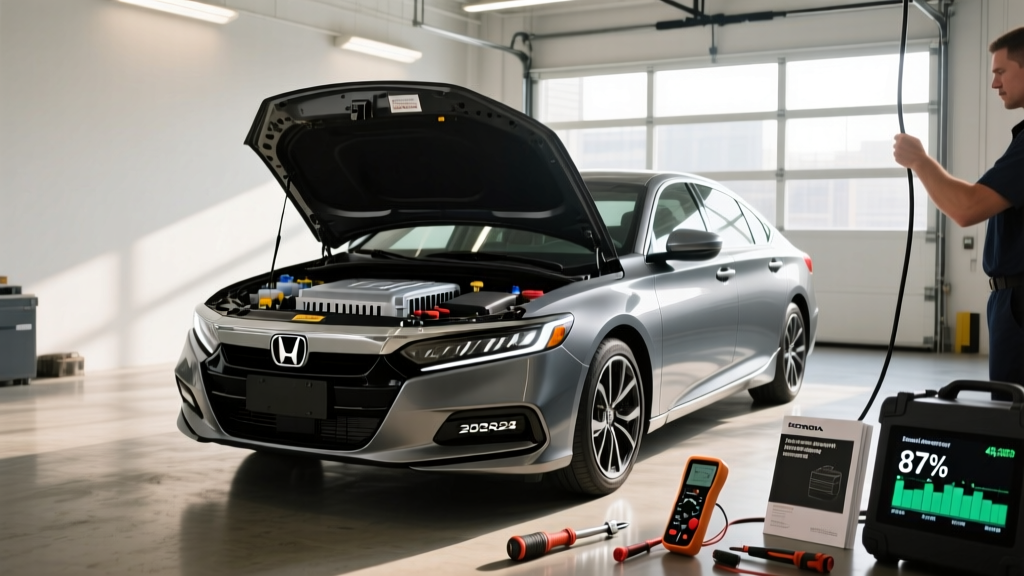
State of Health (SoH) is the percentage of original capacity your pack currently holds. A new pack is 100% SoH; a pack that originally held 80 kWh but now holds 72 kWh is at 90% SoH. Here's how owners can monitor it:
- In-vehicle displays: Tesla offers a "Battery Health" percentage in the service menu (Software 2024.38+). Hyundai/Kia displays SoH through the dealer diagnostic tool, and some owners access it via the OBD-II port. BMW's iDrive shows estimated range that adjusts with degradation but doesn't display a raw SoH number.
- OBD-II dongles + apps: Tools like OBDLink SX paired with apps such as EVNotify or LeafSpy (for Nissan Leaf) can read BMS-reported SoH, cell voltage variance, and pack temperature in real time.
- Third-party testing: Companies like Recurrent Auto and AVTO offer battery health reports that compare your pack's degradation to fleet averages — useful for used-EV purchases.
- Dealer diagnostics: Any authorized service center can pull a full BMS report during routine service. Request this if you're approaching a warranty threshold.
What to watch for: Cell voltage imbalance (individual cell groups deviating by more than 50-100 mV from the pack average) is an early indicator of module-level issues. Sudden range drops of 10%+ that aren't explained by temperature or driving style warrant a BMS diagnostic.
What's Next: Solid-State and Silicon-Anode Batteries
Next-generation battery technologies promise step-change improvements — but realistic timelines matter. Here's where things stand as of 2026:
Solid-State Batteries: These replace the liquid electrolyte with a solid material (ceramic, sulfide, or polymer), offering higher energy density (~400-500 Wh/kg at the cell level), faster charging potential, and improved safety. Toyota has announced a solid-state pack targeting 2027-2028 production in limited models. Samsung SDI and QuantumScape have demonstrated prototype cells with 10-minute 10-80% charge capability, but manufacturing yield and cost remain barriers. Realistic widespread availability: 2029-2032.
Silicon-Anode Batteries: Replacing graphite anodes with silicon increases energy density by 20-40%. Sila Nanotechnologies and Group14 are supplying silicon-anode materials to manufacturers including Mercedes-Benz and Panasonic. Expect incremental adoption starting in 2026-2027 premium models, with broader rollout by 2028-2029. This is not a full chemistry replacement — it's an anode upgrade to existing NMC cells.
Sodium-Ion Batteries: CATL and BYD have begun producing sodium-ion packs for lower-cost, shorter-range EVs in China. Energy density is lower (~120-140 Wh/kg), but raw materials are abundant and cheap. Possible in US-market budget EVs by 2028-2030, primarily for city/commuter vehicles with 150-200 mile range targets.
None of these technologies are available in vehicles you can buy today. If you're shopping now, current LFP and NMC packs — with proper care — are proven, durable, and backed by robust warranties. Waiting for solid-state means waiting at minimum 3-5 years for meaningful market availability.
Frequently Asked Questions
How long do EV batteries last in years and miles?
Modern liquid-cooled EV batteries from 2020 onward typically last 15-20 years or 200,000+ miles before dropping below 70% capacity. Fleet data from Tesla, Geotab, and Recurrent Auto shows average annual degradation of 1.5-2%, meaning most packs outlive the rest of the vehicle. Air-cooled older designs (pre-2019 Nissan Leaf, early Kia Soul EV) degrade faster at 2-3% annually.
How much does it cost to replace an EV battery?
Out-of-warranty replacement costs range from ~$6,500 for smaller packs (Nissan Leaf remanufactured) to $20,000-$30,000 for large packs like the Ford F-150 Lightning Extended Range. Most mainstream packs (Tesla Model 3, Hyundai Ioniq 5, Chevy Equinox EV) fall in the $8,000-$18,000 range including labor. However, complete replacement is extremely rare for liquid-cooled packs — most owners never face this cost. Cell prices continue declining ~8-12% per year.
What does the EV battery warranty cover?
Federal law mandates 8 years / 100,000 miles minimum (10 years / 150,000 miles in CARB states). The warranty guarantees the pack retains at least 70% of original capacity. If it drops below that threshold within the warranty period, the manufacturer repairs or replaces the pack — often with refurbished or partial modules, not necessarily a brand-new unit. The warranty also covers defects in the battery management system, thermal management, and high-voltage components.
How do I check my EV battery health?
Methods vary by brand. Tesla displays Battery Health % in the service menu (2024+ software). Hyundai/Kia and BMW require dealer diagnostic tools or OBD-II readers. Third-party apps like LeafSpy (Nissan) and EVNotify work via OBD-II dongles for real-time SoH, cell voltage, and temperature data. Request a BMS report from your dealer during routine service, especially before the warranty expires.
Is LFP or NMC better for battery longevity?
LFP wins on raw cycle life (3,000-5,000 cycles vs 1,000-2,000 for NMC) and tolerates daily 100% charging without accelerated wear. NMC offers higher energy density (more range per kWh) and better cold-weather performance. For a home-charger who drives under 40 miles daily in a mild climate, LFP is the longevity champion. For road-trippers, cold-climate drivers, or those who need maximum range, NMC with disciplined 80% daily charging is the better fit.
Does fast charging damage EV batteries?
Occasional DC fast charging has minimal impact on modern liquid-cooled packs. The risk comes from exclusive fast-charging reliance, especially above 150 kW in hot climates, which can add 0.3-0.5% annual degradation vs Level 2 charging. Always precondition the pack before fast charging (navigate to the charger using the car's built-in navigation), and use Level 2 as your daily charging method. The charging curve also matters: most packs taper charge rate significantly above 80% SoC to protect cells — this is normal, not a malfunction.
Should I charge my EV to 100% every night?
It depends on chemistry. LFP packs: yes, 100% daily is fine and actually helps the BMS calibrate cell balance. NMC/NCA packs: no — set a daily limit of 80% and only charge to 100% when you need the full range for a trip. Leaving any pack at 100% SoC for extended periods (days to weeks), especially in heat, accelerates calendar aging. Use your vehicle's scheduled charging feature to time the charge completion close to your departure.