Is Zoox Operating a Driverless Robotaxi Service in Washington DC?
If you've searched for "zoox washington dc" hoping to hail a driverless ride to the National Mall, the short answer in early 2026 is: not yet as a public, on-demand service. Zoox — the Amazon-owned autonomous vehicle company — has been conducting testing and validation operations in the Washington DC metropolitan area, but the district has not joined the short list of cities where Zoox runs a commercial, rider-open robotaxi network. That distinction matters, and it's the core of what this guide unpacks.
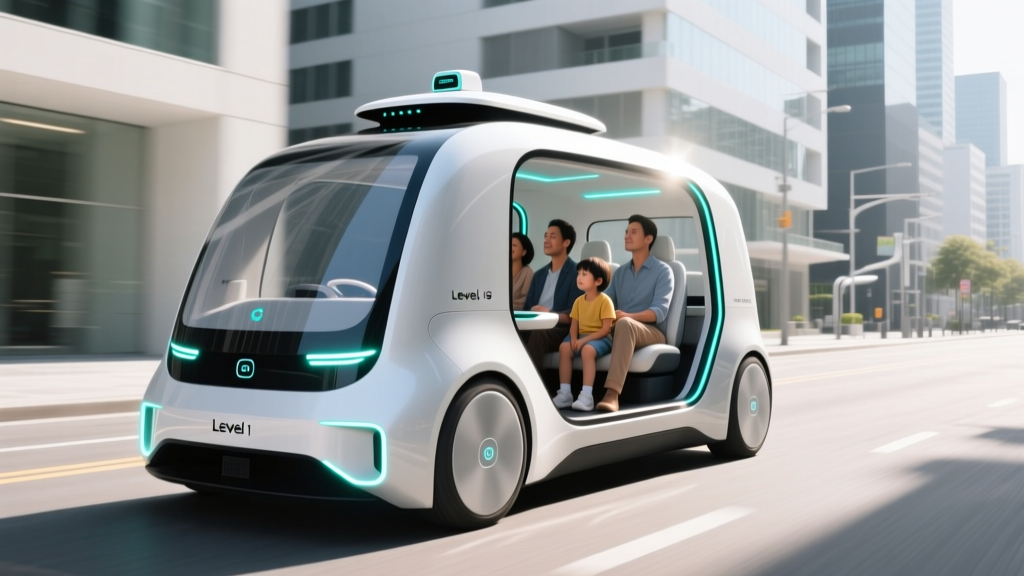
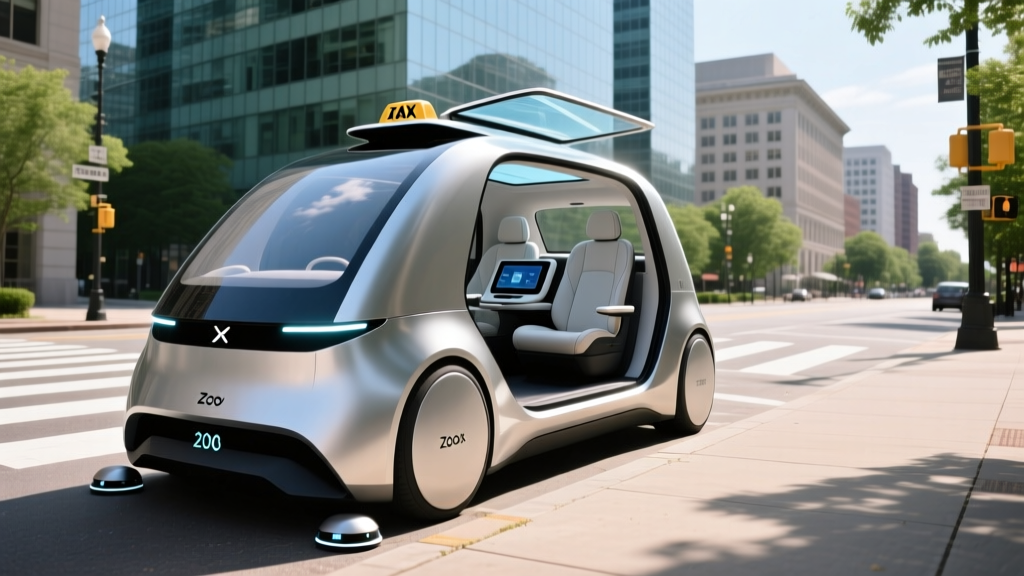
Zoox's purpose-built robotaxi — the bidirectional, carriage-style vehicle with no steering wheel or pedals — is a fundamentally different proposition from the driver-assist systems you find in consumer EVs. Understanding where it operates, what its safety record shows, and how it compares to Uber or Lyft on price requires separating live commercial service from testing programs and announced expansion.
Zoox's robotaxi operates at SAE Level 4 — full autonomy within a defined operational design domain (geofenced area, specific conditions) with no human driver onboard and no expectation of human intervention. This is categorically different from Level 2 driver-assist systems like Tesla Autopilot, GM Super Cruise, or Ford BlueCruise, which require an attentive driver behind the wheel at all times. Zoox vehicles have no steering wheel, no pedals, and no driver seat.
Where Can You Actually Ride a Zoox Robotaxi Right Now?
Zoox has been gradually expanding its commercial service footprint. As of early 2026, here is the breakdown of where Zoox robotaxis are operational versus where they remain in testing:
| City / Region | Status | Access Type | Notes |
|---|---|---|---|
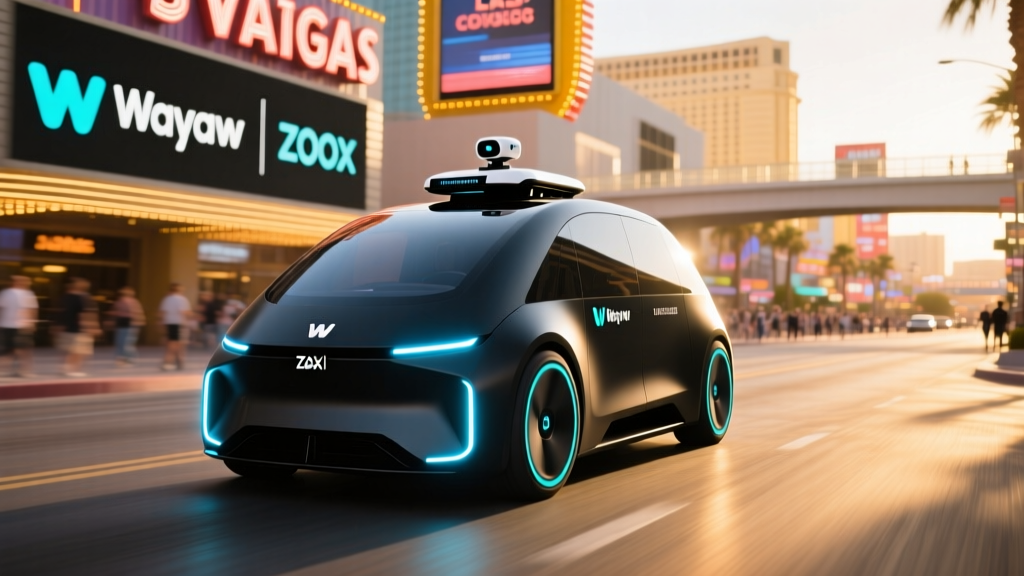
| Las Vegas, NV | ✅ Commercial service | Public (Zoox app) | Primary commercial market; Vegas Strip corridor |
| San Francisco, CA | ✅ Commercial service | Public (Zoox app) | Limited geofence; expanded from early employee program |
| Foster City, CA | ✅ Limited service | Public (Zoox app) | Peninsula suburban routes |
| Washington, DC | 🟡 Testing / validation | Not open to public | Mapping, sensor validation, regulatory engagement |
| Austin, TX | 🟡 Testing | Not open to public | Announced expansion target |
| Atlanta, GA | 🟡 Testing | Not open to public | Announced expansion target |
The key takeaway for DC-area residents: Zoox vehicles have been spotted and documented on DC streets, but these are test and mapping operations, not rides you can book. Zoox has historically required a DMV or local-regulatory approval process before opening a city to paid riders — and as of this writing, the National Highway Traffic Safety Administration (NHTSA) and DC's local authorities have not greenlit a commercial Zoox launch in the district.
Zoox's Level 4 Technology Stack: Lidar, Cameras, and Geofencing
Zoox's approach to autonomy is sensor-heavy and purpose-built — the company designed both the vehicle and the AI stack from scratch, rather than retrofitting a consumer car. Here's what powers the system:
Zoox Sensor & Compute Architecture
- Lidar: Multiple solid-state and spinning lidar units providing 360° 3D point-cloud mapping out to ~150+ meters. Lidar is the primary sensor for object detection and distance measurement regardless of lighting.
- Cameras: A surround array of high-resolution cameras for lane detection, traffic-light state recognition, sign reading, and classification of road users (pedestrians, cyclists, vehicles).
- Radar: Forward and corner radar units for velocity detection of other objects and redundancy in poor-visibility conditions (rain, fog).
- Compute: Custom onboard AI inference hardware processing sensor fusion in real time — Zoox does not publish exact TOPS figures but confirms redundant compute paths.
- HD Maps & Geofencing: Every operational zone is pre-mapped at centimeter-level resolution. The vehicle will not operate outside its validated geofence. If it approaches a boundary, it executes a safe stop or reroute.
- V2I readiness: Zoox vehicles are designed to interface with infrastructure signals where available, though commercial deployment does not depend on V2I.
This is a fundamentally different philosophy from Tesla's camera-only ("Tesla Vision") approach to FSD. Zoox, like Waymo, relies on lidar as a non-negotiable primary sensor — a choice rooted in redundancy and the physics of direct distance measurement versus inferred depth from 2D images.
Pricing: How Would Zoox Compare to Uber and Lyft?
In markets where Zoox operates commercially, the company has used a promotional pricing model to build ridership. Here's how Zoox fares compare to traditional rideshare in active markets, based on publicly reported rider experiences and Zoox's stated pricing approach:
| Metric | Zoox Robotaxi | UberX (est.) | Waymo One (est.) |
|---|---|---|---|
| Short trip (~3 mi) | $0–$8 (promotional) | $10–$16 | $8–$14 |
| Medium trip (~7 mi) | $8–$18 | $18–$28 | $15–$24 |
| Surge pricing | Not currently applied | 1.5x–3x common | Limited surge |
| Tipping | No (no driver) | Expected ($2–$5) | Optional (no driver) |
| Wait time | 3–8 min (geofence-limited) | 2–10 min | 3–12 min |
Zoox's current pricing is heavily subsidized — the company is prioritizing ridership volume and data collection over per-ride profitability. This is standard for the robotaxi industry at this stage. If and when Zoox launches in Washington DC, expect introductory fares well below Uber/Lyft, with pricing normalizing over 12–24 months. For context on the economics of robotaxi operations, the U.S. DOT's Intelligent Transportation Systems program tracks deployment data across pilot programs.
Safety Record: What the Data Actually Shows
Robotaxi safety is the most scrutinized — and most misrepresented — topic in autonomous driving. Here's what we know about Zoox's safety record based on publicly available regulatory filings and incident reports:
Zoox Safety Data Snapshot (as of early 2026)
- Reported at-fault collisions: Zoox has reported a small number of minor contact incidents to California DMV and NHTSA — predominantly low-speed events where the Zoox vehicle was rear-ended or side-contacted by a human-driven vehicle. No reported fatalities or serious injuries involving a Zoox robotaxi in commercial service.
- Disengagement rate: In California DMV disengagement reports, Zoox has reported intervention rates that have improved year-over-year. Exact miles-per-disengagement figures vary by reporting period and operational domain complexity.
- NHTSA Standing General Order: Under NHTSA's Standing General Order (SGO 2021-01), Zoox — like all ADS operators — is required to report crashes involving Level 2+ and Level 3-5 systems. Zoox has complied with these reporting requirements. Data is accessible via NHTSA's ADS crash reporting portal.
- No high-profile service suspension: Unlike Cruise (which suspended operations in late 2023 after a pedestrian incident in San Francisco), Zoox has not experienced a regulatory-ordered service halt in its commercial markets as of early 2026.
It's important to contextualize this data: Zoox's commercial fleet is small relative to Waymo's, and its total autonomous miles in revenue service are correspondingly lower. Smaller sample sizes mean individual incidents have outsized statistical impact. The absence of a serious incident is encouraging but not a guarantee — it reflects both cautious geofencing and limited exposure.
Regulatory Landscape: Who Approves Robotaxi Operations?
Robotaxi deployment in the United States is governed by a patchwork of federal, state, and local authorities. Understanding this structure is essential for anyone tracking Zoox's expansion to Washington DC:
- Federal (NHTSA): Sets vehicle safety standards (FMVSS). Zoox received a notable NHTSA exemption in 2022 to deploy its purpose-built vehicle, which lacks traditional controls (steering wheel, mirrors, pedals). NHTSA also mandates crash reporting via the Standing General Order.
- State level: Each state controls whether driverless testing and commercial deployment are permitted on public roads. California (DMV + CPUC), Nevada, and other states have specific permitting frameworks. DC's regulatory framework falls under the District Department of Transportation (DDOT) and the DC Council, which must establish rules for driverless commercial service.
- Local/municipal: Cities often negotiate operational terms — geofence boundaries, hours of operation, fleet-size caps, and data-sharing requirements — directly with robotaxi companies.
For Washington DC specifically, the district has historically taken a cautious approach to autonomous vehicle regulation. DC is not among the states/territories with permissive driverless-commercial legislation. Until DC's regulatory framework explicitly authorizes fare-charging driverless operations, Zoox cannot legally offer rides to the public in the district — even if its vehicles are technically capable of navigating DC streets.
Current Limitations of Zoox Robotaxis
Even in cities where Zoox is live, the service operates under significant constraints. These are the real-world limitations that will apply if and when Zoox launches in Washington DC:
Operational Limitations
- Geofencing: Zoox vehicles operate only within a pre-mapped, approved zone. Request a ride outside the geofence and the app will not allow it. In Vegas, this covers the Strip and surrounding corridors — not the entire metro area.
- Weather restrictions: Heavy rain, snow, fog, and ice degrade lidar and camera performance. Zoox may suspend or restrict service during adverse conditions. DC's winter weather (snow, freezing rain, salt spray) would pose a significant operational challenge.
- Speed limits: Zoox vehicles currently operate on roads with speed limits up to ~45 mph. Highway driving is not part of the current operational design domain.
- Construction zones: Unmapped lane closures, temporary signals, and shifting road geometry remain edge cases. Zoox vehicles may stop, reroute, or request remote assistance in complex construction zones.
- No intercity trips: The geofence means no airport runs (unless the airport is within the zone — in Vegas, Harry Reid International is included; in DC, DCA/IAD/BWI may or may not be in a future geofence).
- Passenger capacity: The Zoox vehicle seats up to 4 passengers. No wheelchair-accessible variant is currently in commercial service, though Zoox has discussed accessibility plans.
- Luggage and cargo: The interior is designed for passengers, not large bags or freight. Airport runs with multiple suitcases may be impractical.
How to Use Zoox (When It Launches in Your City)
For those in markets where Zoox is live, the rider experience is straightforward:
- Download the Zoox app (iOS/Android) and create an account.
- Enter your pickup and drop-off — both must be within the geofenced service area.
- Confirm the ride. There's no driver to message; the vehicle navigates to your pickup point autonomously.
- Board the vehicle. The Zoox carriage-style vehicle has facing bench seats. Doors unlock via the app or vehicle-side button.
- Ride. An in-cabin screen shows the vehicle's perception of its surroundings (detected objects, planned route). A "Stop" button is available for passenger-initiated emergency stops.
- Exit at your destination. Payment is automatic via the app.
The experience is notably different from Waymo's retrofitted Jaguar I-PACE vehicles — Zoox's purpose-built design means a symmetric, bidirectional cabin with no "front" or "back" of the vehicle in the traditional sense.
Frequently Asked Questions
Where can I use a Zoox robotaxi right now?
As of early 2026, Zoox operates commercial rider service in Las Vegas (NV), San Francisco (CA), and Foster City (CA). Washington DC, Austin, and Atlanta are in testing phases with no public ride availability.
Is Zoox truly self-driving, or is there a human driver?
Zoox is a Level 4 driverless system. There is no human driver in the vehicle, no steering wheel, and no pedals. The vehicle operates autonomously within its geofenced service area. This is fundamentally different from Level 2 systems like Tesla FSD (Supervised) or GM Super Cruise, which require a human driver's attention.
How much does a Zoox ride cost compared to Uber or Lyft?
In active markets, Zoox has priced rides at or below UberX levels — short trips can be as low as $0–$8 under promotional pricing, while comparable UberX rides run $10–$16. Pricing is expected to normalize upward as the service matures. No surge pricing or tipping is currently applied.
How safe are Zoox robotaxis?
Zoox has reported minor low-speed contact incidents (primarily being struck by human-driven vehicles) through NHTSA's Standing General Order reporting. As of early 2026, no fatalities or serious injuries have been reported in Zoox commercial service. The fleet's total autonomous miles are smaller than Waymo's, so statistical comparisons should be made cautiously. All crash data is reported to NHTSA and, in California, to the DMV.
Will Zoox come to Washington DC?
Zoox has been testing in the DC area, which signals intent — but a commercial launch requires DC regulatory approval, which has not been granted as of early 2026. DC's autonomous vehicle regulatory framework would need to be established or updated before Zoox could offer public rides. Based on Zoox's expansion pattern (testing → regulatory approval → limited launch → gradual expansion), a DC commercial launch would likely follow Austin or Atlanta if those markets proceed first.
Can a Zoox robotaxi drive in snow or heavy rain?
Current Level 4 robotaxis, including Zoox, reduce or suspend operations in heavy precipitation, snow, and ice. Lidar performance degrades in dense precipitation, and road markings become obscured. DC's winter conditions would be a significant operational constraint for any robotaxi service.
What happens if something goes wrong during a Zoox ride?
Zoox vehicles are monitored by a remote-assistance team that can provide guidance to the vehicle's AI in ambiguous situations (e.g., an unmapped construction zone). Passengers have an in-cabin "Stop" button for emergency stops. The vehicle is designed to pull over safely if it encounters a scenario it cannot resolve autonomously.
The Bottom Line for DC-Area Robotaxi Watchers
Zoox's presence in Washington DC is real — its vehicles are testing on district streets — but a bookable, driverless ride is not yet available. The company's commercial service remains concentrated in Las Vegas and the San Francisco Bay Area, with Austin and Atlanta as announced expansion targets ahead of DC.
For DC residents interested in robotaxi service, the realistic near-term options remain limited. Waymo has not announced DC plans. Cruise (under GM) suspended and has been cautiously restarting operations. The regulatory pathway in DC is the binding constraint — not the technology.
If you're tracking Zoox's DC timeline, watch for two signals: (1) a DC Council hearing or DDOT rulemaking on driverless commercial operations, and (2) Zoox's job postings for DC-based fleet operations or remote-assistance roles. Those are the leading indicators that a commercial launch is approaching.