Quick Answer: How to Ride Zoox in Las Vegas
If you've searched for zoox las vegas how to ride, here's the short version: Zoox operates its purpose-built, steering-wheel-free robotaxi on the Las Vegas Strip and in select surrounding corridors as a free, invite-only early rider service as of early 2026. You download the Zoox app (iOS/Android), join the waitlist, and when invited, request a ride within the geofenced service area. There is no steering wheel, no pedals, and no driver — this is a true SAE Level 4 autonomous vehicle.
Unlike Waymo One in Phoenix and San Francisco, Zoox has not yet launched a paid public fare structure in Las Vegas. That means rides are currently complimentary for accepted riders, though Amazon and Zoox have signaled a transition to commercial pricing later in 2026. Below, we break down exactly where Zoox operates, what the technology stack looks like, how safety data stacks up, and what the current limitations are before you plan your trip.
Where Can I Use Zoox Right Now?
Zoox's operational footprint is deliberately narrow. The company uses geofencing — a virtual boundary that restricts the vehicle to pre-mapped, approved streets — to limit where its robotaxis can travel. As of early 2026, Zoox vehicles operate in the following cities:
| City | Status | Key Zones | Access |
|---|---|---|---|
| Las Vegas, NV | Active | Las Vegas Strip corridor, portions of Paradise Rd, near Harry Reid International Airport | Invite-only early rider program |
| Foster City, CA | Active | Select streets in the Bay Area peninsula | Invite-only early rider program |
| San Francisco, CA | Testing | Limited test routes | Not open to public riders |
| Austin, TX | Testing | Limited test routes | Not open to public riders |
In Las Vegas specifically, the geofenced zone covers a roughly 3-4 mile stretch along and adjacent to the Strip, including major hotel-casino drop-off points. The vehicle will not travel outside this boundary — if your destination falls beyond the geofence, the app will not allow you to request the ride.
Zoox's robotaxi is classified as SAE Level 4 (High Automation). This means the vehicle handles all driving tasks within its defined operational design domain (ODD) — the geofenced area and approved conditions — with no human driver present and no expectation of human intervention. This is fundamentally different from Level 2 systems like Tesla Autopilot, GM Super Cruise, or Ford BlueCruise, which require an attentive driver behind the wheel at all times. Zoox vehicles have no steering wheel, no pedals, and no driver's seat. If the system encounters a scenario it cannot handle, it performs a minimal risk maneuver (pulling over safely) rather than handing control to a passenger.
Step-by-Step: How to Request a Zoox Ride in Las Vegas
- Download the Zoox app — Available on iOS and Android. Search "Zoox" in your app store.
- Create an account and join the waitlist — You'll provide basic information and select Las Vegas as your preferred city.
- Wait for an invitation — Zoox onboards riders in waves. Wait times have ranged from days to several weeks depending on demand.
- Request a ride within the service zone — Once invited, open the app, enter your pickup and drop-off locations. Both must fall within the Las Vegas geofence.
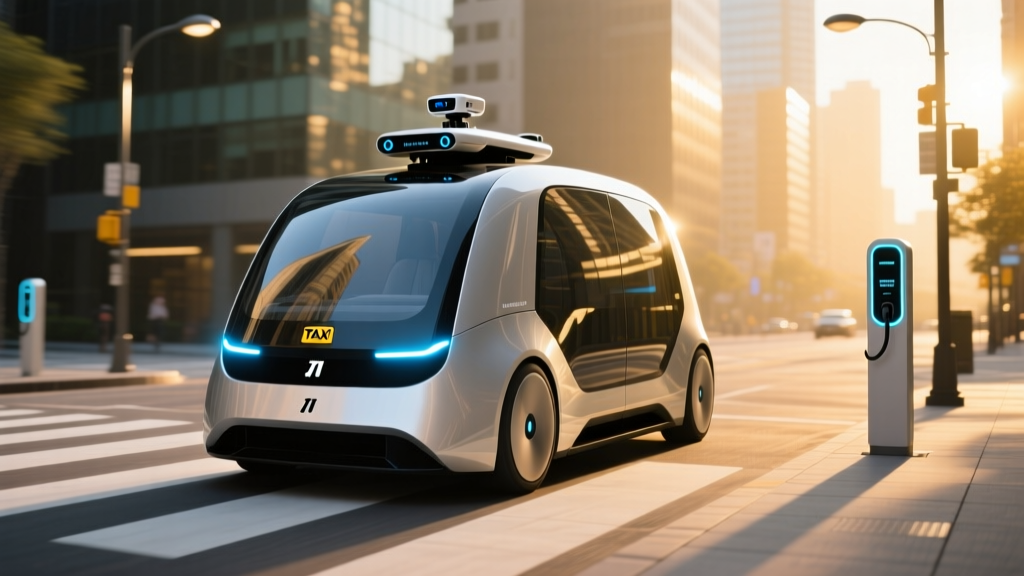
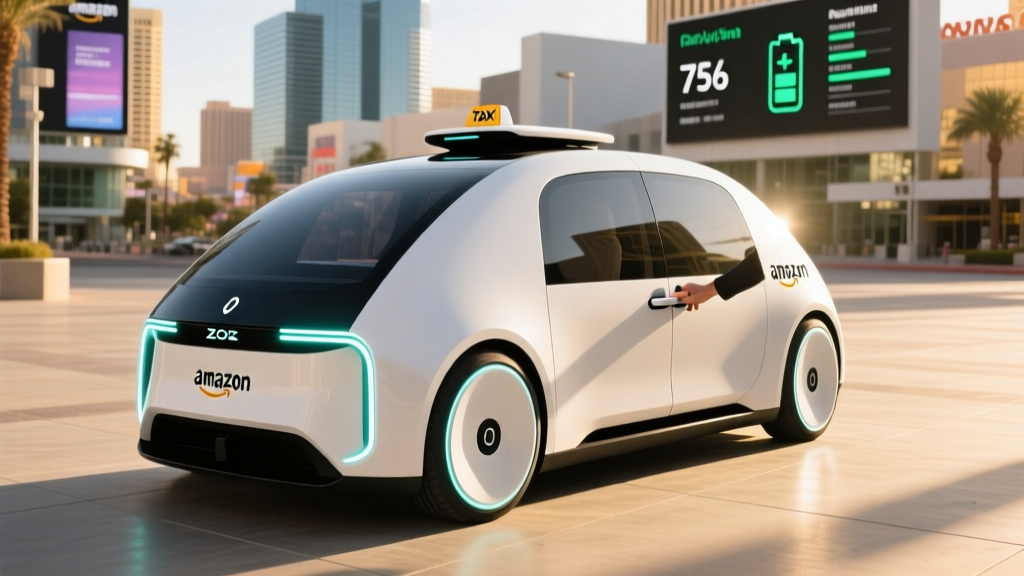
- Meet the vehicle — The Zoox vehicle is a compact, carriage-style pod with no front or back — it's symmetrical and can travel in either direction. Doors open automatically when you approach.
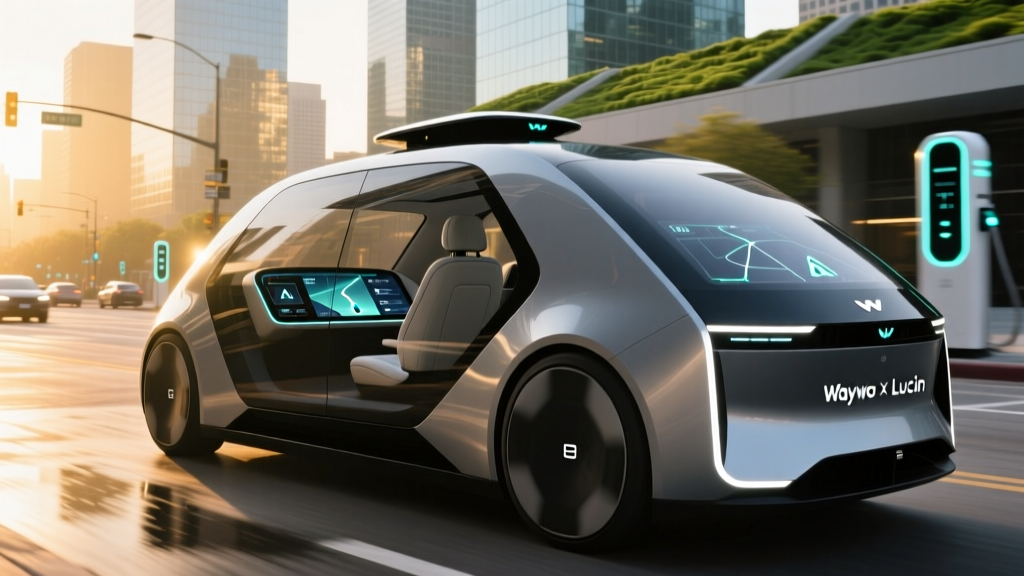
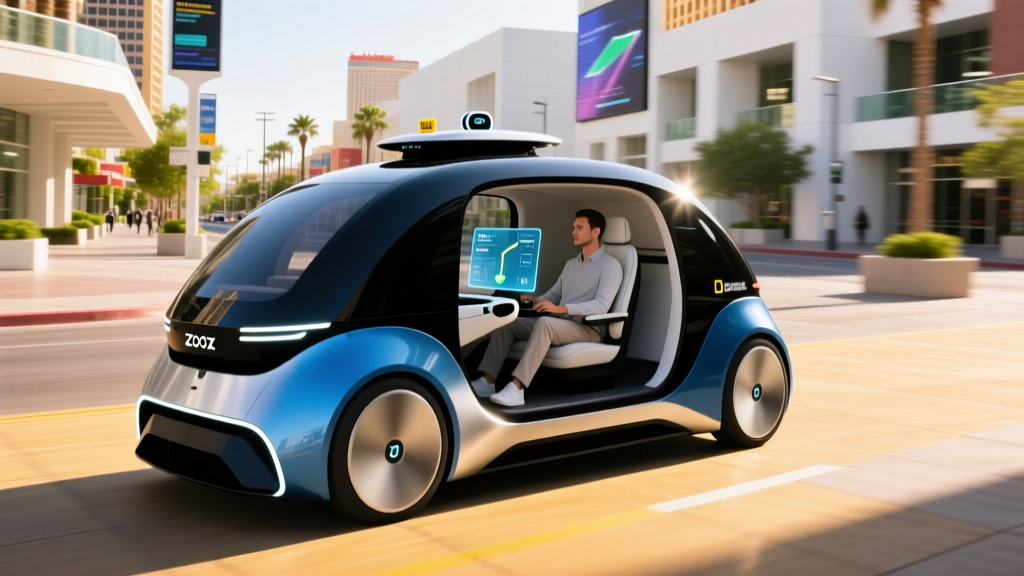
- Enjoy the ride — Inside, you'll find two forward-facing and two rear-facing seats (four passengers max), a touchscreen for ride status, and climate controls. No driver is present.
Zoox Pricing vs. Uber and Lyft in Las Vegas
As of early 2026, Zoox rides in Las Vegas are free for accepted early riders. The company has not published a commercial fare schedule, but industry analysts and statements from Zoox leadership suggest that when paid service launches, pricing will target parity with UberX and Lyft — roughly $0.75–$1.25 per mile plus a base fare, depending on demand.
| Service | Base Fare | Per-Mile Rate | Typical 3-Mi Ride | Surge Pricing |
|---|---|---|---|---|
| Zoox (current) | $0.00 | $0.00 | Free (invite-only) | None |
| Zoox (projected commercial) | ~$2.00 | ~$1.00/mi | ~$5.00 | Likely yes |
| UberX | $2.50 | $1.10/mi | $5.80–$8.00 | Yes (1.2x–3x) |
| Lyft Standard | $2.25 | $1.05/mi | $5.40–$7.50 | Yes (Prime Time) |
| Waymo One (Phoenix/SF) | $2.50 | $1.15/mi | $5.95–$8.50 | Yes (limited) |
The strategic advantage for Zoox (and Amazon) is the elimination of the driver's share, which typically accounts for 60–75% of a rideshare fare. This gives robotaxi operators room to undercut traditional rideshare while maintaining margins — once they reach sufficient fleet scale. For now, Vegas visitors who get off the waitlist are riding for free.
How Safe Are Zoox Robotaxis? Real Data
Safety is the most scrutinized aspect of any driverless service. Zoox publishes periodic safety reports and is subject to NHTSA oversight as well as Nevada state regulation through the Nevada Department of Motor Vehicles' Autonomous Vehicle Testing program.
- Total autonomous miles driven: ~1.2 million+ miles across all test and operational cities (cumulative since program inception)
- At-fault collisions: Zero reported at-fatal or serious-injury incidents involving Zoox vehicles in autonomous mode as of the latest available public reports
- Minor contact incidents: A small number of low-speed contacts (<5 mph) reported during testing phases, consistent with industry norms for early-stage robotaxi deployment
- Disengagement rate: Zoox does not publish a standardized disengagement-per-1,000-miles metric comparable to California DMV reports, as its primary operations are in Nevada. Internal data shared with regulators indicates decreasing intervention frequency over successive software versions.
- Regulatory standing: Zoox holds active testing and deployment permits in Nevada and California. No permit suspensions or revocations have been issued.
For context, IIHS research on autonomous vehicle safety notes that Level 4 robotaxi services operating in geofenced urban environments have demonstrated collision rates at or below human-driver baselines in comparable conditions, though total deployed miles remain a fraction of human-driven vehicle miles.
It's worth noting that Zoox's fleet is still small relative to Waymo's ~1,000+ vehicles operating across Phoenix, San Francisco, and Los Angeles. Smaller fleet size means fewer total miles, which means the statistical sample for safety claims is narrower. Zoox's cautious, geofenced approach is a deliberate trade-off: fewer miles, but a tightly controlled operational environment.
Under the Hood: Zoox Technology Stack
Zoox's purpose-built vehicle is not a retrofitted SUV or sedan — it's a ground-up robotaxi designed from the start without a driver. This gives the engineering team significant packaging and sensor-placement advantages over competitors who bolt autonomy hardware onto production vehicles.
- LiDAR: Multiple solid-state and spinning LiDAR units providing 360° 3D point-cloud mapping up to ~150+ meters. LiDAR is the primary depth-sensing modality, critical for detecting pedestrians, cyclists, and debris in complex urban environments.
- Cameras: A surround-camera array (multiple high-resolution units) providing visual classification, traffic-light state detection, signage recognition, and redundancy for LiDAR.
- Radar: Forward and corner radar units for velocity detection of moving objects, particularly useful in rain or fog where LiDAR and camera performance degrade.
- Ultrasonic sensors: Short-range proximity sensors for low-speed maneuvering, docking, and curb detection.
- Custom onboard compute platform (Zoox-designed) running perception, prediction, and planning stacks in real time
- HD pre-mapped routes within the geofence — the vehicle does not navigate to unmapped areas
- Remote assistance capability: if the vehicle encounters an ambiguous scenario (e.g., a construction zone with conflicting signals), a remote human operator can provide high-level guidance (not direct driving) to help the vehicle proceed
- All-electric, battery-electric vehicle with estimated ~70–80 kWh battery pack (Zoox has not published exact usable capacity)
- Bidirectional charging capable — the vehicle can return to a depot and charge without human plug-in (automated docking)
- Top speed limited to ~75 mph (the vehicle is designed for urban, not highway, operation)
The multi-sensor approach — LiDAR + camera + radar — stands in contrast to Tesla's camera-only FSD strategy. For a Level 4 system operating without any human fallback, sensor redundancy is not optional; it's a regulatory and engineering necessity. If one sensor modality degrades (e.g., camera glare at sunset), the others compensate.
Regulatory Landscape: Who Approves Zoox?
Robotaxi operations in the United States are regulated at a patchwork of state and federal levels:
- NHTSA (federal): Sets vehicle safety standards. Zoox received a notable exemption from NHTSA in 2024 to deploy its purpose-built vehicle, which lacks traditional controls (steering wheel, pedals, mirrors) that Federal Motor Vehicle Safety Standards (FMVSS) normally require. This exemption is limited in scope and fleet size.
- Nevada DMV: Issues autonomous vehicle testing and deployment permits. Nevada was one of the first states to create a legal framework for driverless vehicles, and Zoox has operated under this framework since its Las Vegas expansion.
- California DMV & CPUC: In California, the DMV issues testing permits while the California Public Utilities Commission (CPUC) authorizes commercial passenger service. Zoox holds testing permits in California but had not received full commercial deployment authorization as of early 2026.
- Local municipalities: City and county governments can impose additional restrictions on where and when robotaxis operate, including lane restrictions, school-zone rules, and event-related closures.
The regulatory environment remains fluid. Following high-profile incidents involving other robotaxi operators in 2023–2024 (notably Cruise's permit suspension in California), regulators in multiple states have tightened oversight requirements, including mandatory incident reporting timelines and fleet-size caps during initial deployment phases.
Current Limitations: What Zoox Cannot Do
Understanding what a robotaxi cannot do is as important as understanding what it can. Here are the real-world constraints you'll face with Zoox in Las Vegas:
- Geofence boundaries: You cannot travel to areas outside the pre-approved map. Destinations like Red Rock Canyon, Lake Mead, or even some suburban Henderson addresses are unreachable.
- Weather restrictions: Heavy rain, flooding, or dust storms can cause Zoox to suspend service. The vehicle's LiDAR and camera systems degrade in low-visibility conditions, and the system defaults to caution — meaning it will pull over and wait rather than proceed unsafely.
- Construction zones: Active, unanticipated road construction with shifted lanes or temporary barriers may cause the vehicle to stop and request remote assistance, adding delay to your trip.
- No highway driving: The Zoox vehicle is designed for urban speeds (typically under 45 mph). It will not merge onto I-15 or US-95 for highway-speed travel.
- Limited passenger capacity: Four passengers maximum. No car seats, no wheelchair accessibility in the current vehicle generation (Zoox has stated ADA-accessible vehicles are in development).
- No stops or multi-destination trips: You cannot ask the vehicle to stop at a convenience store or add a second drop-off. It goes from point A to point B.
- Wait times: With a limited fleet, wait times during peak Strip hours (Friday/Saturday nights, major conventions like CES) can exceed 15–20 minutes, compared to 3–5 minutes for Uber/Lyft.
- Service hours: Zoox does not currently operate 24/7. Service windows are typically daytime through late evening, with overnight hours reserved for fleet charging and maintenance.
Zoox vs. Waymo: Las Vegas Robotaxi Comparison
Waymo One does not currently operate in Las Vegas (its active commercial markets are Phoenix, San Francisco, and Los Angeles as of early 2026). However, if you're comparing robotaxi experiences across cities, here's how the two platforms differ:
| Feature | Zoox | Waymo One |
|---|---|---|
| Vehicle | Purpose-built Zoox pod (no steering wheel) | Jaguar I-PACE (retrofitted SUV) |
| SAE Level | Level 4 | Level 4 |
| Las Vegas availability | Yes (invite-only) | No |
| Paid public service | Not yet | Yes (Phoenix, SF, LA) |
| Typical fare (3-mi ride) | Free (current) | $6–$9 |
| Max passengers | 4 | 3 (I-PACE config) |
| Sensor stack | LiDAR + camera + radar + ultrasonic | LiDAR + camera + radar |
| Parent company | Amazon | Alphabet (Google) |
| Total autonomous miles (est.) | ~1.2M+ | ~10M+ (paid rides alone) |
Frequently Asked Questions
Is Zoox truly self-driving, or is there a hidden driver?
There is no driver — hidden or otherwise. The Zoox vehicle has no steering wheel, no pedals, and no driver's seat. It is a true SAE Level 4 autonomous vehicle. A remote assistance team monitors the fleet and can provide high-level guidance in edge cases, but they do not steer or control the vehicle directly.
How long is the Zoox waitlist in Las Vegas?
Wait times vary based on demand and fleet availability. Some users report receiving invitations within a week; others have waited a month or more. Signing up well before your planned Vegas trip is recommended.
Can I use Zoox to get to the Las Vegas airport?
Zoox's Las Vegas geofence includes areas near Harry Reid International Airport (LAS), but coverage may not extend to all terminal pickup/drop-off zones. Check the app for real-time availability at your specific airport location.
What happens if the Zoox vehicle encounters something it can't handle?
The vehicle performs a "minimal risk maneuver" — it signals, slows down, and pulls over to a safe stop. A remote assistance operator then evaluates the situation and either provides guidance for the vehicle to proceed or dispatches a human support team. Passengers are never asked to take control.
Is Zoox available to tourists, or only locals?
Anyone can join the waitlist regardless of residency. Tourists visiting Las Vegas are actively encouraged to sign up, as Zoox uses rider feedback from diverse users to improve its service.
Will Zoox expand beyond the Las Vegas Strip?
Zoox has indicated plans to gradually expand its geofenced area as it accumulates more mapping data and regulatory approvals. However, expansion timelines are not public, and any new zones must be approved by Nevada regulators before going live. Don't expect service to downtown Fremont Street or Summerlin in the near term.