Quick Verdict: Zoox in Las Vegas Is Free (For Now)
If you've been searching for the Zoox Vegas cost, the short answer will surprise most riders: as of early 2026, Zoox does not charge passengers for rides in its Las Vegas service area. The Amazon-backed autonomous vehicle company has been operating a limited, invitation-based and app-request ride-hail service on the Las Vegas Strip corridor since mid-2024, gradually expanding access through 2025 and into 2026. There is no per-ride fare, no surge pricing, and no subscription fee during this public pilot phase.
That said, "free" comes with major caveats. Zoox's Las Vegas footprint is tightly geofenced, wait times can stretch past 20 minutes, and the service is not yet open to every visitor who downloads the app. Understanding what Zoox actually offers in Vegas — and what it will eventually cost when commercial pricing launches — requires a closer look at the technology, the safety record, and the regulatory framework governing Level 4 robotaxis in Nevada.
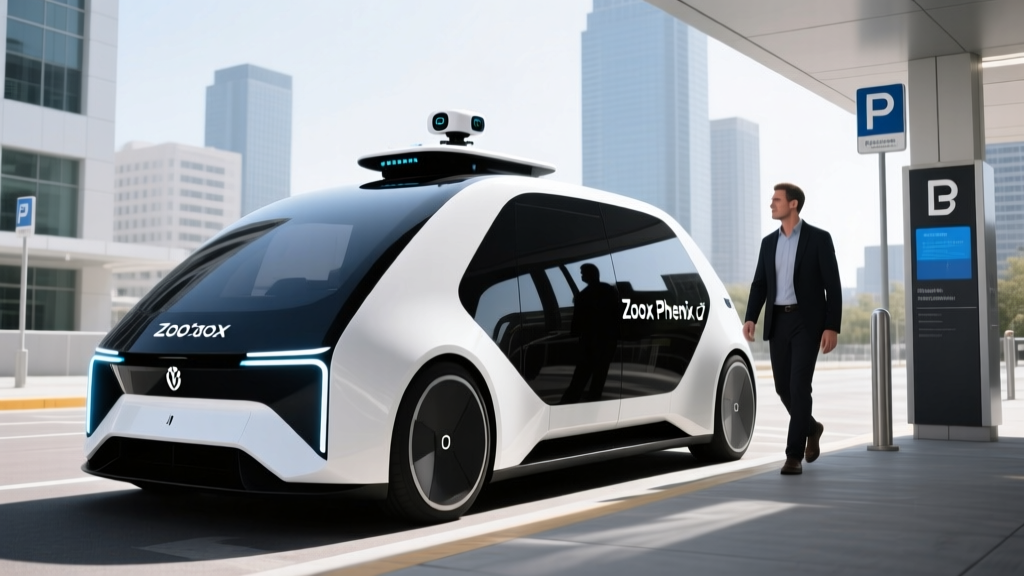
Zoox operates as a SAE Level 4 autonomous service — meaning the vehicle drives itself without a human driver behind the wheel within its defined operational design domain (ODD). This is fundamentally different from Tesla Autopilot or Ford BlueCruise, which are Level 2 driver-assistance systems that require constant human supervision. In a Zoox vehicle, there is no steering wheel and no driver's seat. The system handles all driving tasks within its geofenced zone; if it encounters a scenario it cannot handle, it pulls over safely rather than handing control to a passenger.
Where Can I Use Zoox in Las Vegas Right Now?
Zoox's Las Vegas operational area is deliberately narrow. The service currently covers a corridor along and adjacent to the Las Vegas Strip, including key hotel-casino properties, the Las Vegas Convention Center, and portions of the surrounding entertainment district. The geofence does not extend to Harry Reid International Airport, suburban Henderson, Summerlin, or the broader I-15 corridor.
| City | Status | Coverage Area | Access Model |
|---|---|---|---|
| Las Vegas, NV | Active (pilot) | Strip corridor + Convention Center | App-based, expanding waitlist |
| Foster City / Bay Area, CA | Active (pilot) | Select Peninsula routes | Employee + early-access riders |
| San Francisco, CA | Testing (no public rides) | N/A | Safety-driver testing only |
| Austin, TX | Announced / pre-deployment | TBD | Not yet available |
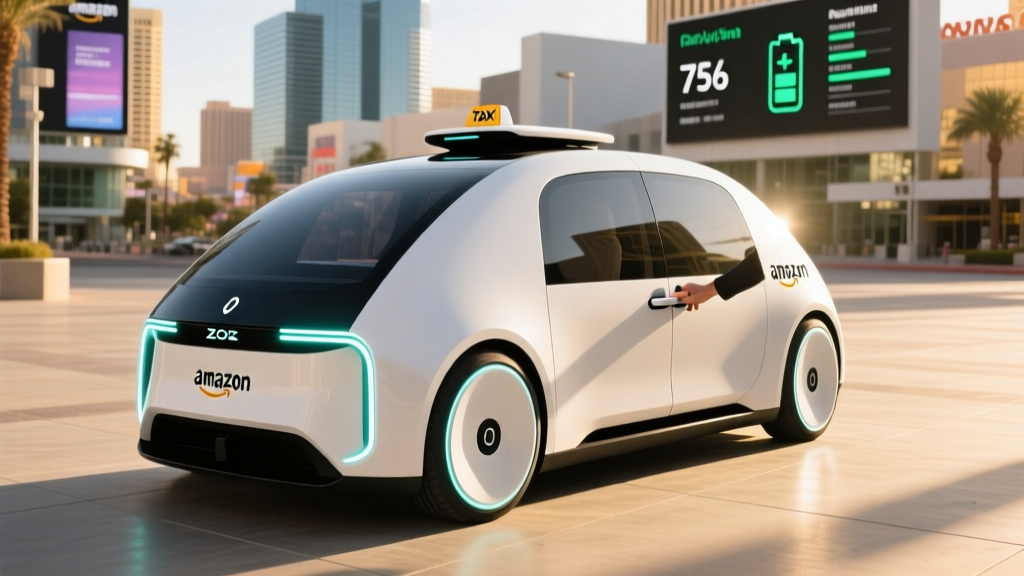
Access in Las Vegas is managed through the Zoox mobile app (available on iOS and Android). Riders request a pickup within the geofenced zone, and the system dispatches a Zoox vehicle — the company's custom-built, carriage-style robotaxi with bidirectional driving capability and no steering wheel. Wait times vary significantly: during off-peak weekday hours, you might get a ride within 5–10 minutes; on busy weekend evenings along the Strip, expect 15–30 minutes or a "no vehicles available" message.
How Much Does Zoox Cost vs. Uber and Lyft in Vegas?
During its current pilot phase, Zoox charges $0 per ride in Las Vegas. This is a deliberate strategy: like Waymo's early San Francisco launches, Zoox is accumulating real-world rider data, stress-testing its dispatch system, and building public familiarity before introducing fares.
When Zoox transitions to commercial pricing — widely expected in late 2026 or 2027 — industry analysts and statements from the company suggest fares will be competitive with UberX and Lyft standard rides, likely in the range of $1.00–$1.50 per mile with a base pickup fee. The economic thesis of robotaxis is that removing the human driver (who captures roughly 60–70% of a rideshare fare) allows the platform to undercut traditional rideshare while still generating margin on vehicle utilization.
| Service | Current Fare (2026) | Estimated Future Fare | Surge Pricing? |
|---|---|---|---|
| Zoox | $0 (pilot) | ~$5–$7 | TBD |
| UberX | $10–$16 | — | Yes (1.5x–3x common) |
| Lyft Standard | $9–$15 | — | Yes (Prime Time) |
| Waymo (if/when Vegas launches) | Not yet in Vegas | ~$6–$9 (based on SF/LA pricing) | Dynamic pricing used |
For context, Waymo's commercial robotaxi service in San Francisco and Los Angeles charges fares roughly comparable to UberX without surge, typically $0.99–$1.30 per mile plus a base fee. A 3-mile trip in SF often lands between $7 and $12. Zoox is expected to price similarly or slightly below to capture market share in a city where Uber and Lyft already saturate every hotel curb.
Zoox Safety Record: What the Data Actually Shows
Zoox has reported accumulating over 1 million autonomous miles across its testing and pilot operations in Las Vegas, the Bay Area, and other test zones. The company's custom vehicle — which features a symmetric, bidirectional design with four-wheel steering and airbags for all seating positions — has not been involved in any reported at-fault collisions resulting in passenger injury during public pilot rides. Like all autonomous vehicle operators in California and Nevada, Zoox is required to submit disengagement reports and collision filings to state regulators. Specific per-million-mile intervention rates have not been published in a standalone public safety report as of this writing, though data is available through NHTSA's Standing General Order reporting framework for automated driving systems.
Evaluating robotaxi safety requires comparing apples to apples. The relevant metric is not "has there ever been an incident?" but rather the rate of safety-critical events per million miles compared to human drivers. The U.S. human-driver fatality rate sits at approximately 1.35 deaths per 100 million vehicle miles traveled (per NHTSA FARS data). Level 4 robotaxi operators, including Waymo and Zoox, operate at volumes far too small to generate statistically comparable fatality data — Zoox's ~1 million autonomous miles is roughly 1/100th of the exposure needed to evaluate a single fatality-rate data point.
What we can assess:
- Contact incidents: Zoox's California DMV disengagement and collision reports show a small number of minor contact events during testing phases (with safety drivers present), consistent with an early-stage autonomous program. No at-fault injuries to passengers or pedestrians have been publicly reported during driverless pilot operations.
- Disengagement rate: In its most recent California DMV disengagement report cycle, Zoox reported disengagement rates that have improved year-over-year, reflecting software maturation. However, direct comparison to Waymo's disengagement figures is difficult because Zoox's ODD (operational design domain) and testing conditions differ.
- Vehicle design safety: The Zoox custom vehicle includes a crash-optimized structure, multi-point seatbelts for four passengers, and redundant braking and steering systems — a purpose-built safety advantage over retrofitted production vehicles used by some competitors.
For the most comprehensive and current safety data, check IIHS and NHTSA as they develop rating frameworks specifically for automated driving systems.
Inside the Zoox Vehicle: Technology Stack Explained
Zoox's approach to autonomous driving differs from Tesla's camera-centric philosophy and aligns more closely with Waymo's sensor-rich architecture. The Zoox custom vehicle uses a multi-modal sensor suite designed to provide overlapping, redundant perception of the driving environment.
- LiDAR: Multiple solid-state and spinning LiDAR units provide 360° 3D point-cloud mapping out to ~150+ meters, critical for depth perception in low-light and complex urban scenes.
- Cameras: A suite of high-resolution cameras covers all directions, handling lane-line detection, traffic-light state recognition, sign reading, and object classification.
- Radar: Forward and corner radar units track velocity of other vehicles and detect objects in adverse conditions (rain, fog) where LiDAR and cameras degrade.
- Compute platform: Custom high-performance computing hardware processes sensor fusion in real time, running Zoox's proprietary prediction, planning, and control algorithms.
- HD mapping + geofencing: The vehicle operates within a pre-mapped, centimeter-accurate HD map of its service area. It does not navigate outside this geofence — if asked to go beyond the boundary, the ride request is declined.
- V2I communication: The vehicle can receive infrastructure signals (e.g., connected traffic lights) in equipped corridors, supplementing onboard perception.
The bidirectional vehicle design is not just a novelty — it eliminates the need for three-point turns or multi-point maneuvers in tight urban spaces. The Zoox vehicle can simply reverse direction and drive the opposite way with identical sensor coverage, a meaningful advantage in dense city grids and hotel drop-off zones.
Compared to Tesla's vision-only FSD (which relies on cameras and neural networks without LiDAR or radar), Zoox's sensor-fusion approach provides hardware redundancy that most autonomous-vehicle safety researchers consider essential for Level 4 operations. The trade-off is higher per-vehicle hardware cost, which Zoox absorbs as part of its fleet-ownership model — riders never see or pay for the sensor suite directly.
Current Limitations: Where Zoox Can't (Yet) Drive
Level 4 autonomy is powerful but bounded. Zoox's system is designed to operate within a specific Operational Design Domain (ODD), and stepping outside that domain is not an option — the vehicle will not attempt it. Here are the real-world constraints riders should understand:
- Geofence boundary: The vehicle will only pick up and drop off within its pre-approved Las Vegas corridor. Airport runs, suburban addresses, and cross-city trips outside the zone are not possible.
- Weather restrictions: Heavy rain, flooding, or extreme dust-storm conditions (relevant in the Mojave Desert) can trigger service suspension. LiDAR and camera performance degrade in heavy precipitation, and Zoox's ODD does not include severe-weather operation.
- Construction zones: Unmapped, major road-construction changes can confuse the HD map. Zoox typically updates maps frequently, but sudden lane closures or detours may cause the vehicle to pull over and wait for remote-assistance guidance rather than improvise.
- Special events: Massive crowd events (New Year's Eve on the Strip, major conventions with road closures) may result in service suspension or severely limited availability. The system prioritizes safety over availability.
- No highway driving: Zoox's Las Vegas ODD is surface-street only. The vehicle does not merge onto I-15 or US-95.
- Accessibility: The Zoox vehicle accommodates standard wheelchair dimensions, but riders with oversized mobility devices should verify compatibility through the app before requesting a ride.
- Passenger capacity: The vehicle seats exactly four passengers. There is no option for larger groups, and cargo space is limited to what fits on your lap or in the small rear compartment.
These limitations are not unique to Zoox — they apply to virtually every Level 4 robotaxi operating today, including Waymo in Phoenix and San Francisco. The difference from Level 2 driver-assist systems (which work on any road but require a human driver) is that Level 4 systems handle everything within their domain but cannot function outside it.
Regulatory Landscape: Who Approves Robotaxi Operations?
Robotaxi deployment in the United States is governed by a patchwork of state and federal regulations. In Nevada, the Nevada Department of Motor Vehicles and the state's Autonomous Vehicle Committee oversee testing and deployment permits. Zoox received authorization to test without a safety driver in Nevada and subsequently expanded to limited public rides under a pilot framework.
At the federal level, NHTSA does not currently "approve" autonomous vehicle operations in the way it issues vehicle safety certifications. Instead, NHTSA exercises oversight through its Standing General Order (SGO), which requires all ADS-equipped vehicle operators to report crashes within one day of occurrence. NHTSA also retains authority to investigate and recall automated driving systems that present an unreasonable safety risk.
Key regulatory distinctions:
- California (CPUC + DMV): The California Public Utilities Commission regulates commercial robotaxi fares and service permits, while the DMV handles testing permits and disengagement reporting. Waymo and Cruise (now suspended) have operated under this dual-permit framework.
- Nevada: More permissive than California in some respects, Nevada allows driverless testing and deployment with state authorization. Las Vegas's concentrated tourist corridor makes it an attractive proving ground with relatively predictable traffic patterns.
- Federal: The NHTSA SGO applies nationwide. There is no comprehensive federal ADS deployment law as of 2026, leaving primary authority with states.
For riders, the practical implication is that Zoox's availability, pricing, and service rules are shaped by Nevada state regulators — and those rules could change as the service scales from pilot to full commercial deployment.
Frequently Asked Questions
Is Zoox truly self-driving, or is there a human driver?
Zoox operates at SAE Level 4, meaning there is no human driver in the vehicle and no steering wheel. The system handles all driving tasks within its geofenced service area. This is fundamentally different from Level 2 systems like Tesla Autopilot or GM Super Cruise, which require an attentive human driver at all times. If a Zoox vehicle encounters a situation it cannot resolve, it is designed to pull over safely and request remote assistance — it does not hand control to the passenger.
How do I request a Zoox ride in Las Vegas?
Download the Zoox app (iOS or Android), create an account, and request a ride within the Las Vegas service zone. During the pilot phase, access may be limited to an approved waitlist or invitation. Pickup and drop-off points are constrained to locations within the geofence — typically major hotel entrances and designated stops along the Strip corridor.
Will Zoox eventually charge for rides in Vegas?
Almost certainly, yes. The current $0 pricing is a pilot-phase strategy to build rider familiarity and collect operational data. When commercial fares launch (expected late 2026 or 2027), pricing is projected to be competitive with UberX — roughly $5–$10 for a typical 2–4 mile Strip trip — without the surge pricing spikes that human-driven rideshare imposes during peak demand.
How does Zoox compare to Waymo?
Both are Level 4 robotaxi services, but with key differences. Waymo uses retrofitted production vehicles (Jaguar I-PACE, currently transitioning to newer platforms) and has been commercially operational in Phoenix since 2020 and San Francisco since 2022, with Los Angeles added subsequently. Zoox uses a purpose-built, carriage-style vehicle with bidirectional driving capability and four-wheel steering. Waymo has significantly more commercial miles and a published safety case study; Zoox is earlier in its public deployment curve but benefits from Amazon's logistics and capital resources.
Can I use Zoox to get to the Las Vegas airport?
Not currently. Harry Reid International Airport is outside Zoox's Las Vegas geofence. Airport rides would require either a geofence expansion (which requires regulatory approval) or a partnership with airport authorities. For now, you'll need Uber, Lyft, or a taxi for airport transfers.
What happens if the Zoox vehicle encounters an emergency?
The vehicle is equipped with redundant braking, steering, and communication systems. If it detects a scenario it cannot safely navigate (an unmapped obstruction, a severe weather event, or a system fault), it will execute a controlled stop — pulling to the curb when possible. A remote-operations team monitors the fleet and can provide guidance or dispatch assistance. In a medical emergency, passengers can use the in-vehicle communication system to reach Zoox support, which can coordinate with emergency services.