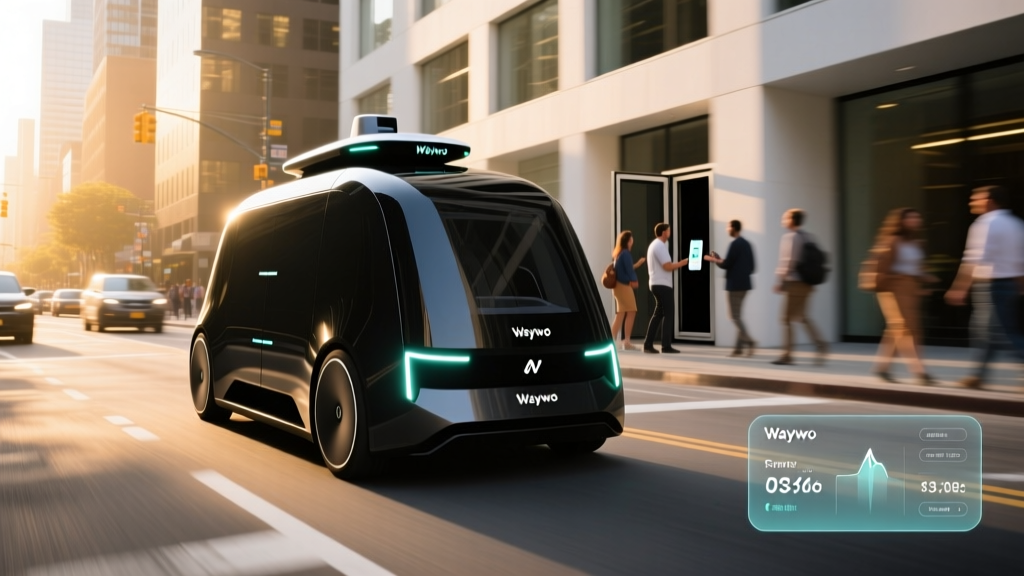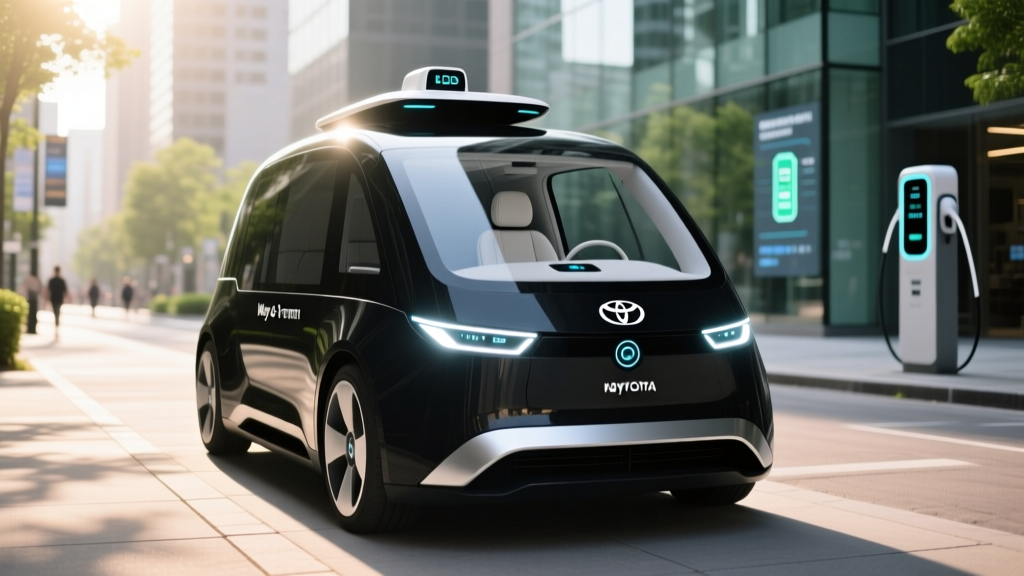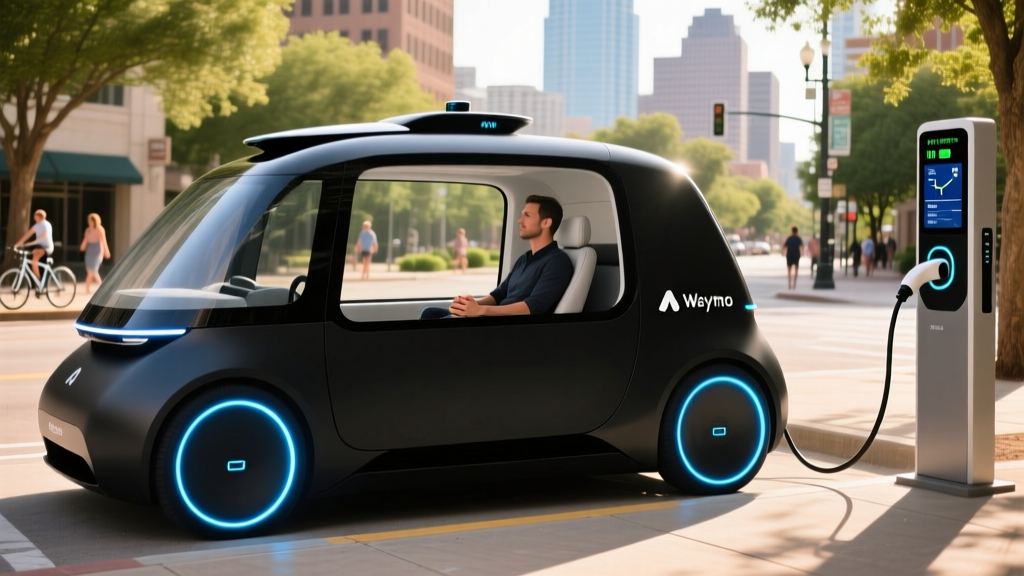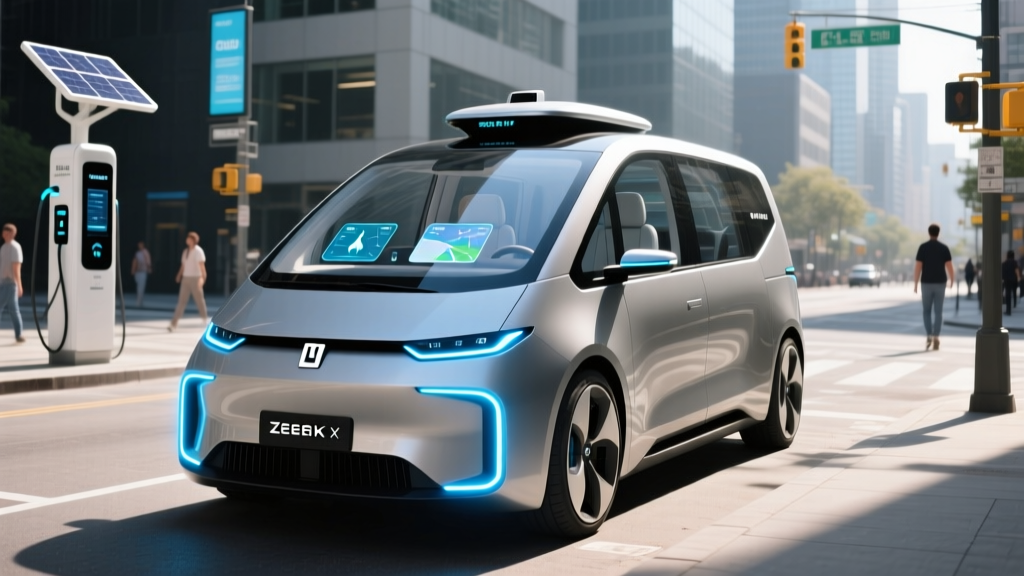
The search term Zeekr Waymo points to one of the most consequential hardware partnerships in the autonomous-vehicle industry: Geely's premium EV brand Zeekr building a ground-up robotaxi for Alphabet's Waymo Driver. Unlike the retrofitted Jaguar I-PACE and Chrysler Pacifica minivans that dominated Waymo's early commercial fleet, the Zeekr M-Vision (sometimes called the Zeekr RT) was engineered from day one without a steering wheel, pedals, or mirrors — a purpose-built Level 4 platform designed for high-volume driverless deployment.
As of early 2026, the vehicle is in advanced validation testing in the Phoenix and San Francisco Bay Area metros, with commercial rider service still pending regulatory clearance. Here is exactly what we know about the platform, the autonomy stack, the rollout timeline, and how it fits into the broader robotaxi landscape.
Is the Zeekr Waymo Robotaxi Truly Self-Driving?
Yes — but only within a tightly defined Operational Design Domain (ODD). The Zeekr M-Vision runs Waymo's 6th-generation Driver system, which is classified as SAE Level 4: fully driverless within its geofenced service area, with no human fallback required. This is fundamentally different from any consumer vehicle you can buy today.
SAE Automation Levels — Where Zeekr Waymo Sits
| Level | Name | Who Drives | Example |
|---|---|---|---|
| Level 0 | No Automation | Human | Any car without ADAS |
| Level 1 | Driver Assistance | Human (one axis assisted) | Adaptive cruise OR lane-keep |
| Level 2 | Partial Automation | Human (must supervise) | Tesla Autopilot, GM Super Cruise, Ford BlueCruise |
| Level 3 | Conditional Automation | System (human on standby) | Mercedes Drive Pilot (limited markets) |
| Level 4 | High Automation | System (no human needed in ODD) | Waymo Driver, Zoox |
| Level 5 | Full Automation | System (anywhere, any condition) | Does not yet exist commercially |
Consumer vehicles with Autopilot, FSD (Supervised), or BlueCruise remain Level 2 — the driver is legally and functionally responsible at all times. The Zeekr Waymo robotaxi is Level 4: no driver, no steering wheel, no pedals.
The Vehicle: Zeekr M-Vision Platform Specs
Zeekr unveiled the M-Vision concept in late 2022 and confirmed the production variant — internally the Zeekr RT — in 2024. The platform uses Geely's SEA-M (Sustainable Experience Architecture for Mobility), a skateboard chassis distinct from the consumer SEA platform under the Zeekr 001 and 009.
| Specification | Zeekr M-Vision (Zeekr RT) |
|---|---|
| Vehicle Class | Purpose-built robotaxi minivan |
| Steering / Pedals | None (Level 4 only) |
| Seating Capacity | Up to 5 passengers, lounge-style |
| Doors | Power sliding, electrically actuated |
| Platform | Geely SEA-M skateboard |
| Battery Chemistry | NMC (estimated ~100 kWh usable) |
| Estimated Range | ~250–300 mi (final EPA TBD at certification) |
| Charging | DC fast charge capable, fleet depot charging |
| Production Location | Geely factories, China (US-market validation ongoing) |
| Status (2026) | Validation / pre-commercial testing |
The absence of a driver's position lets Zeekr reclaim roughly 15–20% of interior volume for passengers. The cabin features a flat floor, swappable seating layouts, integrated screens, and HVAC zoning designed for rider comfort rather than driver ergonomics.
Waymo 6th-Generation Driver: The Technology Stack
Sensor and Compute Architecture
Waymo's 6th-gen Driver, which debuted on the Jaguar I-PACE fleet in 2024 and carries over to the Zeekr platform, represents a significant hardware consolidation over earlier generations:
- LiDAR: Custom-designed units with improved range (300+ meters) and resolution, positioned for 360° coverage with fewer sensors than the 5th-gen roof rack.
- Cameras: High-dynamic-range imaging array covering near, mid, and far fields — critical for traffic-light state detection, signage, and pedestrian intent.
- Radar: Imaging radar for velocity estimation and adverse-weather object detection, complementing LiDAR rather than replacing it (a key distinction from Tesla's camera-only approach).
- Audio sensors: External microphones detect sirens from emergency vehicles approaching from any direction.
- Compute: Custom Waymo silicon replacing earlier off-the-shelf GPUs, reducing power draw and thermal load — important for an EV platform where every watt of compute cuts into driving range.
Camera-only vs. multi-sensor: Waymo, Cruise/Zoox, and most Level 4 operators use LiDAR + camera + radar fusion. Tesla's FSD is camera-only. The robotaxi industry consensus is that LiDAR provides non-negotiable redundancy for depth accuracy at range and in low-light conditions.
The Zeekr vehicle's flat roof and integrated sensor pods allow cleaner packaging than the retrofitted Jaguar I-PACE, which had to carry a bulky roof-mounted sensor array bolted onto a consumer vehicle not originally designed for autonomy.
Where Can You Ride the Zeekr Waymo Right Now?
The honest answer: you cannot hail a Zeekr-built robotaxi as a paying rider anywhere in early 2026. The vehicle is in the validation and testing phase, and Waymo's commercial rider service continues to run on the Jaguar I-PACE in existing markets. Here is the current breakdown:
| City / Region | Waymo One Rider Service | Zeekr M-Vision Presence |
|---|---|---|
| Phoenix, AZ (metro) | Live, 24/7, fully driverless | Testing / validation |
| San Francisco, CA | Live, fully driverless | Testing / validation |
| Los Angeles, CA | Live, expanding coverage | Not yet deployed |
| Austin, TX | Live, limited geofence | Not yet deployed |
| Atlanta, GA | Announced / early launch | Not yet deployed |
| Shanghai, China | No Waymo service | Zeekr production base |
Source: Waymo service area page. Service boundaries are geofenced and can change monthly. Always check the Waymo One app for your exact pickup eligibility.
Waymo has indicated that the Zeekr vehicle will join the commercial fleet once it completes NHTSA compliance validation and state-level deployment permits, but no firm date has been published. Expect initial Zeekr deployments in Phoenix and San Francisco — the two most mature Waymo markets — likely in the 2026–2027 window.
How to Use Waymo One and What It Costs vs. Uber/Lyft
While the Zeekr vehicle is not yet in service, the Waymo One app and pricing model it will eventually use are already established. Here is how the service works today on the Jaguar I-PACE fleet:
- Download the Waymo One app (iOS/Android) and create an account.
- Check service availability — the app shows your geofenced service area and current wait times.
- Request a ride — enter pickup and drop-off within the service area.
- Verify your ride — match the vehicle's license plate and use the in-app PIN to unlock the doors.
- Ride — no driver, no tipping. In-ride screens show the route and allow music control.
- Pay — automatically charged to your linked payment method.
| Cost Factor | Waymo One (Phoenix/SF) | UberX / Lyft (same markets) |
|---|---|---|
| Base fare structure | Per-mile + per-minute, similar to rideshare | Per-mile + per-minute + booking fee |
| Typical 5-mile trip | $12–$18 | $11–$20 (surge dependent) |
| Surge pricing | Less volatile; no driver supply constraint | Can 2–3x during peak demand |
| Tipping | Not applicable (no driver) | Expected ($2–$5 typical) |
| Airport service | Available at PHX; SFO limited | Available at all major airports |
| Accessibility (WAV) | Limited WAV fleet | WAV available, limited supply |
Pricing varies by market, time, and demand. Waymo has historically priced competitively with rideshare to build ridership. When the Zeekr vehicle enters service, expect similar pricing — Waymo's cost advantage comes from removing the driver, not premium fares.
Safety Record: What the Data Actually Shows
Waymo Driver Safety Data (through 2025)
- Total autonomous miles driven: Over 50 million fully driverless miles across Phoenix, San Francisco, Los Angeles, and Austin (per Waymo's safety reports).
- Injury-causing crash rate: Waymo's published data shows an approximately 85% reduction in injury-causing crashes compared to human benchmarks in comparable geographies.
- Police-reported crash rate: Roughly 57% lower than human drivers in the same operating areas.
- Contact rate: Most incidents involve low-speed contact with other vehicles or objects that entered the Waymo vehicle's path — the robotaxi is typically the struck party, not the at-fault party.
Sources: Waymo Safety Data, NHTSA standing general order crash reporting. Human benchmark data from SHRP2 naturalistic driving study.
Important context: Waymo operates in geofenced, mapped urban environments and will pull over or request remote assistance when it encounters scenarios outside its confidence threshold (construction zones, severe weather, unusual road configurations). This is not a limitation — it is the conservative safety philosophy that differentiates Level 4 robotaxis from Level 2 consumer systems that expect the human to intervene.
California DMV disengagement reports, which require operators to log every instance a safety driver takes control, show Waymo consistently reporting thousands of miles between disengagements — orders of magnitude ahead of most competitors. However, disengagement metrics are imperfect; Waymo's own published studies using insurance-claims data and crash rates are the more meaningful safety indicators.
Regulatory Landscape: Who Approves Robotaxi Operations?
The Zeekr Waymo vehicle must clear multiple regulatory gates before carrying paying passengers in the US:
- NHTSA (federal): The vehicle must meet Federal Motor Vehicle Safety Standards (FMVSS) — or receive an exemption. Because the M-Vision has no steering wheel, mirrors, or pedals, it requires an FMVSS exemption similar to what was granted for earlier driverless test vehicles. NHTSA also mandates crash reporting under its Standing General Order.
- State DMVs and PUCs: Each state sets its own deployment rules. California's CPUC and DMV jointly regulate testing and commercial deployment. Arizona has a permissive framework that allowed Waymo's first commercial launch. Texas and Georgia have their own permitting processes.
- Local municipalities: Cities can impose additional requirements on routing, hours of operation, and fleet size. San Francisco's Board of Supervisors has at times pushed back on robotaxi expansion over traffic-incident concerns.
- Import / trade compliance: Because the Zeekr vehicle is manufactured in China, it must satisfy US import regulations, tariffs, and any national-security reviews — a layer of complexity that does not apply to domestically assembled platforms like the upcoming Tesla Robotaxi.
Waymo has not publicly detailed the FMVSS exemption status of the Zeekr M-Vision, but the company's track record of securing exemptions for its prior driverless test vehicles suggests this is procedural rather than a fundamental barrier.
Current Limitations of the Zeekr Waymo Platform
What the Robotaxi Cannot Do (Yet)
- Geofence restriction: Operates only within pre-mapped service areas. Cannot drive you from Phoenix to Tucson or San Francisco to Sacramento — even though a human driver could.
- Heavy weather: Torrential rain, dense fog, and snow reduce LiDAR and camera effectiveness. Waymo may pause service or limit the operational area during severe conditions.
- Unmapped construction zones: Major road reconfigurations not yet reflected in HD maps can trigger a conservative pullover or remote-assistance request.
- No intercity / highway long-haul: Current service is urban and suburban. Airport runs are available in some markets but limited to mapped corridors.
- Limited cargo / accessibility: The minivan form factor helps, but wheelchair-accessible vehicle (WAV) supply remains constrained across all robotaxi fleets.
- Not yet in commercial service: As of early 2026, you cannot hail a Zeekr-built robotaxi. The Jaguar I-PACE remains Waymo's rider-facing vehicle.
- China manufacturing and tariff risk: Geopolitical trade policy could affect vehicle import timelines or costs — a variable unique to the Zeekr platform versus US-assembled competitors.
Zeekr Waymo vs. Competing Robotaxi Platforms
| Platform | Operator | SAE Level | Base Vehicle | Status (2026) |
|---|---|---|---|---|
| Zeekr M-Vision | Waymo | Level 4 | Purpose-built (Geely SEA-M) | Testing / pre-commercial |
| Jaguar I-PACE | Waymo | Level 4 | Retrofitted consumer EV | Live commercial (Phoenix, SF, LA, Austin) |
| Zoox vehicle | Amazon/Zoox | Level 4 | Purpose-built carriage | Limited service (Las Vegas, SF testing) |
| Cruise Origin | GM/Cruise | Level 4 | Purpose-built | Paused / restructuring after 2024 incidents |
| Tesla Robotaxi | Tesla | Level 4 (claimed) | Purpose-built (announced) | Announced; no commercial service |
| Apollo Go | Baidu | Level 4 | Various (China) | Live in 10+ Chinese cities |
Frequently Asked Questions
Where can I use this robotaxi service right now?
You cannot hail a Zeekr-built robotaxi as of early 2026. Waymo One rides are available on the Jaguar I-PACE in Phoenix, San Francisco, Los Angeles, and Austin via the Waymo One app. The Zeekr M-Vision is in validation testing and is expected to join the fleet once NHTSA and state regulators clear it for commercial deployment.
How much does Waymo cost vs. Uber or Lyft?
Waymo One pricing is comparable to UberX and Lyft — typically $12–$18 for a 5-mile urban trip, with no tipping and less surge-pricing volatility. Exact fares depend on market, distance, and time. The Zeekr vehicle, when it enters service, is expected to use the same pricing model.
How safe are Waymo robotaxis — is there real data?
Yes. Waymo has published safety analyses covering over 50 million driverless miles, showing an approximately 85% reduction in injury-causing crashes and a 57% reduction in police-reported crashes versus human benchmarks in comparable geographies. Data is available on Waymo's safety page and through NHTSA's Standing General Order crash reports.
What are the current limitations?
Geofenced service areas (no intercity trips), weather sensitivity in heavy rain or fog, dependence on HD-mapped roads, limited wheelchair-accessible supply, and — for the Zeekr vehicle specifically — it is not yet in commercial service. These are operational constraints of all current Level 4 systems, not unique flaws.
Is this truly self-driving or driver-assist?
The Zeekr Waymo robotaxi is SAE Level 4 — fully driverless within its operational domain, with no steering wheel, no pedals, and no human fallback. This is categorically different from Level 2 consumer systems like Tesla Autopilot, FSD (Supervised), GM Super Cruise, or Ford BlueCruise, all of which require an attentive human driver at all times.
Why is Zeekr building a car for Waymo?
Zeekr (a Geely brand) has deep EV manufacturing scale and the SEA-M skateboard platform suited for a purpose-built robotaxi. Waymo needed a high-volume, cost-efficient vehicle partner to scale beyond the limited-production Jaguar I-PACE. The partnership lets Waymo focus on software and operations while Zeekr handles vehicle manufacturing — a model similar to how Apple contracts Foxconn for iPhone production.
Will the Zeekr robotaxi be available outside the US?
Waymo currently operates only in the United States. Zeekr sells consumer vehicles in China and Europe, but the M-Vision robotaxi is built specifically for Waymo's US operations. There is no announced plan for Waymo service in China or Europe, though Geely's own autonomous-driving efforts may eventually use similar hardware in Chinese markets.