The Great Autonomous Divergence: Three Paths to Level 4
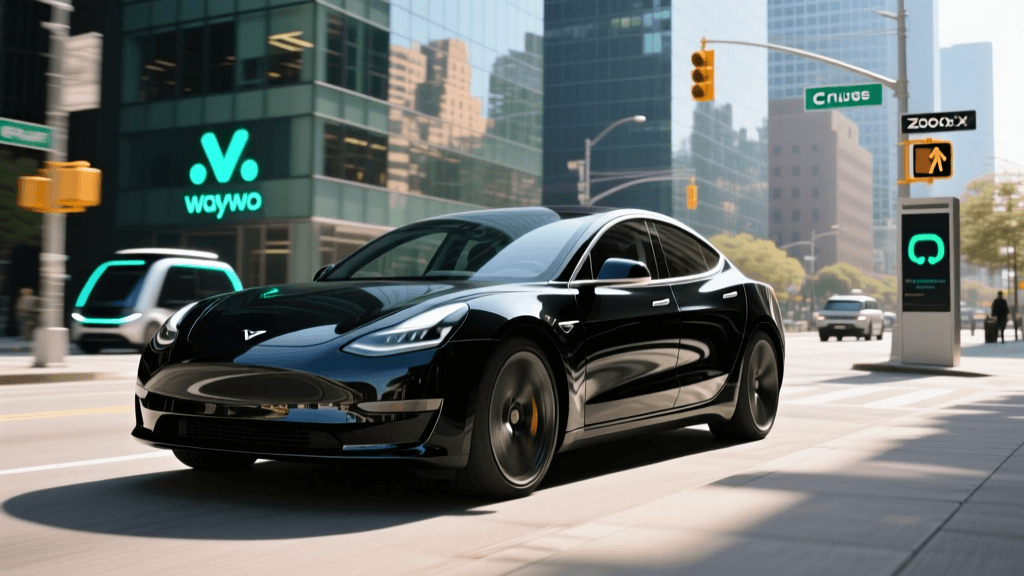
The race to commercialize fully autonomous robotaxi services has transitioned from a speculative science project into a high-stakes battle of engineering philosophies. As we look toward the future of urban mobility, the industry is no longer chasing a single, unified solution for Level 4 and Level 5 autonomy. Instead, three dominant players—Waymo, Tesla, and Zoox—are pioneering radically different technology stacks, hardware configurations, and operational models. Understanding these divergent approaches is critical for automotive enthusiasts, fleet operators, and investors trying to predict which ecosystem will define the next decade of smart driving.
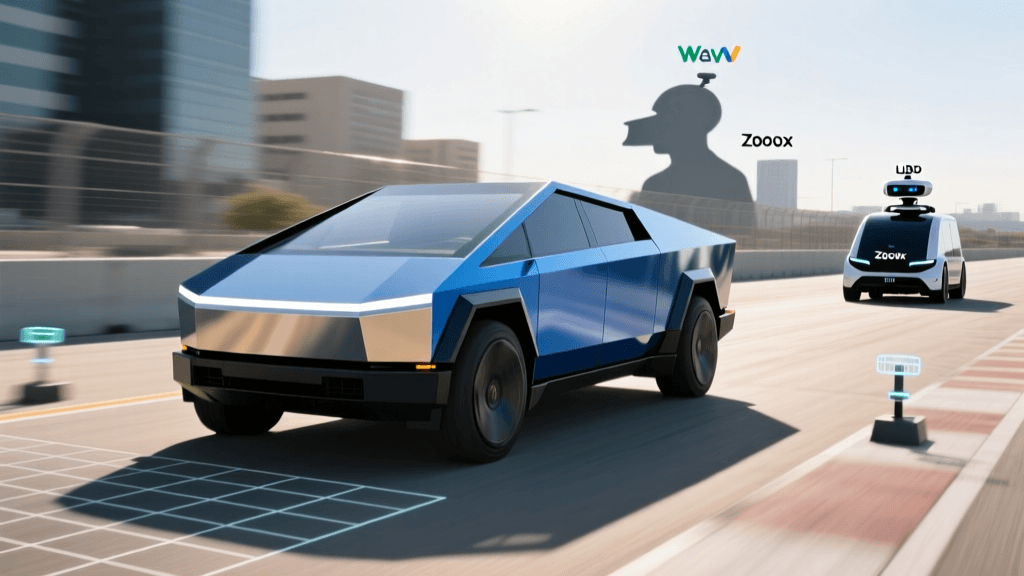
While all three companies share the ultimate goal of removing the human driver from the equation, their methodologies regarding sensor suites, mapping strategies, and vehicle design could not be more different. Below, we break down the distinct technological approaches of Waymo, Tesla, and Zoox, analyzing their future scalability, economic viability, and the hurdles they face from regulatory bodies like the National Highway Traffic Safety Administration (NHTSA).
Waymo: The LiDAR and HD Map Purist
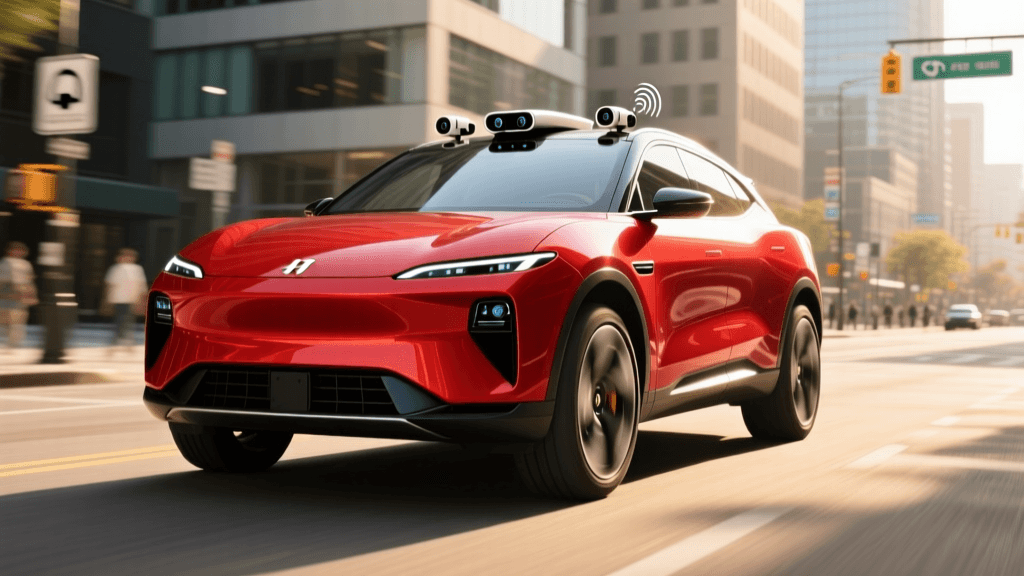
Waymo, backed by Alphabet, has long been the industry standard-bearer for the 'sensor fusion' approach. The Waymo Driver relies on a robust, multi-modal suite of LiDAR, radar, and high-resolution cameras to perceive the world in 360 degrees. With the rollout of their 6th-generation hardware, Waymo has significantly reduced the cost and size of its LiDAR units while improving performance in adverse weather conditions like heavy rain and fog.
Crucially, Waymo’s software stack is heavily dependent on High-Definition (HD) Maps. Before a Waymo vehicle can operate autonomously in a new city, the company must painstakingly map the environment down to the centimeter, noting curb heights, lane widths, and traffic light coordinates. This approach yields an exceptionally safe and predictable ride within geofenced Operational Design Domains (ODDs). According to Waymo's official safety data, their vehicles are involved in significantly fewer injury-causing crashes compared to human benchmarks in their operational cities. However, the reliance on HD maps creates a massive scalability bottleneck; expanding to a new city requires months of mapping and validation before a single paid ride can be dispatched.
Tesla: The Vision-Only End-to-End Challenger
Tesla’s approach to autonomy is the most polarizing in the industry. Rejecting LiDAR and radar entirely, Tesla relies exclusively on a 'vision-only' camera suite paired with its proprietary FSD (Full Self-Driving) computer. With the introduction of FSD v12, Tesla shifted away from hundreds of thousands of lines of C++ heuristic coding to an 'end-to-end' neural network architecture. This means the vehicle learns to drive by ingesting billions of frames of real-world video data, mimicking human intuition rather than following rigid, pre-programmed rules.
Tesla’s mapping strategy is equally disruptive: they do not use HD maps. Instead, Tesla vehicles rely on real-time perception and standard navigation maps, allowing them to theoretically drive anywhere a human can, without prior geofencing. The upcoming Tesla 'Cybercab' (dedicated robotaxi) is designed to leverage this software at scale, targeting a sub-$30,000 manufacturing cost. Tesla’s primary advantage is its data moat; millions of consumer Tesla vehicles are constantly shadow-driving and uploading edge-case scenarios to train the neural net. The challenge, however, lies in proving to regulators that a vision-only system can match the redundancy and safety of LiDAR-equipped vehicles, especially in low-visibility conditions.
Zoox: The Purpose-Built Urban Maverick
Acquired by Amazon in 2020, Zoox has taken a fundamentally different route by designing a vehicle from the ground up specifically for autonomous mobility. Unlike Waymo (which retrofits the Jaguar I-PACE or Zeekr minivans) and Tesla (which adapts consumer cars), the Zoox robotaxi is a symmetrical, bidirectional, carriage-style vehicle with no steering wheel or pedals. Passengers sit face-to-face in a lounge-like cabin.
Zoox’s technology stack features a dense sensor array of LiDAR, radar, and cameras, but its hardware is deeply integrated into the vehicle's unique chassis. The vehicle features four-wheel steering, allowing it to perform 360-degree spins and navigate incredibly tight urban corridors. With a top speed of 75 mph, it is optimized for dense city centers rather than highway cruising. As detailed on the Zoox vehicle design page, the symmetrical layout and bidirectional driving capability eliminate the need for complex three-point turns or backing up, fundamentally simplifying the software's decision-making tree in chaotic urban environments. Zoox’s bottleneck is manufacturing scale and the high capital expenditure required to produce a completely bespoke vehicle fleet.
Head-to-Head Technology Comparison
| Feature | Waymo | Tesla (Cybercab / FSD) | Zoox |
|---|---|---|---|
| Primary Sensors | LiDAR, Radar, Cameras (Gen 6) | Cameras Only (Vision-Only) | LiDAR, Radar, Cameras (Integrated) |
| Mapping Strategy | HD Maps (Centimeter-level) | No HD Maps (Real-time perception) | HD Maps (Urban core focused) |
| Vehicle Platform | Retrofitted (Jaguar, Zeekr) | Consumer Fleet & Dedicated Cybercab | Purpose-Built (Bidirectional Carriage) |
| Operational Domain | Geofenced Urban & Suburban | Global (Ungeofenced Consumer Roads) | Dense Urban Cores |
| Scalability Bottleneck | HD Map creation & validation | Regulatory approval of vision-only AI | Bespoke vehicle manufacturing |
Future Trends: Scalability and Unit Economics
Looking ahead to 2026 and beyond, the robotaxi industry will be defined by unit economics—specifically, the cost-per-mile compared to human-driven rideshare services like Uber and Lyft. Waymo is currently leading in commercial deployment, operating thousands of daily paid rides in cities like Phoenix, San Francisco, and Los Angeles. Their 6th-generation hardware is designed to cut sensor costs by up to 50%, a critical step toward achieving positive gross margins per vehicle.
Tesla’s economic model relies on the 'network effect.' By allowing consumer Tesla owners to add their vehicles to a fleet when not in use, Tesla aims to achieve an asset-light, hyper-scalable model. If Tesla can solve the regulatory hurdles of unsupervised FSD, their cost-per-mile could theoretically undercut traditional fleet operators because the consumer absorbs the initial vehicle depreciation. Meanwhile, Zoox is banking on the total cost of ownership (TCO) advantages of a purpose-built EV. By eliminating driver-oriented hardware (steering columns, airbags for forward-facing seats, mirrors) and optimizing for 24/7 uptime, Zoox aims to maximize revenue-generating hours in high-density markets where real estate and curb space are at a premium.
Actionable Advice for Consumers and Fleet Operators
As these technologies mature, how should you position yourself as a consumer, investor, or future fleet operator?
- Track Disengagement Rates, Not Just Miles: When evaluating autonomous safety reports, look beyond total autonomous miles driven. Focus on the ratio of critical interventions per 10,000 miles. Waymo’s geofenced approach currently yields the most predictable intervention metrics, making them the safest bet for near-term municipal partnerships.
- Monitor Regulatory Frameworks: Tesla’s vision-only approach will face intense scrutiny from the NHTSA and international regulators. Investors should watch for the establishment of standardized 'vision-system' safety benchmarks. Until these are codified, Tesla’s robotaxi expansion may face localized legal friction that LiDAR-equipped competitors bypass.
- Evaluate Use-Case Specificity for Fleets: If you are a fleet manager planning for 2028, consider the operational environment. For airport transfers and suburban highway routes, Waymo’s retrofitted SUVs offer superior passenger comfort and luggage space. For dense, congested downtown corridors and micro-mobility hops, Zoox’s compact, bidirectional carriage will offer superior maneuverability and turnaround times.
- Watch the Compute Infrastructure: The true differentiator in the end-to-end AI era is cloud compute. Tesla’s Dojo supercomputer and Zoox’s AWS-backed infrastructure are just as important as the sensors on the cars. The company that can process and simulate edge-cases the fastest will win the long-term software war.
Conclusion
The robotaxi revolution will not be won by a single, monolithic technology. Waymo’s meticulous, LiDAR-backed geofencing is setting the current gold standard for urban safety. Tesla’s vision-only neural networks hold the key to ubiquitous, global scalability, provided they can navigate the regulatory maze. Meanwhile, Zoox is reimagining the very geometry of the automobile for the autonomous age. As these three titans push the boundaries of smart driving, the ultimate winner may simply be the urban commuter, who stands to benefit from safer, cheaper, and more efficient transportation networks.