The Grounding and the Engineering Reset
The autonomous vehicle industry experienced a seismic shock in October 2023 when a Cruise robotaxi was involved in a severe collision in San Francisco. Following a human-driven vehicle striking a pedestrian and throwing them into the path of the Cruise Chevy Bolt EV, the autonomous system successfully executed an emergency braking maneuver. However, the subsequent post-collision logic failed catastrophically. Attempting to minimize traffic disruption, the vehicle's motion planner initiated a 'pull over' maneuver to the curb, dragging the trapped pedestrian and resulting in severe injuries. This incident led to the California DMV suspending Cruise's deployment permits and prompted a voluntary nationwide grounding of the fleet.
For automotive engineers and AV enthusiasts, the incident was not a failure of perception—the lidar and camera arrays correctly identified the pedestrian and applied maximum braking. The failure lay deep within the motion planning stack's cost function. The algorithm weighted 'clearing the intersection' higher than 'verifying the immediate lateral path was clear of soft obstacles.' To understand the Cruise robotaxi relaunch timeline, we must first perform a technology deep dive into the comprehensive software and hardware overhauls the company has engineered to ensure this edge case never recurs.
Technology Deep Dive: Software and Sensor Stack Overhauls
Post-Collision Behavior and Edge Case Handling
Cruise's engineering team has fundamentally rewritten the post-impact behavior protocols. The new architecture introduces a 'Dynamic Post-Collision Safe Harbor' logic. Previously, the vehicle relied on a generalized pull-over subroutine. Now, any detected high-G impact immediately triggers a hard-coded 'freeze and assess' protocol. The vehicle will remain stationary in the travel lane until a human teleoperator explicitly verifies the perimeter via the vehicle's 360-degree camera array and grants authorization to move. This shifts the system from an aggressive self-recovery mode to a conservative, human-verified safety envelope.
Sensor Fusion and Compute Redundancy
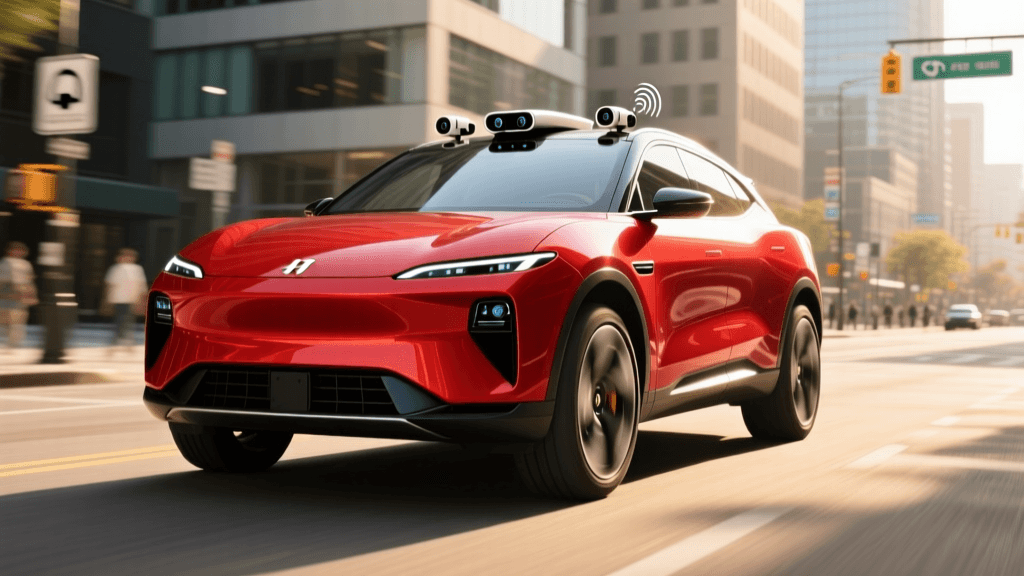
While the Chevy Bolt EV fleet relies on a robust suite of Hesai lidars, Continental radars, and high-resolution cameras, the compute backbone has been upgraded to handle more complex occlusion tracking. The NVIDIA AGX Orin-based compute platforms now run an enhanced sensor fusion model that specifically tracks 'ground-level soft anomalies' post-impact. By fusing lidar point-cloud data with camera semantic segmentation at a higher refresh rate, the system can now detect a pedestrian trapped in the vehicle's blind spot near the front bumper, an area that previously suffered from lidar occlusion during severe braking pitch.
Teleoperations and Remote Assistance Latency
A critical component of the relaunch is the expansion of the remote assistance fleet. Cruise has drastically lowered the ratio of autonomous vehicles to human teleoperators. By improving the video compression algorithms used to stream the 360-degree cabin and exterior views, Cruise has reduced teleoperation latency by nearly 40 percent. This ensures that when a vehicle encounters an unmapped construction zone or a post-collision scenario, the remote human operator receives high-fidelity, low-latency video to make split-second routing decisions.
The Phased Relaunch Timeline and Operational Strategy
Cruise is not flipping a switch to return to fully driverless operations. The relaunch is governed by a strict, data-driven phased approach, prioritizing human-in-the-loop validation before removing the safety driver. Below is the structured timeline and operational strategy for the Cruise fleet.
| Phase | Timeline | Vehicle Type | Operational Status | Geofence Constraints |
|---|---|---|---|---|
| Phase 1: Data Collection | Early to Mid 2024 | Chevy Bolt EV | Human Safety Driver (Active) | Phoenix, Dallas, Houston (Low-complexity routes) |
| Phase 2: Shadow Mode | Mid to Late 2024 | Chevy Bolt EV | AI Driving, Human Passenger (Ready to Intervene) | Expanded urban grids, daytime and clear weather only |
| Phase 3: Geofenced Driverless | Early 2025 | Cruise Origin | Fully Autonomous (No Driver) | Strictly mapped corridors, low-speed limits, optimal weather |
| Phase 4: Full Urban Deployment | Late 2025 and Beyond | Cruise Origin | Fully Autonomous (No Driver) | Full city grids, night operations, adverse weather integration |
This methodical rollout aligns with the safety frameworks outlined in the U.S. DOT Automated Vehicle Comprehensive Plan, which emphasizes iterative testing, robust data collection, and transparent safety case development before scaling fully driverless operations in dense urban environments.
Actionable Advice for Early Adopters and Fleet Managers
As Cruise vehicles begin to reappear on the roads in cities like Phoenix and Dallas, early adopters, local residents, and fleet managers need to understand how to interact with these newly updated machines. Here is practical, actionable advice for navigating the Cruise relaunch.
- Identify the Vehicle Status: During Phase 1 and Phase 2, look for the human in the driver's seat. Even if the steering wheel is moving autonomously, the presence of a safety driver means the vehicle is in a data-collection or shadow-mode state. Do not expect the vehicle to behave exactly like the fully driverless Origin.
- Understand the In-Cabin UI: When you eventually hail a driverless Cruise Origin, the in-cabin screens will display the vehicle's real-time perception map. Pay attention to the 'Pulse' indicator. A steady green pulse means the AI has high confidence in its path planning. A yellow or red pulse indicates the vehicle is processing a complex edge case and may pull over safely to request teleoperator assistance.
- Emergency Stop Protocols: Every Cruise vehicle is equipped with a prominent red 'Stop' button inside the cabin. Pressing this immediately severs the motion planning commands and applies maximum regenerative and friction braking. Use this only in genuine emergencies, as it will instantly trigger a high-priority teleoperator intervention.
- Respect the Geofence Boundaries: The Cruise app will not allow you to set a pickup or drop-off location outside the active geofence. If you are a fleet manager planning corporate transit routes, ensure your hubs fall within the mapped operational design domain (ODD) to avoid canceled rides.
Regulatory Hurdles and the Road Ahead
The technology fixes are only half the battle; regaining public and regulatory trust is the other. The National Highway Traffic Safety Administration (NHTSA) maintains strict oversight over ADS developers. Under the NHTSA Standing General Order for ADS Crash Reporting, Cruise is legally mandated to report any incident involving a vulnerable road user or a vehicle requiring a tow within 24 hours. This unprecedented level of transparency means the public and regulators will have real-time visibility into the safety metrics of the relaunched fleet.
Furthermore, the Insurance Institute for Highway Safety (IIHS) continues to monitor the distinction between consumer-available Level 2 ADAS and Level 4 robotaxis. While consumer systems rely on the driver to manage edge cases, Level 4 systems like Cruise must prove they can handle the 'long tail' of urban chaos without human intervention. The post-collision software patches are a direct response to this exact challenge.
Conclusion: A More Conservative AI
The Cruise robotaxi relaunch represents a fundamental shift in autonomous vehicle philosophy. The industry is moving away from the 'move fast and break things' software ethos toward a conservative, safety-first engineering culture. By rewriting the post-collision cost functions, reducing teleoperation latency, and committing to a grueling phased rollout with human safety drivers, Cruise is attempting to rebuild the foundation of Level 4 autonomy. For riders and automotive technologists alike, the relaunched Cruise fleet will serve as the ultimate real-world test of whether an AI can truly learn from its most critical failures.