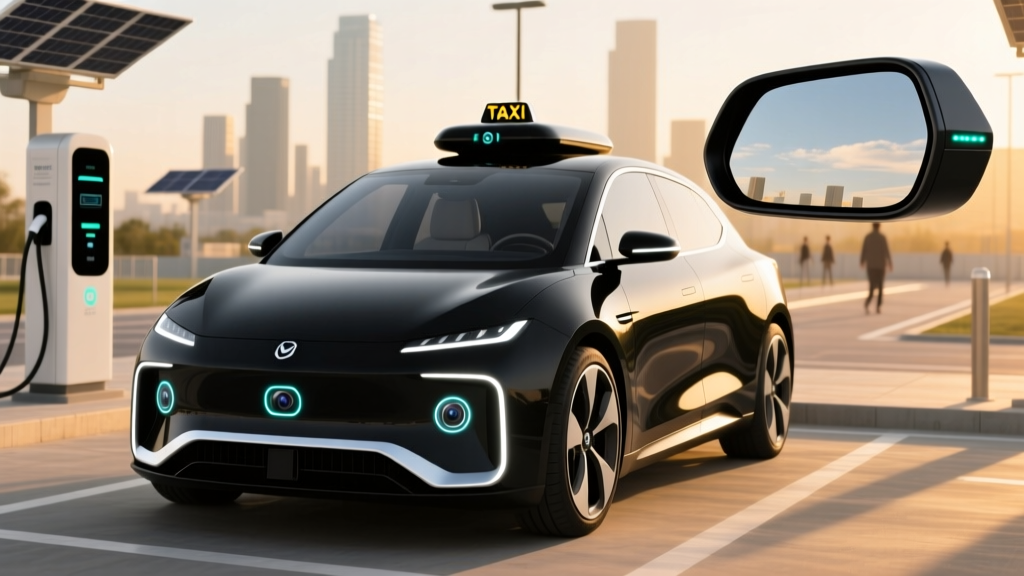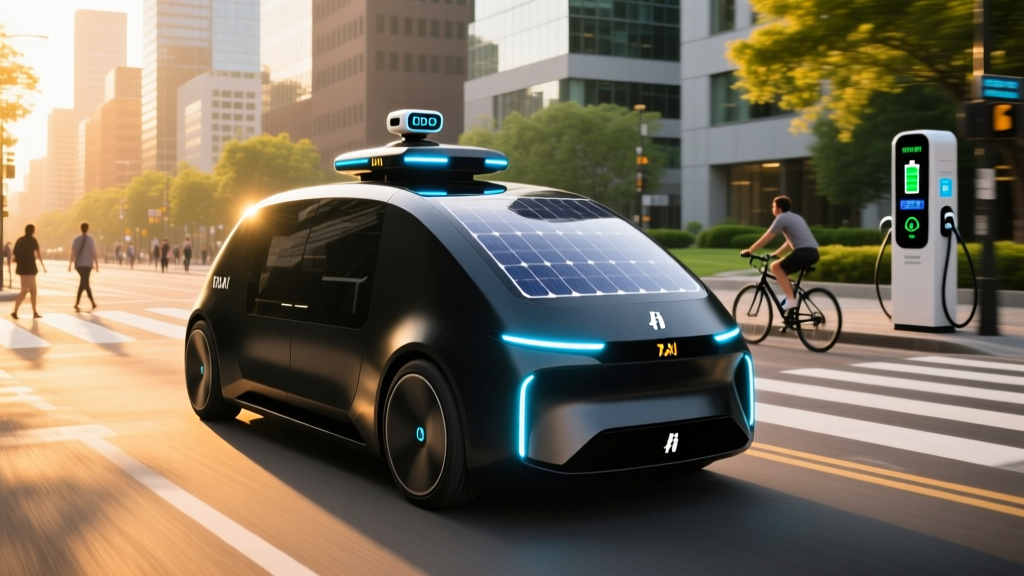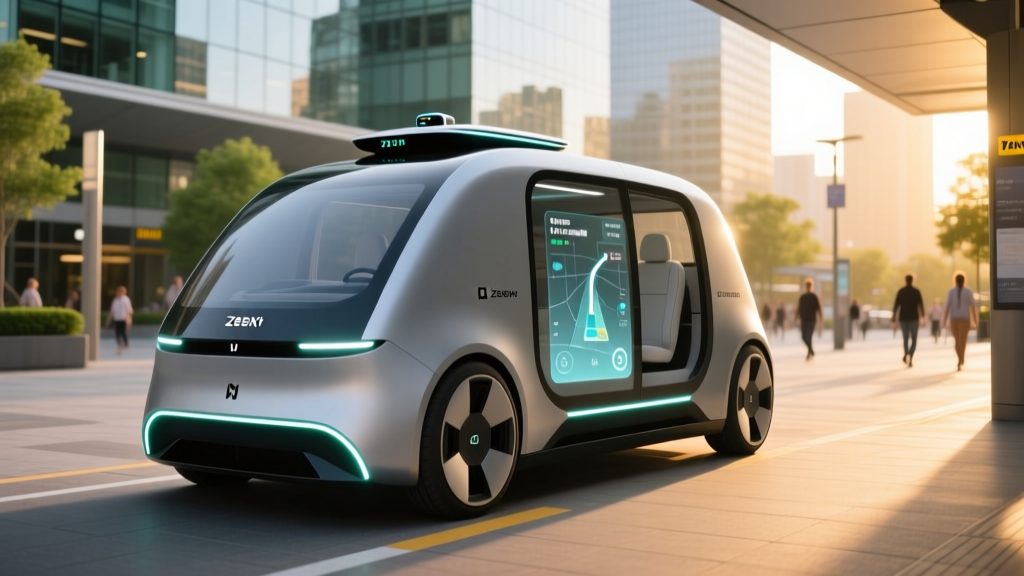
The collaboration between Alphabet's Waymo and Geely's premium EV brand Zeekr represents one of the most significant hardware shifts in the robotaxi industry. Unlike Waymo's earlier generations — which retrofitted existing vehicles like the Chrysler Pacifica Hybrid and Jaguar I-PACE with aftermarket sensor suites — the Zeekr M-Vision (badged as the Zeekr RT in some markets) was engineered from the ground up as a purpose-built autonomous vehicle. By 2026, this custom platform is forming the backbone of Waymo's fleet expansion across multiple U.S. metros.
This guide breaks down what the Waymo-Zeekr robotaxi actually is, where you can hail one, how the technology works, what safety data shows, and where the service still falls short.
What the Waymo-Zeekr Robotaxi Actually Is
The Zeekr RT (Robotaxi) is a fully electric, purpose-built autonomous vehicle manufactured by Zeekr, a subsidiary of China's Geely Holding Group — the same parent company behind Volvo, Polestar, and Lotus. Waymo selected Zeekr as its hardware partner in 2021, and the production-intent M-Vision concept was refined into a road-legal robotaxi platform that began entering Waymo's commercial fleet in late 2024, scaling through 2025 and 2026.
Key design differences from Waymo's earlier retrofitted vehicles:
- Purpose-built architecture: The Zeekr RT uses Geely's SEA (Sustainable Experience Architecture) electric platform, designed from the start for autonomous operation — no steering wheel, no pedals, no driver's seat in the production robotaxi configuration.
- Integrated sensor suite: Rather than bolting sensors onto an existing car, Zeekr designed the vehicle body around Waymo's 6th-generation Waymo Driver hardware, with lidar, cameras, and radar embedded into the roofline, pillars, and bumpers for optimal sightlines and reduced drag.
- Passenger-first interior: With no driver controls, the cabin prioritizes rider space — bench seating for up to four passengers, large displays for trip info and entertainment, and wheelchair-accessible configurations in select markets.
- EV powertrain: The platform is fully electric, with an estimated 100+ kWh usable battery pack (NMC chemistry) supporting all-day operation with opportunity charging between rides.
SAE Automation Level: Level 4 (High Automation)
The Waymo-Zeekr robotaxi operates at SAE Level 4 — meaning the vehicle handles all driving tasks within its defined operational design domain (ODD) without any human driver present or monitoring required. This is fundamentally different from consumer vehicles like Tesla's FSD (Supervised) or GM's Super Cruise, which remain SAE Level 2 systems requiring constant driver attention. There is no steering wheel or pedals in the production robotaxi — no human can intervene. The vehicle either completes the trip autonomously or pulls over safely and contacts remote assistance.
Where You Can Ride a Waymo-Zeekr Robotaxi Right Now
As of early 2026, Waymo's commercial robotaxi service (branded as Waymo One) operates in several U.S. metropolitan areas, with the Zeekr RT progressively replacing older Jaguar I-PACE vehicles across the fleet. Availability and service status vary by city:
| City / Region | Service Status | Operating Hours | Geofence Coverage | Zeekr RT in Fleet |
|---|---|---|---|---|
| Phoenix, AZ (East Valley, Downtown, North Phoenix) | Fully open to public | 24/7 | ~225 sq mi | Yes — majority of fleet |
| San Francisco, CA | Fully open to public | 24/7 | ~50 sq mi (city core + expansion zones) | Yes — mixed with I-PACE |
| Los Angeles, CA | Fully open to public | 24/7 | ~80 sq mi (Santa Monica, Hollywood, Downtown, Beverly Hills) | Yes — expanding |
| Austin, TX | Public access (waitlist clearing) | Limited hours initially, expanding | ~45 sq mi (Downtown, South Austin, Airport corridor) | Yes — primary vehicle |
| Atlanta, GA | Announced / early testing | Not yet commercial | TBD | Testing phase |
How to access: Download the Waymo One app (iOS/Android), create an account, and request a ride within the geofenced service area. In Phoenix and San Francisco, waitlists have largely been eliminated as of late 2025. Los Angeles and Austin may still require brief waitlist periods depending on demand. No special membership or invitation is required once the waitlist clears.
Pricing: Waymo vs. Uber and Lyft
Waymo One uses a dynamic pricing model similar to rideshare, with fares calculated based on distance, time, and demand. In practice, pricing is competitive with — and sometimes slightly below — UberX and Lyft in the same markets, though surge pricing during peak hours can narrow the gap.
| Route Example | Waymo One | UberX | Lyft |
|---|---|---|---|
| 5-mile city trip (off-peak) | $9–$13 | $10–$15 | $9–$14 |
| 10-mile trip (off-peak) | $16–$22 | $18–$26 | $17–$25 |
| Airport run (15 mi, off-peak) | $25–$35 | $28–$40 | $26–$38 |
| 5-mile trip (peak/surge) | $15–$22 | $18–$30 | $16–$28 |
Key pricing notes:
- Waymo does not charge a separate "autonomous vehicle fee" — pricing is all-in.
- Tipping is optional and handled in-app (drivers obviously aren't present to receive tips, but Waymo has noted tips support their rider support teams).
- Waymo occasionally offers promotional credits for new riders, typically $5–$15 off first rides.
- Unlike Uber/Lyft, there is no human driver to rate or interact with — the experience is entirely app-managed.
Safety Record: What the Data Shows
Waymo has accumulated over 30 million autonomous miles on public roads as of late 2025, with the majority of commercial rider trips occurring in Phoenix and San Francisco. The safety data is among the most transparent in the autonomous vehicle industry, though context matters.
Waymo Safety Data Highlights
- Total autonomous miles driven: 30+ million (public roads, all vehicle generations)
- Commercial trips completed: 10+ million paid rides as of early 2026
- Contact rate (vehicle-to-object): Waymo's published data shows a contact rate approximately 85% lower than human benchmark drivers for the same urban environments, per their safety transparency reports.
- Injury-causing incidents: Extremely rare in the commercial fleet. The majority of documented contacts have been low-speed, minor scrapes — often with stationary objects like bollards or chain-link fences in construction zones, not other moving vehicles.
- Compared to human drivers: NHTSA data shows human drivers average approximately 1.5 fatal crashes per 100 million vehicle miles. Waymo's fleet has logged zero fatalities across its commercial operations, though the sample size (tens of millions of miles) is still smaller than the billions of human-driven miles used for statistical baselines.
Important context: Robotaxi safety data comes from geofenced, well-mapped urban environments with favorable weather. Waymo's operational design domain excludes heavy snow, flooding, and unmapped construction zones. Direct statistical comparison with human drivers — who operate in all conditions, on all roads — requires careful normalization. Waymo has published peer-reviewed methodology for these comparisons, but the autonomous vehicle industry as a whole is still building the mileage base needed for definitive long-term safety conclusions.
For the most current incident data, NHTSA's Standing General Order requires all ADS-equipped vehicle operators to report crashes, providing a public record of incidents across the industry.
Technology Stack: How the Zeekr RT Sees the Road
The Zeekr RT is equipped with Waymo's 6th-generation Waymo Driver — a significant evolution from the 5th-gen hardware used in the Jaguar I-PACE fleet. This system uses a multi-sensor fusion approach, combining several complementary technologies:
| Sensor Type | Function | Advantage |
|---|---|---|
| Lidar (multiple units, roof + perimeter) | 3D point-cloud mapping of surroundings up to 500m | Precise distance measurement, works in darkness, unaffected by glare |
| Cameras (high-res, 360° coverage) | Traffic light state detection, sign reading, lane marking, object classification | Color and text recognition, high resolution for fine detail |
| Radar (imaging radar, multiple units) | Velocity detection of moving objects, performance in rain/fog | Penetrates precipitation, directly measures object speed via Doppler |
| External audio sensors | Detection of emergency vehicle sirens | Enables safe pull-over behavior before sirens are visible |
Why not camera-only? Waymo's approach differs fundamentally from Tesla's vision-only strategy for FSD. Waymo uses lidar as a core sensor because it provides direct, unambiguous distance measurement independent of lighting conditions. This redundancy — lidar confirming what cameras see, radar confirming what lidar detects — is a deliberate design choice for a Level 4 system where no human driver exists as a backup. If one sensor modality is degraded (e.g., cameras in fog), the others compensate.
Geofencing and HD mapping: The Zeekr RT operates within a pre-mapped Operational Design Domain (ODD). Waymo creates centimeter-accurate HD maps of every service area, including lane geometry, speed limits, traffic signal locations, and curb topology. The vehicle localizes itself within this map in real time using lidar and GPS. If the vehicle exits its geofenced area or encounters unmapped road changes (new construction, road closures not yet reflected in the map), it will not proceed and will safely pull over or reroute.
Regulatory Landscape: Who Approves Robotaxi Operations
Robotaxi deployment in the United States is governed by a patchwork of state and local regulations — there is currently no comprehensive federal framework for autonomous vehicle commercial operations.
- Arizona: The most permissive regulatory environment. Arizona does not require a specific permit for autonomous vehicle testing or commercial deployment, though operators must register vehicles and carry insurance. This is why Phoenix was Waymo's first commercial market.
- California: The California Public Utilities Commission (CPUC) issues permits for commercial passenger service, while the California DMV issues testing and deployment permits. Waymo holds both a DMV deployment permit and a CPUC commercial permit for San Francisco and Los Angeles. The CPUC has the authority to suspend or modify permits based on safety performance — which it exercised in 2023 when it temporarily restricted Cruise's operations in San Francisco following a serious incident.
- Texas: Austin has established a local framework for autonomous vehicle operations, with Waymo coordinating with city transportation authorities. Texas state law permits ADS-equipped vehicles without human drivers under specific conditions.
- Federal (NHTSA): The National Highway Traffic Safety Administration requires crash reporting under its Standing General Order and retains authority over vehicle safety standards, but has not yet issued a comprehensive regulatory framework for Level 4 commercial operations. The NHTSA AV safety page tracks current federal guidance.
This fragmented regulatory landscape means that expansion to new cities requires separate negotiations with state regulators, local transportation authorities, and sometimes city councils — a process that adds months or years to each new market launch.
Current Limitations: Where the Waymo-Zeekr Robotaxi Falls Short
Despite significant capability, Level 4 robotaxis have well-defined limitations that riders should understand before booking:
Operational Limitations
- Weather restrictions: Waymo vehicles do not operate in heavy rain, snow, ice, flooding, or dense fog. In Phoenix, monsoon conditions can trigger service suspensions. In San Francisco, heavy fog may reduce service availability. The Zeekr RT's sensor suite handles light rain and overcast conditions, but precipitation that degrades lidar and camera performance will cause the vehicle to pull over safely and end the trip.
- Geofence boundaries: You cannot hail a ride to or from locations outside the mapped ODD. If your destination falls outside the service area, the app will not allow you to book. Expansion is ongoing but incremental — new neighborhoods are added in phases, not all at once.
- Construction zones: Major, unmapped road construction can confuse the system. While Waymo updates its maps regularly, sudden lane closures or detours that haven't been mapped may cause the vehicle to reroute conservatively or stop and wait for remote guidance.
- Pickup/dropoff precision: The vehicle will stop at a safe, legal location near your requested address — but not always directly at the front door. Expect to walk a short distance from the curb stop to your exact destination, especially in areas with restricted stopping zones (fire hydrants, bus stops, loading zones).
- No highway operation (most markets): In most current service areas, Waymo operates primarily on surface streets. Highway driving is limited or excluded in several markets, which constrains airport access in some configurations.
- Wait times: Depending on fleet density and demand, wait times can range from 2–15 minutes. In peak hours or at the edges of the geofence, waits are longer. Waymo's fleet is still smaller than Uber or Lyft in every market.
- No in-ride stops: You cannot ask the vehicle to stop at a convenience store or make a detour mid-trip. The route is set at booking, and you cannot alter it in real time.
The Road Ahead for Waymo-Zeekr
The Zeekr RT platform gives Waymo a vehicle designed specifically for autonomous operation — lower operating costs per mile (no driver seat means more revenue-generating passenger space), better sensor integration, and a purpose-built EV architecture optimized for the stop-and-charge patterns of robotaxi service. As fleet density increases through 2026, expect wait times to decrease and service areas to expand incrementally in existing markets before new cities come online.
For riders in Phoenix, San Francisco, Los Angeles, and Austin, the Waymo-Zeekr robotaxi is not a future promise — it's a bookable, everyday transportation option today. For everyone else, it's a preview of what Level 4 autonomy looks like when it's deployed at scale, with all the capability and the clearly defined constraints that come with it.
Frequently Asked Questions
Is the Waymo-Zeekr robotaxi truly self-driving, or is there a human monitoring remotely?
The vehicle is genuinely driverless — there is no human in the car, no steering wheel, and no pedals. Waymo does employ remote fleet assistance operators who can provide guidance to a vehicle that encounters an ambiguous situation (e.g., an unusual construction zone), but these operators do not "drive" the vehicle in real time. The vehicle makes all driving decisions autonomously within its operational design domain.
How much does a Waymo ride cost compared to Uber or Lyft?
Waymo One pricing is generally competitive with UberX and Lyft, typically within $1–$5 of a comparable rideshare trip for the same route. Off-peak trips may be slightly cheaper than rideshare; peak-hour pricing is comparable. Waymo does not add a separate "autonomous vehicle surcharge."
What happens if the Zeekr RT encounters a situation it can't handle?
The vehicle is designed to enter a "minimal risk condition" — it will slow down, pull over to a safe location (ideally off the travel lane), and contact Waymo's remote assistance team. The trip may be ended early, and the rider would need alternative transportation for the remaining distance. Waymo does not charge for incomplete trips caused by system limitations.
Can I use the Waymo-Zeekr robotaxi in bad weather?
No. Waymo suspends or limits service during heavy rain, snow, ice, dense fog, or flooding. Light rain and overcast conditions are typically manageable, but any weather that significantly degrades sensor performance will trigger a service pause. Check the Waymo One app for real-time service status in your area.
What EV platform does the Zeekr RT use?
The Zeekr RT is built on Geely's SEA (Sustainable Experience Architecture) electric platform — the same modular EV architecture underpinning the Zeekr 001, Smart #1, and Polestar 4. It uses a fully electric powertrain with an estimated 100+ kWh NMC battery pack, though Waymo has not published the exact usable capacity for the robotaxi configuration.
How does Waymo's safety record compare to Cruise or other robotaxi operators?
Waymo has the longest continuous commercial robotaxi operation in the U.S. and the largest published mileage dataset. Cruise (GM's robotaxi division) suspended operations in late 2023 following a serious incident in San Francisco and has been gradually resuming with reduced scope. Waymo maintained continuous operations throughout this period. For current incident data across all operators, consult NHTSA's Standing General Order reports.