The Waymo–Toyota Robotaxi Landscape in 2026
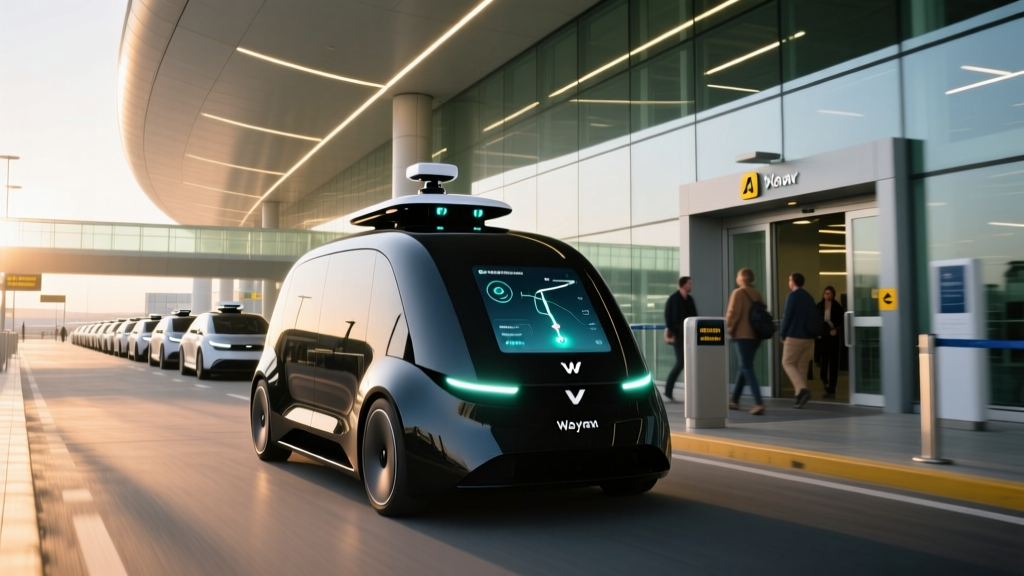
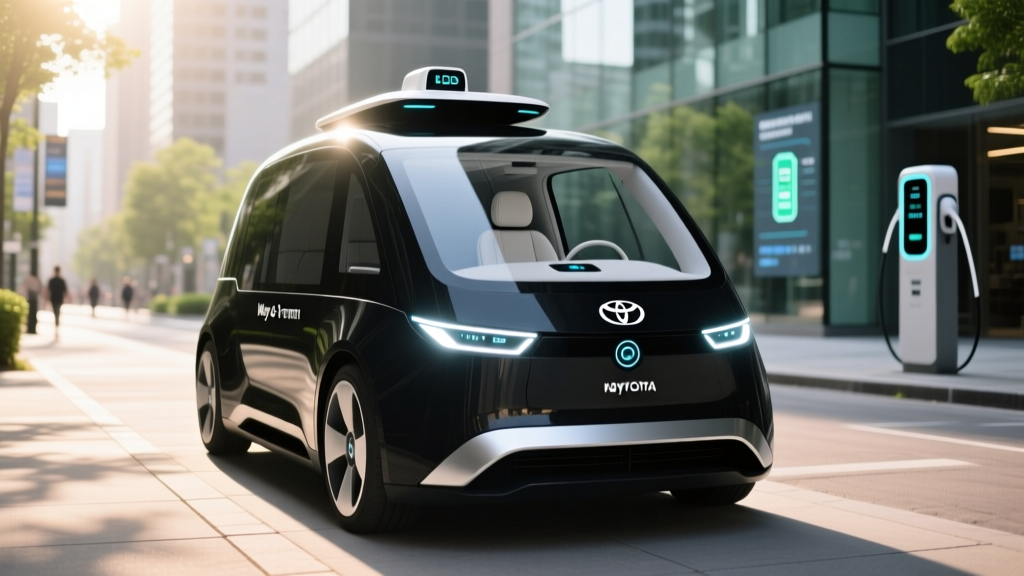
When you search "waymo toyota," you're likely looking for clarity on how two of the biggest names in autonomous driving intersect — or how Toyota's own Woven City and Arene OS efforts compare to Waymo's commercial robotaxi service. The reality in 2026: Waymo operates its commercial Waymo One service primarily on the Jaguar I-PACE and the purpose-built Zeekr M-Vision platform, while Toyota's autonomous ambitions run through its Woven by Toyota subsidiary and its Lexus RX-based AV testing fleet. They are competitors, not partners, though Toyota's Lexus SUVs remain a common sight in Waymo's development history.
This guide breaks down exactly where you can hail a driverless robotaxi today, what it costs, how safe the data says it is, and what technical and regulatory limits still apply — whether you're comparing Waymo One to Uber, or tracking Toyota's parallel AV roadmap.
SAE Automation Levels: Robotaxi vs. Driver-Assist
What you need to know: Waymo One is an SAE Level 4 service — no human driver is present in the vehicle, and the system handles all driving tasks within its geofenced operational design domain (ODD). This is fundamentally different from Level 2 systems like Tesla Autopilot, Ford BlueCruise, or Toyota/Lexus Teammate, which require continuous driver supervision.
| SAE Level | Description | Example Systems | Driver Required? |
|---|---|---|---|
| Level 2 | Partial automation — steering + acceleration assisted | Tesla Autopilot, Toyota Teammate, GM Super Cruise | Yes, always |
| Level 3 | Conditional automation — system drives in specific scenarios | Mercedes DRIVE PILOT (limited markets) | No in approved conditions |
| Level 4 | High automation — no driver in geofenced ODD | Waymo One, Zoox | No (in service area) |
| Level 5 | Full automation — any road, any condition | None commercially available | No |
Toyota's consumer vehicles ship with Level 2 Toyota Safety Sense and the newer Teammate advanced drive system. Toyota's Woven by Toyota division is developing higher-level autonomy, but as of 2026, no Toyota or Lexus vehicle offers a commercially available Level 4 robotaxi service to the public.
Where Can You Use Waymo One Right Now?
Waymo One is the only scaled Level 4 robotaxi service available to the general public in the United States. Service areas are geofenced — the car will not operate outside approved boundaries.
| City | Service Status (2026) | Approximate Coverage Area | Hours |
|---|---|---|---|
| Phoenix, AZ | Fully open to public | ~225 sq mi (metro-wide) | 24/7 |
| San Francisco, CA | Fully open to public | ~50 sq mi (most of city) | 24/7 |
| Los Angeles, CA | Fully open to public | ~80 sq mi (Santa Monica to DTLA corridor) | 24/7 |
| Austin, TX | Open to public (expanding) | ~45 sq mi (central + airport) | Extended hours |
Waymo has announced future expansion to additional cities, but those remain in testing or early-access phases — not yet open for paid public rides. If you're outside these metros, you cannot hail a Waymo today.
Waymo One Pricing vs. Uber and Lyft
Waymo One pricing is dynamic, similar to rideshare surge pricing, but generally competitive with UberX and Lyft standard fares. There is no tipping, and no human driver to rate.
| Service | Avg. Cost per Mile | Avg. 5-Mile Ride | Surge Pricing | Tipping |
|---|---|---|---|---|
| Waymo One | $1.20–$1.80 | $9–$15 | Yes (moderate) | None |
| UberX | $1.10–$2.00 | $8–$16 | Yes (can be extreme) | Optional |
| Lyft Standard | $1.05–$1.90 | $8–$15 | Yes | Optional |
In practice, a typical 5-mile trip in Phoenix costs roughly $11–$14 on Waymo One, comparable to UberX without surge. During peak hours, Waymo's surge tends to be less aggressive than Uber's, but wait times can extend to 10–15 minutes when demand is high because the fleet is smaller than human-driven rideshare.
How to use it: Download the Waymo One app, enter your pickup and drop-off, confirm the fare upfront, and a vehicle arrives. You unlock it via the app, and the ride is fully autonomous. No driver interaction required.
Safety Data: What the Numbers Actually Show
Waymo's published safety record: As of late 2025, Waymo reported over 30 million fully autonomous miles driven across its fleet. Independent analyses have compared Waymo's crash rates to human benchmarks.
- Injury-causing crash rate: Waymo's vehicles were involved in injury-causing crashes at approximately 85% lower rate than human benchmarks in comparable urban environments, per Waymo's published safety reports.
- Police-reported crash rate: Approximately 57% lower than human drivers in the same geographies.
- Total autonomous miles: 30+ million driverless miles as of late 2025, growing rapidly in 2026.
- Notable incidents: Waymo vehicles have been involved in minor collisions (typically struck by human drivers), and in 2024, an incident in San Francisco involving a Waymo vehicle and a pedestrian drew NHTSA review. No fatalities have been attributed to Waymo's autonomous system.
Context matters: robotaxis operate in dense urban environments at lower speeds (typically under 45 mph), which reduces crash severity but increases exposure to complex scenarios like jaywalkers and cyclists. Waymo's safety advantage appears strongest in avoiding rear-end and angle collisions — scenarios where sensor coverage and reaction time exceed human capability.
Technology Stack: Lidar, Cameras, and Geofencing
Waymo's 6th-generation Driver system (2025–2026 vehicles):
- Lidar: Custom-built, roof-mounted and corner-mounted units providing 360° 3D point-cloud mapping out to 500+ meters.
- Cameras: High-resolution surround cameras for lane detection, traffic-light state recognition, and object classification.
- Radar: Imaging radar for velocity detection and performance in rain or fog where lidar degrades.
- Compute: Custom AI inference hardware processing sensor fusion in real time.
- HD Maps: Pre-mapped geofenced areas with centimeter-level road geometry, enabling the system to "know" every lane, crosswalk, and signal in advance.
This is a sensor-fusion approach — fundamentally different from Tesla's camera-only FSD system. Waymo relies on lidar as a primary depth sensor, which provides reliable distance measurement regardless of lighting conditions but adds hardware cost (estimated $20,000–$30,000+ per vehicle for the full sensor suite).
Toyota's approach through Woven by Toyota uses a different philosophy: the Arene operating system is designed to be platform-agnostic, and Toyota's testing fleet uses a mix of lidar, radar, and cameras on Lexus RX prototypes. However, Toyota has emphasized a "driver-first" philosophy for consumer vehicles, focusing on Level 2+ and Level 3 capabilities rather than deploying a public robotaxi service.
Regulatory Landscape: Who Approves Robotaxi Operations?
Robotaxi deployment in the US is governed at the state level, not federally. Key regulators:
- California (CPUC + DMV): The California Public Utilities Commission issues permits for commercial robotaxi service. The DMV manages testing permits. San Francisco and Los Angeles operations required CPUC approval.
- Arizona: Lighter-touch regulation — the state allowed Waymo to operate commercially with fewer permitting hurdles, which is why Phoenix was the first market.
- Texas: Austin operations approved under state autonomous vehicle legislation passed in 2017.
- Federal (NHTSA): The National Highway Traffic Safety Administration oversees vehicle safety standards and investigates incidents, but does not currently approve or block robotaxi deployments directly.
This patchwork means expansion is city-by-city, not national. Each new metro requires local regulatory engagement, mapping, and testing before public service can launch.
Current Limitations: Weather, Geofences, and Edge Cases
- Heavy rain and fog: Lidar performance degrades in heavy precipitation. Waymo will pull over or refuse rides during severe weather events (monsoon storms in Phoenix, heavy fog in SF).
- Geofence boundaries: You cannot hail a Waymo to a destination outside the mapped service area. Suburban and rural routes are not available.
- Construction zones: Unexpected road closures or lane shifts can confuse the system. Waymo may reroute or end the trip early.
- Highway driving: Limited. Waymo operates primarily on surface streets. Highway segments are included in some markets but at lower speeds than typical freeway traffic.
- Complex pickup locations: Gated communities, parking garages, and private driveways may not be accessible for pickup/drop-off.
- Accessibility: Waymo's current fleet (Jaguar I-PACE) is a crossover SUV — not wheelchair-accessible. The next-generation Zeekr vehicle is designed with a low floor and wide door for accessibility, but is still ramping up.
Toyota's Autonomous Future: Woven City and Beyond
Toyota's autonomous strategy differs from Waymo's in a critical way: Toyota is building the platform, not just the service. Woven City, Toyota's prototype city near Mt. Fuji, serves as a living lab for autonomous mobility, smart infrastructure, and the Arene OS. The goal is a software-defined vehicle ecosystem that could enable autonomy across Toyota and Lexus models — not a single robotaxi fleet.
For consumers in 2026, this means:
- Toyota and Lexus vehicles offer Level 2 driver-assist (Teammate, TSS 3.0) — not self-driving.
- Toyota has not announced a public robotaxi service competing with Waymo One.
- The Waymo–Toyota relationship is one of parallel development, not partnership. Waymo uses Jaguar and Zeekr platforms; Toyota develops its own stack.
Frequently Asked Questions
Is Waymo truly self-driving, or is there a human watching?
Waymo One is SAE Level 4 — no human driver is in the vehicle, and no remote operator controls the car in real time. A remote support team can assist with routing or edge cases, but they do not steer or brake the vehicle.
Can I use Waymo with a Toyota or Lexus vehicle?
No. Waymo One rides are provided in Waymo's own fleet (Jaguar I-PACE and Zeekr M-Vision). You cannot use your personal Toyota or Lexus to access the service. Toyota's autonomous efforts are separate.
How much does a Waymo ride cost compared to Uber?
Roughly comparable — expect $9–$15 for a 5-mile urban trip, similar to UberX without surge. Waymo's surge pricing tends to be less aggressive, but fleet size is smaller, so wait times can be longer.
Are robotaxis safer than human drivers?
Waymo's data shows lower injury-causing and police-reported crash rates versus human benchmarks in comparable urban environments. However, robotaxis operate in limited, mapped areas at lower speeds — a direct comparison to all human driving (including highway) is not apples-to-apples.
Will Toyota launch its own robotaxi service?
As of 2026, Toyota has not announced a public robotaxi service. Its Woven by Toyota division is developing autonomous technology, and Woven City is a testing ground, but the focus appears to be on platform software (Arene OS) that could enable autonomy in Toyota/Lexus consumer vehicles rather than a Waymo-style fleet service.