If you've been searching for a Waymo stock price chart, you've likely hit a wall: there isn't one. Waymo, the company operating the most commercially advanced robotaxi fleet in the United States, is not a publicly traded entity. It exists as a wholly owned subsidiary of Alphabet Inc. (NASDAQ: GOOG / GOOGL), the parent company of Google. You cannot buy shares of Waymo directly.
This matters because Waymo is, as of 2026, the only SAE Level 4 driverless taxi service running at meaningful commercial scale across multiple U.S. cities. Investors want exposure. Riders want to know the company's financial health. Neither group gets a clean, standalone ticker. Below, we break down exactly how Waymo fits into Alphabet's stock, what Waymo's actual service looks like on the ground in 2026, and the hard data on safety, pricing, and limitations that should inform both your investment thesis and your decision to hail one.
How to Get Waymo Exposure Through Alphabet Stock
Because Waymo has no independent equity, any investment in Waymo's future is an investment in Alphabet as a whole. Alphabet trades on the NASDAQ under two share classes: GOOG (Class C, no voting rights) and GOOGL (Class A, one vote per share). Both track the same underlying business.
The challenge for Waymo-focused investors is that Alphabet's $2+ trillion market cap is overwhelmingly driven by Google Search, YouTube advertising, Google Cloud, and Android. Waymo's revenue — while growing — represents a fractional percentage of Alphabet's total. Alphabet does not break out Waymo's financials as a separate line item in its quarterly earnings; Waymo's performance is folded into the "Other Bets" segment, which also includes companies like Verily (life sciences), Wing (drone delivery), and Waymo's autonomous-trucking efforts.
Is Waymo Truly Self-Driving? The SAE Level 4 Distinction
This is where precise terminology matters, because the autonomous-vehicle industry is plagued by marketing that blurs critical lines. Waymo's commercial robotaxi service, Waymo One, operates at SAE Level 4 — high automation within a defined operational design domain (ODD).
| SAE Level | Name | Who Drives? | Examples (2026) |
|---|---|---|---|
| Level 0 | No Automation | Human, always | Basic cruise control |
| Level 1 | Driver Assistance | Human (system assists steering OR speed) | Adaptive cruise, lane-keep assist |
| Level 2 | Partial Automation | Human (system assists steering AND speed simultaneously) | Tesla Autopilot, GM Super Cruise, Ford BlueCruise, Tesla FSD (Supervised) |
| Level 3 | Conditional Automation | System drives in specific conditions; human must take over when requested | Mercedes DRIVE PILOT (limited markets, ≤40 mph) |
| Level 4 | High Automation | System drives fully within its ODD; no human intervention needed in that domain | Waymo One, Zoox (limited areas) |
| Level 5 | Full Automation | System drives everywhere, all conditions, no human needed | Does not exist commercially |
Where Can You Use Waymo One Right Now?
As of early 2026, Waymo One operates commercial, fully driverless rides in the following metro areas:
| City | Status | Service Area Notes |
|---|---|---|
| Phoenix, AZ (Metro) | Fully operational | Largest coverage area; includes Scottsdale, Tempe, Mesa, Chandler; airport service to PHX |
| San Francisco, CA | Fully operational | City-wide coverage including downtown, Mission, Sunset; SFO airport service active |
| Los Angeles, CA | Fully operational | Santa Monica, Hollywood, Downtown LA, Beverly Hills, LAX airport service |
| Austin, TX | Operational (expanding) | Central Austin, downtown, South Congress; coverage area growing through 2026 |
Waymo has announced plans to expand to additional cities, but announced plans are not live service. If you're outside these metros, you cannot currently hail a Waymo. The service is geofenced — vehicles operate only within mapped and approved zones and will not accept rides that begin or end outside those boundaries.
How to Ride and What It Costs vs. Uber and Lyft
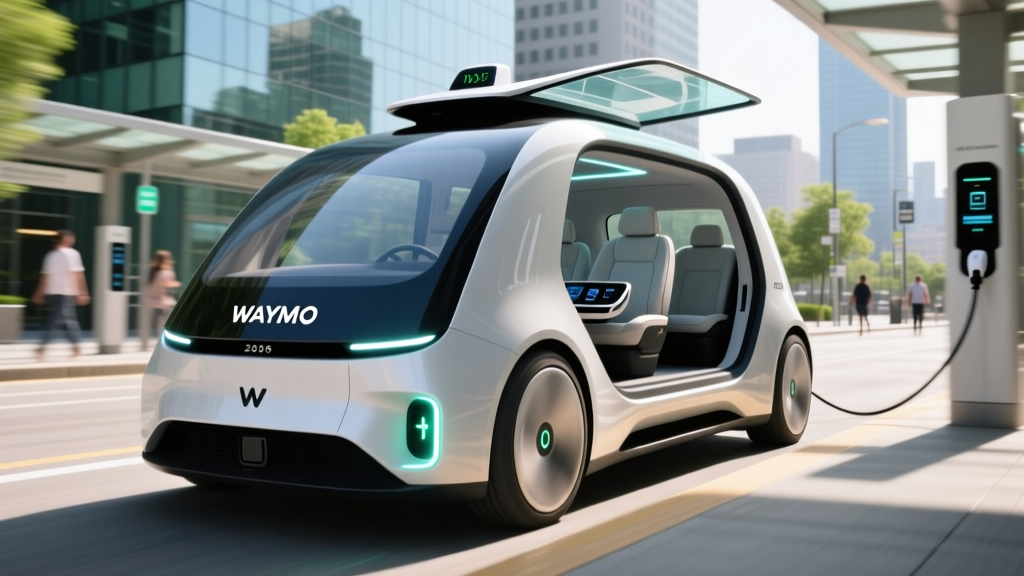
Using Waymo One is straightforward: download the Waymo One app (available on iOS and Android), enter your destination, and request a ride. A driverless vehicle — currently the Jaguar I-PACE equipped with Waymo's 6th-generation Driver sensor suite, with the all-electric Zeekr RT custom robotaxi entering the fleet through 2026 — arrives at your location. You unlock the car via the app, sit in the back, and the vehicle drives itself to your destination. In-app controls let you adjust climate, change music, add stops, or pull over safely.
| Route Example | Waymo One | UberX | Lyft Standard |
|---|---|---|---|
| Short trip (~3 miles, city) | $8–$12 | $9–$14 | $8–$13 |
| Medium trip (~8 miles) | $16–$24 | $17–$26 | $15–$24 |
| Airport run (~15 miles) | $30–$45 | $32–$50 | $28–$48 |
Waymo's pricing is broadly competitive with standard rideshare tiers — it is not dramatically cheaper, but it also doesn't carry a significant premium. Surge pricing exists on Waymo during peak demand, though Waymo has historically kept surge multipliers more moderate than Uber/Lyft. Waymo also offers a Waymo One membership in some markets with reduced wait times and slight fare discounts for frequent riders.
How Safe Are Waymo Robotaxis? The Real Data
Safety is the single most important question for both riders and investors. Waymo has published and submitted safety data that is among the most detailed in the industry, and independent analyses from organizations like the Insurance Institute for Highway Safety (IIHS) and academic researchers have examined the fleet's performance.
- Total fully driverless miles driven: Over 20 million autonomous miles across all Waymo One markets (per Waymo's published figures)
- Injury-crash rate: Waymo's published data shows an injury-involved crash rate approximately 85% lower than human benchmarks in comparable urban environments
- Police-reported crash involvement: Waymo vehicles have been involved in minor-contact incidents (typically low-speed, other-party-at-fault), but no fatalities have been attributed to a Waymo One vehicle operating in driverless mode as of this writing
- Disengagement rate: In California DMV disengagement reports, Waymo consistently logs among the highest autonomous miles per disengagement of any permitted operator — routinely exceeding 25,000+ miles per remote-assist intervention
Context matters: Waymo operates in dense urban environments where low-speed contact incidents (scrapes, bumped poles, minor rear-end events where another driver is at fault) are statistically common for all vehicles. The relevant metric is whether Waymo's vehicles cause fewer serious incidents than human drivers in the same conditions — and the available data indicates they do.
That said, Waymo has faced scrutiny for incidents including vehicles contacting construction-zone cones, temporary stalling at complex intersections, and rare cases of vehicles stopping in travel lanes. These are not unique to Waymo — every robotaxi operator encounters edge cases — but they illustrate that Level 4 autonomy is not infallible.
Waymo's Technology Stack: Lidar, Cameras, and Geofencing
Unlike Tesla's camera-only approach to autonomy, Waymo employs a redundant, multi-sensor architecture:
- Lidar: Custom-designed spinning and solid-state lidar units providing high-resolution 3D point clouds up to 500+ meters; functions in darkness, rain, and direct sunlight where cameras struggle
- Cameras: Multiple high-resolution surround-view cameras for object classification, traffic-light state detection, sign reading, and lane identification
- Radar: Imaging radar for velocity detection of moving objects, performance in heavy precipitation
- Audio sensors: External microphones to detect emergency-vehicle sirens and adjust behavior accordingly
- HD Mapping: Centimeter-precision pre-mapped routes updated continuously; the vehicle cross-references live sensor data against its map for localization
- Compute: Custom in-vehicle computing platform running Waymo's perception, prediction, and planning stack in real time
The reliance on lidar is a philosophical and technical divergence from Tesla's vision-only FSD approach. Waymo's position is that sensor redundancy — particularly lidar's independence from lighting conditions — provides a safety margin that cameras alone cannot. The trade-off is cost: a Waymo-equipped vehicle's sensor suite adds tens of thousands of dollars to the hardware cost, which is viable for a fleet operator but not for consumer vehicles.
Geofencing is equally important to the tech stack. Waymo vehicles do not drive everywhere. They operate within pre-mapped, extensively tested zones. If a requested route would take a vehicle outside its operational design domain — due to unmapped roads, severe weather, or known construction — the ride is declined or rerouted.
Regulatory Landscape: Who Approves Robotaxi Operations?
Robotaxi deployment in the U.S. is governed by a patchwork of state and local regulations, not a single federal framework:
- California: The California Public Utilities Commission (CPUC) and the California DMV jointly regulate autonomous vehicle testing and commercial deployment. Waymo holds a DMV deployment permit and a CPUC permit to charge passengers.
- Arizona: Arizona has among the most permissive regulatory environments for AVs. The state requires a testing permit but has actively encouraged commercial robotaxi operations since 2018.
- Texas: Texas passed autonomous vehicle legislation allowing driverless operation with a registered AV permit. Austin's local government works with operators on deployment zones.
- Federal (NHTSA): The National Highway Traffic Safety Administration requires all AV operators to report crashes under the Standing General Order. NHTSA sets vehicle safety standards but does not currently issue a unified "robotaxi license" — that authority rests with states.
This fragmented regulatory environment means expansion is city-by-city and state-by-state. A robotaxi company cannot simply "launch nationally." Each new market requires regulatory approval, local government coordination, geofence mapping, and emergency-services integration.
Current Limitations: What Waymo Cannot Do
Understanding what robotaxis cannot do is as important as understanding what they can:
- Weather constraints: Waymo service may be suspended or restricted during heavy rain, flooding, dense fog, or snow. Phoenix's dry climate is an operational advantage; expansion into snow-belt cities faces genuine technical hurdles.
- Geofence boundaries: You cannot hail a Waymo to an address outside the mapped service zone. Suburban and rural areas are generally not covered.
- Complex construction zones: While Waymo handles most routine construction detours, highly dynamic or poorly marked work zones may cause the vehicle to pull over safely and request remote assistance.
- No intercity trips: Waymo One is a city-service robotaxi. You cannot take a Waymo from San Francisco to Los Angeles.
- Accessibility limitations: The current Jaguar I-PACE fleet is not wheelchair-accessible. Waymo has stated plans to introduce accessible vehicles, but as of 2026, riders requiring wheelchair accommodation cannot use the standard fleet.
- Pets and unaccompanied minors: Waymo's terms of service require all riders to be 18+ and do not permit unattended pets or cargo-only trips.
Frequently Asked Questions
Can I invest directly in Waymo stock?
No. Waymo is a private subsidiary of Alphabet Inc. The only way to gain financial exposure to Waymo's growth is by purchasing Alphabet shares (GOOG or GOOGL). There is no announced plan for a Waymo IPO as of early 2026.
Why isn't Waymo a public company?
Alphabet has kept Waymo internal, likely because the robotaxi business is still scaling and may not yet meet the profitability thresholds typical of a standalone public company. Spinning off Waymo would also require establishing independent governance, financial reporting, and regulatory compliance structures.
How much does a Waymo ride cost compared to Uber?
Waymo One pricing is broadly competitive with UberX and Lyft Standard — typically within $1–$5 of comparable rideshare fares for the same route. Surge pricing exists but tends to be less aggressive than rideshare competitors. See the pricing table above for specific route estimates.
Has a Waymo vehicle ever been in a fatal crash?
As of early 2026, no fatality has been attributed to a Waymo One vehicle operating in fully driverless mode. Waymo vehicles have been involved in minor-contact incidents, typically at low speed and often with another party at fault. Always check the latest NHTSA Standing General Order data for the most current crash reporting.
Is Waymo safer than a human driver?
Waymo's published data indicates its driverless fleet has an injury-crash rate significantly lower than human benchmarks in comparable urban environments. However, Waymo operates in geofenced, mapped areas and avoids the most challenging conditions (heavy snow, unmapped rural roads). The comparison is favorable but context-dependent — it's not a blanket "safer everywhere" claim.
What cities have Waymo service in 2026?
Waymo One is commercially operational in Phoenix (metro), San Francisco, Los Angeles, and Austin. Expansion to additional cities has been announced but is not yet live. Service is limited to geofenced zones within those metros.
Does Waymo use Tesla's camera-only approach?
No. Waymo uses a multi-sensor stack including lidar, cameras, radar, and audio sensors. This is a deliberate divergence from Tesla's vision-only FSD approach. Waymo argues that lidar redundancy provides safety margins cameras alone cannot achieve, particularly in low-light and adverse-weather conditions.