The Day the Grid Went Dark: Waymo's Power Outage Problem
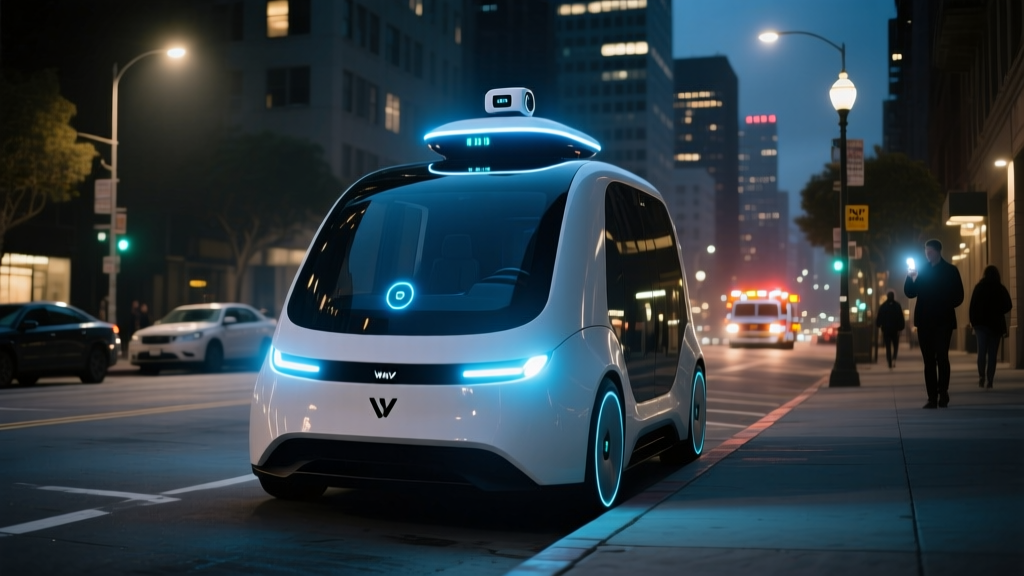
When a major power outage hit San Francisco, thousands of traffic signals went dark, streetlights failed, and cellular networks strained under surging demand. For most drivers, it was an inconvenience. For Waymo's fleet of Level 4 robotaxis operating across the city, it represented one of the most challenging edge cases in autonomous driving: navigating an environment where the infrastructure the system relies on suddenly stops working.
This scenario — a Waymo San Francisco power outage — crystallizes a core tension in the robotaxi promise. These vehicles are engineered to handle complex urban driving without a human behind the wheel. But what happens when the city itself becomes unpredictable? Understanding how Waymo's fifth-generation and sixth-generation (Osmium) vehicles respond to infrastructure failure reveals both the impressive resilience and the hard limits of today's Level 4 autonomous systems.
SAE Automation Levels: Why Waymo Is Different From Your Tesla
Before examining outage behavior, it's essential to establish what Waymo actually is — and what it isn't. The confusion between consumer driver-assist systems and true robotaxis remains one of the most persistent misunderstandings in the EV space.
| Level | Name | Who Drives | Examples |
|---|---|---|---|
| Level 0 | No Automation | Human | Basic cruise control |
| Level 1 | Driver Assistance | Human (one feature assisted) | Adaptive cruise OR lane-keep |
| Level 2 | Partial Automation | Human (must supervise) | Tesla Autopilot/FSD Supervised, GM Super Cruise, Ford BlueCruise |
| Level 3 | Conditional Automation | System (human must take over on request) | Mercedes Drive Pilot (limited markets/conditions) |
| Level 4 | High Automation | System (no human needed in ODD) | Waymo One, Zoox, Cruise (pre-suspension) |
| Level 5 | Full Automation | System (everywhere, all conditions) | Does not exist commercially |
Waymo operates at SAE Level 4. This means the vehicle handles all driving tasks within its Operational Design Domain (ODD) — a defined geographic and conditional boundary — with no human driver present and no expectation of human takeover. This is fundamentally different from Tesla's Full Self-Driving (Supervised), which is a Level 2 system requiring constant driver attention regardless of marketing language.
The ODD distinction matters enormously during a power outage. A Level 4 system is designed to recognize when conditions fall outside its ODD and execute a minimal-risk maneuver — typically pulling over safely and stopping. It does not attempt to "figure it out" the way a human driver might.
How Waymo's Technology Stack Handles (or Doesn't Handle) Blackouts
Waymo 6th-Gen (Osmium) Sensor Suite
- LiDAR: 6+ units providing 360° 3D point-cloud mapping up to 500+ meters; works independently of ambient light and traffic signals
- Cameras: 29+ cameras for object classification, signage, signal state detection, and lane marking identification
- Radar: 6+ imaging radars for velocity detection, adverse weather performance, and redundancy
- Audio sensors: External microphones to detect sirens from emergency vehicles
- HD Mapping: Pre-built centimeter-accurate maps of every operational road, refreshed regularly
- Compute: Custom Waymo-designed AI inference platform processing sensor fusion in real-time
Here's the critical insight: Waymo's onboard sensors do not depend on city power. The LiDAR, cameras, and radar operate from the vehicle's own electrical system (the Jaguar I-PACE and Geely-sourced Zeekr platforms carry substantial battery capacity). The vehicle can see the road, detect objects, and localize itself on its HD map regardless of whether streetlights or traffic signals are energized.
The problem isn't the car's ability to perceive — it's what to do when the rules of the road become ambiguous. A darkened traffic signal is, legally and practically, treated as a four-way stop in most jurisdictions. Waymo's software must:
- Recognize the signal is non-functional (no red/green/yellow state detected)
- Classify the intersection as an uncontrolled or all-way stop scenario
- Yield appropriately to other vehicles, pedestrians, and cyclists who may or may not be following the same rules
- Communicate intent through vehicle movement in an environment where human drivers are improvising
During widespread outages, this becomes exponentially harder. Human drivers behave erratically during blackouts — some treat dark signals as stop signs, others slow-roll through, and emergency vehicles may be rerouting through unexpected corridors. The combination of infrastructure failure and unpredictable human behavior creates a scenario that can exceed the system's validated ODD.
What Actually Happens: Waymo's Outage Response Protocol
Based on Waymo's public safety framework and incident reporting, here is the likely cascade of events during a significant San Francisco power outage:
Phase 1 — Detection and Assessment: The vehicle's perception system identifies that traffic signals along its route are showing no active state. Simultaneously, Waymo's fleet operations center (staffed 24/7) may receive alerts from city infrastructure monitoring or internal telemetry showing anomalous signal states across a geographic cluster.
Phase 2 — Behavioral Adaptation: For isolated dark signals, the vehicle defaults to treating the intersection as a four-way stop, proceeding with heightened caution. Waymo's driving policy engine has been trained on uncontrolled intersection scenarios and can handle these in low-complexity situations.
Phase 3 — ODD Boundary Evaluation: If the outage is widespread — affecting large swaths of the geofenced service area — Waymo's system and fleet operations may determine that conditions have exceeded the validated ODD. This is when the system initiates a minimal-risk condition (MRC).
Phase 4 — Safe Stop or Rerouting: Vehicles in affected areas will pull over to a safe location (curbside, parking lot, or low-traffic side street) and wait. Passengers in active rides are notified. Fleet operations may remotely assist with rerouting around the affected zone or authorize the vehicle to remain stationary until conditions improve.
Phase 5 — Service Adjustment: Waymo can dynamically shrink its active service area via geofence updates, redirecting the fleet to unaffected neighborhoods or pausing service entirely until the grid stabilizes.
Key Limitation During Outages
Waymo vehicles cannot receive remote driving commands in the sense of a teleoperator physically steering the car. Remote assistance provides high-level guidance (e.g., "proceed past this obstacle" or "route around this zone") but the vehicle's AI still executes all driving maneuvers. If cellular networks are also degraded during a blackout, even remote assistance becomes limited.
Current Waymo Service Availability (2026)
As of early 2026, Waymo One — the company's commercial ride-hailing service — operates in the following markets:
| City/Region | Status | Service Area Notes |
|---|---|---|
| San Francisco, CA | Fully operational 24/7 | ~60+ sq mi geofence covering most of the city; highway driving enabled on select corridors |
| Phoenix Metro, AZ | Fully operational | East Valley (Chandler, Tempe, Mesa, Gilbert); expanded to include Scottsdale and parts of Phoenix proper |
| Los Angeles, CA | Operational | Santa Monica, West Hollywood, Beverly Hills, Downtown LA; gradual expansion ongoing |
| Austin, TX | Operational (limited) | Central Austin geofence; expansion in progress |
| Atlanta, GA | Announced / Early Access | Hyundai partnership; limited early rider program |
San Francisco remains Waymo's densest and most complex urban deployment — and therefore the city where a power outage poses the greatest operational challenge. The geofence covers most of the city, but the combination of steep hills, dense pedestrian activity, frequent emergency vehicle traffic, and aging grid infrastructure makes outage resilience a live engineering problem.
How to Use Waymo One and What It Costs
Using Waymo One is straightforward: download the Waymo One app (iOS/Android), create an account, enter your destination, and request a ride. The vehicle arrives, you unlock it via the app, and it drives you to your destination with no human driver present.
| Route | Waymo One | UberX | Lyft Standard |
|---|---|---|---|
| SOMA to Marina (~4 mi) | $13–$18 | $14–$22 | $13–$20 |
| Mission to SFO Airport (~14 mi) | $35–$48 | $38–$55 | $36–$52 |
| Financial District to Sunset (~7 mi) | $18–$26 | $20–$30 | $19–$28 |
Waymo's pricing is generally competitive with standard UberX and Lyft fares, often slightly lower during non-surge periods. Unlike rideshare, Waymo does not implement surge pricing in the traditional sense, though wait times can increase during peak demand. Tipping is not expected (there's no driver), though the app allows optional feedback.
For airport runs to SFO, Waymo service is available from many San Francisco neighborhoods, a significant convenience advantage. However, pickups at the airport itself depend on current agreements with SFO ground transportation authorities — check the app for the latest availability.
Safety Record: What the Data Actually Shows
Waymo Safety Metrics — Verified Data
- Total autonomous miles driven: 50+ million fully driverless miles (as of mid-2025; estimated 70+ million by early 2026) — per Waymo's published safety reports
- Injury-causing crash rate: Approximately 85% lower than human benchmarks in comparable urban environments, based on Waymo's peer-reviewed analysis published in collaboration with insurance data
- Police-reported crash rate: Roughly 57% lower than human drivers in the same operating cities
- Contact events: The vast majority are low-speed, low-severity (e.g., sideswiping at under 10 mph); Waymo publishes detailed incident descriptions for transparency
- California DMV disengagement reports: Waymo reports disengagement rates (miles per human intervention) significantly better than most competitors, though direct comparison is complicated by differing ODD boundaries
However, Waymo has not been without incidents. In San Francisco, there have been documented cases of vehicles making contact with pedestrians near crosswalks (typically at very low speeds), collisions with stationary objects, and instances where vehicles entered active construction zones. The NHTSA Standing General Order requires all ADS-equipped vehicles to report crashes, and Waymo's filings are publicly searchable.
During a power outage specifically, the safety calculus shifts. A vehicle that executes a safe-stop maneuver and waits is arguably safer than a human driver navigating darkened intersections — but only if the safe-stop location itself is secure. Pulling over on a busy, unlit arterial road during a blackout introduces its own risk profile.
The Regulatory Framework: Who Allows This?
Robotaxi operations in the United States are governed by a patchwork of state and local authorities:
- California: The California Public Utilities Commission (CPUC) issues permits for commercial passenger service. The California DMV issues testing and deployment permits. Both agencies have authority to suspend operations — as the DMV briefly did to Cruise in late 2023 following a pedestrian-dragging incident.
- Arizona: Largely self-certification with minimal state oversight; Phoenix has been Waymo's most permissive market.
- Texas: Austin operates under a city-level agreement with state-level framework legislation.
- Federal: NHTSA oversees vehicle safety standards and crash reporting but does not currently license ADS operations directly. The NHTSA AV safety framework remains largely voluntary guidance.
During a power outage, regulatory expectations become relevant: if a robotaxi operator's response to infrastructure failure results in passenger strandings or safety incidents, the permitting agencies can demand operational changes, impose service-area restrictions, or suspend permits entirely. This regulatory pressure is a significant incentive for Waymo to handle outage scenarios conservatively — pulling over rather than pushing through.
Current Limitations of Level 4 Robotaxis
Where Waymo Cannot (Yet) Operate
- Heavy weather: Dense fog, heavy snow, and torrential rain can exceed sensor capability; service is paused or geofence is reduced
- Unmapped areas: The vehicle requires HD map coverage; driving outside the geofenced area is not possible
- Complex construction zones: While improving, rapidly changing construction configurations with temporary signage and lane shifts remain challenging
- Infrastructure failure: Power outages affecting large areas, as discussed, may trigger service pauses
- Emergency scenarios: Wildfire evacuations, earthquake response, or active emergency corridors may exceed the ODD
- Highway driving: Enabled on select corridors but not universally available across the geofence
- Rural and suburban roads: Waymo is urban-focused; low-density road networks are not in the current ODD
The power outage scenario sits squarely in the "infrastructure failure" limitation category. It's a known edge case that Waymo engineers for, but it remains a scenario where the system's conservative response — stopping and waiting — may frustrate passengers expecting point-to-point reliability.
Frequently Asked Questions
Where can I use Waymo's robotaxi service right now?
Waymo One is commercially operational in San Francisco (citywide), Phoenix metro (East Valley plus expanding), Los Angeles (Westside and Downtown), and Austin (central). Atlanta is in early access with Hyundai. Service areas are geofenced — you can only request rides within the mapped boundary.
How much does Waymo cost compared to Uber and Lyft?
Waymo One pricing is comparable to standard UberX and Lyft fares, typically in the $13–$48 range for common San Francisco trips. Waymo does not use traditional surge pricing. Airport runs to SFO are available from many SF neighborhoods.
How safe are Waymo robotaxis based on real data?
With 50+ million driverless miles logged, Waymo reports injury-causing crash rates approximately 85% lower than human benchmarks and police-reported crash rates roughly 57% lower. Most contact events are low-speed and low-severity. All crashes are reported to NHTSA under the Standing General Order.
What happens if I'm in a Waymo during a power outage?
The vehicle's onboard sensors continue to function independently of city power. For isolated dark signals, the car treats them as four-way stops. During widespread outages, the system may determine conditions exceed its operational design domain and execute a safe stop — pulling over and waiting until the situation clears or fleet operations provides guidance.
Is Waymo truly self-driving or is it driver-assist like Tesla Autopilot?
Waymo is a true SAE Level 4 autonomous system — no human driver is present, and the vehicle handles all driving tasks within its operational domain. This is fundamentally different from Tesla Autopilot or FSD (Supervised), which are Level 2 systems requiring a human driver to remain attentive and ready to take over at all times. Waymo has no steering wheel accessible to passengers.
Can Waymo robotaxis drive in heavy rain or snow?
Light rain is handled without issue. Heavy rain, dense fog, and snow can degrade sensor performance (particularly LiDAR and cameras), and Waymo will reduce its service area or pause operations in these conditions. Phoenix's dry climate is one reason it was the first launch market.
What vehicle does Waymo use?
Waymo's current fleet primarily uses the Jaguar I-PACE (a 90 kWh battery EV with ~234 miles EPA range) and is transitioning to its 6th-generation "Osmium" hardware platform, initially deployed on the Geely/Zeekr vehicle platform with custom integration.
The Bottom Line: Resilient but Conservative
A Waymo San Francisco power outage scenario reveals the defining characteristic of Level 4 autonomy in 2026: impressive capability bounded by conservative safety margins. The vehicle's sensor suite doesn't go blind when the grid fails — LiDAR, radar, and cameras operate independently. But the system's response to the resulting chaos — darkened signals, erratic human drivers, potential cellular degradation — is to retreat to safety rather than improvise.
For passengers, this means a robotaxi ride during a major outage may end with you pulled over at a safe curb, waiting for the grid to come back online. It's not the seamless experience anyone wants. But compared to the alternative — an autonomous vehicle attempting to navigate uncontrolled intersections alongside panicked human drivers in the dark — it's the responsible engineering choice.
As Waymo's fleet accumulates more miles and the AI encounters more edge cases, the operational envelope will widen. Future software updates may enable more confident navigation through outage-affected areas. Until then, the honest answer to "what happens to Waymo during a blackout?" is: it stops, it waits, and it keeps you safe — even if it can't keep you moving.