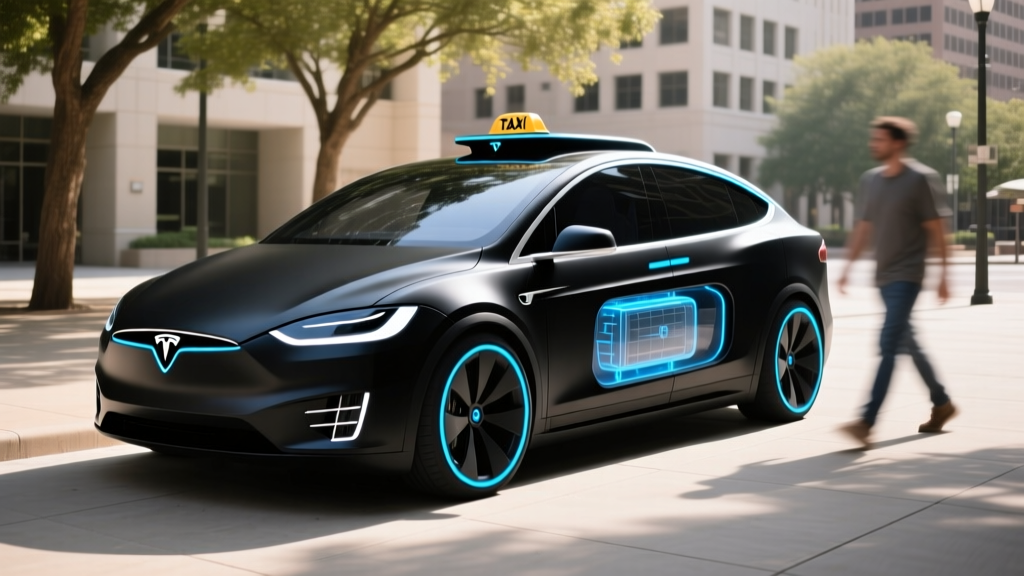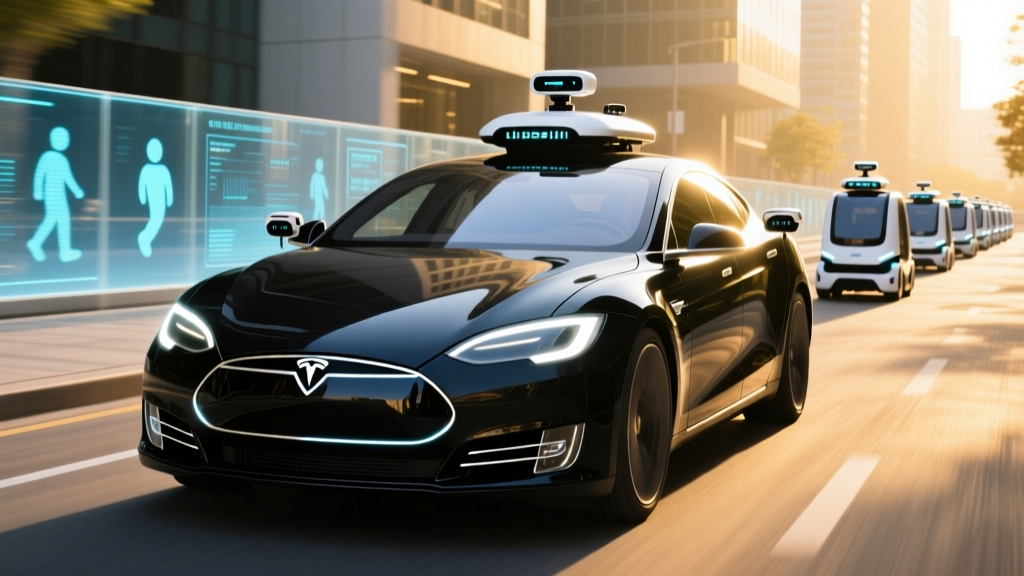
If you're researching the Tesla Model S Autopilot price, you've likely noticed that Tesla's driver-assistance ecosystem is layered, frequently repriced, and heavily marketed under names that can blur together. Basic Autopilot comes standard on every new Model S. Full Self-Driving (FSD) — Tesla's most advanced consumer ADAS package — is a separate, premium add-on available as either a one-time purchase or a monthly subscription.
This guide breaks down exactly what each tier costs in 2026, what hardware and software powers the system, which capabilities you actually get, and where Tesla's claims diverge from real-world performance. Spoiler: no version of this system is self-driving, and understanding that distinction is critical before you spend thousands.
What Tesla Autopilot and FSD Actually Do
Tesla's driver-assistance stack is split into three tiers, each adding functionality on top of the last:
| Feature | Basic Autopilot (Standard) | Enhanced Autopilot (EAP) | Full Self-Driving (FSD Supervised) |
|---|---|---|---|
| Traffic-Aware Cruise Control | ✅ | ✅ | ✅ |
| Autosteer (lane centering) | ✅ | ✅ | ✅ |
| Auto Lane Change | ❌ | ✅ | ✅ |
| Navigate on Autopilot (highway exits/interchanges) | ❌ | ✅ | ✅ |
| Autopark (parallel & perpendicular) | ❌ | ✅ | ✅ |
| Smart Summon | ❌ | ✅ | ✅ |
| Traffic Light & Stop Sign Control | ❌ | ❌ | ✅ |
| City Street Autosteer | ❌ | ❌ | ✅ |
Basic Autopilot handles longitudinal and lateral control on marked highways — it maintains your set speed relative to traffic ahead and keeps the car centered in a single lane. That's it.
Enhanced Autopilot (EAP) adds automated lane changes, highway navigation assistance (ramp-to-ramp), parking, and Smart Summon (the car drives to you in a parking lot at low speed).
FSD (Supervised) extends all of the above to city streets, adding traffic light recognition, stop sign handling, and urban intersection navigation. The "Supervised" label is critical — Tesla renamed the package in late 2024 to clarify that the driver must actively monitor the system at all times.
SAE Automation Level: Level 2
All Tesla Autopilot and FSD variants are SAE Level 2 driver-assistance systems. The vehicle controls steering and acceleration under specific conditions, but the driver must remain fully engaged — hands on or near the wheel, eyes on the road, ready to intervene instantly. This is the same automation level as Ford BlueCruise and GM Super Cruise. Only driverless robotaxi services like Waymo operate at Level 4. Tesla's system does not drive itself.
Tesla Model S Autopilot Price: Every Tier Broken Down
Here's what you'll actually pay for each driver-assistance tier on a 2026 Tesla Model S. Note that Tesla adjusts pricing periodically — these figures reflect the most recent published rates as of early 2026.
| Tier | One-Time Purchase | Monthly Subscription | Availability |
|---|---|---|---|
| Basic Autopilot | Included (no extra cost) | N/A | Standard on all Model S trims |
| Enhanced Autopilot (EAP) | Discontinued as standalone (was $6,000) | N/A | No longer offered separately; features bundled into FSD |
| Full Self-Driving (FSD Supervised) | $8,000 | $99/month | Available on all Model S trims (Long Range & Plaid) |
Key pricing details to understand:
- The $8,000 FSD purchase is a one-time, non-refundable add-on tied to the vehicle. If you sell the car, FSD transfers with it — you don't get it back or receive a refund.
- The $99/month FSD subscription is flexible. You can activate it for a road trip month and cancel when you're done. It's tied to your Tesla account and the specific vehicle, not transferable to another car.
- EAP was discontinued as a mid-tier standalone purchase in late 2024. If you see EAP referenced on used Model S listings, it was purchased before the change and remains active on that vehicle.
- FSD does not qualify for the §30D federal EV tax credit. The credit applies to the vehicle itself (subject to MSRP caps and buyer income limits under current IRS rules), not to software add-ons purchased separately.
Is the subscription or purchase a better deal? At $99/month, you'd need to subscribe for roughly 81 months (nearly 7 years) before the cumulative cost exceeds the $8,000 one-time price. If you plan to keep your Model S long-term and use FSD regularly, the purchase breaks even. If you drive a lot on highways only a few months per year, or want to test the system before committing, the subscription makes more financial sense.
Hardware Behind the System: Tesla Vision
Since 2022, Tesla has relied exclusively on a camera-only perception stack called Tesla Vision. The company removed ultrasonic sensors (USS) and radar from new production vehicles, betting entirely on neural-network-processed camera data for object detection, distance estimation, and path planning.
The current Model S (Hardware 4 / AI4 platform) uses:
- 8 external cameras — front-facing narrow and wide-angle, repeater cameras on front fenders, rear-view, and rear quarter-panel cameras providing 360° coverage
- High-resolution sensors — upgraded from the legacy Hardware 3 cameras, with improved low-light performance and wider dynamic range
- Onboard AI inference computer — Tesla's custom-designed chip processing camera feeds in real time to build a 3D representation of the driving environment
There is no lidar (unlike Waymo's Level 4 robotaxis) and no radar redundancy (unlike Mercedes-Benz Drive Pilot, which uses radar + lidar + cameras for its Level 3 system in Germany and Nevada). Tesla's approach is software-dependent — the neural network must infer depth, speed, and object classification purely from 2D camera images, which introduces specific limitations discussed below.
Real-World Capabilities: Where FSD Works Well
Based on extensive testing across highway and urban environments, Tesla's FSD (Supervised) performs competently in several scenarios:
- Highway driving: Lane centering, traffic-aware cruise, and automated lane changes are smooth and predictable on well-marked interstates. Navigate on Autopilot handles ramp-to-ramp transitions reliably in clear conditions.
- Suburban arterial roads: FSD handles speed-limit adjustments, gentle curves, and four-way stop intersections with increasing confidence.
- Traffic light recognition: The system correctly identifies red, yellow, and green lights and stops/starts accordingly at most controlled intersections.
- Parking: Autopark handles standard parallel and perpendicular spots, though tight spaces or irregularly marked lots can cause the system to abort.
For daily highway commuters, Basic Autopilot alone reduces fatigue substantially. FSD's city-street capability adds value primarily for drivers who encounter frequent intersections, school zones, and variable speed limits on surface streets.
Limitations and Edge Cases: What FSD Cannot Do
⚠️ Critical Limitations of Tesla FSD (Supervised)
- Not self-driving. You are the driver. You are legally responsible for every action the vehicle takes. NHTSA requires your full attention.
- Camera-only perception struggles in: heavy rain, fog, snow, direct sun glare, and nighttime driving on poorly lit roads without clear lane markings.
- Construction zones: Temporary lane shifts, cones, and barrels frequently confuse the system. Expect to take over immediately in any work zone.
- Unprotected left turns: FSD can hesitate or misjudge gaps in oncoming traffic at intersections without dedicated turn signals.
- Phantom braking: The system occasionally applies unexpected deceleration on highways, often triggered by shadows, overpasses, or roadside objects it misclassifies as obstacles. NHTSA has investigated multiple phantom braking complaints.
- No geofencing guarantee: Unlike GM Super Cruise (which only activates on pre-mapped divided highways), FSD will engage on virtually any road — including ones it may not handle well. The driver must judge suitability.
- Driver monitoring via cabin camera: Tesla uses the interior camera to check that your eyes are directed forward. Repeated inattention warnings can lock you out of Autopilot/FSD for the remainder of the drive.
The practical implication: FSD is a convenience and fatigue-reduction tool, not a replacement for an attentive driver. On a 300-mile road trip, it meaningfully reduces cognitive load. In complex urban environments, you'll find yourself intervening every few minutes — sometimes more often than if you'd simply driven manually.
Tesla vs. Competing ADAS Systems
| Feature | Tesla FSD (Supervised) | Ford BlueCruise | GM Super Cruise | Hyundai HDA2 |
|---|---|---|---|---|
| SAE Level | Level 2 | Level 2 | Level 2 | Level 2 |
| Hands-Free on Highways | No (hands-on/near-wheel) | Yes (pre-mapped highways) | Yes (pre-mapped highways) | No (hands-on required) |
| City Street Capability | Yes (all roads) | No | Limited (mapped roads only) | No |
| Automated Lane Change | Yes | Yes | Yes | Yes |
| Sensor Suite | Cameras only | Cameras + radar | Cameras + radar + lidar map | Cameras + radar |
| Driver Monitoring | Cabin camera | IR camera (eye tracking) | IR camera (eye tracking) | Torque sensor (steering wheel) |
| One-Time Cost | $8,000 (FSD) | $2,100–$2,800 | $2,500–$3,000 (incl. 3-yr connectivity) | Included on upper trims |
| Subscription Option | $99/month | $75/month (after trial) | $25/month (after trial) | N/A |
Where Tesla leads: FSD is the only consumer ADAS that attempts full city-street navigation — traffic lights, stop signs, unprotected turns, and variable urban environments. No competitor offers this breadth of coverage.
Where competitors lead: Ford BlueCruise and GM Super Cruise both allow true hands-free driving on pre-mapped divided highways (over 400,000 miles of roadway in North America for Super Cruise). Their infrared eye-tracking driver monitoring is also more robust than Tesla's cabin-camera approach. For pure highway commuting, these systems offer a more relaxed, hands-off experience — within their operational limits.
Where Hyundai/Kia impress: Highway Driving Assist 2 (HDA2) is included at no extra cost on mid-to-upper trims of vehicles like the Ioniq 5 and EV6. It doesn't attempt city streets or hands-free driving, but its lane centering, adaptive cruise, and lane-change assist are smooth, predictable, and free.
Which Model S Trims Include What
Every 2026 Tesla Model S — whether the Long Range (dual-motor AWD, EPA-estimated 402 miles, 670 hp) or the Plaid (tri-motor AWD, EPA-estimated 396 miles, 1,020 hp) — ships with Basic Autopilot as standard equipment. There is no trim-level gatekeeping for the base system.
FSD (Supervised) can be added to any Model S at purchase or activated later via the Tesla app. The $8,000 purchase price or $99/month subscription is the same regardless of whether you choose Long Range or Plaid. There is no performance or range difference between vehicles with and without FSD — it is purely a software unlock.
Worth noting: FSD capability is tied to the vehicle's hardware generation. All current-production Model S vehicles ship with Hardware 4 (AI4), which is required for the latest FSD neural network stack. Older Model S vehicles with Hardware 3 may receive reduced-capability FSD updates or be ineligible for certain features.
Frequently Asked Questions
Is Tesla Autopilot free on the Model S?
Basic Autopilot — traffic-aware cruise control and lane-centering Autosteer — is included at no extra cost on every new Model S. Enhanced Autopilot and Full Self-Driving (FSD) are paid add-ons. There is no free trial period for FSD as of 2026, though Tesla has occasionally offered limited-time promotional trials in past years.
Can I add FSD to my Model S after purchase?
Yes. You can purchase FSD outright ($8,000) or subscribe ($99/month) at any time through the Tesla app, provided your vehicle has the required Hardware 4 (AI4) computer. All current-production Model S vehicles have this hardware.
Does FSD transfer if I sell my Model S?
Yes, if you purchased FSD outright, it remains with the vehicle when you sell or trade it. You do not receive a refund, and you cannot transfer it to a new Tesla. Subscription-based FSD is tied to your account and vehicle and cancels when you sell.
Is Tesla FSD actually self-driving?
No. Tesla FSD is an SAE Level 2 driver-assistance system. The driver must remain fully engaged — monitoring the road, keeping hands on or near the steering wheel, and ready to take over at any moment. The "Supervised" designation in the product name reflects this requirement. True self-driving (Level 4) is currently available only through robotaxi services like Waymo in select cities.
Does FSD improve over time?
Tesla pushes over-the-air (OTA) software updates that can improve FSD behavior, add features, or adjust the neural network's performance. However, improvements are incremental and not guaranteed to address every edge case. Major version updates (e.g., FSD v13, v14) have introduced noticeable improvements in intersection handling and lane-change smoothness, but regression in other areas has occasionally been reported by users.
How does FSD handle bad weather?
Tesla Vision relies on cameras, so heavy rain, snow, fog, and low-visibility conditions degrade system performance. In these conditions, Autopilot and FSD may issue a "Camera Visibility Reduced" alert and limit or disable functionality. You should expect to take full manual control in adverse weather. Competing systems using radar (Ford BlueCruise, GM Super Cruise) have a sensor advantage in reduced-visibility scenarios, though they too have operational limits.
What's the total cost of ownership impact of adding FSD?
The $8,000 FSD purchase increases your upfront cost but does not affect insurance premiums uniformly — some insurers charge slightly more for vehicles equipped with advanced ADAS, while others offer discounts. FSD does not qualify for the §30D federal EV tax credit, which applies to the vehicle purchase price only. The $99/month subscription is an ongoing operational cost comparable to a premium streaming service — budget accordingly.
The bottom line on the Tesla Model S Autopilot price: Basic Autopilot is a capable, standard system that handles highway driving well. FSD at $8,000 or $99/month extends capability to city streets, but it remains a supervised Level 2 system with real-world limitations that demand your constant attention. Evaluate whether the city-street features justify the cost for your specific commute before committing — for highway-only drivers, the included Basic Autopilot may be all you need.