What SAE Automation Level Is Waymo — And Why It Matters for Safety
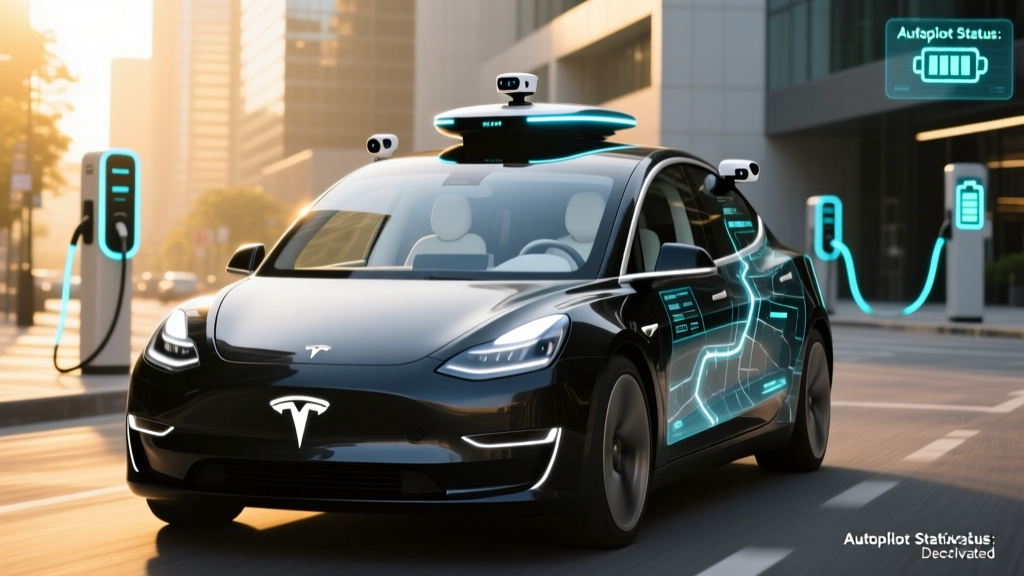
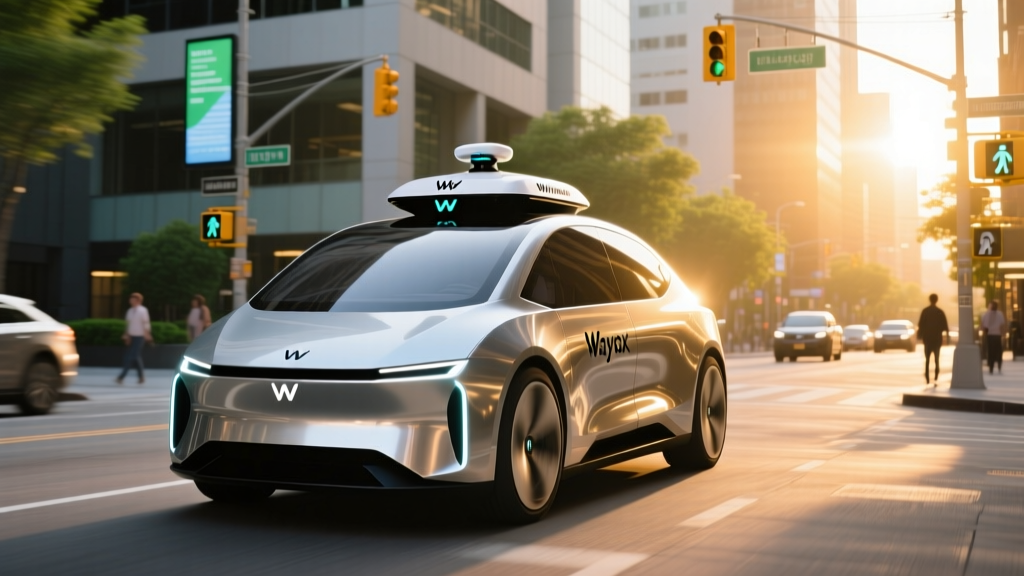
Before analyzing Waymo's safety data, it's critical to distinguish what Waymo actually is. The Waymo One robotaxi service operates at SAE Level 4 — meaning the vehicle handles all driving tasks within its defined operational design domain (ODD) without any human driver behind the wheel. This is fundamentally different from consumer driver-assist systems like Tesla Autopilot, Ford BlueCruise, or GM Super Cruise, which are SAE Level 2 and require constant driver supervision.
| Level | Description | Example |
|---|---|---|
| Level 2 | Driver-assist; human must monitor at all times | Tesla Autopilot, BlueCruise |
| Level 3 | Conditional automation; human must take over on request | Mercedes DRIVE PILOT (limited markets) |
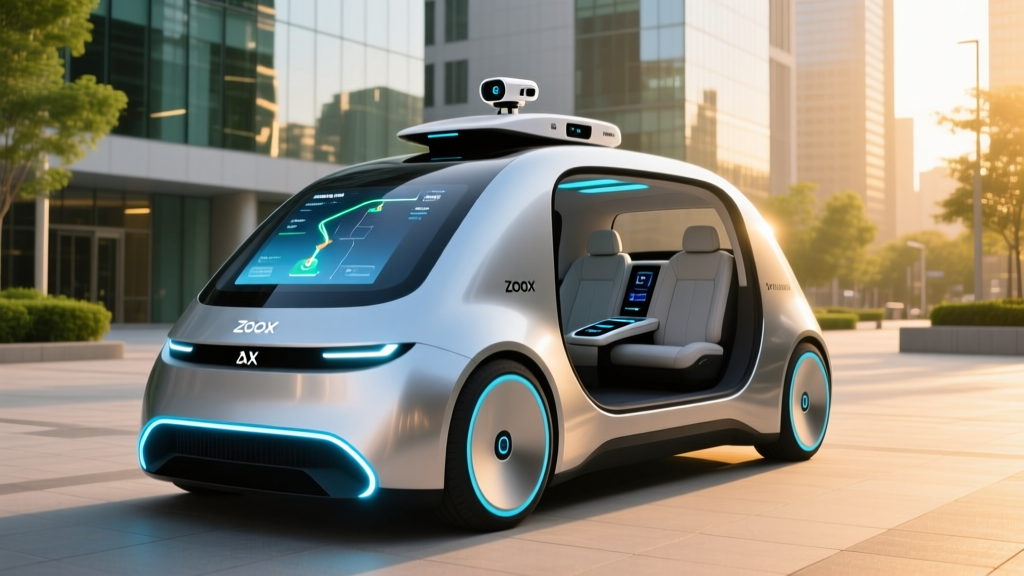
| Level 4 | Full automation within a geofenced ODD; no driver needed | Waymo One, Zoox |
| Level 5 | Full automation everywhere, all conditions | Does not exist commercially |
Waymo's Level 4 status means the vehicle is responsible for the entire dynamic driving task within its service area. There is no steering wheel operator, no remote joystick pilot controlling the car in real time. Waymo does have remote assistance — fleet specialists can answer questions the car's AI "asks" (e.g., whether a construction zone is passable) — but they do not drive the vehicle. This distinction is central to understanding Waymo's safety architecture: the system must be robust enough to handle scenarios autonomously or pull over safely.
Where Can You Actually Ride a Waymo Robotaxi Right Now?
As of early 2026, Waymo One operates fully driverless commercial service in four U.S. metro areas. Expansion announcements (Austin, Atlanta, and others) are in testing phases but are not yet live for paying public ridership. Here's the current operational map:
| Metro Area | Service Zone Coverage | Status | Hours |
|---|---|---|---|
| Phoenix, AZ | ~315 sq mi (Chandler, Tempe, Scottsdale, downtown Phoenix, Sky Harbor Airport) | Fully operational | 24/7 |
| San Francisco, CA | ~50 sq mi city core + expanding corridors | Fully operational | 24/7 |
| Los Angeles, CA | ~80 sq mi (Santa Monica, Hollywood, downtown LA, Beverly Hills) | Fully operational | 24/7 |
| Mountain View / Palo Alto, CA | Limited suburban corridor (employee/early-rider programs expanded to public) | Operational (limited) | Select hours |
Waymo's geofencing is strict. If your pickup or dropoff falls outside the mapped ODD, the app simply won't let you book the ride. The company has also temporarily paused or restricted service during extreme weather events — heavy fog in Phoenix, atmospheric rivers in the Bay Area — when sensor performance may degrade.
Waymo Safety Data: What the Numbers Actually Show
Waymo safety is the most scrutinized topic in autonomous vehicles, and for good reason: the company has accumulated more driverless commercial miles than any other robotaxi operator. As of Q1 2026, Waymo reports over 10 million fully driverless miles completed across its commercial fleet. But raw mileage alone doesn't tell the safety story — the rate and severity of incidents matter far more.
- Total driverless commercial miles: 10+ million
- Fatalities involving Waymo driverless vehicles: 0
- Police-reported contact events: ~40 incidents across all testing + commercial operations since 2019 (NHTSA Standing General Order data)
- Injury rate vs. human benchmark: Waymo's published analysis (peer-reviewed, 2023) showed a 85% reduction in injury-causing crash rate and 57% reduction in any-severity crash rate compared to human drivers in comparable urban environments
- Contact rate: Approximately 1 reportable contact per ~250,000 driverless miles — many of these are minor (e.g., side-swipe by another vehicle at low speed, pole contact during tight turns)
Waymo's most rigorous safety comparison, published in collaboration with Swiss Re and subjected to external peer review, used insurance-claims methodology to compare Waymo's at-fault crash rates against a human-driver baseline of over 600,000 miles in the same urban corridors. The results showed Waymo vehicles were involved in fewer at-fault collisions per million miles than human drivers in the same environments.
However, context matters. Robotaxis operate primarily in dense urban areas at moderate speeds (typically under 45 mph), where crashes tend to be lower-severity but more frequent. Waymo does not currently operate on high-speed freeways at 70+ mph in most markets, where fatality risk is highest. The comparison is valid for the environments Waymo serves, but it is not a blanket "safer than all human driving everywhere" claim.
Notable Incidents and What They Reveal
Several high-profile Waymo incidents have drawn regulatory and public attention:
- San Francisco school bus contact (2024): A Waymo vehicle made low-speed contact with the side of a stopped school bus that had its stop-arm extended. No children were injured. The NHTSA investigated and Waymo issued a software update to improve detection of extended stop-arms.
- Phoenix pedestrian near-misses: Dashcam footage shared online showed Waymo vehicles making unexpected stops near pedestrians. In several cases, the vehicle's conservative behavior (stopping abruptly) was actually safer than a human driver's, though it caused traffic disruption.
- Construction zone confusion: Multiple reports from SF riders documented Waymo vehicles pulling over and requesting remote assistance in complex construction zones rather than attempting to navigate through. This is by design — the system defaults to a safe stop when confidence drops.
Every police-reportable incident involving a Waymo vehicle is filed with the NHTSA under the agency's Standing General Order for automated driving systems, making Waymo one of the most transparently monitored fleets on the road.
How the Waymo Tech Stack Enables (and Limits) Safety
Waymo's 6th-generation "Waymo Driver" hardware suite, deployed on the all-electric Zeekr M-Vision (a purpose-built robotaxi) and retrofitted Jaguar I-PACE vehicles, represents one of the most sensor-dense platforms in production:
| Sensor Type | Count (6th Gen) | Function |
|---|---|---|
| LiDAR (custom) | 5+ units | 360° 3D point cloud; detects shape, distance, velocity of objects up to 500m |
| Cameras (high-res) | 29 units | Traffic light state, signage text, lane markings, pedestrian gestures |
| Radar | 6 units | Velocity tracking in rain/fog where LiDAR degrades; redundancy layer |
| External audio receivers | Multiple | Detects sirens (ambulance, police, fire) and honking from surrounding vehicles |
| HD mapping + GPS/IMU | System-level | Centimeter-precision localization within geofenced ODD |
The key differentiator from camera-only approaches (most notably Tesla's vision-based FSD) is LiDAR redundancy. LiDAR provides precise depth information independent of lighting conditions — it works identically at night, in direct sun glare, or in shadow. Camera-only systems must infer depth computationally, which introduces latency and potential error in edge cases.
Waymo's approach is also heavily dependent on HD pre-mapping. Every road within the service area is mapped to centimeter accuracy before any driverless operation begins. This means Waymo can't simply "drive anywhere" — it can only operate where it has mapped. The tradeoff is extreme precision within the geofence at the cost of geographic flexibility.
Pricing: Waymo vs. Uber and Lyft in 2026
Waymo One uses dynamic pricing similar to rideshare, but without surge multipliers driven by driver availability. Here's how typical fares compare in markets where all three operate:
| Route Example | Waymo One | UberX | Lyft Standard |
|---|---|---|---|
| 3-mile urban trip (SF) | $12–$16 | $10–$18 (surge-dependent) | $10–$17 |
| 8-mile airport run (PHX Sky Harbor) | $22–$30 | $18–$35 | $18–$32 |
| 12-mile cross-town (LA) | $28–$38 | $22–$45 | $22–$42 |
| Peak-hour surge (Friday 6 PM, SF) | $16–$20 (no surge) | $25–$40 (2–3x surge) | $22–$38 (1.5–2.5x) |
The key pricing insight: Waymo does not surge. During high-demand periods (rush hour, events, rain), Uber and Lyft prices can spike 2–3x, while Waymo fares remain stable. This makes Waymo competitive or even cheaper during peak times, though slightly more expensive during off-peak periods when rideshare has abundant driver supply.
Waymo also does not offer shared/pool rides, XL vehicles for groups larger than 2 riders with luggage, or accessibility-equipped vehicles (WAV) in all markets yet — all areas where traditional rideshare still has broader options.
Current Limitations: Where Waymo Cannot (or Will Not) Drive
Waymo's Level 4 autonomy is powerful but tightly bounded. Understanding these limitations is essential for setting realistic expectations:
- Geofence boundaries: Waymo will not drive outside its mapped service area. A trip from downtown SF to Sausalito (across the Golden Gate Bridge) is not bookable because the bridge and Marin County are outside the current ODD.
- Heavy weather: Dense fog (common in SF's Sunset district), heavy rain (atmospheric rivers), and snow (not applicable in current markets) cause service restrictions or pauses. LiDAR scatters in heavy precipitation; cameras lose contrast.
- Construction zones: While Waymo handles many construction zones, complex multi-stage lane shifts with temporary signage may trigger a conservative pull-over and remote-assist request, adding 5–15 minutes to your trip.
- Unprotected left turns (in some markets): Early SF operations restricted unprotected left turns at busy intersections. Waymo has progressively enabled these, but some complex intersections still route around them.
- No highway driving (most markets): Phoenix includes some freeway segments, but SF and LA operations are primarily surface streets. You cannot book a Waymo for a 65-mph freeway commute in most cities.
- Passenger capacity: Currently limited to 2 adult passengers in the Zeekr vehicles (the Jaguar I-PACE seats up to 3 rear passengers). No child seats are provided or permitted — you cannot bring an infant.
- No food/drink or pets: Waymo's rider policy prohibits eating, drinking, open containers, and pets (service animals excepted).
Regulatory Landscape: Who Approves Waymo's Operations?
Robotaxi operations in the U.S. exist under a patchwork of state and local regulations — there is no single federal "robotaxi license." Here's how the approval chain works:
- NHTSA (federal): Oversees vehicle safety standards (FMVSS). Waymo received an exemption to deploy the Zeekr M-Vision, which lacks a traditional steering wheel and pedals. NHTSA also collects crash data through the Standing General Order, which requires all ADS-equipped vehicles to report crashes within 24 hours.
- State DMVs/CPUCs: California's CPUC (Public Utilities Commission) issues permits for commercial robotaxi service. Arizona's approach is lighter-touch — the state allows testing and commercial operations with fewer permitting requirements, which is why Phoenix was Waymo's launch market.
- Local municipalities: City governments control curb access, parking enforcement interaction, and can restrict operations on certain streets. SF's Board of Supervisors has held multiple hearings on robotaxi operations following resident complaints about traffic disruption.
The regulatory environment remains fluid. California's CPUC voted in August 2023 to allow Waymo and Cruise (now defunct as a commercial service following its October 2023 permit suspension) to expand 24/7 operations in San Francisco. Cruise's suspension — following a severe incident where a pedestrian was dragged — demonstrated that regulators will act decisively, and this precedent shapes how cautiously Waymo operates.
How to Actually Use Waymo One: Booking, Riding, and What to Expect
Using Waymo One is straightforward if you're in a service area:
- Download the Waymo One app (iOS/Android) and create an account with payment info.
- Enter your pickup and dropoff. The app will confirm both are within the service area. If not, it will tell you immediately.
- Wait for your vehicle. Typical wait times are 3–8 minutes in well-covered areas (downtown Phoenix, SF Financial District), longer at the edges of the geofence.
- Verify and unlock. The app shows the vehicle's license plate and a photo. When it arrives, you confirm the last 4 digits of your PIN on the rear-door screen, and the door unlocks.
- Ride. The interior has a screen showing your route, music controls, and a "pull over" button. There is no driver. You can talk to support via the in-car screen or phone.
- Exit and rate. The vehicle stops at your destination, doors unlock automatically, and you rate the trip in the app.
Frequently Asked Questions About Waymo Safety
Is Waymo truly self-driving, or is there a human controlling it remotely?
Waymo is genuinely self-driving (SAE Level 4) within its service area. There is no human driver in the vehicle and no remote operator steering it in real time. Remote fleet specialists can answer high-level questions the AI poses (e.g., "Is this road closed?") but they do not control the vehicle's steering, braking, or acceleration.
Has a Waymo vehicle ever caused a fatality?
As of early 2026, there have been zero fatalities involving a Waymo driverless vehicle in commercial or testing operations. This encompasses over 10 million driverless commercial miles and tens of millions of additional testing miles with safety drivers. By comparison, the U.S. traffic fatality rate is approximately 1.35 deaths per 100 million vehicle miles (NHTSA).
How does Waymo's safety compare to a human Uber driver?
Waymo's peer-reviewed safety analysis showed a 57% lower rate of any-severity police-reported crashes and an 85% lower rate of injury-causing crashes compared to a human-driver benchmark in comparable urban environments. However, Waymo operates in a narrower set of conditions (lower speeds, mapped roads, no extreme weather) than the average human driver, so the comparison applies specifically to urban surface-street driving.
What happens if the Waymo vehicle's system fails mid-ride?
Waymo vehicles have redundant computing, power, and braking systems. If the primary system detects a fault, the backup system engages and the vehicle executes a "minimal risk condition" — typically pulling over to the nearest safe stop (curbside, parking lot) and contacting remote support. The vehicle will not continue driving with a degraded system.
Can I use Waymo if I'm in a wheelchair or need accessibility accommodations?
Waymo has begun deploying wheelchair-accessible vehicles (WAVs) in Phoenix, but availability is limited and wait times are longer. The standard Zeekr M-Vision and Jaguar I-PACE vehicles are not wheelchair-accessible. Waymo has stated plans to expand WAV availability but has not published a firm timeline for all markets.
Is Waymo safe at night?
Yes. Waymo's LiDAR system provides full 360° depth perception regardless of lighting conditions, and the camera suite includes sensors optimized for low-light performance. Nighttime operations run 24/7 in Phoenix and San Francisco with no additional restrictions. The system's perception capability does not degrade in darkness the way human vision does.