The Waymo Jaguar I-PACE: America's Largest Level 4 Robotaxi Fleet
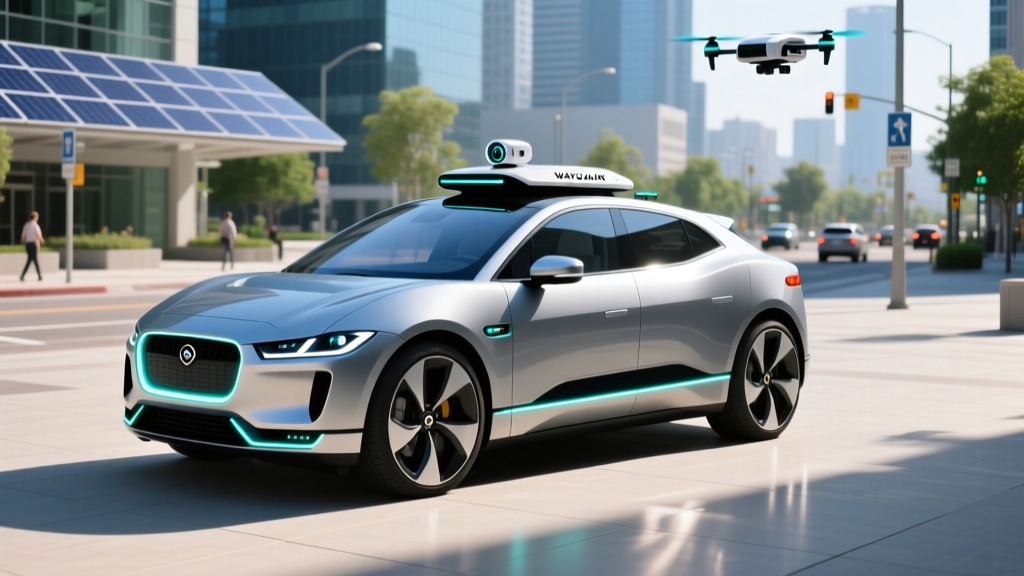
If you've seen a white Jaguar I-PACE crawling through Phoenix or San Francisco traffic with a spinning rooftop turret and no one behind the wheel, you've seen Waymo's primary workhorse. The Waymo Jaguar I-PACE — officially called the Waymo 6th-Generation Driver integrated into Jaguar's all-electric SUV — remains the backbone of Waymo One, the only commercially scaled Level 4 robotaxi service operating at volume in the United States as of early 2026.
Unlike Tesla's Full Self-Driving (Supervised) or GM's Super Cruise, which require an attentive driver at all times, the Waymo Jaguar operates with no human driver in the vehicle. The steering wheel turns itself. The pedals press themselves. And in its approved operational zones, the car handles every driving task without human intervention or fallback. That distinction — Level 4 vs. Level 2 — is the single most important thing to understand about this vehicle.
SAE Automation Level: Level 4 (High Driving Automation)
The Waymo Jaguar I-PACE operates at SAE Level 4 within its geofenced service areas. This means the system performs all driving tasks without human oversight within defined conditions (mapped urban/suburban roads, fair weather). If the system encounters a scenario it cannot handle, it will pull over safely rather than handing control to a passenger. This is fundamentally different from Level 2 systems like Tesla Autopilot or Ford BlueCruise, where the human driver remains legally responsible and must monitor the road at all times. There is no Level 5 (full everywhere/all-conditions) robotaxi in commercial service anywhere in the world as of 2026.
Where Can You Actually Ride in a Waymo Jaguar Right Now?
Waymo One has expanded steadily since its Phoenix launch in 2020, but service remains tightly geofenced. You can't hail a Waymo Jaguar outside approved zones, and the service area maps are precise down to specific streets. Here's where the fleet operates commercially as of 2026:
| Metro Area | Service Zone Coverage | Availability | Notes |
|---|---|---|---|
| Phoenix, AZ | ~225+ sq mi (Chandler, Tempe, Mesa, Scottsdale, parts of Phoenix proper, airport) | 24/7 | Largest and most mature service area; Sky Harbor Airport rides available |
| San Francisco, CA | ~50+ sq mi (most of SF proper including downtown, Sunset, Richmond) | 24/7 | Expanded to full city coverage; highway driving limited |
| Los Angeles, CA | ~80+ sq mi (Downtown LA, Hollywood, Santa Monica, Westside, LAX) | 24/7 | Ramped significantly through 2025; LAX service active |
| Austin, TX | ~45+ sq mi (Downtown, South Austin, parts of East Austin) | Limited hours / waitlist | Newer market; expanding coverage through 2026 |
Key caveat: Waymo has announced intentions to expand to additional cities, but announced expansion is not live service. If your ZIP code isn't inside the geofence, you cannot hail a ride. Waymo's app will show you the exact service boundary when you open it in a supported city.
The Jaguar I-PACE Platform: EV Specs Behind the Robotaxi
Waymo chose the Jaguar I-PACE as its fleet vehicle starting with the 5th-generation Driver system, and the partnership continues with the current 6th-generation hardware. The I-PACE provides the electric platform; Waymo bolts on its sensor suite, compute stack, and driving software. Here's what's underneath the robotaxi skin:
| Specification | Jaguar I-PACE (Waymo Fleet Config) |
|---|---|
| Battery Capacity | 90 kWh (usable ~84 kWh), NMC lithium-ion |
| EPA Range (stock) | 246 miles (stock I-PACE); fleet vehicles run shorter effective range due to sensor compute draw and HVAC for equipment |
| Powertrain | Dual-motor AWD, 394 hp, 512 lb-ft torque |
| 0–60 mph | 4.5 seconds (stock; fleet limited to conservative acceleration profiles) |
| DC Fast Charge | 100 kW peak (CCS1), 10–80% in ~45 min |
| Level 2 AC Charge | 11 kW onboard charger |
| Waymo Sensor Suite (6th Gen) | Roof-mounted lidar array, 6+ cameras, 4+ external microphones, radar units, custom compute module |
| Fleet Duty Cycle | Typically 18–20 hours/day operational; swapped to depot charging during off-peak |
The I-PACE's 90 kWh NMC battery gives Waymo enough range for a full shift of urban rides before returning to a depot for DC fast charging. The 100 kW peak charge rate is modest by 2026 passenger-EV standards (many consumer EVs now peak at 200–350 kW), but fleet operations charge during scheduled downtime rather than needing ultra-rapid turnaround. Waymo manages charging logistics centrally — riders never see or interact with the charging process.
Real-World Fleet Range vs. EPA Sticker
The stock Jaguar I-PACE carries an EPA range of 246 miles. However, Waymo fleet vehicles carry additional compute hardware drawing continuous power, run HVAC to cool sensor and computing equipment, and operate in stop-and-go urban patterns with high accessory loads. Real-world fleet range is estimated at 160–190 miles per charge cycle before depot return. This is irrelevant to riders — Waymo manages battery logistics — but it illustrates why fleet operators choose depot-charging models over public fast-charging reliance.
Technology Stack: How the Waymo Jaguar Sees the Road
The 6th-generation Waymo Driver is a multi-sensor fusion system — a stark contrast to Tesla's camera-only FSD approach. Waymo's philosophy is sensor redundancy: if one modality degrades (camera blinded by sun glare), others compensate (lidar still maps geometry). Here's the stack:
Sensor & Compute Breakdown
- Lidar (roof array): Custom-built 360° lidar provides high-resolution 3D point clouds up to 250+ meters. Lidar works independently of lighting conditions — critical for night driving and shadowed intersections.
- Cameras (6+ units): High-dynamic-range cameras covering 360° with overlapping fields of view. Used for traffic-light state detection, sign reading, lane-marking identification, and object classification.
- Radar (multiple units): Forward and corner radars for velocity detection of moving objects, especially useful in rain or fog where lidar and cameras degrade.
- External microphones (4+): Detects sirens from emergency vehicles (ambulance, fire, police) and triggers appropriate yielding behavior.
- Custom compute module: Waymo-designed processing unit in the cargo area runs perception, prediction, and planning models in real time. Draws significant continuous power (hence the reduced effective range).
- HD mapping: Waymo pre-maps every inch of its service areas at centimeter-level resolution. The vehicle localizes against this map in real time. This is why the system is geofenced — it cannot drive in unmapped areas.
The lidar-vs-camera debate matters here. Tesla's FSD Supervised relies entirely on cameras and neural networks — no lidar, no radar (in current Hardware 4/AI5 vehicles). Waymo's approach adds hardware cost and complexity but provides physical redundancy that regulators and safety researchers generally view as more robust for unattended operation. When no human is available as a fallback, sensor redundancy isn't optional — it's the safety case.
Pricing: Waymo One vs. Uber and Lyft in 2026
Waymo One uses dynamic pricing similar to rideshare platforms, with base fares, per-mile rates, and per-minute rates that adjust for demand. Pricing varies by city and time of day. Here's a representative comparison based on observed fares in Phoenix and San Francisco:
| Route (Example) | Waymo One | UberX | Lyft Standard |
|---|---|---|---|
| Airport to downtown (PHX Sky Harbor → Downtown Phoenix, ~5 mi) | $18–$26 | $15–$22 | $14–$20 |
| Short urban trip (Mission District → Financial District, SF, ~4 mi) | $16–$24 | $14–$20 | $13–$19 |
| Cross-town (Santa Monica → Downtown LA, ~15 mi) | $32–$48 | $28–$42 | $26–$40 |
| Surge pricing (Friday night, high demand) | 1.3–1.8x base | 1.5–3.0x base | 1.5–2.5x base |
Key takeaways:
- Waymo One fares are generally on par with or slightly higher than UberX/Lyft during normal demand. The premium is typically $2–$6 per ride.
- During surge periods, Waymo's pricing tends to be more stable — its surge multipliers are generally lower than rideshare peaks, because Waymo doesn't need to incentivize human drivers to get on the road.
- Waymo does not offer shared/pool rides (you won't be matched with strangers), which makes it comparable to UberX or Lyft Standard rather than shared tiers.
- Tipping is not expected or possible (no driver to tip). This effectively reduces the total cost vs. rideshare where a 15–20% tip is customary.
To use Waymo One, download the Waymo app, enter your destination, and the app confirms whether your pickup/dropoff is within the service zone. Wait times typically run 3–8 minutes in mature markets like Phoenix, and 5–15 minutes in newer markets. The car arrives, you unlock it via the app (or a PIN on the window), and the ride begins with no one in the driver's seat.
Safety Record: What the Data Actually Shows
Robotaxi safety is the most scrutinized — and most misunderstood — aspect of autonomous driving. Waymo publishes safety data, and third-party analyses from the National Highway Traffic Safety Administration (NHTSA) and independent researchers provide additional context. Here's what we know as of early 2026:
Waymo Fleet Safety Data (through 2025)
- Cumulative fully autonomous miles driven: 50+ million miles (driverless, no human behind the wheel)
- Fatality rate: Zero passenger or pedestrian fatalities attributed to Waymo vehicle-at-fault incidents in driverless commercial service
- Police-reported crash involvement: Waymo vehicles have been involved in minor incidents (primarily low-speed contact events where other parties were at fault). NHTSA Standing General Order data shows Waymo vehicles involved in fewer severe crashes per million miles than the human-driven fleet average.
- Waymo's published comparison: Internal analysis (peer-reviewed by external researchers) claims 85% reduction in injury-causing crash rates vs. human benchmarks in comparable urban environments
- Disengagement rate (autonomous): Not directly comparable to California DMV disengagement reports, since Waymo's commercial fleet operates under different reporting frameworks. Remote-assistance interventions (where a remote operator provides guidance, not direct steering) occur but are not publicly broken out per 1,000 miles.
Context that matters: Waymo's safety record benefits enormously from geofencing, conservative driving behavior (the cars drive below speed limits, take wide margins around cyclists, and pause at ambiguous intersections), and operating in mapped, well-understood environments. The comparison to human drivers is favorable in urban settings, but Waymo vehicles do not operate on rural highways, in heavy snow, or in unmapped construction zones — all environments where human flexibility currently excels.
The most honest framing: Waymo's Level 4 robotaxis have demonstrated safety performance at least competitive with attentive human drivers in their specific operational domain, with a trend toward improvement as software updates roll out. This is not the same as claiming they are "safer than humans everywhere."
Regulatory Landscape: Who Approves Robotaxi Operations?
Robotaxi deployment in the United States is governed by a patchwork of state and local regulations — there is no single federal license to operate a driverless taxi nationwide.
- Arizona: The most permissive major market. Arizona has no specific autonomous-vehicle statute restricting deployment; Waymo operates under standard vehicle registration with a testing/commercial permit from the state. Phoenix's regulatory environment is why Waymo scaled there first.
- California: The California DMV issues autonomous vehicle testing permits, while the California Public Utilities Commission (CPUC) authorizes commercial robotaxi services. Waymo holds both. The CPUC has imposed conditions including incident reporting, accessibility requirements, and coordination with local emergency services.
- Texas: Austin allows autonomous vehicle testing and limited commercial operations under state law (Texas Transportation Code Chapter 545). Local coordination with the city is required for commercial deployment.
- Federal (NHTSA): NHTSA regulates vehicle safety standards but does not currently issue "robotaxi licenses." The agency's Standing General Order requires all entities testing or deploying automated driving systems to report crashes. NHTSA has investigated specific Waymo incidents but has not issued fleet-wide recalls or operational bans as of early 2026.
The regulatory environment is evolving. Several other states (Nevada, Florida, Michigan) have frameworks that could support Waymo expansion, while some municipalities have pushed back on robotaxi operations citing concerns about traffic disruption, emergency-vehicle interaction, and accessibility.
Current Limitations: What the Waymo Jaguar Cannot Do
Level 4 autonomy is impressive within its domain, but the domain is narrow. Here are the hard limitations riders should understand:
Operational Constraints (2026)
- Geofencing: The vehicle will not drive outside its pre-mapped service area. If your destination crosses the boundary, the app won't let you book the ride.
- Weather restrictions: Heavy rain, fog, and snow degrade lidar and camera performance. Waymo reduces service or suspends operations during severe weather events. Phoenix's dry climate is one reason it was the first market. San Francisco fog causes occasional service adjustments.
- Highway driving: Limited. Waymo vehicles can handle some highway segments within the geofence (e.g., freeway on-ramps and short highway stretches to cross Phoenix), but extended high-speed interstate driving is not a core use case.
- Construction zones: Dynamically changing construction zones with temporary lane shifts, flaggers, and novel signage remain challenging. Waymo's remote-assistance team may guide the vehicle through, or the car will pull over and wait.
- Emergency vehicle interaction: Waymo vehicles detect sirens and pull over, but there have been documented instances of robotaxis stopping in ways that complicate emergency response. San Francisco fire officials have raised concerns about robotaxi behavior near active emergency scenes.
- No manual override for passengers: There is no steering wheel or pedal accessible to riders. You cannot "take over" if something feels wrong. You can contact remote support via an in-car button, and the vehicle can be commanded to pull over at the next safe location.
- Accessibility: The Jaguar I-PACE is an SUV, requiring passengers to step up into the vehicle. Wheelchair-accessible vehicles are limited in the fleet. Waymo has committed to adding accessible options but coverage remains incomplete.
- Pets and cargo: Service animals are permitted. Pets and large cargo are at the rider's risk and subject to Waymo's policies. There's no driver to negotiate with.
Frequently Asked Questions
Is the Waymo Jaguar I-PACE truly self-driving, or is there a hidden driver?
There is no driver — hidden or otherwise. The driver's seat is empty. The Waymo Jaguar I-PACE in Waymo One service operates at SAE Level 4, meaning the automated system performs all driving tasks within its geofenced service area without any human oversight. This is fundamentally different from Tesla FSD (Supervised), Ford BlueCruise, or GM Super Cruise, which are Level 2 systems requiring an attentive human driver. When you ride in a Waymo, you are in a vehicle with no human operator.
How much does a Waymo ride cost compared to Uber or Lyft?
Waymo One fares are generally comparable to UberX and Lyft Standard, typically within $2–$6 per ride in normal conditions. During surge pricing periods, Waymo's multipliers tend to be lower than rideshare peaks. There is no tipping, which effectively reduces the total cost by 15–20% compared to a tipped rideshare ride. A typical 5-mile urban trip runs $16–$26 depending on city and time of day.
How safe are Waymo robotaxis? Is there real data?
Waymo has accumulated over 50 million fully driverless miles with zero passenger or pedestrian fatalities in commercial service. Independent analyses and NHTSA data show Waymo vehicles involved in fewer severe crashes per million miles than the human-driven average in comparable urban environments. Waymo's published research claims an 85% reduction in injury-causing crash rates vs. human benchmarks. However, this data applies to geofenced urban driving in fair weather — the system's operational domain — and is not directly comparable to all driving conditions.
Can I use Waymo in any city, or is it limited?
Waymo One currently operates commercially in Phoenix, San Francisco, Los Angeles, and Austin (with Austin in limited/early deployment). Service is tightly geofenced — you can only hail rides within specific mapped zones in each metro area. If you're outside the geofence, the app will not allow you to book. Waymo has announced plans for further expansion, but announced cities are not yet live.
What happens if the Waymo Jaguar encounters a situation it can't handle?
The vehicle is designed to pull over safely and stop rather than hand control to a passenger (there are no passenger-accessible driving controls). In complex scenarios like unmapped construction zones, the vehicle may contact Waymo's remote-assistance team, who can provide high-level guidance (not direct steering). If the system cannot proceed safely, it will remain stopped until the situation resolves or remote support directs a safe path.
Why does Waymo use the Jaguar I-PACE instead of a cheaper EV?
The I-PACE was selected early in the partnership (announced 2018) for its combination of all-electric powertrain, premium ride quality, spacious interior for sensor/compute equipment, and Jaguar Land Rover's willingness to co-develop a purpose-built fleet variant. The 90 kWh battery provides sufficient range for a full shift. While the I-PACE is a premium vehicle (MSRP ~$72,000+ for consumer versions), Waymo purchases fleet vehicles at scale and amortizes cost over high daily utilization (18–20 hours/day). The Zeekr RT, a purpose-built robotaxi designed from the ground up for autonomous service, is expected to eventually supplement or replace the I-PACE in future fleet expansions, but the Jaguar remains the primary platform in 2026.
Does the Waymo Jaguar qualify for the federal EV tax credit?
The consumer Jaguar I-PACE's eligibility for the §30D federal clean vehicle credit depends on current-year battery sourcing, critical minerals requirements, MSRP caps, and buyer income limits — all of which have changed multiple times since 2023. However, this is largely irrelevant to riders: you don't buy a Waymo, you ride in one. Waymo (Alphabet) purchases and operates the fleet. If you're considering buying a Jaguar I-PACE for personal use, consult the IRS clean vehicle credit page and a tax professional for current eligibility rules.