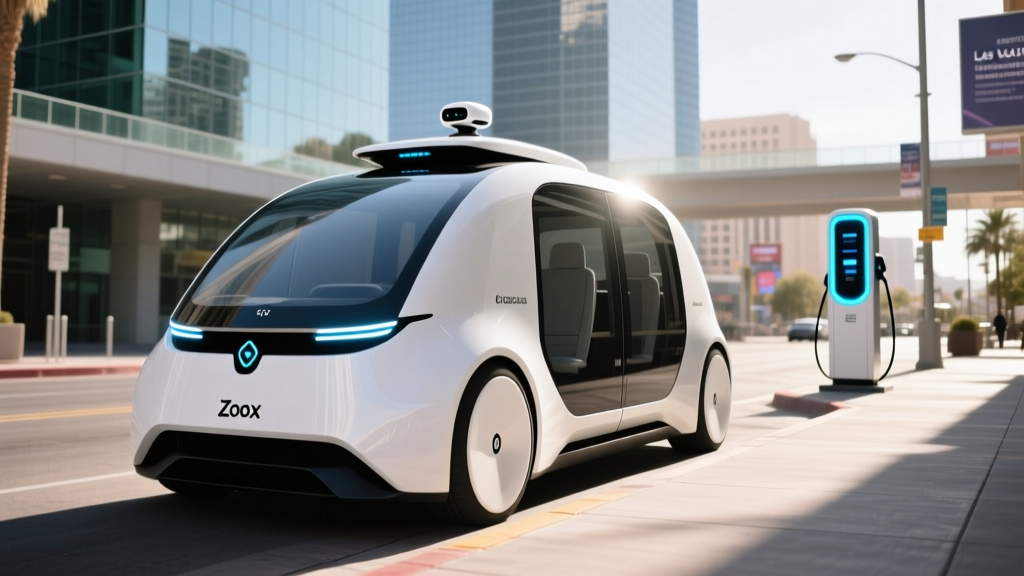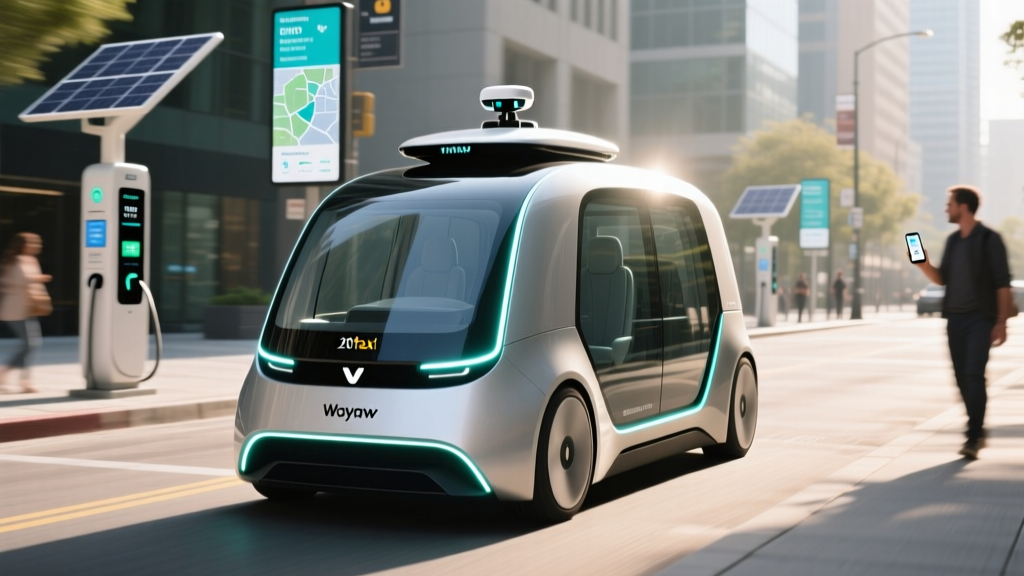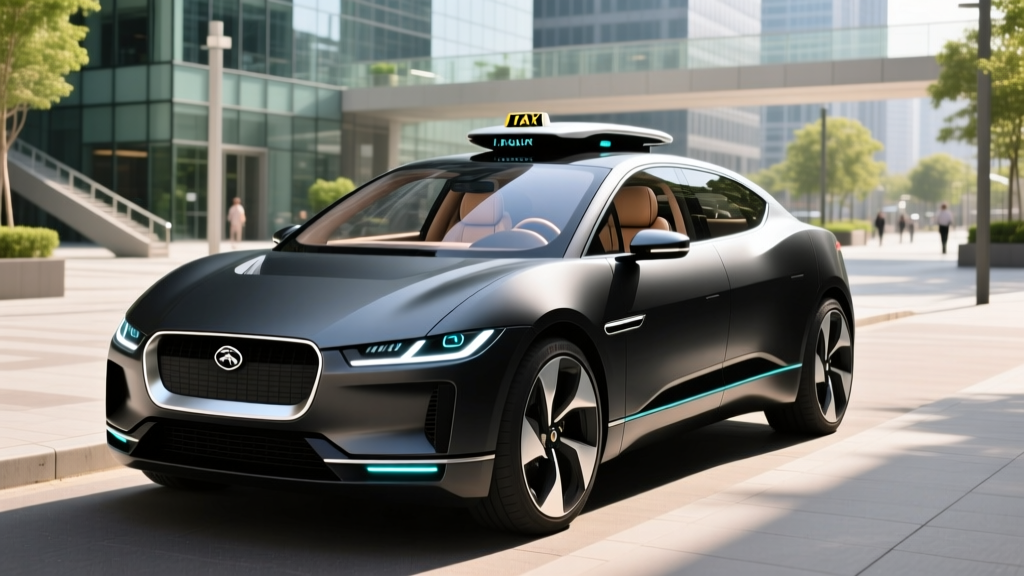
If you have spent any time browsing autonomous vehicle forums or social media, you may have encountered the oddly affectionate term driverless car pug. It refers to the Waymo One robotaxi fleet — specifically the Jaguar I-PACE vehicles retrofitted with Waymo's fifth-generation (and now sixth-generation) sensor suite. The nickname comes from the I-PACE's distinctive blunt, rounded front fascia and the dense cluster of lidar domes and cameras perched on its roof, which together give the car an unmistakably pug-like profile. Beneath that quirky exterior sits one of the most mature commercial autonomous driving platforms operating on public roads today.
This guide breaks down exactly what the Waymo Jaguar I-PACE robotaxi is, where it operates, what it costs, how safe it has proven to be, and — critically — what it still cannot do.
SAE Automation Level: Why This Is True Self-Driving
Before examining the hardware, it is essential to place the Waymo robotaxi on the SAE International automation scale. Consumer vehicles like Tesla's FSD (Supervised), GM's Super Cruise, and Ford's BlueCruise are all SAE Level 2 systems — meaning the human driver must remain engaged and supervise at all times. Waymo One is fundamentally different.
Waymo's robotaxi operates at SAE Level 4 within its approved Operational Design Domain (ODD). There is no human driver in the vehicle. No steering wheel interaction, no pedal input, no supervision required from the rider. The system handles all driving tasks within its geofenced service area. If the vehicle encounters a scenario it cannot handle, it executes a Minimal Risk Condition (MRC) — typically a controlled pull-over — rather than handing control to a passenger. This is categorically different from Level 2 driver-assist systems sold to consumers.
| Level | Name | Who Drives | Example |
|---|---|---|---|
| 0 | No Automation | Human | Legacy vehicles |
| 1 | Driver Assistance | Human (system assists steering OR speed) | Adaptive cruise control |
| 2 | Partial Automation | Human (system assists steering AND speed) | Tesla Autopilot, GM Super Cruise, Ford BlueCruise |
| 3 | Conditional Automation | System (human must take over on request) | Mercedes Drive Pilot (limited markets/conditions) |
| 4 | High Automation | System (within geofenced ODD, no human needed) | Waymo One, Zoox |
| 5 | Full Automation | System (everywhere, all conditions) | Does not exist commercially |
Where Can You Ride the Pug-Nosed Robotaxi Right Now?
As of early 2026, Waymo One operates fully driverless commercial service in a defined set of metro areas. Expansion has been methodical rather than rapid — Waymo maps and validates each zone before opening it to riders.
| City / Region | Status | Service Area Notes |
|---|---|---|
| Phoenix Metro, AZ | Fully operational (driverless) | Largest coverage area: ~600+ sq mi spanning Chandler, Tempe, Mesa, Scottsdale, Gilbert, and parts of downtown Phoenix. Airport service to PHX active. |
| San Francisco, CA | Fully operational (driverless) | City-wide coverage including dense downtown corridors. 24/7 service. |
| Los Angeles, CA | Fully operational (driverless) | Expanded across central LA, Hollywood, Westside, and parts of the Valley. |
| Austin, TX | Operational (driverless, expanding) | Initial commercial service launched covering central and south Austin, with ongoing geofence expansion. |
| Atlanta, GA | Announced / early launch phase | Partnership with Uber; phased rollout expected through 2026. |
Outside these geofenced zones, the Waymo vehicle will not operate autonomously. If you request a ride with a destination beyond the approved ODD, the app will either reroute you or inform you that the trip is unavailable.
The Jaguar I-PACE Platform: EV Specs Behind the Robotaxi
Waymo selected the Jaguar I-PACE as its primary fleet vehicle for good engineering reasons: a flat skateboard chassis, responsive electric powertrain, and drive-by-wire compatibility that integrates cleanly with Waymo's autonomous control stack. Here is what the base vehicle brings to the table.
| Attribute | Specification |
|---|---|
| Battery Capacity | 90 kWh (usable ~84 kWh), NMC chemistry |
| EPA Range | 246 miles (expect ~190–210 mi in stop-and-go robotaxi duty with HVAC and sensor load) |
| Powertrain | Dual-motor AWD, 394 hp, 512 lb-ft torque |
| 0–60 mph | 4.5 seconds |
| Max DC Fast Charge | 100 kW (CCS1) — 10–80% in ~40 min |
| Level 2 AC Charge | 11 kW onboard charger |
| Efficiency | 76 MPGe combined (EPA) |
The I-PACE's 100 kW peak DC charge rate is modest by 2026 passenger-EV standards, but for a fleet vehicle that returns to a depot for overnight Level 2 charging and mid-day top-ups, this is a manageable operational constraint rather than a consumer-facing drawback.
Sensor and Technology Stack: How the Pug Sees the World
- Lidar: Multiple custom-built 360° lidar units providing high-resolution point clouds up to 500+ meters, with improved near-field resolution over the Gen 5 system.
- Cameras: A surround array of high-dynamic-range cameras covering 360° vision, optimized for traffic-light detection, signage recognition, and pedestrian intent classification.
- Radar: Imaging radar units for velocity detection of moving objects, redundancy in low-visibility conditions, and close-range object tracking.
- External Audio Sensors: Microphone arrays capable of detecting emergency vehicle sirens from multiple directions.
- Compute: Custom Waymo-designed perception and planning computers mounted in the vehicle, processing terabytes of sensor data per hour in real time.
- HD Maps + Geofencing: Centimeter-precision pre-mapped routes within the ODD, continuously updated. The vehicle will not operate outside its validated map boundary.
This is a multi-modal sensor fusion approach — fundamentally different from Tesla's camera-only (Tesla Vision) strategy. Waymo's stack assumes that lidar, radar, and cameras each cover the others' blind spots, providing layered redundancy.
The roof-mounted lidar array and camera housing are what give the I-PACE its signature "pug" silhouette — a raised, slightly domed roof rack that looks like the car is wearing a tight-fitting helmet. It is functional, not aesthetic, and it is why the nickname has stuck in EV and AV enthusiast communities.
How to Use Waymo One and What It Costs vs. Uber/Lyft
Riding in a Waymo robotaxi is designed to feel like a standard rideshare experience, minus the driver.
- Download the Waymo One app (iOS/Android) and create an account.
- Set your pickup and drop-off within the service area. The app confirms availability in real time.
- Wait for the vehicle. ETA is displayed; the car arrives autonomously at your curb.
- Unlock via app. Tap "Start Ride" in the app or use the rear-door handle button. The interior screens confirm your trip.
- Ride. In-car screens show the route, current speed, and detected objects. You can adjust music and climate. There is no driver to talk to.
- Arrive and exit. The vehicle stops, doors unlock, and you leave. Payment is automatic.
| Scenario | Waymo One | UberX | Lyft |
|---|---|---|---|
| Short trip (~3 mi, city center) | $8–$12 | $9–$14 | $9–$13 |
| Medium trip (~8 mi, mixed roads) | $16–$24 | $17–$28 | $16–$26 |
| Airport run (~15 mi, PHX or SFO) | $28–$40 | $30–$50 | $28–$48 |
| Surge/Peak pricing | Less volatile — Waymo uses more predictable pricing models | Can spike 1.5x–3x | Can spike 1.5x–3x |
Waymo's pricing is generally competitive with or slightly below standard UberX/Lyft fares, and notably more stable during high-demand periods since there is no human-driver supply constraint in the same way. However, Waymo does apply dynamic pricing during peak hours — just with a narrower band. Promo codes and Waymo One membership plans can reduce per-ride costs further.
Safety Record: What the Data Actually Shows
Autonomous vehicle safety is the most scrutinized — and most misrepresented — topic in the industry. Let us look at concrete figures rather than marketing claims.
- 30+ million fully driverless miles completed across all Waymo One service areas.
- Fatalities: Zero pedestrian or cyclist fatalities attributed to a Waymo vehicle operating in autonomous mode as of this writing.
- Injury-rate comparison: Waymo's NHTSA-reported crash data shows a significantly lower rate of injury-involved crashes per million miles compared to the human-driver baseline published by the NHTSA (~1.5 injury crashes per million miles for human drivers nationally).
- Contact-rate data: Waymo has published peer-reviewed analyses showing a ~76% reduction in injury-causing crash rates and an ~85% reduction in police-reported crash rates compared to human benchmarks in comparable operating environments.
- NHTSA Standing General Order: All Level 4 operators must report crashes involving ADS-equipped vehicles. Waymo's filings are publicly searchable and reflect minor low-speed contacts (e.g., being rear-ended at stoplights by human-driven vehicles) as the most common incident type.
Sources: NHTSA Standing General Order, Waymo Safety Reports, IIHS Autonomous Vehicle Research.
The critical context: the vast majority of incidents involving Waymo vehicles are caused by other human-driven vehicles — rear-end collisions, red-light runners, and distracted drivers striking the robotaxi. This is consistent with broader traffic safety data. The robotaxi is not immune to being hit; it is designed to reduce its own contribution to crash causation.
Regulatory Landscape: Who Approves Robotaxi Operations?
Robotaxi deployment in the United States is governed by a patchwork of state and local authorities — there is no single federal "robotaxi license."
- California (CPUC + DMV): The California Public Utilities Commission issues permits for commercial passenger service (driverless deployment permits). The CA DMV separately issues autonomous vehicle testing and deployment permits. Waymo holds both.
- Arizona: Arizona has taken a permissive regulatory stance since 2015, with the Arizona Department of Transportation overseeing AV operations. No special state-level passenger-service permit is required beyond standard business and insurance compliance.
- Texas: The Texas Department of Transportation and the Texas Department of Licensing and Regulation oversee AV operations. Austin has become a key expansion market.
- Federal (NHTSA): NHTSA does not currently "approve" or "certify" autonomous driving systems. It enforces the Standing General Order requiring crash reporting and retains recall authority over ADS software defects. The NHTSA AV safety framework continues to evolve.
Insurance requirements for commercial robotaxi operators typically exceed standard rideshare minimums, with Waymo carrying commercial liability policies well above state minimums in each operating jurisdiction.
Current Limitations: What the Driverless Pug Cannot Do
- Geofencing: The vehicle will not operate outside its pre-mapped, validated service area. Trips cannot cross ODD boundaries.
- Severe weather: Heavy rain, dense fog, snow, and ice degrade lidar and camera performance. Waymo may suspend service during extreme weather events. Phoenix and LA are chosen partly for their favorable weather; this remains a major barrier to expansion into northern and midwestern cities.
- Construction zones: Rapidly changing lane configurations, temporary signage, and flagger-directed traffic remain challenging edge cases. The vehicle may reroute or execute a safe stop rather than navigate an unfamiliar construction setup.
- Unprotected left turns (complex intersections): While improving with each software generation, multi-lane unprotected left turns with heavy oncoming traffic can result in conservative behavior — extended waits or rerouting.
- No highway-only long-distance trips: Waymo's ODD is urban/suburban. You cannot hail a robotaxi for a 200-mile intercity highway trip.
- Accessibility: Current I-PACE vehicles require riders to enter and exit independently. Wheelchair-accessible vehicle options are limited, though Waymo has announced partnerships for accessible fleet vehicles (Zeekr-based) in future deployment phases.
- No stops en route: You cannot ask the vehicle to make an unscheduled stop at a convenience store or add a mid-trip waypoint.
- Pets and minors: Unaccompanied minors are not permitted. Pet policies vary by market.
These limitations are not unique to Waymo — they apply broadly to all current Level 4 operators, including Zoox and Cruise (now under GM's restructured AV division). The gap between Level 4 geofenced autonomy and Level 5 "drive anywhere, any conditions" autonomy remains enormous, and credible industry timelines for Level 5 are measured in decades, not years.
Is the Driverless Car Pug Right for You? A Practical Decision Framework
Choose Waymo One if:
- You live in or frequently visit Phoenix, San Francisco, Los Angeles, or Austin.
- You want a genuinely driverless experience — no steering wheel, no human behind the wheel.
- You value predictable pricing over surge-heavy rideshare rates.
- Your trips are within the geofenced urban/suburban service area.
- You are comfortable with the current limitations (no en-route stops, weather suspensions).
Stick with Uber/Lyft (or your own EV) if:
- You need to travel outside the robotaxi geofence, including intercity or highway trips.
- You require wheelchair accessibility or need to transport unaccompanied minors.
- You frequently travel in heavy rain, snow, or fog conditions.
- You want the flexibility to make mid-trip stops or change destinations on the fly.
Frequently Asked Questions
Is Waymo's robotaxi truly self-driving, or is there a remote human driver?
There is no human driver in the vehicle — no one behind the wheel, no remote teleoperator controlling the car in real time. Waymo's remote assistance team can provide high-level guidance (e.g., confirming a route around an obstacle) but does not steer, accelerate, or brake the vehicle. This is SAE Level 4 autonomy within the geofenced ODD.
How much does a Waymo ride cost compared to Uber?
Waymo One fares are generally competitive with UberX, typically within $1–$3 of comparable rideshare fares for the same route. Waymo's pricing tends to be more stable during peak demand, with less aggressive surge multipliers. A 5-mile urban trip typically costs $12–$18.
Has a Waymo robotaxi ever been in a serious crash?
Waymo vehicles have been involved in minor incidents — most commonly being rear-ended by human drivers at low speeds. As of early 2026, Waymo has reported zero pedestrian or cyclist fatalities in autonomous mode across 30+ million driverless miles. All reportable incidents are filed with NHTSA under the Standing General Order and are publicly accessible.
Why is it called the "driverless car pug"?
The nickname is an internet-originated term referring to the Jaguar I-PACE's blunt, rounded front-end design combined with the prominent roof-mounted lidar and camera housing. Together, the vehicle's profile resembles a pug's flat-faced, wide-eyed expression. The term is informal and not used by Waymo or Jaguar.
Can I buy a Jaguar I-PACE with Waymo's self-driving system?
No. Waymo's autonomous driving system (the Waymo Driver) is not available for consumer purchase. It is exclusively deployed in Waymo's commercial fleet. The consumer Jaguar I-PACE comes with standard Level 2 ADAS features but nothing approaching the robotaxi's Level 4 capability. If you want a consumer EV with advanced driver-assist, options like Tesla's FSD (Supervised), GM's Super Cruise, and Ford's BlueCruise are Level 2 systems that still require your full attention.
What happens if the Waymo vehicle encounters a situation it cannot handle?
The vehicle executes what Waymo calls a Minimal Risk Condition (MRC). This typically means the car will safely pull over to the side of the road, activate hazard lights, and contact remote assistance for guidance. It will not hand control to the passenger — because there is no expectation that the passenger can drive.
The "driverless car pug" — Waymo's sensor-laden Jaguar I-PACE — represents the most commercially mature Level 4 robotaxi platform available to riders today. It is not perfect, it is not everywhere, and it is not Level 5. But for riders within its geofenced service areas, it offers a concrete, data-backed, and increasingly routine glimpse of what autonomous urban mobility looks like when the driver is genuinely removed from the equation.