If you've ever opened the Waymo One app and wondered how the pricing actually works, you're not alone. Unlike traditional rideshare platforms where surge pricing can double your fare during rush hour, Waymo's pricing model operates differently — and understanding it is key to deciding whether a robotaxi makes sense for your daily commute or airport run.
This guide breaks down exactly how Waymo charges riders in 2026, where the service operates, what it costs compared to Uber and Lyft, the real safety data behind the wheel-less rides, and the hard limitations that still constrain Level 4 autonomous driving.
How Does Waymo Charge Riders? The Pricing Model Explained
Waymo One operates on a per-ride pricing model that calculates your fare based on three primary factors:
- Distance: The miles traveled from pickup to dropoff
- Time: The estimated duration of the trip (factoring in traffic conditions)
- Demand: A dynamic pricing component that adjusts based on fleet availability and ride requests in your area
Unlike Uber and Lyft, Waymo does not charge a separate booking fee or service fee as a line item — the quoted price you see in the app is the price you pay. There's no tipping (there's no driver), and the fare is locked in when you confirm the ride, barring significant route deviations.
Payment is handled entirely through the Waymo One app via credit/debit card, Google Pay, or linked payment methods. You can also purchase ride credits or use promotional codes that Waymo periodically offers in specific markets.
Waymo Pricing vs Uber and Lyft: Side-by-Side Comparison
The most common question from potential robotaxi riders: is Waymo actually cheaper than calling an Uber? The answer depends on your city, time of day, and trip length. Based on rider reports and aggregated fare data from major Waymo markets in early 2026, here's how the costs typically compare:
| Trip Type | Waymo One | UberX | Lyft Standard |
|---|---|---|---|
| Short trip (~3 miles, city center) | $8–$13 | $9–$16 | $9–$15 |
| Medium trip (~8 miles, cross-town) | $16–$25 | $18–$32 | $17–$30 |
| Airport run (~15 miles) | $28–$42 | $32–$55 | $30–$50 |
| Surge/rush hour multiplier | ~1.0–1.3x | ~1.5–3.0x | ~1.4–2.8x |
| Tipping expected? | No | Yes (15–20%) | Yes (15–20%) |
| Booking/service fee | Included in fare | $2–$4 added | $2–$3 added |
Key takeaway: On base fares, Waymo is generally competitive with — and often slightly cheaper than — Uber and Lyft, especially during peak demand periods when rideshare surge pricing kicks in. Waymo's dynamic pricing adjustments are far more muted than traditional surge multipliers. On a Friday night bar-hop or a Monday morning airport dash, Waymo can be significantly cheaper. During off-peak midday hours, the difference narrows or Waymo may cost slightly more on certain routes.
One hidden cost advantage: no tipping. A 20% tip on a $25 UberX ride adds $5. With Waymo, that $5 stays in your pocket every single ride.
Where Can You Use Waymo One Right Now?
Waymo's service area has expanded steadily, but it remains geofenced to specific metro areas where the company has mapped roads extensively and received regulatory approval. As of early 2026, here are the confirmed operational markets:
| City / Region | Status | Service Area Notes |
|---|---|---|
| Phoenix, AZ (Metro) | Fully open — no waitlist | Chandler, Tempe, Mesa, Scottsdale, Sky Harbor Airport. Largest and longest-running market (~300+ sq mi) |
| San Francisco, CA | Fully open — no waitlist | Most of SF proper including downtown, SOMA, Mission, Sunset. Airport (SFO) service available |
| Los Angeles, CA | Open — expanding zones | Santa Monica, Hollywood, Downtown LA, West Hollywood, LAX airport service. Coverage expanding |
| Austin, TX | Open — limited zones | Downtown, South Austin, select corridors. Expanding through 2026 |
| Mountain View / Palo Alto, CA | Limited / employee + invited riders | Testing zone around Waymo HQ; not fully public |
Important: Waymo service areas are geofenced — the vehicle will not drive outside its approved operational design domain (ODD). If you request a ride that crosses outside the mapped boundary, the app will inform you the destination is unavailable. You cannot hail a Waymo in a suburb 20 miles outside the service zone.
Waymo has announced intentions to expand to additional cities, but announced expansion is not live service. Always check the Waymo One page for current availability before planning a trip around the service.
SAE Automation Level: Is Waymo Truly Self-Driving?
This is where precision matters. Consumer vehicles with features like Tesla's FSD (Supervised), GM's Super Cruise, or Ford's BlueCruise are SAE Level 2 driver-assistance systems. The human driver must remain attentive, hands ready, and is legally responsible for the vehicle at all times.
| Level | Who Drives | Example |
|---|---|---|
| Level 0 | Human (no automation) | Basic car with no assist features |
| Level 1 | Human (one assist feature) | Adaptive cruise control OR lane-keeping |
| Level 2 | Human (must supervise) | Tesla FSD Supervised, Super Cruise, BlueCruise |
| Level 3 | System (human on standby) | Mercedes Drive Pilot (limited conditions, specific markets) |
| Level 4 | System (no human needed, geofenced) | Waymo One, Zoox |
| Level 5 | System (anywhere, any condition) | Does not yet exist in production |
Waymo is Level 4, not Level 5. It cannot drive everywhere in all conditions — it operates within mapped, approved zones under conditions its system can handle. That distinction is critical for setting realistic expectations.
Waymo's Safety Record: What the Data Shows
Safety is the single biggest question for first-time robotaxi riders. Waymo has published safety data and has been involved in incidents that are part of the public record. Here's what we know from available data:
- Cumulative fully autonomous miles driven: Over 30 million driverless miles (as reported by Waymo in late 2025)
- Police-contactable crash rate: Waymo's published data shows a rate approximately 57% lower than human benchmark data for police-reported crashes per million miles, based on Waymo's safety reports
- Injury-causing crash rate: Reported at roughly 85% lower than human benchmarks in Waymo's peer-reviewed analysis
- Notable incidents: Waymo vehicles have been involved in low-speed contact incidents (often other drivers striking the Waymo vehicle, e.g., rear-ends at stoplights). A small number of incidents involved the Waymo vehicle making contact — these are investigated by NHTSA and state regulators
- Recalls: Waymo has issued voluntary software recalls (OTA updates) when incident patterns warranted — a standard practice for autonomous systems
Context that matters: Waymo vehicles are rear-ended at a higher rate than human drivers in some datasets because they obey speed limits strictly, stop fully at stop signs, and sometimes brake more conservatively than the human drivers behind them expect. This doesn't reflect a system failure — it reflects a system that follows traffic laws more precisely than many human drivers do.
For comparison, the NHTSA FARS database records approximately 1.35 fatalities per 100 million vehicle miles traveled across all US drivers. Waymo has not reported a fatality involving a pedestrian or passenger in its driverless commercial service as of early 2026.
The Technology Stack: Lidar, Cameras, and Geofencing
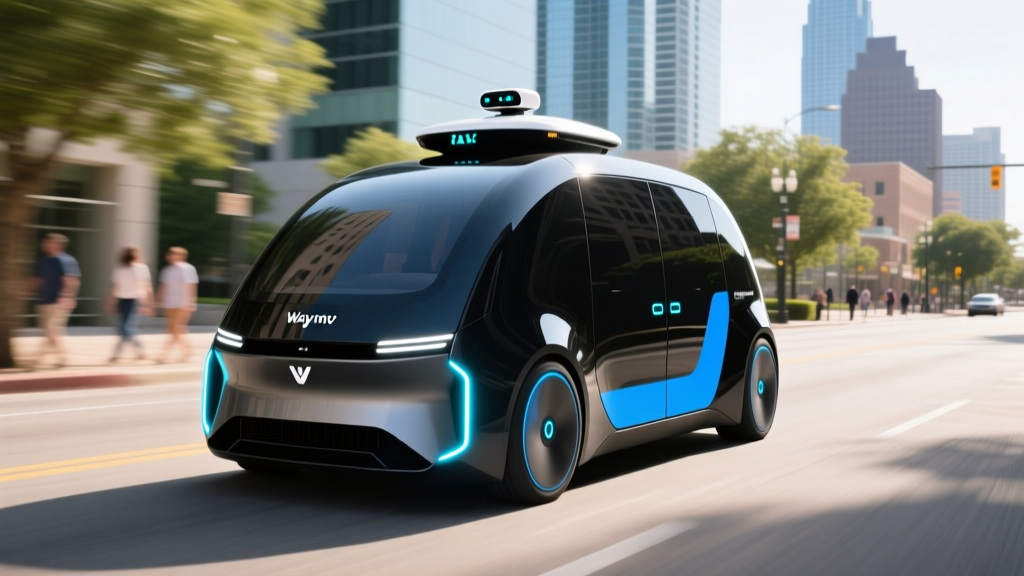
Waymo's approach to autonomy differs fundamentally from camera-only systems (most notably Tesla's vision-based FSD). The Waymo Driver — the integrated hardware/software platform — relies on a redundant sensor suite:
- Lidar: Waymo's custom-built, roof-mounted lidar units generate a real-time 3D point cloud of the vehicle's surroundings, accurate to centimeter-level resolution at ranges exceeding 200 meters. Lidar works independently of ambient light, giving Waymo strong night and low-visibility performance
- Cameras: A multi-camera array (wide-angle, telephoto) provides color and texture information — reading traffic lights, recognizing signage, detecting brake lights on vehicles ahead
- Radar: Millimeter-wave radar provides velocity data on moving objects and performs well in rain and fog where lidar can degrade
- HD Maps: Waymo pre-maps every inch of its service area at centimeter-level detail. The vehicle localizes itself against this map in real time, providing a layer of redundancy beyond what sensors see in the moment
- Geofencing (ODD): The system will only operate within its approved Operational Design Domain. It knows the exact boundaries of where it is permitted and capable of driving
This sensor-redundant, map-dependent approach trades the theoretical universality of a vision-only system for higher reliability within known environments. It's why Waymo can operate without a driver but cannot yet drive in any city without months of prior mapping and testing.
Current Limitations: What Waymo Cannot Do
Level 4 autonomy is impressive, but it comes with hard constraints that every rider should understand before relying on the service:
- Geofence boundaries: You cannot ride outside the approved service area. Suburban or rural destinations beyond the map are simply unavailable
- Heavy weather: Waymo vehicles may pull over or refuse to dispatch during heavy rain, dense fog, or flooding that exceeds sensor capability. Phoenix's dry climate is ideal; San Francisco fog and LA rain can trigger service interruptions
- Construction zones: Major, unmapped road construction can confuse the system. Waymo may route around construction or, in some cases, the ride may be canceled if the only route passes through an unmanageable zone
- Unprotected complex intersections: While Waymo handles most unprotected left turns, extremely complex multi-lane intersections with irregular signal patterns may cause the vehicle to pause and wait for a larger gap, adding time to your trip
- No highway driving in all markets: Waymo has been testing freeway operations (notably in Phoenix), but highway-capable service is not universal across all cities and may be limited to specific corridors
- Accessibility: Waymo's current fleet (primarily Jaguar I-PACE vehicles) requires passengers to enter and exit the vehicle independently. Wheelchair-accessible vehicles are in pilot phases but not broadly available
- No food or drink stops: Unlike Uber, you cannot ask the car to stop at a drive-through or wait for you while you run an errand. The ride is point A to point B
- Age restrictions: Unaccompanied minors generally cannot ride. Waymo's terms require riders to be 18+ (or accompanied by an adult, depending on market rules)
Regulatory Landscape: Who Approves Robotaxi Operations?
Waymo does not simply launch in a city because it wants to. Each market requires regulatory approval at multiple levels:
- State level: In California, the California Public Utilities Commission (CPUC) issues permits for commercial robotaxi service. The California DMV separately issues testing and deployment permits. In Arizona, the state has taken a permissive approach with executive orders enabling autonomous vehicle testing and operation with fewer restrictions
- City/municipal level: Local governments negotiate operating agreements covering pickup/dropoff zones, fleet size, data sharing, and equity requirements. San Francisco's expansion was contentious, involving public hearings and objections from the fire department and transit agency before approval
- Federal level: NHTSA oversees vehicle safety standards. Waymo's Jaguar I-PACE vehicles are built to standard FMVSS requirements. NHTSA also has standing General Orders requiring crash reporting from automated driving systems
This multi-layered regulatory environment means expansion is slow by design. Each new city requires mapping, testing, regulatory negotiation, and public comment periods — often taking 12–24 months before commercial rides begin.
Frequently Asked Questions
How does Waymo charge my payment method?
Waymo charges the payment method linked to your Waymo One account (credit card, debit card, or Google Pay) after the ride is completed. The fare shown before confirmation is the fare you pay — no post-ride surge adjustments. You'll receive a receipt via email and in the app.
Is Waymo cheaper than Uber at night or during surge?
Generally, yes. Waymo's dynamic pricing adjustments are far less aggressive than Uber/Lyft surge multipliers. During peak demand (Friday nights, events, airport rush hours), Waymo can be 20–40% cheaper than a surged UberX or Lyft ride, primarily because there's no driver-side surge incentive needed.
Can I schedule a Waymo ride in advance?
Waymo One has introduced scheduled ride features in select markets, but availability varies. In most cases, you request a ride on-demand and are matched with the nearest available vehicle. Wait times typically range from 2–8 minutes in well-covered areas.
What happens if the Waymo vehicle encounters a problem mid-ride?
The vehicle is monitored by Waymo's remote assistance team (called "fleet response"). If the system encounters an ambiguous situation — a blocked road, an unusual construction pattern — it can request remote guidance. If the vehicle must stop, it pulls to a safe location. In-app support and a help button connect you to a live agent who can dispatch assistance or issue a refund.
Does Waymo work in the rain?
Light rain: generally yes, with no service disruption. Heavy rain or flooding: Waymo may slow operations, reroute, or temporarily suspend service in affected zones. The lidar and camera systems degrade in heavy precipitation, and Waymo takes a conservative approach rather than risking reduced sensor performance.
Is Waymo a Level 5 fully autonomous vehicle?
No. Waymo is SAE Level 4, meaning it drives without a human within its geofenced service area under conditions it's designed to handle. Level 5 — driving anywhere, in any condition, with no limitations — does not exist in production anywhere in the world as of 2026. Anyone claiming otherwise is overstating the current state of autonomous technology.