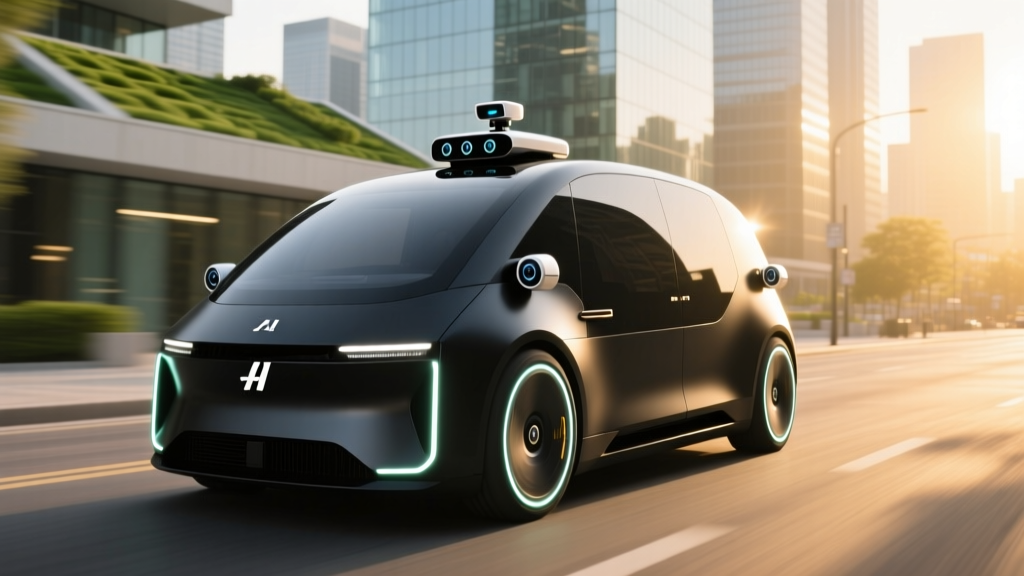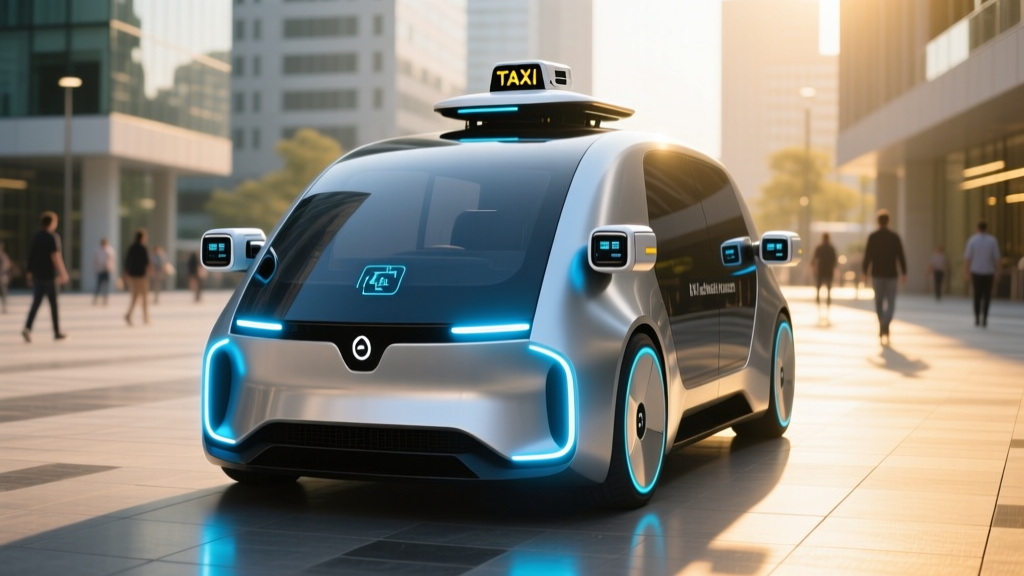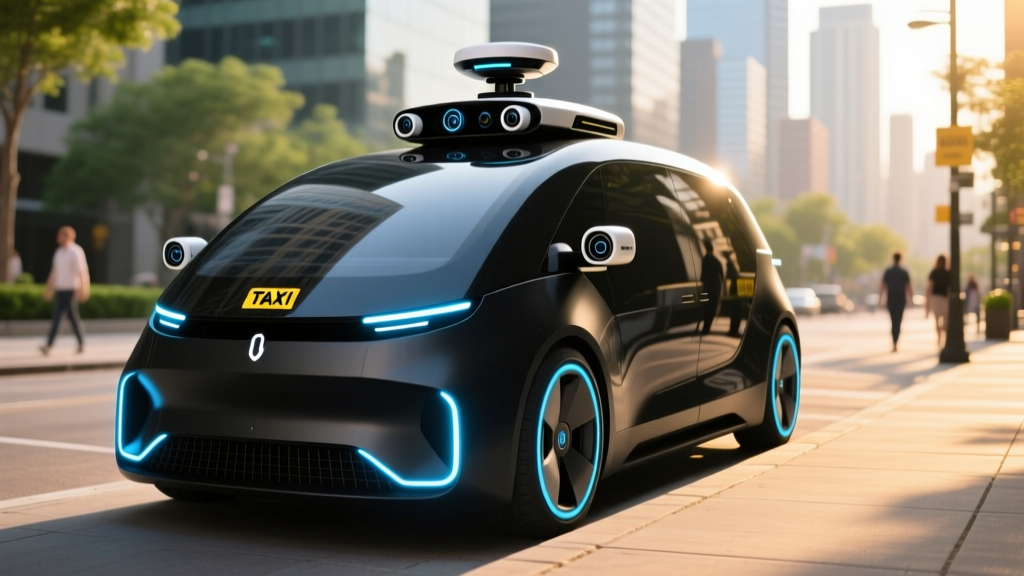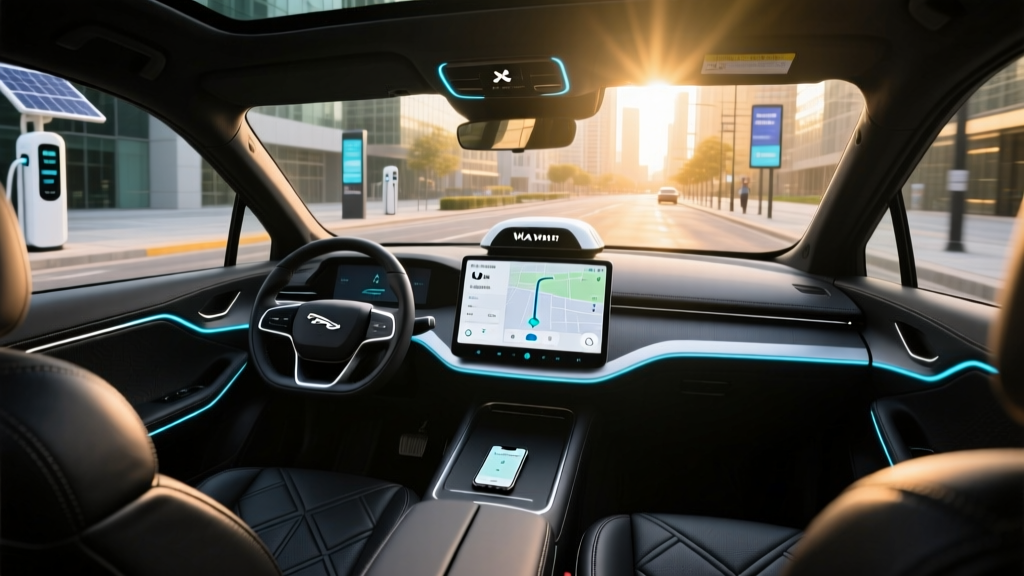
If you've seen a white Jaguar I-PACE cruising San Francisco or Phoenix with a bulky roof rack and spinning lidar pods, you've spotted the Waymo Jaguar car — the backbone of Waymo's commercial driverless fleet. Unlike the driver-assist systems you might use on your own EV, this vehicle has no one behind the wheel. It operates as a true SAE Level 4 robotaxi, navigating city streets, handling unprotected left turns, and pulling up to your curb without a human in the loop.
But what exactly is the Waymo Jaguar car capable of in 2026? Where can you actually hail one, how much does a ride cost, and what does the safety data really show? This guide breaks down the vehicle, the technology, the service, and the hard limitations you should understand before you book your first driverless ride.
What the Waymo Jaguar Car Actually Is
The vehicle in question is a Jaguar I-PACE — an all-electric luxury crossover — modified by Waymo with its proprietary 5th-generation "Waymo Driver" hardware suite. Jaguar Land Rover manufactures the base I-PACE at its Magna Steyr plant in Austria and delivers the vehicles to Waymo with pre-installed wiring harnesses and mounting points for the sensor array. Waymo then integrates its custom compute platform, sensor suite, and software stack.
The base Jaguar I-PACE provides a solid EV platform for robotaxi duty:
- Battery: 90 kWh usable (NMC chemistry)
- EPA range: 246 miles (real-world city driving with sensor load draws additional power, reducing effective range to roughly 200–220 miles before needing to return for charging)
- Charging: DC fast charge up to 100 kW peak (10–80% in approximately 45 minutes)
- Power: 394 hp, dual-motor AWD, 0–60 mph in 4.5 seconds
Waymo doesn't sell these vehicles. The fleet is owned and operated exclusively by Waymo for its commercial ride-hailing service, Waymo One. You cannot buy a Waymo-modified I-PACE for personal use.
SAE Level 4: True Driverless, Not Driver-Assist
SAE Level 4 — High Automation: The Waymo Jaguar car operates at SAE Level 4, meaning it performs all driving tasks within its defined operational design domain (ODD) — specific geofenced areas under specific conditions — with no human driver required. There is no steering wheel interaction, no "take over" request, and no driver monitoring camera watching for your attention.
This is fundamentally different from Level 2 systems like Tesla Autopilot, GM Super Cruise, or Ford BlueCruise, which require an attentive human driver ready to intervene at any moment. Waymo's Level 4 vehicle handles everything or, if it encounters a scenario it cannot manage, it executes a minimal risk maneuver (pulling over safely) without human input.
| Level | Name | Who Drives | Example |
|---|---|---|---|
| Level 0 | No Automation | Human | Basic car, no assist |
| Level 1 | Driver Assistance | Human | Adaptive cruise OR lane centering |
| Level 2 | Partial Automation | Human (monitored) | Autopilot, Super Cruise, BlueCruise |
| Level 3 | Conditional Automation | System (human on standby) | Mercedes Drive Pilot (limited markets) |
| Level 4 | High Automation | System (no human needed) | Waymo One, Zoox |
| Level 5 | Full Automation | System (everywhere, all conditions) | Does not exist commercially |
Where Can You Ride the Waymo Jaguar Car Right Now?
As of early 2026, Waymo One operates fully driverless commercial service in the following metro areas:
| City | Status | Service Area Notes |
|---|---|---|
| Phoenix, AZ | Fully driverless, open to public | Largest coverage area (~600+ sq mi including Chandler, Tempe, Mesa, Scottsdale, Sky Harbor Airport) |
| San Francisco, CA | Fully driverless, open to public | City-wide coverage including most neighborhoods; some highway segments enabled |
| Los Angeles, CA | Fully driverless, open to public | Expanded coverage across central LA, Hollywood, Santa Monica, Westside, Downtown |
| Austin, TX | Fully driverless, open to public | Central and south Austin coverage area, expanding |
Waymo has announced plans to expand to additional cities, but those services are not yet live. The operational design domain (ODD) in each city is geofenced — the car will only accept trips that start and end within its approved service area. If you try to book a ride outside the boundary, the app simply won't let you.
To use Waymo One, download the Waymo One app (iOS/Android), create an account, enter your pickup and drop-off locations, and confirm. The app shows an upfront price, estimated arrival time, and the vehicle's approach in real time. When the Jaguar I-PACE arrives, you unlock it through the app, and the ride begins with no one in the driver's seat.
Pricing: Waymo vs. Uber and Lyft
Waymo One uses upfront, fixed pricing — the price you see when you confirm is the price you pay, regardless of traffic delays. Surge pricing does not apply in the same dynamic way it does on Uber or Lyft, though Waymo adjusts pricing based on demand and time of day.
| Scenario | Waymo One | UberX | Lyft Standard |
|---|---|---|---|
| Short trip (3 mi, city) | $9–$14 | $8–$13 | $8–$12 |
| Medium trip (8 mi, city) | $16–$24 | $14–$22 | $13–$20 |
| Airport trip (15 mi) | $28–$40 | $25–$38 | $24–$35 |
| Surge/peak pricing | Moderate adjustment | Can 2–3x | Can 2–3x |
| Tip expected? | Optional (in-app) | Expected (15–20%) | Expected (15–20%) |
In practice, Waymo pricing is competitive with UberX and Lyft Standard on most routes — sometimes slightly higher, sometimes lower. The main financial advantage is predictability: no surge multipliers during bar close or airport rush, and no tip expectation (though the app offers an optional tip feature). For riders who take frequent short trips in covered areas, Waymo can be cost-comparable to or cheaper than traditional rideshare, especially during peak hours.
The Technology Stack: Lidar, Cameras, and Radar
The Waymo Jaguar car uses a fundamentally different sensor philosophy than camera-only systems like Tesla's FSD. Waymo's 5th-generation Waymo Driver suite relies on a redundant, multi-modal sensor array:
Waymo Driver 5th-Gen Sensor Suite:
- Lidar: Custom-built, roof-mounted 360° lidar providing high-resolution 3D point clouds up to 500+ meters. Lidar works independently of lighting conditions — critical for night driving and high-contrast scenarios.
- Cameras: 29 cameras around the vehicle providing 360° visual coverage at varying focal lengths (wide-angle for near-field, telephoto for distant object classification).
- Radar: 6 radar units for velocity detection, adverse weather penetration, and redundancy. Radar excels at measuring the speed of surrounding objects even in rain or fog.
- Audio detection: External microphones that detect emergency vehicle sirens and adjust behavior accordingly.
- Compute: Custom Waymo-designed compute platform in the trunk area, processing sensor fusion, perception, prediction, and planning in real time.
This sensor fusion approach means the Waymo Jaguar car doesn't rely on any single sensor modality. If heavy rain degrades camera visibility, lidar and radar maintain object detection. If a plastic bag blows across the road, the combined sensor data helps the system classify it as non-hazardous rather than slamming on the brakes — a common problem in early autonomous systems.
The vehicle operates within a geofenced, pre-mapped operational design domain. Waymo builds high-definition 3D maps of every street in its service area, including lane markings, curb heights, traffic signal positions, and speed limits. The car localizes itself within this map using lidar and GPS, then plans its route in real time while accounting for dynamic obstacles (pedestrians, cyclists, other vehicles, construction zones).
Safety Record: What the Data Actually Shows
Waymo Safety Data (through 2025, published by Waymo and independent researchers):
- Total autonomous miles driven: Over 50 million fully driverless miles across all operational cities.
- Injury-causing crash rate: A study published by the Insurance Institute for Highway Safety (IIHS) and corroborated by Waymo's own safety data found that Waymo vehicles were involved in injury-causing crashes at a rate approximately 85% lower than the human benchmark in comparable driving environments.
- Police-reportable crash rate: Approximately 57% lower than human drivers in the same geographies, per Waymo's published safety performance data.
- Contact rate: Most minor incidents involving Waymo vehicles have been low-speed, rear-end or side-swipe contacts caused by other human drivers striking the robotaxi — not the Waymo vehicle initiating contact.
Source: Waymo Safety Report, NHTSA AV Safety Data
It's important to contextualize these numbers. Waymo operates primarily in dense urban environments at moderate speeds (under 45 mph in most zones), which differs from highway driving where the majority of fatal crashes occur. The comparison is appropriate — Waymo's ODD matches the urban driving environments where it operates — but it's not a like-for-like comparison with all human driving, which includes rural highways and high-speed interstates.
NHTSA's Standing General Order requires all operators of automated driving systems to report crashes. Waymo has complied with these reporting requirements, and the data is publicly accessible through NHTSA's website. No Level 4 system is crash-free, but the available data suggests Waymo's fleet is involved in fewer at-fault incidents than human drivers in equivalent conditions.
Current Limitations: What the Waymo Jaguar Car Cannot Do
Level 4 autonomy is powerful within its domain, but that domain has hard edges. Here are the real, current limitations of the Waymo Jaguar car as of 2026:
- Geofenced areas only: The car will not drive outside its approved service boundary. You cannot take a Waymo from San Francisco to Sacramento.
- Heavy weather restrictions: In heavy rain, dense fog, or conditions that significantly degrade sensor performance, Waymo may limit or suspend service. The Jaguar I-PACE platform does not currently operate in snow or ice conditions — meaning no winter service in cities with significant snowfall.
- Highway limitations: While Waymo has enabled some highway segments (particularly in Phoenix and San Francisco), many highway routes remain outside the ODD. The system is optimized for surface streets.
- Construction zones: While the system handles many construction scenarios, complex or rapidly changing construction zones may cause the vehicle to pull over and request remote assistance from Waymo's fleet response team.
- Unmapped or recently changed roads: If a road has been significantly altered since Waymo's last HD map update, the vehicle may refuse to traverse it or take a more conservative route.
- No intercity trips: Every trip must begin and end within the geofenced service area.
- Limited passenger capacity: The I-PACE accommodates up to 3 passengers in the rear seat. No front-seat passenger (the driver's seat is empty but not available).
- Accessibility: The Jaguar I-PACE is not wheelchair-accessible. Waymo has acknowledged this gap and is working on accessible vehicle options, but as of 2026, riders must be able to enter a standard crossover SUV.
The Regulatory Landscape: Who Approves Robotaxi Operations?
Robotaxi operations in the United States are governed by a patchwork of state and local regulations — there is no single federal license for autonomous ride-hailing.
In California, the California Public Utilities Commission (CPUC) issues permits for autonomous vehicle passenger service, while the California Department of Motor Vehicles (DMV) issues testing and deployment permits. Waymo holds both. In Arizona, the regulatory environment is considerably more permissive — the state has allowed driverless commercial operations since 2018 with minimal restriction, which is why Phoenix was Waymo's first commercial market.
At the federal level, NHTSA sets vehicle safety standards and collects crash data through its Standing General Order, but it does not currently issue operational permits for robotaxi services. That authority remains with individual states. This patchwork means Waymo's expansion to new cities requires navigating each state's unique regulatory framework — a process that takes months to years, not weeks.
Frequently Asked Questions
Is the Waymo Jaguar car truly self-driving, or is there a remote human driver?
There is no human driver — not in the car, and not remotely "driving" the vehicle via teleoperation. Waymo's fleet response team can provide high-level guidance if the vehicle encounters an unusual scenario (e.g., confirming that a road is closed), but they do not steer, brake, or accelerate the vehicle. The car's onboard AI handles all real-time driving decisions.
Can I buy a Waymo Jaguar I-PACE for personal use?
No. Waymo's modified I-PACE vehicles are fleet-only and not available for consumer purchase. The sensor suite, compute platform, and software are proprietary to Waymo and not sold as aftermarket equipment. If you want a Jaguar I-PACE for personal use, you can buy a standard consumer model — but it will have no autonomous capability beyond standard Level 2 driver-assist features.
How does Waymo handle emergencies or accidents?
The vehicle is programmed to execute a minimal risk maneuver — typically pulling to the side of the road and stopping — if it encounters a situation it cannot safely handle. In the event of a collision, the vehicle automatically contacts Waymo's fleet response center, which can dispatch roadside assistance and communicate with emergency services. Passengers can also contact support through the in-app help feature or the in-vehicle speaker system at any time.
Does the Waymo Jaguar car work at night?
Yes. Waymo One operates 24/7 in Phoenix and San Francisco, and during extended hours in Los Angeles and Austin. The lidar sensor suite does not depend on visible light, so nighttime driving is a strength of the system compared to camera-only approaches. That said, Waymo may adjust routing or speed in poorly lit areas as a safety precaution.
What happens if the car's battery runs low during my ride?
Waymo's fleet management system monitors battery state of charge continuously and will not dispatch a vehicle with insufficient charge for the requested trip. Vehicles are rotated out of service for charging (typically at Waymo's dedicated depot chargers) well before they reach critically low battery levels. You will not be stranded by a depleted battery.
Is Waymo safer than Uber or Lyft with a human driver?
Based on published data from Waymo and independent analysis by IIHS, Waymo's driverless vehicles show lower rates of police-reportable crashes and injury-causing crashes compared to the human driving benchmark in the same urban environments. However, Waymo operates in geofenced urban areas at moderate speeds, which is a different risk profile than the full spectrum of rideshare driving (which includes highway driving, late-night impaired-passenger scenarios, and rural routes). The data is encouraging but context-dependent.