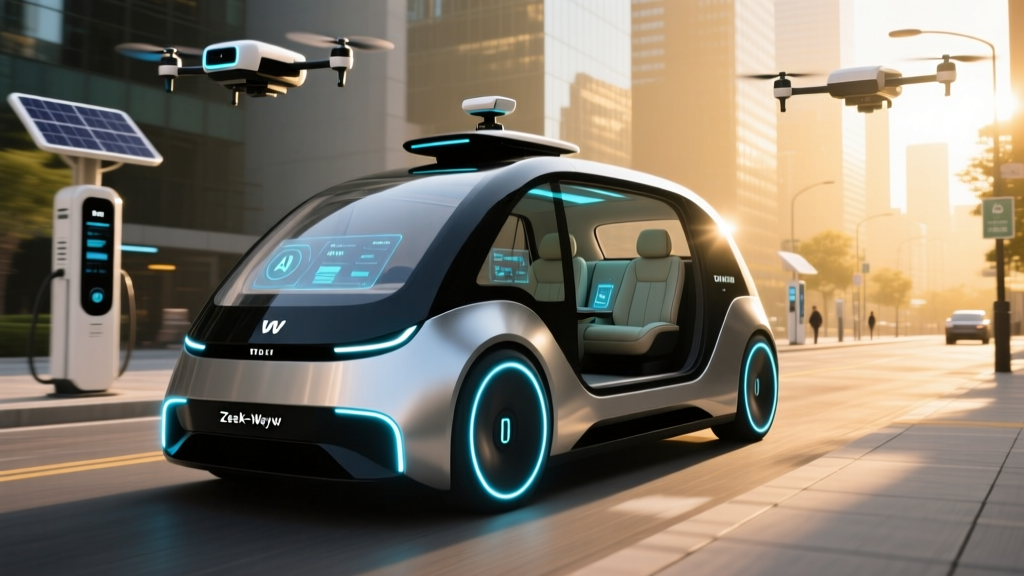
You've probably seen the videos: a steering wheel turning by itself, a car navigating a busy downtown intersection with no one in the driver's seat. These aren't prototypes anymore. Robotaxis — fully driverless ride-hail vehicles — are carrying paying passengers in multiple U.S. cities right now, and the robotics in autonomous vehicles that make them work represent one of the most complex engineering achievements in modern transportation.
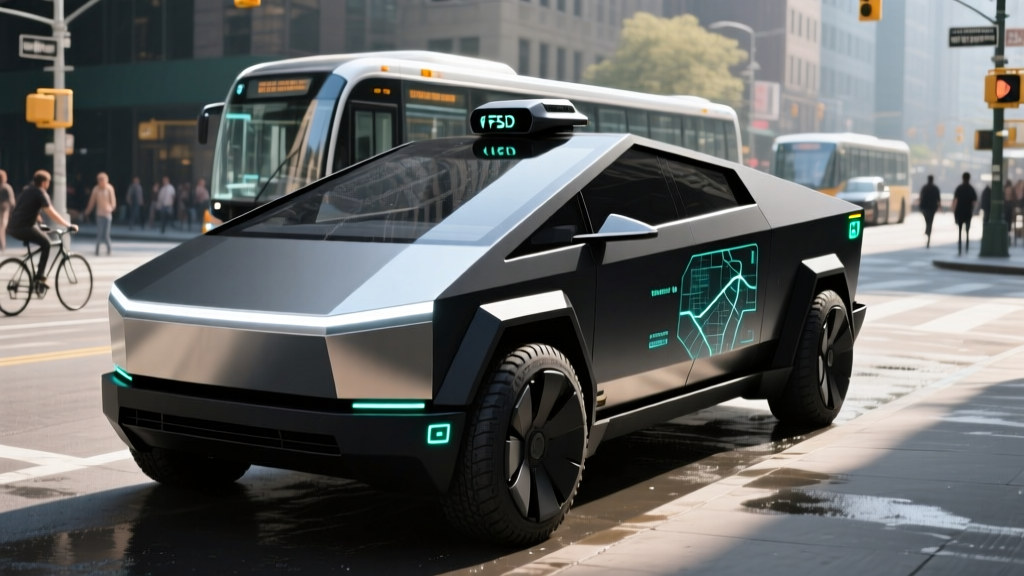
But "self-driving" means very different things depending on who's building it and where you're sitting. A Tesla running FSD (Supervised) requires your hands and attention at all times. A Waymo Jaguar I-PACE pulling up to a Phoenix curb has no driver — and no expectation that you'll intervene. Understanding the robotics, sensors, and software behind these systems is essential before you hail your first driverless ride or evaluate the industry's safety claims.
SAE Automation Levels: Why the Distinction Matters
The Society of Automotive Engineers (SAE) defines six levels of driving automation, from Level 0 (no automation) to Level 5 (full automation everywhere, in all conditions). The single most important line in this framework separates Level 2 from Level 4 — and confusing them is the most common mistake in EV and autonomous-vehicle coverage.
| Level | Name | Who Drives? | Example |
|---|---|---|---|
| 0 | No Automation | Human | Standard car |
| 1 | Driver Assistance | Human (system assists steering OR speed) | Adaptive cruise control |
| 2 | Partial Automation | Human (must supervise at all times) | Tesla Autopilot / FSD Supervised, GM Super Cruise, Ford BlueCruise |
| 3 | Conditional Automation | System (human must take over when requested) | Mercedes Drive Pilot (limited markets, low speed) |
| 4 | High Automation | System (within defined operational domain, no human needed) | Waymo, Zoox, Cruise robotaxis |
| 5 | Full Automation | System (everywhere, all conditions) | Does not yet exist |
Where Robotaxis Operate Right Now
Robotaxi services are geofenced — they operate within mapped, approved zones and will not accept a ride request that starts or ends outside those boundaries. Here is where you can actually hail a driverless ride as of early 2026:
| Operator | Vehicles | Live Cities (Paid Rides) | Hours | Notes |
|---|---|---|---|---|
| Waymo (Alphabet) | Jaguar I-PACE EV, Zeekr RT (expanding) | Phoenix (metro-wide), San Francisco, Los Angeles, Austin | 24/7 in Phoenix & SF | Largest U.S. fleet; ~100,000+ paid rides/week across markets |
| Cruise (GM) | Chevrolet Bolt EV, Origin (purpose-built) | Limited relaunch in Phoenix and Dallas; SF operations remain restricted | Limited hours | Resuming service gradually after 2023 safety incident and restructuring |
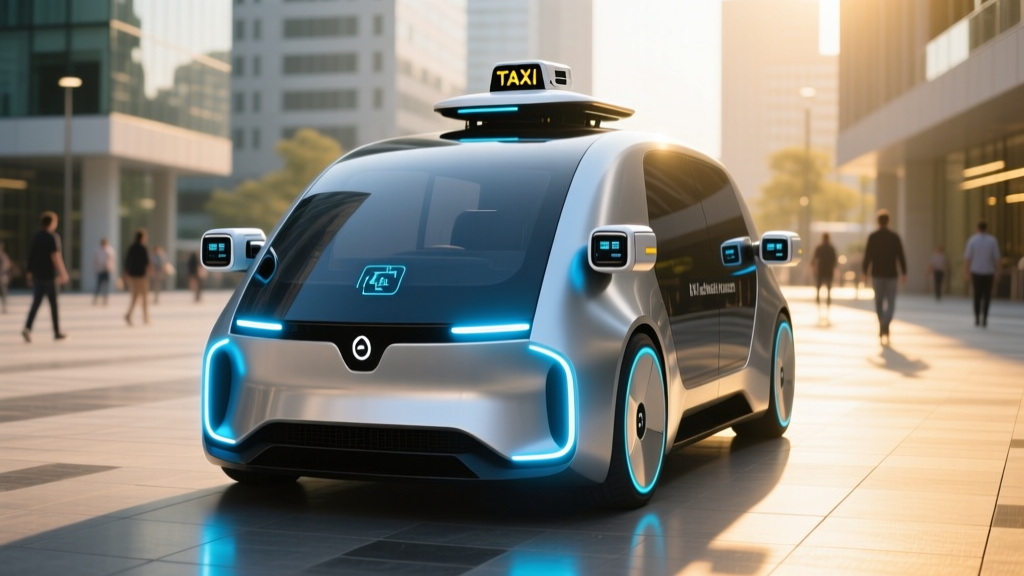
| Zoox (Amazon) | Zoox purpose-built carriage (no steering wheel) | Las Vegas (Strip corridor and surrounding areas), Foster City, CA (testing) | Limited hours | Unique bidirectional vehicle; riders face each other |
International operations exist but are outside the scope of this U.S.-focused guide. Notably, Baidu's Apollo Go operates at significant scale in Beijing, Wuhan, and other Chinese cities with thousands of vehicles.
The Technology Stack: Sensors, Computing, and Robotic Actuation
The phrase "robotics in autonomous vehicles" encompasses three interdependent subsystems: perception (sensing the environment), decision-making (planning a safe path), and actuation (physically steering, braking, and accelerating). Each requires purpose-built hardware and millions of lines of software.
Perception: Camera vs. Lidar vs. Radar
The sensor debate in autonomous vehicles centers on whether cameras alone are sufficient (Tesla's approach for FSD) or whether lidar — laser-based 3D mapping — is necessary for redundancy (Waymo, Zoox, Cruise).
- Waymo's 6th-generation Driver: Uses a combination of lidar (custom-built, 360-degree, range exceeding 500 meters), cameras (29+ units), and radar (6 external units). The system generates a real-time 3D point cloud of the environment, independent of lighting conditions.
- Zoox: Employs a symmetric sensor suite with lidar, cameras, and radar on all four corners of its purpose-built vehicle, providing redundant coverage with no blind spots.
- Tesla FSD (Level 2): Camera-only (8 cameras, no lidar, radar removed from newer models). Relies on neural networks for depth estimation. This approach is not used by any certified Level 4 robotaxi operator.
Computing and Decision-Making
Robotaxis carry multiple high-performance computers — typically custom silicon processing hundreds of terabytes of sensor data per hour. Waymo's vehicles run a proprietary compute stack that handles object detection, prediction (what will that pedestrian do next?), and motion planning (what's the safest trajectory?) in real time, with redundant systems that can bring the vehicle to a controlled stop if a primary computer fails.
Robotic Actuation
The "robotics" in autonomous vehicles extends to the physical control layer. Drive-by-wire systems convert digital commands into steering angle, brake pressure, and throttle position. These actuators must be redundant — if a primary steering motor fails, a backup must engage within milliseconds. Purpose-built robotaxis like the Zoox carriage and Cruise Origin are designed from the ground up with this redundancy; retrofitted vehicles like the Jaguar I-PACE require aftermarket actuator kits.
Safety Data: What the Numbers Actually Show
Safety is the most contested question in autonomous vehicles, and it deserves data — not marketing. Here's what we know from public reports and regulatory filings.
| Metric | Waymo | Cruise (pre-suspension) | Zoox |
|---|---|---|---|
| Total autonomous miles (est.) | 50+ million | ~5 million | ~1+ million (limited) |
| Fatalities in driverless mode | 0 | 0 (one serious pedestrian incident in SF, Oct 2023) | 0 |
| Common incident types | Low-speed contact with stationary objects, construction-zone confusion | Pedestrian drag incident led to CA permit suspension | Limited public data |
| Disengagement rate | Not publicly reported for commercial rides (different metric for testing) | N/A | N/A |
The October 2023 Cruise incident in San Francisco — where a pedestrian thrown into the path of a Cruise vehicle by a human-driven car was subsequently run over and dragged — was a pivotal moment for the industry. California's DMV suspended Cruise's deployment permit, and the company halted nationwide operations before beginning a gradual, city-by-city relaunch in 2024-2025. The incident underscored that edge cases involving multi-vehicle, multi-agent scenarios remain the hardest challenge for autonomous systems.
For context, the Insurance Institute for Highway Safety (IIHS) and NHTSA data show that human drivers are involved in approximately 1.35 fatal crashes per 100 million vehicle miles nationally. Robotaxi operators have not yet accumulated enough miles at a national scale for a statistically equivalent comparison, and their operating environments are not representative of all driving conditions.
Pricing: Robotaxi vs. Uber and Lyft
Robotaxi pricing varies by city, time of day, and promotional period. Here's a representative comparison based on published fares and typical rideshare rates in Phoenix and San Francisco:
| Service | Base Fare | Per-Mile Rate | Estimated Total (5 mi) | Tipping |
|---|---|---|---|---|
| Waymo | ~$5.00 | ~$1.25–$1.75/mi | $11–$14 | No tip expected (in-app option available) |
| UberX | ~$2.50 | ~$1.10–$1.50/mi | $8–$10 | 15–20% customary |
| Lyft Standard | ~$2.50 | ~$1.00–$1.40/mi | $7.50–$9.50 | 15–20% customary |
Waymo frequently runs introductory promotions (e.g., 50% off first several rides) that bring costs below rideshare. At standard rates, Waymo is typically comparable to or slightly higher than UberX/Lyft before tip — and slightly cheaper after accounting for the no-tip norm. As fleet scale increases and vehicle costs decline, operators aim to undercut rideshare pricing, but that economics is not yet proven at scale.
How to Use Waymo (Step by Step)
- Download the Waymo One app (available on iOS and Android).
- Create an account and add a payment method.
- Enter your pickup and dropoff locations — the app will confirm you're within the service area.
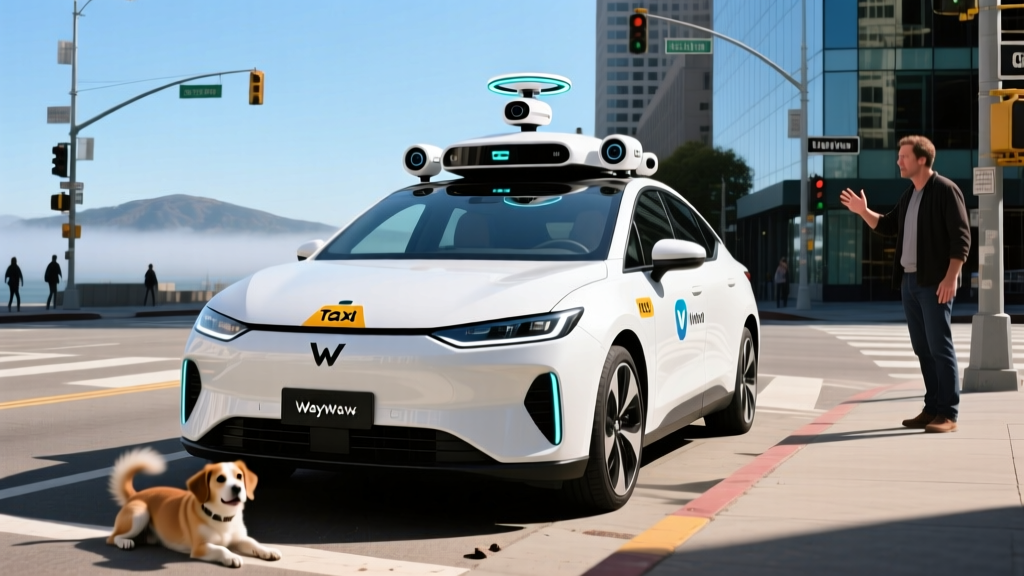
- Confirm your ride. A vehicle (typically a white Jaguar I-PACE with Waymo branding) will drive to your pickup point.
- Unlock the car by tapping "Start Ride" in the app or by entering a PIN on the rear-door screen.
- Buckle up. The ride begins automatically. An in-vehicle screen shows the route and lets you adjust climate and music.
- At your destination, exit the vehicle. The ride ends and you're charged automatically.
Regulatory Landscape: Who Approves Robotaxi Operations?
Autonomous vehicle deployment in the U.S. is governed by a patchwork of state and federal regulation — there is no single national framework.
- Federal (NHTSA): Sets vehicle safety standards (FMVSS) but has not issued comprehensive regulations for driverless deployment. NHTSA investigates crashes and can issue recalls. A standing general order requires operators to report crashes involving ADS-equipped vehicles.
- State DMVs and PUCs: California's DMV issues testing and deployment permits; the California Public Utilities Commission (CPUC) regulates commercial passenger service. Arizona takes a permissive approach with minimal permitting requirements, which is why Phoenix became the first large-scale robotaxi market. Texas, Nevada, and other states have their own frameworks.
- Local governments: Cities can impose operational restrictions, speed limits, and geographic boundaries. San Francisco's Board of Supervisors has been notably active in pushing for tighter oversight after Cruise incidents.
The NHTSA's automated vehicles page maintains current federal guidance and crash-reporting data. Operators must comply with both state deployment permits and federal safety reporting.
Current Limitations: Where Robotaxis Can't Go
Level 4 autonomy is powerful within its operational design domain (ODD) — and severely limited outside it. Here are the hard constraints of today's robotaxi services:
- Geofencing: Vehicles will not operate outside their pre-mapped service area. If your destination crosses the boundary, the ride will be declined.
- Weather: Heavy rain, fog, snow, and ice degrade lidar and camera performance. Waymo operates in light rain in Phoenix and SF but will suspend service during severe weather. Snow-belt cities are not yet viable robotaxi markets.
- Construction zones: Unexpected lane shifts, temporary signage, and flaggers remain challenging. Robotaxis may pull over and request remote assistance or reroute.
- Complex unprompted interactions: A police officer directing traffic with hand signals, a school crossing guard, or a parking attendant waving you forward — these require situational interpretation that autonomous systems handle inconsistently.
- Unmapped roads: New developments, private roads, and rural routes are not in the HD maps robotaxis depend on.
- Passenger emergencies: If a rider has a medical emergency mid-ride, there is no driver to respond. In-vehicle support is limited to a help button connecting to a remote operator.
Frequently Asked Questions
Where can I use a robotaxi service right now?
Waymo offers 24/7 paid rides in Phoenix, San Francisco, Los Angeles, and Austin. Cruise is in limited relaunch in Phoenix and Dallas. Zoox operates a limited paid service on the Las Vegas Strip. Availability expands gradually — check each operator's app for your specific address.
How much does a robotaxi cost compared to Uber or Lyft?
At standard rates, a Waymo ride is comparable to UberX before tip and slightly cheaper after. A 5-mile urban trip typically costs $11–$14 on Waymo vs. $8–$10 on UberX (before a 15–20% tip). Promotional pricing can make robotaxis significantly cheaper.
How safe are robotaxis — is there real data?
Waymo reports over 50 million autonomous miles with zero fatalities in driverless mode and a published 76% reduction in injury-causing crashes vs. human benchmarks. However, these miles are in mapped, lower-speed urban environments — not directly comparable to all human driving. Cruise's 2023 pedestrian incident in SF demonstrated that edge cases remain a serious concern. No operator has yet accumulated enough miles for a definitive national-scale safety equivalence claim.
Is this truly self-driving or just driver-assist?
Robotaxis from Waymo, Zoox, and Cruise are SAE Level 4 — genuinely driverless within their geofenced service areas. There is no human driver, and you are not expected to intervene. This is fundamentally different from Level 2 systems like Tesla FSD (Supervised), GM Super Cruise, or Ford BlueCruise, which require continuous driver attention and engagement.
What vehicles do robotaxis use?
Waymo primarily uses the Jaguar I-PACE (a 90 kWh NMC battery EV with ~234 miles EPA range) and is adding the Zeekr RT. Cruise uses the Chevrolet Bolt EV and its purpose-built Origin. Zoox uses a custom-designed carriage vehicle with no steering wheel, bidirectional driving capability, and four-wheel steering.
Can robotaxis drive on highways?
Some Waymo routes in Phoenix include highway segments at speeds up to 65 mph. Most robotaxi rides are on surface streets. Highway-capable autonomous driving is technically feasible but requires different safety validation at higher speeds, and most current service areas emphasize urban corridors.