Waymo in Miami: Where Things Stand in 2026
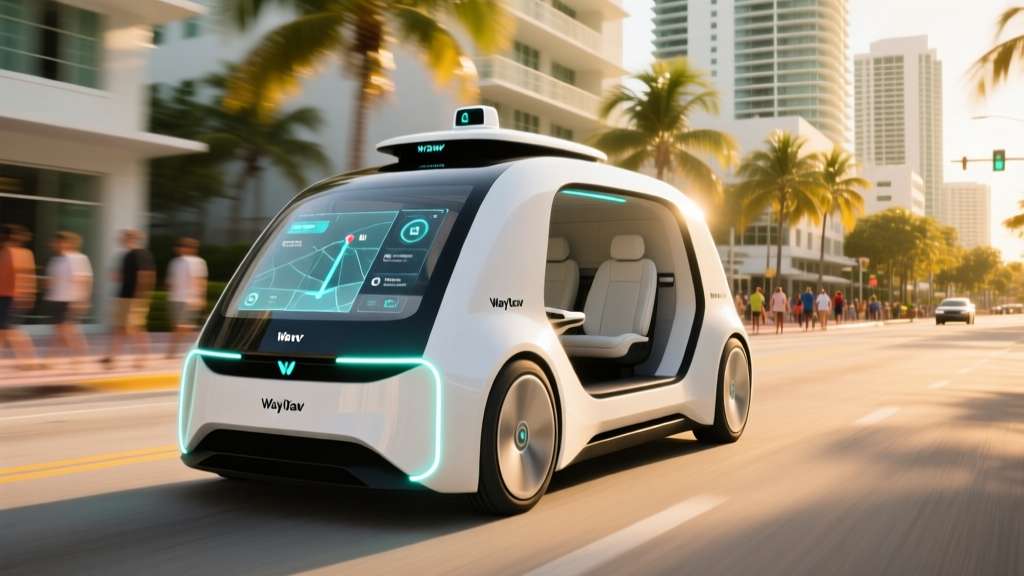
Miami is one of the most anticipated markets for autonomous ride-hailing, and Waymo — Alphabet's self-driving technology company — has signaled serious intent to bring its Waymo One robotaxi service to South Florida. But if you've been searching for Waymo in Miami and wondering whether you can hail a driverless ride right now, the answer requires some nuance. As of early 2026, Waymo has not yet launched a commercial, fully driverless service in Miami. The city is, however, on Waymo's publicly stated expansion roadmap, with testing and mapping activity underway.
This guide covers everything confirmed and projected about Waymo's Miami plans: the SAE automation level that separates a true robotaxi from consumer driver-assist, the technology stack under the hood, what pricing will likely look like versus Uber and Lyft, the real safety data from Waymo's existing markets, and the regulatory hurdles specific to Florida.
SAE Automation Levels: Why Waymo Is Level 4, Not Level 2
Before discussing Miami specifics, it's essential to understand the SAE International automation scale, because conflating Level 2 driver-assist with Level 4 robotaxis is the single most common source of consumer confusion in this space.
| Level | Name | Who Drives? | Examples |
|---|---|---|---|
| 0 | No Automation | Human | Standard vehicles |
| 1 | Driver Assistance | Human (system assists steering OR speed) | Adaptive cruise control, lane-keeping |
| 2 | Partial Automation | Human (must supervise at all times) | Tesla Autopilot/FSD Supervised, GM Super Cruise, Ford BlueCruise |
| 3 | Conditional Automation | System (human must take over when requested) | Mercedes DRIVE PILOT (limited markets, <40 mph) |
| 4 | High Automation | System (no human driver needed within geofence) | Waymo One, Zoox, Cruise (where operational) |
| 5 | Full Automation | System (everywhere, all conditions) | Does not exist commercially |
Waymo One operates at SAE Level 4: the vehicle handles all driving tasks without a human behind the wheel, but only within a defined geofenced area under certain conditions. This is fundamentally different from Tesla's FSD (Supervised), which remains Level 2 — the driver must stay engaged, hands on or near the wheel, eyes on the road, and is legally responsible for the vehicle at all times.
Where Can You Use Waymo One Right Now?
Miami is not yet on the live-service map. Here is where Waymo One currently operates commercially with fully driverless rides as of 2026:
| City | Status | Approximate Service Area Size | Notes |
|---|---|---|---|
| Phoenix, AZ (Metro) | Live — fully driverless | ~225+ sq mi | Largest and longest-running market; includes Chandler, Tempe, Mesa, Scottsdale, airport service |
| San Francisco, CA | Live — fully driverless | ~50 sq mi (city core + expanding) | Dense urban environment; 24/7 service |
| Los Angeles, CA | Live — fully driverless | ~80+ sq mi | Expanded from initial pilot zones; includes LAX airport trips |
| Austin, TX | Live — fully driverless (expanding) | ~45+ sq mi | Launched commercially in 2024–2025; growing footprint |
| Miami, FL | Not yet live — testing/mapping phase | TBD | On Waymo's announced expansion roadmap |
Waymo has historically expanded methodically: mapping roads extensively, running employee-only and invited-rider programs, then opening to the public. Based on this pattern, Miami residents might expect a limited early-rider program before full commercial launch, though Waymo has not published a firm date.
The Technology Stack: Lidar, Cameras, and Radar
Waymo's vehicles — primarily the Jaguar I-PACE electric SUV equipped with the company's proprietary Waymo Driver system (currently in its 6th generation) — carry a sensor suite fundamentally different from camera-only approaches like Tesla's.
Waymo Driver Sensor Array
- Lidar: Multiple custom-built lidar units providing high-resolution 3D point clouds up to 500+ meters, day and night. Lidar is the backbone of Waymo's perception system.
- Cameras: A surround-view camera array covering 360 degrees with high dynamic range for reading traffic lights, signs, and detecting pedestrians and cyclists.
- Radar: Multiple radar units for velocity detection of moving objects, functioning in rain and fog where lidar and cameras degrade.
- Audio detection: External microphones to detect emergency vehicle sirens.
- HD Mapping: Waymo pre-maps every road in its geofence at centimeter-level precision. The vehicle continuously compares live sensor data against this map.
This sensor-fusion approach is a deliberate engineering choice. Waymo's position is that lidar provides a non-negotiable safety redundancy that camera-only systems cannot match, particularly in edge cases involving unusual lighting, occluded objects, or adverse weather. The trade-off is cost: a Waymo-equipped I-PACE carries tens of thousands of dollars in sensor hardware, which is viable for a fleet-operated robotaxi but not (yet) for consumer vehicles.
The I-PACE itself contributes a 90 kWh battery pack (NMC chemistry) with an EPA-estimated range of approximately 234 miles, though Waymo's fleet vehicles charge frequently throughout shifts and don't rely on maximum range. The vehicle's electric powertrain is well-suited to robotaxi duty: instant torque for smooth stops and starts, quiet operation, and lower per-mile energy cost compared to ICE fleet vehicles.
Pricing: Waymo One vs. Uber and Lyft
Waymo has positioned its pricing to be competitive with — and often comparable to — Uber and Lyft in its live markets. Based on fare data from Phoenix, San Francisco, and Los Angeles, here is what Miami riders can reasonably expect:
| Trip Type | Waymo One (Est.) | UberX (Est.) | Lyft (Est.) |
|---|---|---|---|
| Short trip (~3 mi, downtown) | $8–$12 | $9–$14 | $8–$13 |
| Medium trip (~8 mi, cross-town) | $16–$24 | $15–$25 | $14–$23 |
| Airport trip (~15 mi) | $28–$40 | $25–$42 | $24–$40 |
Key pricing dynamics to understand:
- No surge pricing (currently): Waymo has generally avoided the aggressive surge multipliers that Uber and Lyft apply during peak demand, though wait times can increase when fleet capacity is strained.
- No tipping: There is no driver to tip, which effectively reduces total trip cost by 15–20% compared to a comparable rideshare with tip.
- Promotional pricing: In new market launches, Waymo has historically offered discounted or free introductory rides to build ridership.
- Wait times: In established markets, average wait times run 5–10 minutes. In newer markets, expect longer waits initially as fleet density builds.
Safety Record: What the Data Actually Shows
Safety is the most scrutinized aspect of robotaxi operations, and Waymo has published more data than any competitor. Here is what we know from Waymo's operations through 2025, as reported to NHTSA and in peer-reviewed research:
Waymo Safety Data — Key Figures
- Total autonomous miles driven: Over 50 million fully driverless miles across all markets (cumulative through 2025).
- Contact rate: Waymo's published research indicates its vehicles are involved in police-reported crashes at a rate roughly 85% lower than human benchmarks for injury-causing crashes, based on comparison to NHTSA data for similar driving environments.
- Property-damage-only crashes: Approximately 57% lower than human benchmarks per Waymo's peer-reviewed analysis.
- Most incidents: When Waymo vehicles have been involved in collisions, the majority have been low-speed, rear-end, or side-swipe incidents where the other party (human driver) was at fault — consistent with urban driving patterns.
- Disengagement data: As a Level 4 service with no driver present, Waymo tracks remote-assistance interventions. The rate has steadily declined as software improves, though exact per-mile figures are proprietary.
Important context: Waymo's safety data comes from geofenced urban environments with extensive pre-mapping. The system avoids construction zones it cannot confidently navigate, pulls over safely when uncertain, and can request remote guidance from human operators (who do not steer the vehicle but can confirm the vehicle's proposed action). This is not a system that handles every conceivable road scenario — it handles the scenarios within its operational design domain very well.
For comparison, the IIHS and NHTSA have both noted that human drivers cause approximately 94% of crashes through error. Robotaxi safety is measured against this baseline, not against a theoretical perfect driver.
Florida's Regulatory Landscape for Autonomous Vehicles
Florida is one of the more permissive states for autonomous vehicle testing and deployment, which works in Waymo's favor for a Miami launch:
- Florida Statute 316.85–316.86: Permits the operation of fully autonomous vehicles on public roads without a human driver present, provided the vehicle is properly registered and insured.
- No special state permit required for deployment: Unlike California (which requires a CPUC permit and DMV testing permit), Florida does not require a separate state-level operational permit beyond standard registration and insurance requirements.
- Local coordination: Miami-Dade County and the City of Miami would likely require coordination on geofencing, curb management, and pickup/dropoff zones — similar to how rideshare companies coordinate with local authorities.
- Federal oversight: NHTSA maintains authority over vehicle safety standards and crash reporting. All robotaxi operators must report crashes involving ADS-equipped vehicles under NHTSA's Standing General Order.
The regulatory environment in Florida is notably less restrictive than California or New York, which could allow Waymo to move from testing to commercial service faster in Miami than it did in some prior markets. However, Waymo has historically prioritized safety validation speed over regulatory permissiveness — the company will not launch commercially until it is confident in its geofenced coverage.
Current Limitations: What Waymo Cannot Do
Robotaxi Limitations — Honest Assessment
Level 4 autonomy within a geofence is a remarkable engineering achievement, but it comes with significant constraints that buyers and riders should understand:
- Geofencing: Waymo vehicles will not drive outside their pre-mapped service area. If your trip crosses the boundary, the vehicle will not accept the ride or will end the trip at the boundary.
- Weather limitations: Heavy rain — common in Miami — can degrade lidar and camera performance. Waymo has improved its rain handling significantly, but severe tropical storms or flooding conditions will cause service suspension.
- Construction zones: Major, unmapped road construction can confuse the system. Waymo typically geofences around known long-term construction or routes vehicles around it.
- No highway driving (in most markets): Waymo's current service primarily covers surface streets and lower-speed roads. Limited highway segments are included in some markets, but full interstate routing is not standard.
- Pickup/dropoff constraints: The vehicle will only stop at locations it has determined to be safe — it may not pull into a private driveway or a crowded valet lane. Expect designated or algorithmically determined safe-stop locations.
- No in-ride human intervention: There is no steering wheel accessible to the rider. If the vehicle encounters an unresolvable situation, it will pull over safely and either wait for remote guidance or end the trip.
- Accessibility: Waymo's I-PACE fleet requires riders to enter a standard SUV. Wheelchair-accessible vehicles have been introduced in limited numbers but are not universally available.
What Miami Riders Should Expect When Waymo Arrives
Based on Waymo's playbook in Phoenix, San Francisco, Los Angeles, and Austin, here is the likely sequence for Miami:
- Mapping phase: Waymo's sensor-equipped vehicles drive Miami streets collecting HD map data. You may already see these vehicles (distinguishable by their prominent lidar arrays and Waymo branding).
- Testing with safety drivers: Vehicles operate autonomously but with a trained safety operator in the driver's seat, ready to take over.
- Early rider program: Invite-only or waitlist-based service, fully driverless, limited to a small geofenced area (likely starting in neighborhoods like Brickell, Downtown, Wynwood, or the Design District).
- Commercial launch: Open to all users through the Waymo One app, with a growing service area over time.
Miami's grid layout, wide boulevards, and relatively predictable traffic patterns (outside of tourist-heavy corridors and event-driven congestion) are favorable for autonomous driving. The primary challenges will be heavy afternoon rain, aggressive local driving norms, and the complex pedestrian and cyclist environment in dense urban neighborhoods.
Frequently Asked Questions
Is Waymo in Miami available right now?
No. As of early 2026, Waymo One is not commercially available in Miami. The city is on Waymo's expansion roadmap, and mapping and testing activity has been observed, but no commercial launch date has been announced.
How is Waymo different from Tesla's Full Self-Driving?
Waymo operates at SAE Level 4 — fully driverless within a geofence, with no human driver needed. Tesla FSD (Supervised) is SAE Level 2 — the human driver must remain fully engaged and is legally responsible for the vehicle at all times. These are fundamentally different systems with different safety models and regulatory frameworks.
How much will a Waymo ride cost in Miami?
Based on pricing in existing markets, expect fares comparable to UberX and Lyft — roughly $8–$12 for a short downtown trip, $16–$24 for a cross-town ride, and $28–$40 for airport trips. No tipping is required, which reduces effective cost.
Is Waymo safer than a human driver?
Waymo's published, peer-reviewed data indicates its vehicles are involved in injury-causing crashes at approximately 85% lower rates than human benchmarks in comparable driving environments. However, this data comes from geofenced, pre-mapped urban areas — not all driving conditions. No system is crash-proof.
What happens if the Waymo vehicle encounters a situation it can't handle?
The vehicle will pull over to a safe location and either wait for remote guidance from a Waymo operator (who can confirm the vehicle's proposed action but does not steer remotely) or end the trip. The rider is never expected to take control of the vehicle.
Will Waymo work during Miami rain?
Waymo has improved its performance in rain significantly with its 6th-generation hardware. Moderate rain should not affect service. However, severe tropical downpours, flooding, or hurricane conditions will likely cause temporary service suspension for safety reasons.
How do I sign up for Waymo One?
When Waymo launches in Miami, riders will download the Waymo One app (available on iOS and Android), create an account, add a payment method, and request rides within the service area. In new markets, there is typically a waitlist before full public access.