Can You Actually Hail a Driverless Taxi in Las Vegas?
Las Vegas has become one of the most active proving grounds for autonomous ride-hailing in the United States. But if you search for a "driverless taxi Las Vegas" and expect to summon a fully unmanned pod to any address in the metro area, you'll be disappointed. The reality in 2026 is more nuanced: fully driverless robotaxi service exists in Las Vegas, but it's geofenced, limited to specific corridors, and operated under strict regulatory permits.
This guide breaks down exactly where you can ride, what it costs compared to Uber and Lyft, the hard safety data behind these services, and the technological and regulatory constraints that define the current robotaxi landscape in Southern Nevada.
Where Can You Use a Robotaxi Service Right Now?
As of early 2026, two primary operators have run or are actively running autonomous ride-hail programs in the Las Vegas area. However, availability differs sharply between them.
| Operator | Service Type | Operational Area | Hours | Status |
|---|---|---|---|---|
| Motional (Hyundai/Aptiv JV) | Level 4 driverless (no safety driver) | Las Vegas Strip corridor, Convention Center, select hotels | Limited hours, by invitation/app | Active — restricted |
| Waymo | Level 4 driverless | Not yet launched in Las Vegas (Phoenix is nearest major market) | N/A | Not available |
| Cruise (GM) | Level 4 driverless | Operations paused nationally since late 2023; no Vegas service | N/A | Suspended |
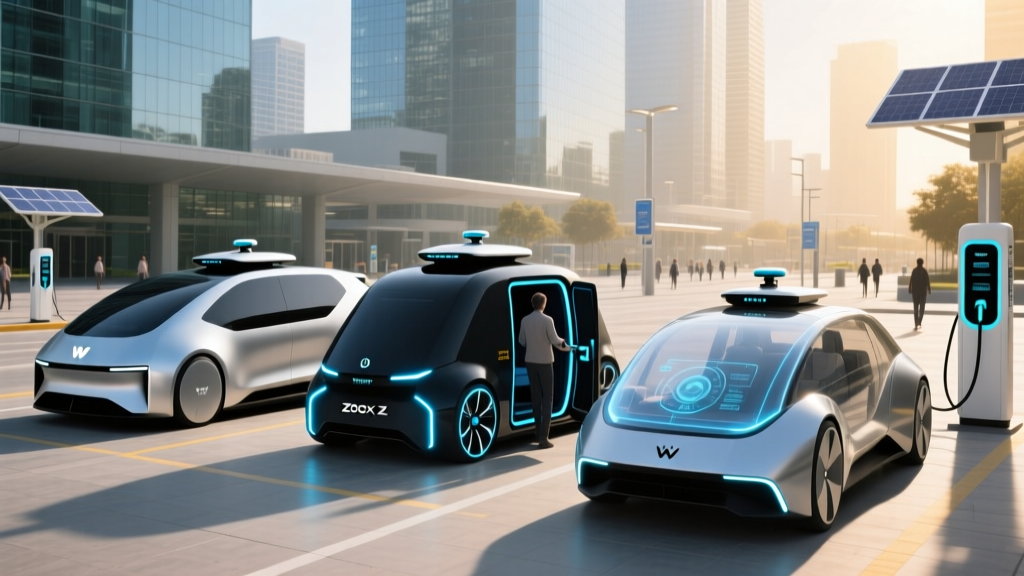
| Zoox (Amazon) | Level 4 driverless, purpose-built vehicle | Limited Las Vegas testing; no public ride-hail yet | N/A | Testing only |
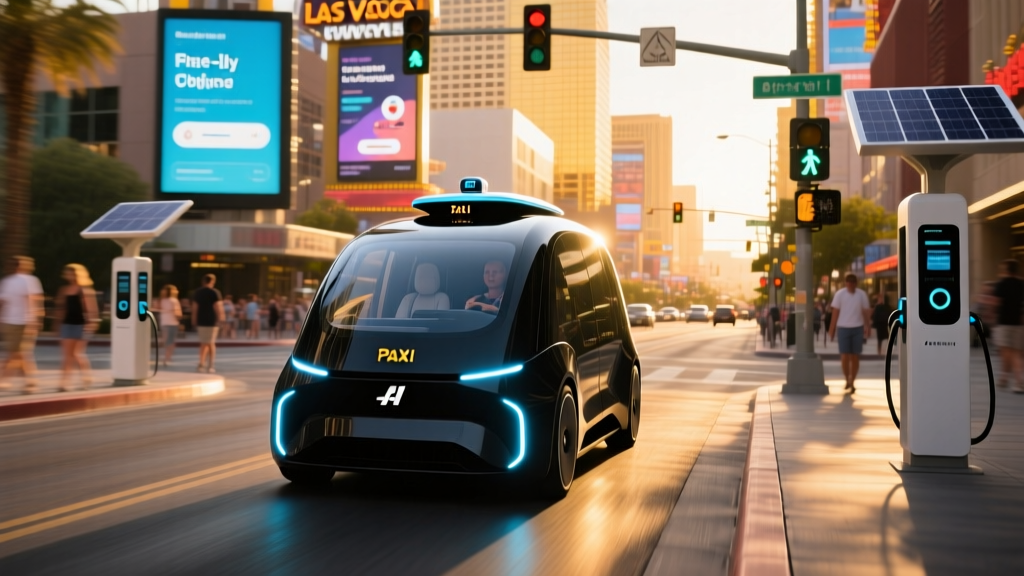
The bottom line: If you want to ride in a genuinely driverless vehicle in Las Vegas today, Motional is the most viable option — but access is far from universal. The service primarily covers the Strip corridor, the Las Vegas Convention Center, and a handful of major hotel drop-off points. You cannot hail a robotaxi from a residential neighborhood in Summerlin or Henderson.
Is This Truly Self-Driving or Driver-Assist?
This distinction is critical, and it's where most consumer confusion lives. Robotaxis like those operated by Motional are SAE Level 4 vehicles. Consumer driver-assist systems like Tesla Autopilot, Ford BlueCruise, and GM Super Cruise are SAE Level 2. They are fundamentally different categories.
| Level | Name | Who Drives? | Examples |
|---|---|---|---|
| Level 0 | No Automation | Human does everything | Traditional cars |
| Level 1 | Driver Assistance | Human + one assist feature (steering OR speed) | Adaptive cruise control |
| Level 2 | Partial Automation | Human must supervise at all times | Tesla Autopilot, BlueCruise, Super Cruise |
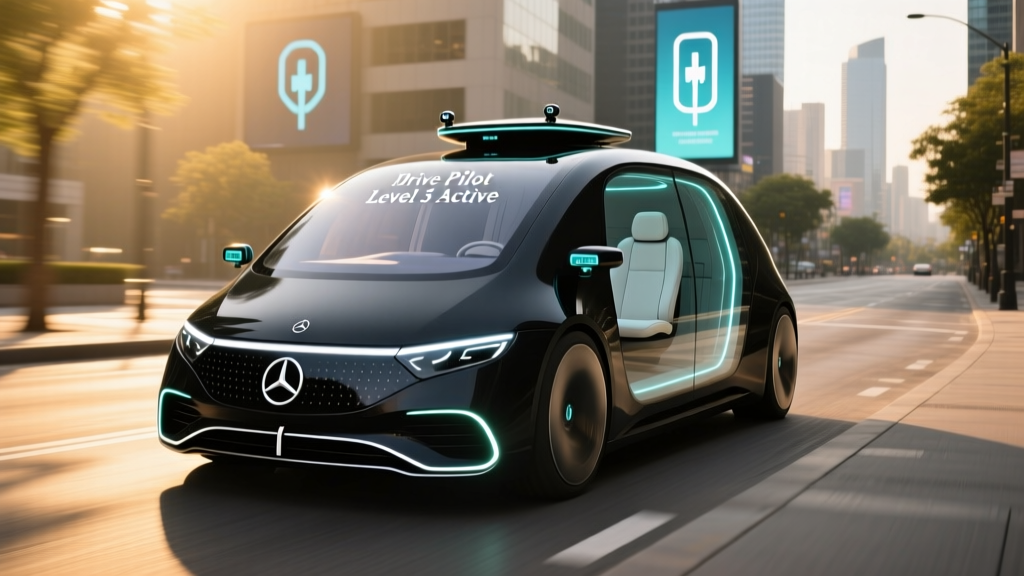
| Level 3 | Conditional Automation | System drives in specific conditions; human must take over when requested | Mercedes Drive Pilot (limited markets) |
| Level 4 | High Automation | System drives fully within its operational design domain; no human needed | Waymo, Motional robotaxis, Zoox |
| Level 5 | Full Automation | System drives everywhere, all conditions | Does not exist commercially |
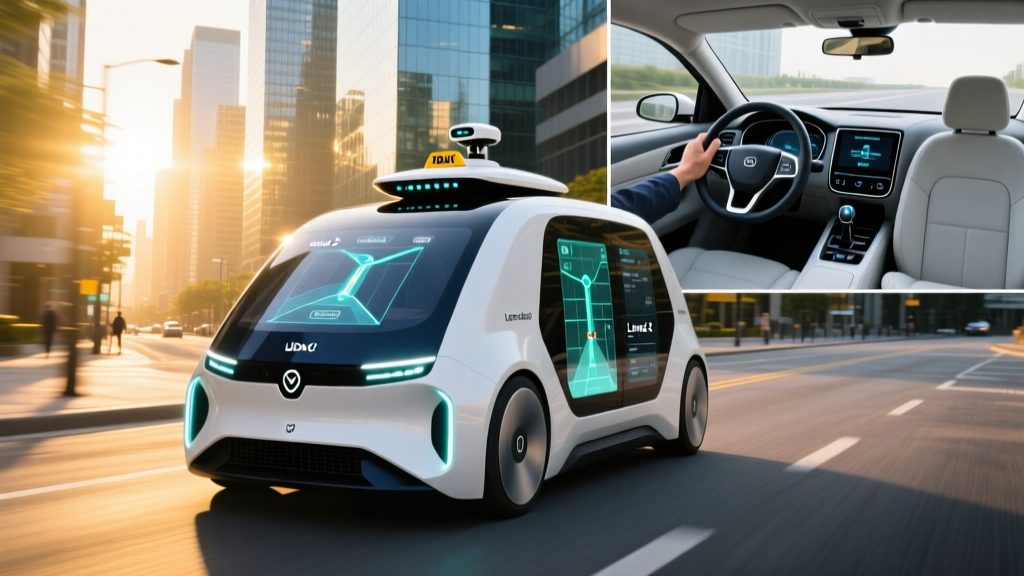
Motional's Ioniq 5-based robotaxis operating on the Las Vegas Strip are Level 4. That means within their geofenced operational area, no human driver is present or required. The vehicle handles all driving tasks, including edge cases like construction zones and jaywalking pedestrians — within its approved domain. If the system encounters a scenario it cannot handle, it executes a minimal-risk maneuver (pulling over safely) rather than handing control to a passenger.
This is categorically different from Tesla's Full Self-Driving (Supervised), which despite its name remains a Level 2 system requiring continuous driver attention and hands-on-wheel readiness.
How Much Does a Robotaxi Cost vs. Uber or Lyft?
Pricing for autonomous ride-hail services is still evolving. Where robotaxis are publicly accessible, operators have generally priced rides competitively with — or slightly below — traditional rideshare to build ridership.
| Service | Typical Fare (3-mile Strip trip) | Surge Pricing? | Tipping |
|---|---|---|---|
| Motional (robotaxi) | $8–$15 (promotional/discounted fares common) | No dynamic surge | No driver to tip |
| UberX | $12–$22 (varies with demand) | Yes — can 2–3x during peak | |
| Lyft Standard | $11–$20 (varies with demand) | Yes — prime-time pricing | |
| Uber Comfort / Lyft XL | $18–$35 | Yes |
Key pricing realities:
- No surge pricing. Robotaxis don't have driver supply constraints in the same way Uber and Lyft do. Fares remain stable even during peak convention traffic or weekend nights.
- No tipping. There's no driver, so the social pressure and cost of tipping disappears. This alone can save $3–$5 per ride.
- Promotional pricing is aggressive. Operators like Motional have historically offered heavily discounted or even free rides during launch phases to accumulate rider data and build public familiarity.
- Availability is the real cost. Even if the fare is lower, you may wait longer or be unable to get a ride at all if you're outside the geofence or during off-hours.
How Safe Are Robotaxis? The Real Data
Safety is the single most scrutinized aspect of robotaxi operations — and for good reason. Here's what the data actually shows.
Safety Data Snapshot: Robotaxi Operations
- Waymo has logged over 30 million fully driverless miles across Phoenix, San Francisco, Los Angeles, and Austin as of late 2025. Their NHTSA-reported crash rate per million miles is lower than the human benchmark for comparable urban driving, though direct comparison requires careful context (robotaxis operate in geofenced, mapped areas at moderate speeds).
- Motional has completed over 200,000 autonomous rides in Las Vegas alone through its Lyft integration and direct programs, with no reported at-fault serious injuries during driverless operations as of their last public disclosure.
- Cruise — a cautionary tale. After a serious October 2023 incident in San Francisco where a pedestrian was dragged by a Cruise vehicle, the company's California permit was suspended and operations were halted nationally. Cruise has been slowly working toward resumption under new oversight, but remains non-operational in most markets as of early 2026.
Sources: NHTSA Automated Vehicle Safety, operator public safety reports, IIHS.
Context matters enormously here. Robotaxis operate in geofenced, HD-mapped zones at speeds typically under 45 mph. They don't drive on rural highways or unmapped roads. Within those constraints, their sensor suites (lidar, radar, cameras) provide 360-degree perception without distraction, fatigue, or impairment — the factors behind the majority of human crashes.
However, they are not infallible. Robotaxis have been documented causing minor rear-end collisions, struggling with complex unprotected left turns, and occasionally stopping abruptly in traffic. The key metric is whether their crash rate per million miles is lower than human drivers in equivalent conditions — and the available data from Waymo and Motional suggests it is, though the sample sizes are still small compared to the billions of miles humans drive annually.
Technology Stack: How a Vegas Robotaxi Actually Sees the Road
Understanding the sensor and compute architecture helps explain both the capabilities and the limitations of current robotaxi service.
Typical Level 4 Robotaxi Sensor Suite
| Sensor Type | Function | Strengths | Limitations |
|---|---|---|---|
| Lidar (Light Detection and Ranging) | Creates precise 3D point-cloud map of surroundings in real time | Works in darkness; centimeter-level depth accuracy; detects pedestrians, debris, curbs | Performance degrades in heavy rain, fog, or dust; high unit cost |
| Cameras (8–12 around vehicle) | Object classification, lane detection, traffic-light reading, sign recognition | Rich semantic data; reads text and color; relatively low cost | Blinded by direct sun glare, heavy rain, or dirty lenses |
| Radar (4–6 units) | Velocity detection of moving objects; works through rain and fog | Excellent in bad weather; measures relative speed directly | Lower spatial resolution; struggles with stationary objects |
| Ultrasonic sensors | Near-field obstacle detection (parking, low-speed maneuvering) | Reliable at close range; very low cost | Range limited to ~5 meters |
| HD Maps + GPS/IMU | Precise localization within pre-mapped operational domain | Provides centimeter-level position context | Must be updated when roads change; limits operational area |
Motional's Ioniq 5 robotaxi uses a lidar-forward approach — a significant contrast to Tesla's camera-only FSD architecture. The lidar units provide redundant depth perception that cameras alone cannot match, particularly in the low-light conditions common on the Las Vegas Strip at night. The vehicle's onboard compute platform processes sensor fusion in real time, running prediction and planning algorithms that model the behavior of surrounding vehicles, pedestrians, and cyclists.
This sensor redundancy is a hallmark of Level 4 systems. Where a Level 2 system can hand control back to a human when confused, a Level 4 robotaxi must resolve the situation itself or execute a safe stop — which demands higher-fidelity sensing and more conservative driving behavior.
The Regulatory Landscape: Who Approves Robotaxi Operations?
Robotaxi operations in Las Vegas exist within a layered regulatory framework:
- Federal (NHTSA): The National Highway Traffic Safety Administration sets vehicle safety standards and investigates crashes. NHTSA does not directly approve ride-hail operations, but it has authority over vehicle design and can issue recalls for autonomous systems. Their automated vehicle safety guidelines establish baseline expectations.
- State (Nevada DMV / Nevada Legislature): Nevada was one of the first states to pass autonomous vehicle legislation (AB 511 in 2011, updated since). The state requires operators to obtain a testing or deployment permit, carry minimum insurance (currently $5 million for driverless operations), and report disengagement and crash data. The Nevada DMV oversees these permits.
- Local (City of Las Vegas / Clark County): Local jurisdictions control road access, permitting for commercial operations, and coordination with emergency services. The Las Vegas Strip itself falls under a mix of Clark County and Nevada state jurisdiction, adding complexity.
This patchwork means that even if an operator has state approval, local political dynamics, public sentiment, and specific road-access agreements can constrain where and when robotaxis actually run. Las Vegas has been relatively welcoming to autonomous testing — the tourism economy benefits from the novelty and innovation branding — but expansion beyond the Strip corridor has been slow.
Current Limitations: What Robotaxis Still Cannot Do
Despite significant progress, robotaxi service in Las Vegas carries real constraints that riders should understand before planning their transportation around it.
- Geofence restrictions: Service is limited to pre-mapped corridors. You cannot currently take a robotaxi from the Strip to Harry Reid International Airport, to Red Rock Canyon, or to residential areas. If your destination is outside the geofence, the app simply won't offer the ride.
- Weather limitations: While Las Vegas is generally dry, the rare heavy monsoon rain can trigger service suspensions. Lidar performance degrades in precipitation, and operators err on the side of caution. A sudden dust storm (haboob) would likely ground the fleet.
- Construction zones: The Strip is perpetually under construction. While robotaxis can navigate some construction with updated maps, sudden lane closures or temporary traffic patterns that haven't been mapped may cause the vehicle to pull over and wait for remote assistance.
- Limited hours: Unlike Uber and Lyft, which operate 24/7, robotaxi services may not run during late-night hours when pedestrian behavior becomes less predictable and lighting conditions change.
- No special requests: You can't ask a robotaxi to make a stop at a drive-through, wait while you run into a store, or adjust the route. It's point A to point B, as programmed.
- Accessibility gaps: While operators are working on wheelchair-accessible vehicles, current robotaxi fleets are predominantly standard sedan/crossover form factors. Riders with mobility devices may not be able to use the service.
- Capacity limits: Most robotaxis seat 2–3 passengers. Large groups or families with car seats are better served by traditional rideshare.
Frequently Asked Questions
Can tourists use a driverless taxi in Las Vegas?
Yes, but access is limited. Motional's service has been available through partnerships and direct apps, and tourists visiting the Strip and Convention Center are among the primary users. However, availability is not guaranteed — you may need to request a ride in advance, and the service area is restricted to the main tourist corridor.
Is there a safety driver in the vehicle?
Motional's current Las Vegas operations include both configurations: some vehicles run fully driverless (Level 4, no human in the driver's seat), while others may still have a safety operator during certain testing phases or in new route-validation periods. When you book through the app, the vehicle type is typically indicated.
How does robotaxi safety compare to Uber or Lyft drivers?
Based on available data from Waymo and Motional, robotaxis have demonstrated lower at-fault crash rates per million miles than human drivers in comparable urban environments. However, robotaxis operate under much more constrained conditions (lower speeds, mapped roads, favorable weather). In those constrained conditions, they eliminate human risk factors like distraction, impairment, and fatigue. The Cruise incident in San Francisco demonstrates that serious failures can still occur, making ongoing regulatory oversight essential.
Why isn't Waymo operating in Las Vegas?
Waymo has prioritized Phoenix, San Francisco, Los Angeles, and Austin for commercial deployment. Las Vegas, despite its robotaxi-friendly regulatory environment, is not currently in Waymo's active service map. Waymo's expansion strategy focuses on cities where they've completed extensive mapping and validation. Phoenix remains the nearest Waymo market to Las Vegas — roughly a 4.5-hour drive away.
What happens if the robotaxi encounters an emergency?
Level 4 robotaxis are programmed to execute a "minimal risk condition" — typically pulling to the side of the road and stopping. They maintain a constant connection to a remote operations center where human specialists can assess the situation and, if needed, provide high-level guidance (e.g., confirming it's safe to proceed around an obstacle). Passengers can also contact support through an in-vehicle interface. Emergency services can be summoned automatically if sensors detect a collision.
Will robotaxis replace Uber and Lyft in Las Vegas?
Not in the near term. The geofence limitations, fleet sizes, and operational hours mean robotaxis currently serve a fraction of the rides that traditional rideshare handles. They are a complement to the transportation ecosystem, not a replacement. Full city-wide coverage without a safety driver requires solving challenges in mapping, edge-case handling, regulatory approval, and public trust that are still years away from universal deployment.