The Door Problem: What Waymo's Gig-Worker Fix Reveals About Robotaxis
Autonomous vehicles can navigate complex urban intersections, merge onto highways, and detect pedestrians in low light — but they cannot reach over and pull a car door shut. In 2026, Waymo, the Alphabet-owned robotaxi operator, has quietly begun paying gig-economy workers to resolve one of the most stubborn edge cases in Level 4 autonomy: riders who leave vehicle doors open after exiting. The keyword circulating in industry discussions — Waymo pays gig workers to shut open robotaxi doors — captures a fundamental truth about autonomous mobility that hype cycles often obscure. Full self-driving, even at Level 4, still requires a human support infrastructure for the physical-world problems that software alone cannot solve.
This article breaks down what this operational workaround means for robotaxi riders, how Waymo's Level 4 service actually works in 2026, where it operates, what it costs, and what the real safety data shows.
SAE Automation Levels: Where Robotaxis Actually Sit
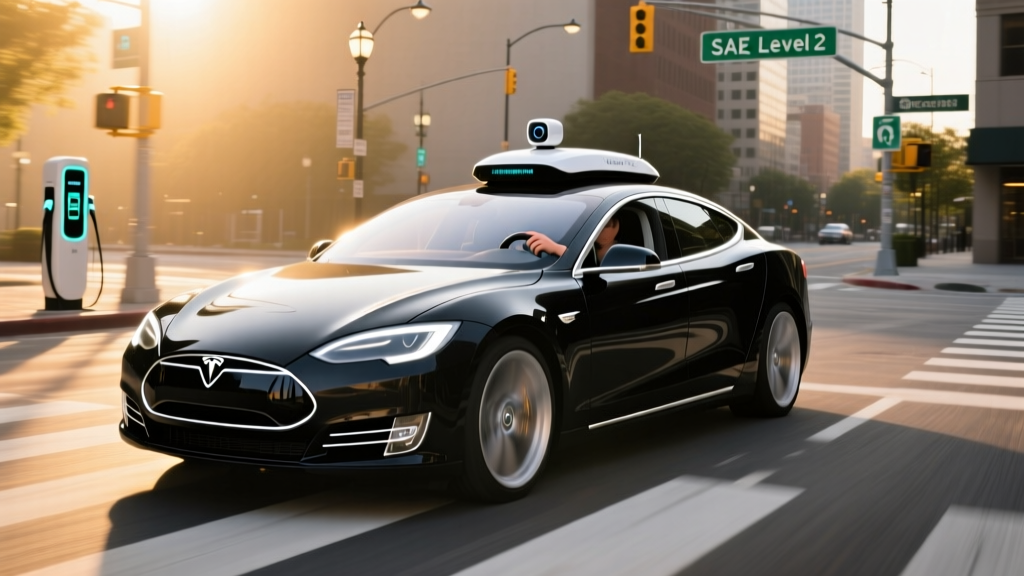
Before evaluating Waymo's service, it is critical to understand the SAE International automation framework. Consumer vehicles like those equipped with Tesla Autopilot or Ford BlueCruise operate at SAE Level 2 — the driver must remain engaged and supervising at all times. Robotaxis like Waymo operate at SAE Level 4, meaning the vehicle handles all driving tasks within a defined operational design domain (ODD) with no human driver present.
| Level | Name | Who Drives | Example |
|---|---|---|---|
| Level 0 | No Automation | Human | Standard car, no assist features |
| Level 1 | Driver Assistance | Human (one feature assisted) | Adaptive cruise control OR lane-keeping |
| Level 2 | Partial Automation | Human (must supervise) | Tesla Autopilot, Ford BlueCruise, GM Super Cruise |
| Level 3 | Conditional Automation | Vehicle in specific conditions; human on standby | Mercedes Drive Pilot (limited markets, under 40 mph) |
| Level 4 | High Automation | Vehicle (within geofenced ODD, no driver needed) | Waymo One, Zoox |
| Level 5 | Full Automation | Vehicle (all conditions, everywhere) | Does not exist commercially |
Where Can I Use Waymo's Robotaxi Service Right Now?
As of early 2026, Waymo One — the company's commercial ride-hailing service — operates in a defined set of metropolitan areas. Service is geofenced, meaning the vehicles will only operate within pre-mapped zones that Waymo has validated for its Level 4 system.
| City | Service Area Coverage | Availability | Notes |
|---|---|---|---|
| Phoenix, AZ (Metro) | ~230 sq miles including Chandler, Tempe, Mesa, Scottsdale | 24/7 | Longest-running market; airport service at PHX |
| San Francisco, CA | Most of SF proper, expanding south | 24/7 | Dense urban environment; freeway-capable routes |
| Los Angeles, CA | Select zones (Santa Monica, Hollywood, Downtown, Mid-Wilshire) | Limited hours expanding | Phased rollout; geofence growing |
| Austin, TX | Central Austin and surrounding corridors | Phased launch | Announced expansion; initial rider-limited access |
If you are outside these geofenced zones, Waymo One is not available. The vehicle will not accept a ride request that originates or terminates outside its operational design domain. Waymo has announced intentions to expand further, but announced cities are not live until service is publicly accessible through the Waymo One app.
The Door Problem: Why Waymo Pays Gig Workers
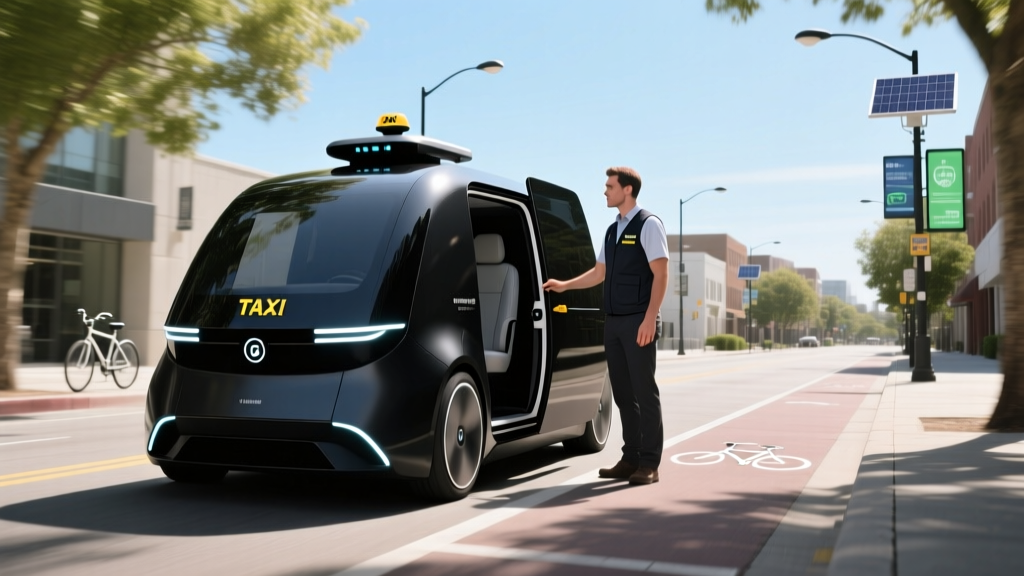
Here is the operational challenge. A Waymo robotaxi has no human driver. When a rider completes a trip and exits the vehicle, the system expects the door to close so the vehicle can proceed to its next ride or reposition. But riders sometimes leave doors ajar — whether distracted, carrying items, or simply inattentive. The vehicle's sensors detect the open door and will not move, because driving with an open door is a safety violation.
Waymo's solution: dispatch gig-economy contractors (similar to TaskRabbit-style workers) who receive a ping through a dedicated app, travel to the stranded vehicle, and physically close the door. Reports indicate workers are paid per task — typically a few dollars per door-close event — and may handle other minor physical interventions, such as clearing debris from sensor arrays or checking on vehicles that have pulled over due to a software fault.
This is not a sign of system failure. It is an honest acknowledgment that Level 4 autonomy, while driverless, is not humanless. The physical world presents edge cases that require manual intervention, and Waymo has built a distributed labor network to handle them. Similar remote-assistance and field-support models exist across the robotaxi industry. Cruise (before its 2024 restructuring) employed remote fleet attendants; Zoox uses support vehicles for on-road interventions.
How Much Does a Waymo Ride Cost vs. Uber and Lyft?
Waymo One pricing is designed to be competitive with traditional rideshare, though it varies by market, time of day, and trip distance. Unlike Uber and Lyft, Waymo does not use a human driver whose earnings must be factored into the fare — but the company absorbs substantial vehicle hardware costs (lidar, redundant compute, sensor suites) and fleet-support overhead (including those gig workers).
| Service | Base Fare | Per Mile | Per Minute | Typical 5-Mile Trip |
|---|---|---|---|---|
| Waymo One | ~$3.50 | ~$1.25 | ~$0.35 | $11–$15 |
| UberX | ~$2.50 | ~$1.10 | ~$0.30 | $9–$14 |
| Lyft Standard | ~$2.50 | ~$1.05 | ~$0.28 | $9–$13 |
Pricing fluctuates with demand. Waymo does not currently implement surge pricing in the same aggressive manner as Uber/Lyft, but wait times can be longer during peak hours due to fleet-size constraints. Tipping is not expected (there is no driver), though the app provides an option.
How to use it: Download the Waymo One app (available on iOS and Android), enter your pickup and drop-off locations within the service area, confirm the ride, and a Waymo vehicle — currently a Jaguar I-PACE-based platform, with the purpose-built Zeekr-based next-gen vehicle entering fleets — arrives. You unlock the doors through the app when the vehicle arrives.
Waymo's Safety Record: What the Real Data Shows
Safety is the most scrutinized aspect of robotaxi operations, and Waymo has published more transparency reports than any competitor. As of late 2025, Waymo reported over 30 million fully autonomous miles driven across its commercial fleet with no driver behind the wheel.
- 30+ million autonomous miles driven (driverless, Level 4)
- Reported contact rates with other vehicles/objects: significantly below human-driver benchmarks in comparable urban environments
- NHTSA Standing General Order requires reporting of all crashes involving ADS-equipped vehicles; Waymo's publicly filed reports are accessible via nhtsa.gov
- No confirmed fatalities attributed to Waymo's autonomous driving system as of early 2026
- Minor low-speed contact incidents have occurred — consistent with dense urban driving — but at rates below human averages per million miles
For context, the U.S. human fatality rate is approximately 1.35 deaths per 100 million vehicle miles (NHTSA FARS data). Waymo's operational miles are not yet large enough for a statistically equivalent comparison at the fatality level, but at the property-damage and minor-injury level, the data suggests performance at or better than human baselines in geofenced urban conditions.
The door-open issue itself is a safety feature, not a bug: the vehicle refuses to move with an open door, which prevents a class of incidents that human drivers sometimes cause (driving off with a door ajar).
Technology Stack: How Waymo's Vehicles See the World
Waymo's approach to autonomy is sensor-rich and fundamentally different from camera-only systems (such as Tesla's vision-based FSD). The Waymo Driver — the company's name for its full hardware/software stack — relies on sensor fusion across three primary modalities:
- LiDAR: Custom-designed rooftop and body-mounted lidar units generate a real-time 3D point cloud of the environment, providing precise distance measurements regardless of lighting conditions. This is the backbone of Waymo's perception system.
- Cameras: Multiple high-resolution cameras provide color and texture information — reading traffic signals, identifying signage, detecting brake lights, and classifying objects.
- Radar: Millimeter-wave radar supplements lidar for velocity detection of moving objects and performs reliably in rain and fog where lidar can degrade.
The compute stack is fully redundant — dual independent computing systems can each bring the vehicle to a safe stop if the other fails. The vehicle operates within a geofenced operational design domain that Waymo has pre-mapped at centimeter-level resolution. The HD map provides the system with lane geometry, speed limits, intersection topology, and known construction zones, which the real-time sensor data then overlays with dynamic objects (pedestrians, other vehicles, temporary obstacles).
This geofencing is both a strength and a limitation. It means the system can operate with extremely high confidence within its zone, but it cannot simply drive into an unmapped suburb the way a human driver can.
Current Limitations: What Waymo Cannot Yet Do
Understanding what a Level 4 robotaxi cannot do is as important as understanding what it can. Waymo's current limitations are real and affect rider experience:
- Geofence boundaries: If your destination is outside the mapped service area, the ride cannot be booked. There is no override.
- Heavy weather degradation: While Waymo operates in rain (common in San Francisco), extreme weather — heavy snow, dense fog, flooding — can cause the system to pull over safely and wait, or cancel a ride. Phoenix's clear skies are an easier operating environment than, say, a Chicago winter.
- Construction zones: Major unplanned roadwork can confuse the HD map overlay. Waymo vehicles may reroute or, in some cases, pull over and request remote assistance.
- The door problem: As detailed above, an open door strands the vehicle until a gig worker arrives. This can delay the vehicle's next ride by 10–20 minutes depending on contractor proximity.
- No trunk access for riders: The trunk/cargo area is locked; riders cannot store luggage in the rear cargo space, limiting airport utility for travelers with large bags.
- Passenger behavior monitoring: In-cabin cameras monitor rider behavior, but the system cannot physically intervene if a rider is ill, unruly, or damages the interior. Remote support can dispatch help, but there is a response-time gap.
- Freeway limitations in some markets: Not all Waymo service areas include freeway driving. In some zones, the vehicle stays on surface streets only.
Regulatory Landscape: Who Approves Robotaxi Operations?
Robotaxi deployment in the United States is governed by a patchwork of state and local regulations. There is no single federal "robotaxi license." Instead:
- State regulators: In California, the California Public Utilities Commission (CPUC) and the California DMV both play roles — the DMV issues autonomous vehicle testing and deployment permits, while the CPUC regulates commercial passenger service. Arizona has taken a more permissive approach, with executive orders enabling Waymo's Phoenix operations with fewer regulatory hurdles.
- Federal role: NHTSA sets vehicle safety standards (FMVSS) and requires crash reporting for ADS-equipped vehicles, but does not currently "approve" autonomous driving systems the way it approves vehicle models. The regulatory framework is still evolving.
- Local municipalities: Cities can influence operations through permitting for curbside pickup, airport access agreements, and coordination with local emergency services. Waymo's airport service at Phoenix Sky Harbor required specific negotiation with the aviation authority.
This fragmented regulatory environment is a major reason robotaxi expansion is gradual. Each new city requires navigating a unique approval process, which constrains how quickly Waymo can scale even if the technology is ready.
What the Gig-Worker Door Fix Means for the Future of Autonomy
The fact that Waymo pays gig workers to shut open robotaxi doors is not a failure of the technology — it is a realistic engineering and operational decision. Level 4 autonomy eliminates the human driver from the driving task, but it does not eliminate the need for humans to manage the physical interface between vehicle and world. Door closures, sensor cleaning, vehicle retrieval from edge-case pull-overs, and interior inspections all require hands.
For riders, this means the robotaxi experience in 2026 is impressively autonomous but not seamless. You are riding in a vehicle with no driver, navigating real urban traffic with a strong safety record — but the system's edges are still being managed by a distributed human workforce. The door problem is a useful reminder: the last 1% of autonomy is not a software update. It is a logistics network.
Frequently Asked Questions
Is Waymo truly self-driving or is it driver-assist like Tesla Autopilot?
Waymo is SAE Level 4 — fully driverless within its geofenced service areas. There is no human in the driver's seat, and no human supervision of the driving task is required. This is fundamentally different from Tesla Autopilot or FSD (Supervised), which are Level 2 systems requiring an attentive driver behind the wheel at all times. Waymo's vehicle handles the entire driving task independently; Tesla's systems assist the driver, who remains responsible.
Where can I ride in a Waymo robotaxi today?
Waymo One is commercially available in Phoenix (metro area, 24/7), San Francisco (24/7), Los Angeles (phased, select zones), and Austin (initial launch phase). Service is limited to geofenced areas within these cities. Check the Waymo One app for your specific address availability.
How much does a Waymo ride cost compared to Uber or Lyft?
Waymo One fares are generally comparable to UberX and Lyft Standard — typically $11–$15 for a 5-mile urban trip depending on market and time. Waymo does not currently apply aggressive surge pricing, but wait times may be longer during peak demand due to fleet size. There is no driver to tip.
How safe are Waymo robotaxis based on real data?
Waymo has logged over 30 million fully autonomous (driverless) miles as of late 2025 with no confirmed fatalities attributed to its driving system. Minor low-speed contact incidents have occurred at rates below human-driver benchmarks per million miles in comparable urban environments. All incidents are reported to NHTSA under the Standing General Order for ADS-equipped vehicles. The data set is not yet large enough for statistically robust fatality-rate comparison, but property-damage and injury metrics are favorable.
Why does Waymo need gig workers if the cars are self-driving?
Self-driving refers to the driving task — navigation, perception, decision-making. But physical-world edge cases like an open door, a soiled interior, a sensor blocked by mud, or a vehicle that has pulled over due to a software fault all require a human to physically interact with the car. Waymo dispatches gig-economy contractors to handle these tasks, typically paying per intervention. This is an operational design choice, not a technology shortcoming — even the most advanced Level 4 system cannot physically close its own door.
Can Waymo robotaxis drive on the freeway?
In some markets, yes. Waymo has been testing and operating freeway-capable routes, including airport runs. However, not all service areas include freeway segments, and the vehicle may stay on surface streets depending on the geofenced zone. Check the app for route details when booking.
What happens if a Waymo vehicle encounters construction or an unmapped road change?
The vehicle relies on HD maps updated regularly, but unplanned construction can create discrepancies. In most cases, the system will reroute around the zone. If it cannot resolve the situation safely, it will pull over, activate hazard lights, and either wait for the obstruction to clear or request remote assistance. A field-support worker may be dispatched if needed.