What Tesla Model S Autopilot Actually Does (and Doesn't Do)
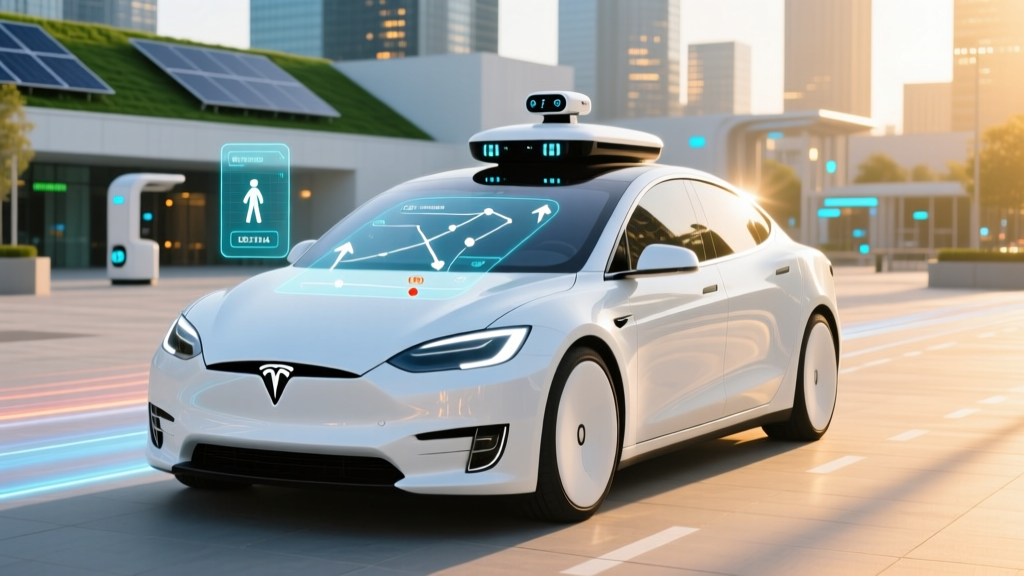
Every new Tesla Model S ships with Basic Autopilot as standard equipment. This is Tesla's entry-level advanced driver-assistance system (ADAS), bundling Traffic-Aware Cruise Control (TACC) and Autosteer. TACC maintains a set following distance from the vehicle ahead using forward-facing cameras and neural-net-based speed estimation. Autosteer provides lane-centering assistance on divided highways by reading lane markings and road edges through Tesla's vision-only hardware suite.
What Basic Autopilot does not do: navigate on-ramps, change lanes autonomously, recognize stop signs or traffic lights for automatic stopping, or handle city streets beyond basic lane-keeping. Those capabilities require the optional Enhanced Autopilot or Full Self-Driving (Supervised) packages, which we break down below.
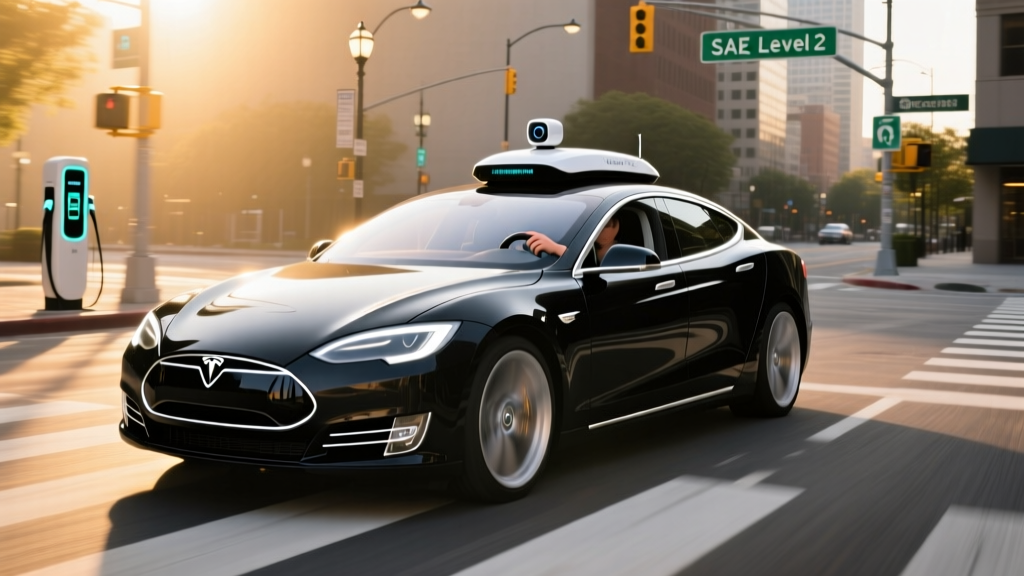
SAE Automation Level: Level 2 — Driver Supervision Required
Both Autopilot and Full Self-Driving (Supervised) are SAE Level 2 systems. This means the driver must remain fully attentive, keep hands on the steering wheel (or apply sufficient steering torque), and be prepared to take over instantly. Tesla's own owner's manual states: "Autopilot and FSD (Supervised) are intended for use with a fully attentive driver." No consumer Tesla vehicle is Level 3, Level 4, or Level 5. Only purpose-built robotaxi services like Waymo operate at Level 4 in geofenced areas.
Hardware Suite: Vision-Only on HW4
The current-generation Model S (2024–2026 refresh) uses Hardware 4 (HW4), Tesla's latest onboard compute platform. HW4 features a suite of high-resolution cameras (up to 5 megapixels per sensor, up from 1.2 MP on HW3) with improved dynamic range and low-light performance. The system is entirely vision-based — Tesla removed ultrasonic sensors (USS) and radar from production vehicles starting in 2022–2023, relying on its "Tesla Vision" neural network for object detection, depth estimation, and occupancy mapping.
The camera array includes:
- Front-facing main and wide-angle cameras (behind the windshield)
- Left and right forward-looking repeater cameras (front fenders)
- Left and right rearward-looking cameras (B-pillars)
- Rear-view backup camera
All sensor fusion, lane detection, and path planning run on Tesla's custom FSD chip, which processes up to 2,300 frames per second across the camera array. The absence of radar and ultrasonics means the system depends entirely on camera data — a design choice that carries real-world trade-offs we detail in the limitations section.
Feature Capability Breakdown: Autopilot vs. Enhanced vs. FSD
| Feature | Basic Autopilot (Included) |
Enhanced Autopilot ($6,000) |
FSD (Supervised) ($8,000 / $99/mo) |
|---|---|---|---|
| Traffic-Aware Cruise Control | ✅ | ✅ | ✅ |
| Autosteer (lane centering) | ✅ | ✅ | ✅ |
| Auto Lane Change | ❌ | ✅ | ✅ |
| Navigate on Autopilot (highway on/off-ramps) | ❌ | ✅ | ✅ |
| Autopark (parallel/perpendicular) | ❌ | ✅ | ✅ |
| Summon / Smart Summon | ❌ | ✅ | ✅ |
| Traffic Light & Stop Sign Control | ❌ | ❌ | ✅ |
| City Street Autosteer | ❌ | ❌ | ✅ |
Note: Pricing and feature availability are subject to change. Tesla frequently adjusts package pricing and has historically modified what's included in each tier. Verify current pricing on Tesla's configurator before purchasing.
Pricing and Subscription Options
| Package | One-Time Purchase | Monthly Subscription | Included with Model S? |
|---|---|---|---|
| Basic Autopilot | N/A | N/A | ✅ Yes (standard) |
| Enhanced Autopilot | $6,000 | Not available | ❌ No |
| FSD (Supervised) | $8,000 | $99/month | ❌ No |
The $99/month FSD subscription is notable because it's not transferable between vehicles — it's tied to your Tesla account and the specific car. If you sell your Model S, the subscription doesn't carry to your next Tesla unless Tesla runs a promotional transfer offer (they've done this occasionally but it's not guaranteed). The one-time $8,000 purchase, by contrast, stays with the vehicle's VIN, which can help with resale value.
For a Model S buyer: the Long Range trim starts at approximately $79,990 (2026 MSRP, before any incentives). Adding FSD at $8,000 pushes the effective price to ~$87,990. The subscription route makes more sense for drivers who want to evaluate FSD before committing, or who don't drive enough city miles to justify the lump sum.
Real-World Limitations: Where Tesla Model S Autopilot Falls Short
⚠️ Critical Limitations — Driver Must Stay Engaged
- Weather degradation: Heavy rain, fog, snow, and direct sun glare can blind the camera system. Autopilot will issue a "Camera visibility reduced" warning and may disengage Autosteer without notice. Unlike radar-equipped competitors, Tesla Vision has no redundant sensor for low-visibility conditions.
- Faded or missing lane markings: Construction zones, rural roads, and poorly maintained highways with worn lane paint cause Autosteer to wander or disengage. The system relies heavily on visible lane boundaries.
- Phantom braking: A documented issue where the system abruptly decelerates on clear highways, often triggered by shadows, overpasses, or roadside objects misidentified as obstacles. NHTSA has investigated this behavior across Tesla vehicles.
- City street unpredictability (FSD): FSD (Supervised) on surface streets may make unexpected routing decisions — late lane changes, overly cautious stops, or failure to proceed at 4-way stops. Constant driver supervision is essential.
- No hands-free operation: The steering wheel torque sensor requires periodic input. If you fail to apply torque, the system escalates warnings and will eventually disable Autosteer for the remainder of the drive (a "strike" on your Tesla safety score).
- Static obstacle detection: Tesla Vision has shown limitations in detecting stationary emergency vehicles, concrete barriers, and parked cars at highway speeds — a factor in multiple NTSB-investigated crashes.
In real-world highway testing, Basic Autopilot performs reliably on well-marked, divided interstates with moderate traffic — this is its design envelope. On a 300-mile road trip across I-5 in clear conditions, Autosteer maintained lane centering with minimal interventions on long stretches. However, merging traffic, tight construction barrels, and rain showers each triggered at least one disengagement or takeover request.
FSD (Supervised) on city streets shows marked improvement in the v12.x end-to-end neural network releases compared to earlier rule-based versions, but it remains a beta-caliber system. Expect 2–5 interventions per 10 miles of mixed urban driving, ranging from unnecessary braking to failure to yield to pedestrians in crosswalks.
How Tesla Model S Autopilot Compares to Competing ADAS
| System | SAE Level | Hands-Free? | Sensor Suite | Cost |
|---|---|---|---|---|
| Tesla Autopilot / FSD | Level 2 | No (torque required) | Cameras only (HW4) | Included / $8K / $99/mo |
| GM Super Cruise | Level 2 | Yes (on mapped roads) | Cameras + radar + LiDAR map | Included (3 yrs), then $25/mo |
| Ford BlueCruise | Level 2 | Yes (on mapped roads) | Cameras + radar | $2,100 / $75/mo |
| BMW Highway Assistant (L2+) | Level 2 | Yes (eyes-off, hands-off at ≤40 mph in traffic) | Cameras + radar + ultrasonic | Included in Driving Assistance Pro ($1,700 pkg) |
| Mercedes DRIVE PILOT | Level 3 (conditional) | Yes (≤40 mph, mapped freeways, CA/NV only) | LiDAR + cameras + radar + HD map | $2,500/yr subscription |
The key differentiator: GM Super Cruise and Ford BlueCruise offer true hands-free driving on pre-mapped divided highways, verified by infrared driver-monitoring cameras. Tesla Autopilot requires steering wheel torque at all times and does not permit hands-free operation on any road. However, Tesla's FSD (Supervised) covers a broader operational design domain — it works on unmapped city streets, rural roads, and parking lots, where Super Cruise and BlueCruise simply don't function.
Mercedes-Benz DRIVE PILOT is the only SAE Level 3 system available in the US (California and Nevada), meaning Mercedes accepts liability during system operation under strict conditions (sub-40 mph, clear weather, mapped freeways). Tesla has not certified any system at Level 3 or above.
Safety Data and Driver Monitoring
Tesla publishes quarterly Vehicle Safety Reports claiming approximately one crash per 4–5 million miles driven with Autopilot engaged, compared to the US average of roughly one crash per 670,000 miles (per NHTSA data). However, these figures require context:
- Tesla's Autopilot is predominantly used on divided highways — statistically the safest driving environment — while the NHTSA average includes all road types.
- Tesla's definition of "Autopilot engaged" includes moments just before disengagement, which may undercount incidents where the driver took over seconds before impact.
- The data is self-reported and not independently audited by a third party.
Tesla's driver monitoring uses steering wheel torque detection (not a dedicated eye-tracking camera, unlike GM's Super Cruise). The cabin camera can supplement monitoring in newer software versions, but the primary engagement check remains torque-based. This means a driver can technically satisfy the system by periodically nudging the wheel without maintaining visual attention — a loophole that Tesla's Safety Score system partially addresses by penalizing "forced autopilot disengagements" and "hard braking" events.
The Insurance Institute for Highway Safety (IIHS) has rated the Model S with acceptable front crash prevention scores but has criticized partial-automation systems industry-wide for insufficient driver-monitoring safeguards. As of 2026, no Tesla vehicle has earned an IIHS "acceptable" rating specifically for its driver monitoring approach.
Who Should (and Shouldn't) Buy FSD on a Model S
Decision Framework
Stick with Basic Autopilot (included) if:
- You primarily need highway cruise control and lane centering on commutes
- You're skeptical of paying $8,000 for a system that still requires full driver attention
- You live in a region with harsh winters where camera-only systems struggle
Consider Enhanced Autopilot ($6,000) if:
- You do frequent highway driving and want automatic lane changes and ramp navigation
- You want Summon for tight parking situations but don't need city-street automation
Consider FSD (Supervised) at $99/month if:
- You want to evaluate city-street automation before committing to the $8,000 purchase
- You drive in moderate-weather urban environments with well-marked roads
- You understand and accept that FSD is a supervised beta, not a chauffeur
Frequently Asked Questions
Is Tesla Model S Autopilot truly self-driving?
No. Both Autopilot and Full Self-Driving (Supervised) are SAE Level 2 driver-assistance systems. The driver must remain fully attentive, keep hands on the wheel (via torque detection), and be ready to take over at any moment. "Full Self-Driving" is Tesla's product name, not a description of its capability. Only Level 4 robotaxi services (like Waymo in Phoenix, San Francisco, and Los Angeles) operate without a human driver.
Can I use Autopilot on any road?
Basic Autopilot's Traffic-Aware Cruise Control works on most roads. Autosteer (lane centering) is designed primarily for divided highways with clear lane markings. FSD (Supervised) extends Autosteer to city streets, but performance varies widely depending on road complexity, weather, and lane-marking quality. Tesla's owner's manual lists specific road types where Autosteer should not be used, including winding roads, icy roads, and areas with poor GPS reception.
Does FSD transfer if I sell my Model S?
The one-time $8,000 FSD purchase is tied to the vehicle's VIN and transfers with the car to the next owner. The $99/month subscription is tied to your Tesla account and does not transfer to a new owner or a new vehicle (unless Tesla runs a limited-time transfer promotion).
How does Tesla Autopilot handle rain and snow?
Tesla's vision-only HW4 system is more susceptible to weather-related degradation than radar-equipped competitors. Heavy rain, snow accumulation on cameras, fog, and direct sun glare can trigger "Camera visibility reduced" warnings and cause Autosteer to disengage. Keep camera lenses clean and expect reduced functionality in adverse weather. The lack of radar means there's no redundant sensor to fall back on when cameras are obscured.
What happens if I ignore Autopilot warnings?
If you fail to apply steering torque when prompted, the system escalates through visual alerts, audible chimes, and eventually a "Autosteer disabled" lockout for the remainder of that drive. Repeated failures affect your Tesla Safety Score, which Tesla has indicated may influence future FSD beta access eligibility and insurance programs.
Is FSD (Supervised) worth $8,000 in 2026?
Objectively: FSD (Supervised) does not yet deliver the autonomous experience its name implies. At $8,000, you're paying for a supervised driver-assist system that still requires full attention. The $99/month subscription is a more rational entry point — it lets you test FSD on your typical routes for a few months. If you find it reduces fatigue on your commute and you trust its city-street behavior, continue subscribing. If not, cancel with no long-term commitment. For most Model S buyers, the included Basic Autopilot covers 80% of the ADAS use case at zero additional cost.