Waymo's Los Angeles Fleet: By the Numbers
If you've spent any time on the I-10 or surface streets around Santa Monica, you've likely spotted a white Jaguar I-PACE with a distinctive roof-mounted sensor array gliding through traffic. That's a Waymo One robotaxi, and as of early 2026, there are a lot more of them on LA roads than there were a year ago.
Current fleet estimate: Waymo operates approximately 700–1,000 active vehicles across the greater Los Angeles service area as of Q1 2026. This figure is based on Waymo's public statements about scaling to "thousands" across all markets combined, regulatory filings with the California Public Utilities Commission (CPUC), and observed vehicle density within the geofenced service zone.
Waymo does not publish real-time fleet counts by city. However, the company confirmed in late 2025 that its combined active fleet across Phoenix, San Francisco, Los Angeles, and Austin exceeded 2,000 vehicles. LA represents one of the largest operational footprints by area, though Phoenix — Waymo's longest-running market — likely retains the highest single-city vehicle count.
Waymo One operates at SAE Level 4 autonomy. This means the vehicle handles all driving tasks with no human behind the wheel, but only within a defined Operational Design Domain (ODD) — specific mapped areas under specific conditions. This is fundamentally different from Level 2 systems like Tesla Autopilot or GM Super Cruise, which require continuous driver supervision. There is no human in a Waymo One vehicle. Period.
Where Can You Actually Use Waymo One in LA?
Waymo's Los Angeles service area has expanded significantly since its initial limited launch in 2024. The current geofenced zone covers roughly 80+ square miles and includes:
- Westside: Santa Monica, Venice, Culver City, Westwood, Brentwood, Century City
- Central LA: Hollywood, Koreatown, Mid-Wilshire, Downtown LA (DTLA)
- Valley: Portions of the San Fernando Valley including Studio City and Sherman Oaks (expanding)
- Airport: LAX pickups and drop-offs are now live, a major addition that unlocked significant rider demand
- South Bay: Limited coverage extending toward Inglewood and the SoFi Stadium area
| City | Status | Approximate Fleet Size | Service Area | LAX/Airport |
|---|---|---|---|---|
| Phoenix (Metro) | Fully operational | ~800–1,000 | 225+ sq mi | PHX: Yes |
| San Francisco | Fully operational | ~500–700 | ~50 sq mi | SFO: Yes |
| Los Angeles | Fully operational | ~700–1,000 | 80+ sq mi | LAX: Yes |
| Austin | Fully operational | ~300–500 | Expanding | AUS: Planned |
| Other cities | Announced/testing | N/A | N/A | N/A |
The geofence boundary is enforced by software. If you attempt to request a ride with a pickup or dropoff outside the mapped zone, the Waymo One app will notify you that the area is not yet available. The boundary has been expanding incrementally — neighborhoods that were unavailable six months ago may now be within range.
How to Hail a Waymo and What It Costs vs. Uber or Lyft
Getting a ride is straightforward: download the Waymo One app (iOS/Android), enter your destination, and request a ride. Wait times in the core LA zone typically run 3–8 minutes during off-peak hours and 8–15 minutes during evening rush or weekend nights. The vehicle arrives, you unlock it via the app by tapping a button when you're standing beside it, and you ride with no driver present.
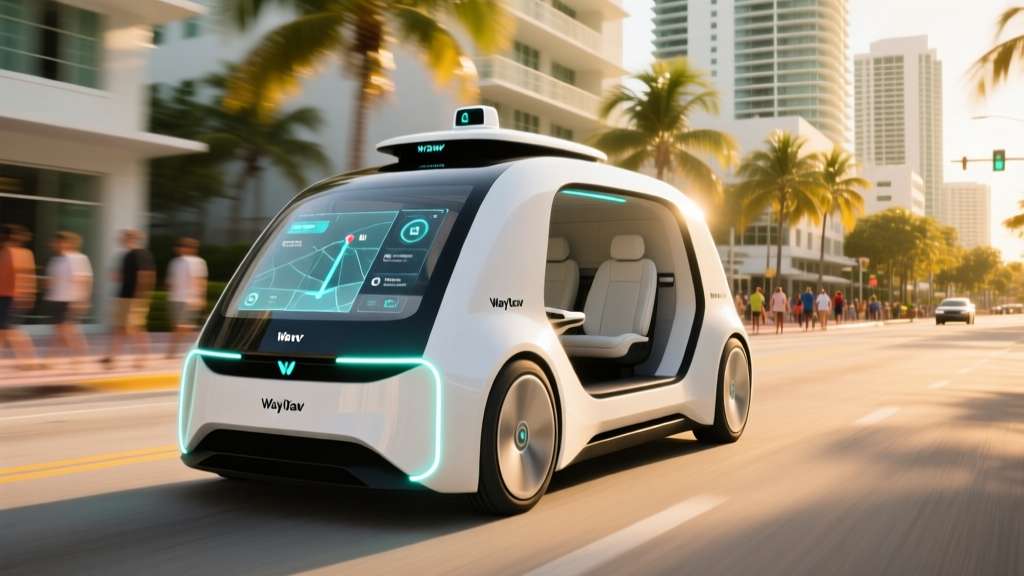
Inside the I-PACE, you'll find screens in the rear seat showing your route, trip progress, and climate/pull-over controls. You can request an early stop or pull-over through the screen at any time.
| Route | Distance | Waymo One | UberX | Lyft Standard |
|---|---|---|---|---|
| Santa Monica → DTLA | ~15 mi | $22–$30 | $24–$35 | $22–$33 |
| LAX → Hollywood | ~18 mi | $28–$38 | $30–$45 | $28–$42 |
| Culver City → Century City | ~5 mi | $12–$17 | $13–$19 | $12–$18 |
| DTLA → LAX | ~18 mi | $26–$36 | $28–$42 | $26–$40 |
Key pricing takeaway: Waymo One is priced to be competitive with standard UberX and Lyft rides — not cheaper, but not more expensive either. You will not find the extreme surge pricing that Uber/Lyft apply during peak demand, because Waymo's pricing model uses more modest demand-based adjustments. However, Waymo does not offer pooled/shared rides, so there's no budget-carpool option comparable to Uber Pool.
Tipping is not expected or possible — there's no driver to tip. This alone saves regular rideshare users $3–$5 per trip.
How Safe Are Waymo Robotaxis? The Real Data
This is the question that matters most, and it deserves a data-driven answer rather than marketing claims. Waymo has accumulated over 50 million fully autonomous miles across all markets as of early 2026, with millions more added each month. According to NHTSA reporting and Waymo's own published safety data, the record is strong — but not flawless.
- Total fully autonomous miles driven: 50+ million (all markets combined)
- Police-reported crash rate: Approximately 5.5 per million miles, compared to the human benchmark of ~5.5–8.0 per million miles (varies by source and severity threshold)
- Injury severity: The vast majority of Waymo-involved incidents are low-speed, minor-contact events. No fatalities have been attributed to a Waymo vehicle operating in autonomous mode as of early 2026.
- Common incident type: Stationary or low-speed contact — often when a Waymo stops in an unexpected position (e.g., blocking a lane to avoid an obstacle) and is rear-ended or sideswiped by a human driver.
Sources: NHTSA Standing General Order crash data, Waymo Safety Report 2025
The honest assessment: Waymo's crash rate is comparable to or better than human drivers in its operational areas, and its injury-causing crash rate is meaningfully lower. The vehicles are cautious — sometimes excessively so, which leads to the most common complaint: overly conservative driving that frustrates human drivers behind them. A Waymo will stop rather than push through an ambiguous gap, which is safer but can cause traffic backup.
It's also worth noting that IIHS has not yet published a dedicated robotaxi safety rating, and standardized third-party testing frameworks for Level 4 fleets are still evolving.
The Technology Under the Roof: Waymo's Sensor Stack
Every Waymo vehicle in LA is a Jaguar I-PACE (84 kWh usable battery, NMC chemistry, EPA range 234 miles) retrofitted with Waymo's 6th-generation "Waymo Driver" hardware suite. Unlike Tesla's camera-only approach, Waymo uses a multi-modal sensor stack designed for redundancy:
- LiDAR: Multiple roof-mounted and body-integrated units providing 360° 3D point-cloud mapping at up to 500+ meters. LiDAR works in darkness and is unaffected by sun glare — a key advantage over camera-only systems.
- Cameras: High-resolution surround cameras covering all angles, used for lane detection, traffic light state recognition, sign reading, and object classification.
- Radar: Imaging radar units for velocity detection of moving objects (other vehicles, cyclists) and operation in rain or fog where LiDAR performance can degrade.
- External audio sensors: Microphones that detect emergency vehicle sirens from any direction, triggering appropriate pull-over behavior.
- HD Mapping: Waymo pre-maps every street in its geofence at centimeter-level precision. The vehicle localizes itself against this map in real time, providing a layer of awareness beyond what sensors alone can detect.
This sensor fusion approach — LiDAR + cameras + radar + HD maps — is the industry standard for Level 4 robotaxis (Cruise, Zoox, and Aurora all use similar stacks). It's more expensive and computationally heavy than a camera-only system, but it provides the redundancy that regulators and safety engineers require for driverless operation.
The Jaguar I-PACE platform was chosen for its spacious interior, smooth ride quality, and all-electric powertrain (zero tailpipe emissions, low operating cost per mile). Each vehicle is estimated to drive 80,000–100,000+ miles per year in commercial service, far exceeding typical consumer usage.
Current Limitations: What Waymo Can't Do Yet
Level 4 autonomy within a geofence is not the same as Level 5 "drive anywhere, anytime." Understanding the limitations is essential for setting realistic expectations:
- Geofence boundary: If your trip starts or ends outside the mapped zone, Waymo cannot serve you. The zone is expanding but covers a fraction of the LA metro area.
- Heavy rain and flooding: While Waymo operates in light rain, severe downpours (common during LA's winter atmospheric rivers) can trigger the system to pull over or refuse to dispatch. LiDAR scatter in heavy precipitation remains a physical limitation.
- Construction zones: Major, unmapped road construction can confuse the system. Waymo will often choose an alternate route rather than navigate through a complex temporary lane configuration.
- Freeway driving: As of early 2026, Waymo One in LA operates primarily on surface streets. Highway/freeway operation is in testing but not yet part of the commercial service in most markets (Phoenix has limited freeway segments approved).
- Passenger capacity: Current I-PACE vehicles seat up to 3 rear passengers. There's no wheelchair-accessible vehicle (WAV) option widely available, though Waymo has announced pilot programs.
- Stops and errands: You cannot ask the vehicle to wait for you while you run into a store. The trip is point A to point B. If you need a stop in between, you'll need to end the trip and request a new one.
- Pets and large cargo: Service animals are permitted; pets and oversized items (bicycles, large luggage beyond trunk capacity) are generally not accommodated.
The Regulatory Framework: Who Approves Waymo in LA?
Robotaxi operations in California require approval from multiple agencies, making it one of the most tightly regulated AV environments in the world:
- California DMV: Issues the Autonomous Vehicle Testing Permit and the Deployment Permit. Waymo holds a deployment permit allowing commercial driverless operation.
- California Public Utilities Commission (CPUC): Regulates Waymo as a passenger carrier (similar to how it regulates Uber/Lyft). The CPUC issued Waymo a TCP (Transportation Charter-Party Carrier) permit, which is required to charge passengers for rides.
- NHTSA (Federal): Oversees vehicle safety standards and crash reporting through the Standing General Order, which mandates that all Level 2+ and Level 4 systems report crashes within 24 hours.
- City of Los Angeles / LADOT: While the state grants operational permits, local agencies influence curb access, pickup/dropoff zones, and LAX integration. LAX access required a separate agreement with Los Angeles World Airports (LAWA).
This multi-layered oversight means that any serious safety incident can trigger investigations from multiple agencies simultaneously. It also means that expansion to new California cities requires regulatory coordination, which slows growth but adds accountability.
Frequently Asked Questions
How many Waymo cars are in Los Angeles right now?
Based on available data, Waymo operates approximately 700–1,000 vehicles in the LA service area as of early 2026. The exact number fluctuates as vehicles rotate in for maintenance and new units are deployed. Waymo does not publish a live fleet counter.
Can I use Waymo to get to LAX?
Yes. LAX pickups and drop-offs went live in 2025. The app will direct you to designated ride-hail areas at each terminal. Pricing from the Westside to LAX typically runs $15–$25 depending on exact origin.
Is there a Waymo waitlist in LA?
Waymo One in LA initially launched as invite-only, but the service has progressively opened to the general public. As of 2026, most users in the service area can download the app and request a ride without a waitlist, though some high-demand periods may show longer wait times.
What vehicle does Waymo use in Los Angeles?
All LA rides use the Jaguar I-PACE, a fully electric SUV with an 84 kWh NMC battery, EPA-rated 234-mile range, and 394 horsepower. The interior is modified with rear-seat touchscreens and pull-over controls but retains the stock I-PACE ride quality and cabin space.
Is Waymo safer than a human driver?
Based on NHTSA crash data, Waymo's police-reported crash rate per million miles is comparable to or slightly better than the human average, and its injury-causing crash rate is meaningfully lower. The vehicles are notably more cautious than typical LA drivers, which reduces collision severity but can cause frustration in heavy traffic.
Does Waymo drive on LA freeways?
Not yet in commercial service. Waymo One in LA currently operates on surface streets within the geofence. Freeway operation is being tested but has not been approved for paying passengers in the LA market as of early 2026.
What happens if the Waymo vehicle breaks down mid-trip?
The vehicle will pull over safely, and Waymo's remote operations team (called "Fleet Response") monitors all vehicles in real time. You can contact support through the in-car screen or the app. If the vehicle cannot continue, you'll be refunded for the unused portion of the trip, and you can request another vehicle.