Why the SAE Levels Matter Before You Trust Any System
Every automaker and tech company wants you to believe their car drives itself. The marketing blur is relentless: "Full Self-Driving," "Autopilot," "Super Cruise," "Hands-Free." But behind every claim sits a precise engineering classification from SAE International (formerly the Society of Automotive Engineers) that tells you exactly what the car can and cannot do — and more importantly, who is liable when something goes wrong.
The SAE J3016 standard defines six levels of driving automation, from Level 0 (no automation) to Level 5 (full automation everywhere, always). As of 2026, consumer vehicles sold in the United States top out at Level 2 or, in limited cases, Level 3. True driverless robotaxi services operating without a human behind the wheel are classified as Level 4 — but only within tightly defined geographic and environmental boundaries. Level 5 does not exist in production anywhere on Earth.
Understanding these distinctions isn't academic. It determines whether you can legally take your eyes off the road, whether your insurance covers an incident, and whether the vehicle you're riding in has a fallback plan when its sensors fail. Let's break down every level, then examine where real robotaxi services stand today.
The Complete SAE Autonomous Driving Levels Breakdown
| SAE Level | Name | Who Drives? | Who Monitors the Environment? | Fallback Ready User Required? | Real-World Example (2026) |
|---|---|---|---|---|---|
| 0 | No Automation | Human | Human | N/A | Any car without ADAS; emergency braking only (warning, no sustained control) |
| 1 | Driver Assistance | Human + system (one axis) | Human | Yes | Adaptive cruise control OR lane-keeping assist (not both simultaneously as a combined system) |
| 2 | Partial Automation | System (steering + speed) | Human | Yes — must supervise at all times | Tesla Autopilot, GM Super Cruise, Ford BlueCruise, Toyota Safety Sense, Honda Sensing |
| 3 | Conditional Automation | System | System (with fallback request) | Yes — must be ready to take over when prompted | Mercedes-Benz DRIVE PILOT (approved in NV and CA, ≤40 mph, specific highways only) |
| 4 | High Automation | System (within ODD) | System | No — no human fallback required inside the Operational Design Domain | Waymo One (Phoenix, SF, LA), Zoox (Las Vegas, Foster City) |
| 5 | Full Automation | System (everywhere, always) | System | No | Does not exist in production as of 2026 |
Where Can You Actually Use a Level 4 Robotaxi Right Now?
Level 4 robotaxi services are not available everywhere. They operate within geofenced Operational Design Domains (ODDs) — mapped zones where the system has been validated for road geometry, traffic patterns, and infrastructure. Step outside the geofence, and the ride either won't start or the vehicle will execute a minimal-risk maneuver (pull over safely).
| Service | Operator | Live Cities | Vehicle Platform | Service Hours | Access |
|---|---|---|---|---|---|
| Waymo One | Waymo (Alphabet) | Phoenix metro (East Valley + downtown), San Francisco, Los Angeles | Jaguar I-PACE (custom sensor suite), next-gen Zeekr RT | 24/7 in Phoenix & SF; limited overnight in LA | Open to public via Waymo app |
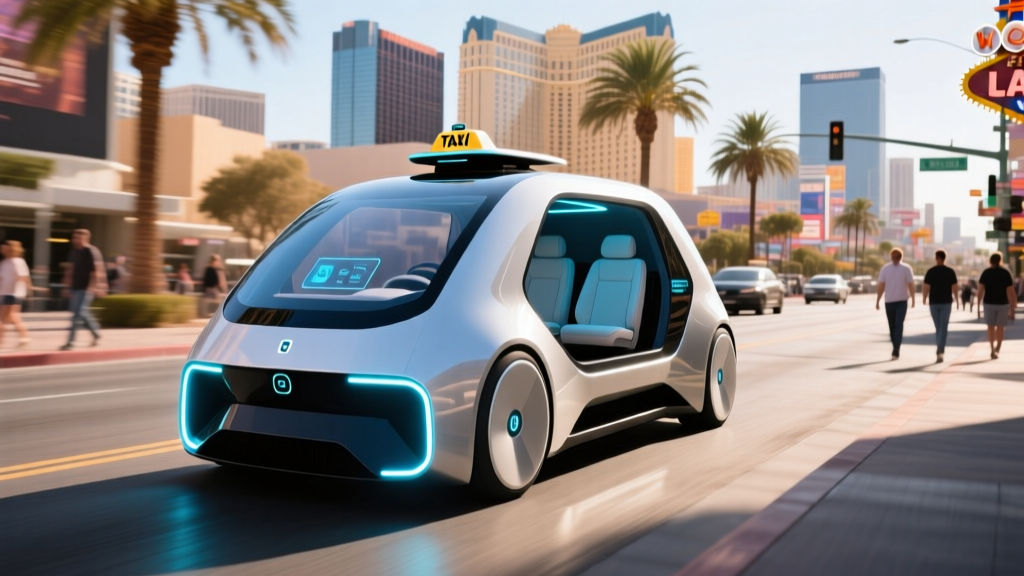
| Zoox | Zoox (Amazon) | Las Vegas (Strip corridor area), Foster City, CA | Zoox purpose-built bidirectional vehicle (no steering wheel) | Limited hours; expanding | Invite-based / early rider programs |
| Cruise (reduced ops) | Cruise (GM) | Phoenix (limited supervised), Dallas (testing) | Chevrolet Bolt EV / Origin (paused in many markets) | Limited daytime | Restricted; safety driver present in most deployments post-2023 incident |
| Motional (Hyundai/Aptiv) | Motional | Las Vegas (partnership with Uber/Lyft for select rides) | Hyundai IONIQ 5 (robotaxi variant) | Select hours | Via rideshare apps in limited zones |
Where can I use this robotaxi service right now? If you live in or visit Phoenix, San Francisco, or Los Angeles, you can download the Waymo One app and request a fully driverless ride today — no waitlist, no safety driver in the front seat. Las Vegas offers limited Zoox and Motional rides. Everywhere else in the US, Level 4 robotaxi service is not yet commercially available to the public.
How Much Does a Robotaxi Cost vs. Uber and Lyft?
Pricing is the first question practical riders ask. Robotaxi services need to undercut or match conventional rideshare to win repeat riders, but the economics of expensive sensor suites and remote-assistance operators make that challenging.
| Metric | Waymo One | UberX (same market) | Lyft Standard (same market) |
|---|---|---|---|
| Base fare (5-mile trip, Phoenix) | ~$9–$14 | ~$10–$16 | ~$9–$15 |
| Surge pricing frequency | Rare (capacity-limited, not demand-surge priced) | Common during peak hours | Common during peak hours |
| Promo/discount availability | Frequent introductory credits for new riders | Uber One membership discounts | Lyft Pink membership discounts |
| Tipping expected? | No (no driver) | Yes ($2–$5 typical) | Yes ($2–$5 typical) |
| Wait time (average) | 3–8 min in core zones | 2–6 min | 2–6 min |
How much does it cost vs Uber/Lyft? In practice, a Waymo One ride in Phoenix or San Francisco is priced comparably to UberX or Lyft Standard for the same route — typically within $1–$3 of a conventional rideshare. The key difference: no tipping (there's no driver), and surge pricing is uncommon because Waymo manages fleet capacity rather than responding to real-time demand spikes. For airport runs and longer trips, Waymo can sometimes be cheaper because it doesn't add per-minute waiting charges the way a human driver might factor into pricing. However, Waymo's geofence may not cover all destinations, especially suburban fringes, which limits its utility for some trips.
Robotaxi Safety Record: What the Data Actually Shows
Safety is where hype meets reality. Robotaxi companies publish disengagement reports, and state regulators (particularly the California DMV and the California Public Utilities Commission) collect incident data. The National Highway Traffic Safety Administration (NHTSA) also tracks standing general orders for crashes involving automated driving systems.
How safe are robotaxis (real data)? The data indicates that Waymo's Level 4 fleet, operating within its validated ODD, has a lower police-reported crash involvement rate than human drivers in the same cities. However, important context is required:
- Severity profile: Most robotaxi-involved crashes are low-speed, minor-contact incidents (being rear-ended at stoplights, sideswiped during lane changes). Fatalities involving Level 4 robotaxis in commercial service have been exceedingly rare compared to human-driven vehicles per mile.
- Cruise incident (Oct 2023, San Francisco): A Cruise vehicle struck a pedestrian who was thrown into its path by a human-driven car, then dragged the pedestrian ~20 feet. This incident led to Cruise's California permit suspension, a fleet-wide pause, and a fundamental restructuring of their operations. It illustrates how edge cases — a pedestrian entering the vehicle's path from an unusual trajectory — remain challenging.
- Disengagement vs. intervention: California DMV disengagement reports (where a safety driver or remote operator must take control) have shown intervention rates of roughly 1 per 5,000–15,000 miles for leading operators, improving year-over-year. However, companies define "disengagement" differently, making direct comparison unreliable.
- Exposure bias: Robotaxis drive millions of urban miles in dense traffic — exactly where crash rates are highest. Their safety performance in this context is notable, but it does not translate to highway speeds, rural roads, or adverse weather.
For authoritative crash data, consult the NHTSA Standing General Order on ADS crashes and state-level reports from the California DMV Autonomous Vehicle Program.
Technology Stack: Lidar, Cameras, and the Sensor Debate
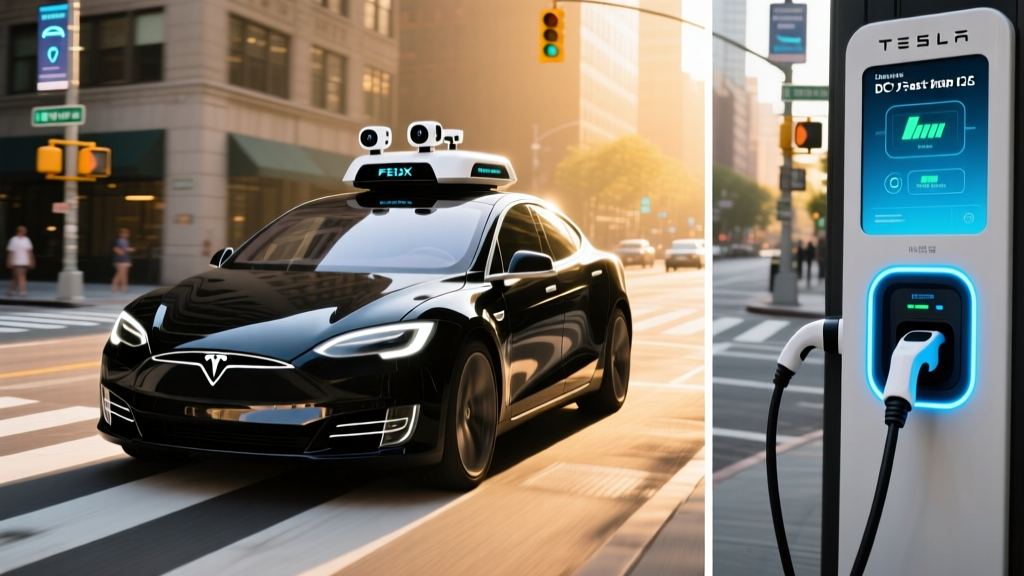
Every Level 4 robotaxi in commercial service today relies on a multi-sensor fusion approach — combining lidar, cameras, and radar to build a redundant 3D model of the environment in real time. The notable exception is Tesla, which uses a camera-only ("Tesla Vision") approach for its Level 2 FSD (Supervised) system — but Tesla's system remains Level 2, requiring driver supervision, and is not a robotaxi.
Typical Level 4 Robotaxi Sensor Suite (e.g., Waymo 6th-generation):
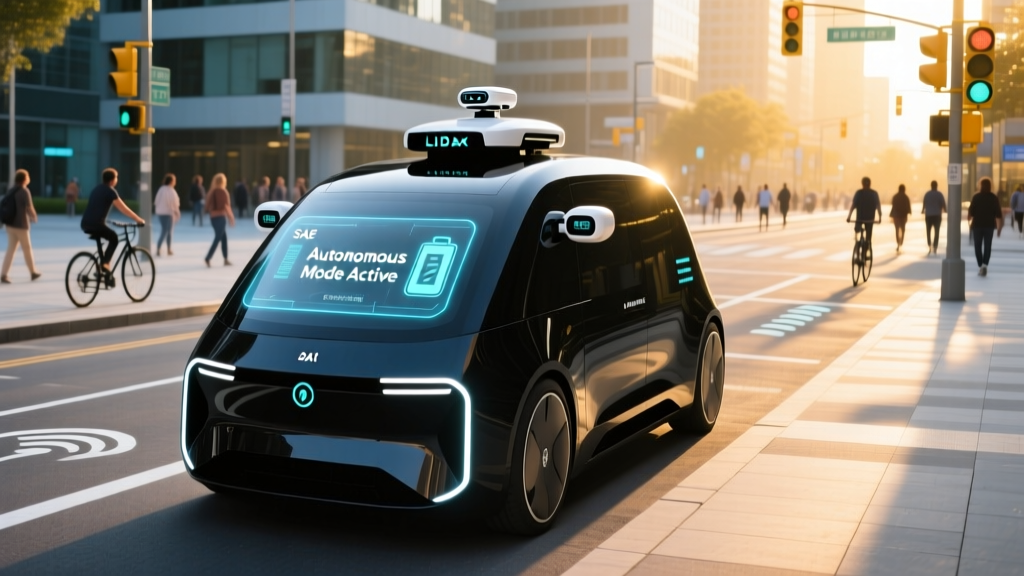
- Lidar: Multiple roof- and body-mounted units providing 360° 3D point clouds. Range: ~500 meters. Lidar excels at precise distance measurement regardless of lighting conditions — critical for night driving and detecting objects cameras might miss.
- Cameras: 20+ high-resolution cameras covering all directions, handling lane markings, traffic light state recognition, sign reading, and object classification.
- Radar: Imaging radar units for velocity detection of moving objects, performance in rain/fog where lidar scatters, and redundancy.
- HD Maps: Pre-built centimeter-accuracy maps of every road in the geofence, updated regularly. The vehicle localizes itself within these maps to know exactly where it is — not just which road, but which lane and which inch of that lane.
- Compute: Custom AI inference hardware (often GPU- or TPU-based) processing terabytes of sensor data per hour in real time, running perception, prediction, and planning models simultaneously.
Geofencing is the other half of the technology story. Level 4 systems operate only within a pre-mapped, pre-validated zone. The ODD includes constraints on road types (no unpaved roads, typically no highways above 45–65 mph depending on the operator), weather conditions (many systems degrade or refuse service in heavy rain, snow, or dense fog), and time of day. When conditions fall outside the ODD, the vehicle will not begin the trip or will safely pull over.
Regulatory Landscape: Who Approves Robotaxi Operations?
There is no single federal robotaxi license in the United States. Regulation is a patchwork of federal, state, and local authority:
- Federal (NHTSA): Sets vehicle safety standards (FMVSS). Has granted limited exemptions for vehicles without steering wheels or pedals (e.g., Zoox, Cruise Origin). Issues Standing General Orders requiring crash reporting for ADS-equipped vehicles. Does not approve or license robotaxi operations directly.
- State — California (DMV + CPUC): The DMV issues testing and deployment permits. The California Public Utilities Commission (CPUC) regulates commercial passenger service (the "drivered" and "driverless" pilot programs). Permits can be suspended, as happened with Cruise in October 2023.
- State — Arizona: Among the most permissive regimes. No specific state permit required for testing or commercial deployment beyond standard business and vehicle registration requirements. This is why Phoenix was Waymo's first commercial market.
- State — Nevada: Requires an autonomous vehicle testing license and has approved Mercedes-Benz DRIVE PILOT (Level 3) for consumer use on specific highways.
- State — Texas: Allows autonomous vehicle testing and deployment under a framework administered by the Texas Department of Transportation. Cruise and Waymo have operated in Austin and other cities under various permits.
- Local/municipal: Cities often negotiate operating agreements covering fleet size, service zones, accessibility requirements, and data sharing. San Francisco's Board of Supervisors and the SF County Transportation Authority have been vocal stakeholders in the expansion process.
The regulatory environment is evolving rapidly. Following the Cruise incident, several states tightened reporting requirements, and the CPUC instituted new conditions for driverless permits including real-time data access for first responders and stricter incident-response protocols.
Current Limitations: What Level 4 Robotaxis Cannot Do
What are the current limitations? Level 4 autonomy is genuinely impressive within its domain, but that domain is narrow. Here are the hard constraints that every potential rider should understand:
- Weather restrictions: Heavy rain, snow, ice, and dense fog degrade lidar and camera performance. Most services will not operate in these conditions. Waymo in Phoenix rarely faces this issue; Waymo in San Francisco occasionally pauses service during atmospheric rivers. Snow-belt cities are not viable for current-generation Level 4.
- Geofence boundaries: You cannot hail a robotaxi to a destination outside the mapped ODD. Suburban sprawl, rural roads, and most highways are excluded. If your trip crosses the boundary, the service simply won't offer it.
- Construction zones: Temporary lane shifts, flaggers, and unmapped detours remain among the hardest edge cases. Robotaxis will often stop and wait for remote-assistance guidance, which can cause delays of several minutes or result in a trip cancellation.
- Unusual road users: Encounters with horses, oversized loads, funeral processions, protest marches, or emergency vehicles behaving unpredictably can cause the system to stop and request remote intervention. These "long-tail" scenarios are where human drivers still outperform.
- Multi-level parking and valet: Robotaxis drop you at the curb. They cannot navigate parking garages, driveways, or private property. Pickup/dropoff points are restricted to public roadways within the geofence.
- Accessibility: While operators are working on wheelchair-accessible vehicles, current fleets are predominantly standard sedans or crossovers. Zoox's purpose-built vehicle offers more interior flexibility but is limited in deployment scale.
- No intercity travel: These are urban point-to-point services. A Phoenix-to-Tucson or SF-to-LA trip is not possible. The vehicle is designed for speeds up to ~65 mph and validated only on specific road types within its zone.
Frequently Asked Questions
Can I buy a Level 4 autonomous car for personal use?
No. As of 2026, no Level 4 vehicle is available for consumer purchase. Level 4 systems are deployed exclusively as fleet-operated robotaxi services. The hardware, software, HD mapping, and remote-assistance infrastructure required make individual ownership impractical and prohibitively expensive. Consumer vehicles max out at Level 2 (most brands) or Level 3 (Mercedes-Benz DRIVE PILOT, under strict conditions).
How does Waymo handle a situation it can't navigate?
Waymo vehicles have a fallback protocol: if the onboard system encounters a scenario it cannot resolve (e.g., an unmapped construction zone, a police officer directing traffic with hand signals), the vehicle will execute a minimal-risk maneuver — typically pulling over to a safe stop. A remote-assistance operator can then provide high-level guidance (not remote driving, but route or maneuver approval) to help the vehicle proceed or the trip is ended and the rider is credited.
Are robotaxis available at airports?
Waymo One serves Phoenix Sky Harbor International Airport (PHX) with designated pickup/dropoff zones. San Francisco International Airport (SFO) service has been in testing and phased rollout. Airport access requires specific agreements with airport authorities, so availability varies by city and is expanding gradually.
What happens if a robotaxi gets into a crash?
The vehicle is designed to stop safely, contact emergency services if needed, and notify the operations center. As a rider, you are a passenger — liability falls on the operating company (Waymo, Zoox, etc.) and their insurance, not on you. This is fundamentally different from Level 2 driver-assist, where the human driver retains liability.
When will Level 5 (full autonomy everywhere) arrive?
No credible industry source projects a specific date for Level 5 autonomy. The challenges — handling every road, every weather condition, every jurisdiction, every edge case worldwide without HD maps — are orders of magnitude harder than the geofenced Level 4 problem. Most experts project Level 5 is at least a decade or more away from commercial viability, and some question whether it is achievable with current AI paradigms. Be skeptical of any company promising imminent Level 5 capability.
Do robotaxis work at night?
Yes, in most markets. Waymo One operates 24/7 in Phoenix and San Francisco. Lidar and radar are not dependent on ambient light, so nighttime performance is strong — in some respects better than a human driver's, since lidar "sees" equally well in total darkness. However, nighttime introduces different edge cases (impaired pedestrians, reduced visibility of road markings for cameras) that the system must handle.