Is Waymo Actually Driving in Dallas? The 2026 Status
The search for a Waymo Dallas map reflects real demand: Dallas-Fort Worth is one of the largest metro areas in the U.S., and residents want to know whether Alphabet's driverless taxi service has reached their streets. As of mid-2026, Waymo has expanded beyond its original launch cities, and Dallas is part of that growth trajectory — but the operational footprint is specific, geofenced, and far smaller than the full metroplex.
This guide breaks down exactly where Waymo operates in the Dallas area, what it costs, how the technology works, what the safety record shows, and where the hard boundaries of Level 4 autonomy still exist. No hype, no speculation — just the data you need before opening the app.
Where Can I Use Waymo in Dallas Right Now?
Waymo's Dallas service area is geofenced — meaning the vehicles will only operate within a digitally mapped boundary approved by the company and local regulators. As of 2026, the active zone covers select corridors rather than the entire city.
| Zone | Status | Key Areas Covered | Notes |
|---|---|---|---|
| Downtown Dallas | Active | Arts District, West End, Deep Ellum perimeter | Core operating zone; highest availability |
| Uptown / Midtown | Active | Knox-Henderson, McKinney Ave corridor | Dense pickup coverage during daytime hours |
| Dallas Love Field Airport | Active | Airport terminals and rental car areas | Designated pickup/dropoff zones only |
| DFW International Airport | Limited / Announced | Select terminal access | Check app for live availability; phased rollout |
| Plano / Frisco (Northern Suburbs) | Not yet active | — | Under evaluation; no confirmed launch date |
| Fort Worth | Not yet active | — | Not in current operational map |
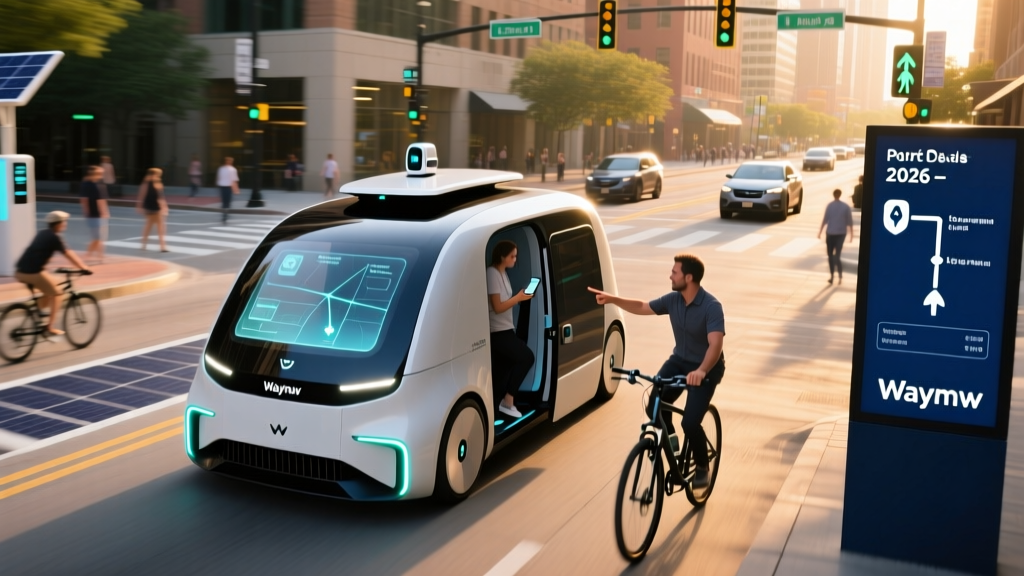
How to check the live map: Open the Waymo One app and enter your pickup and dropoff addresses. The app will confirm whether both points fall within the active geofence. If either endpoint is outside the boundary, the ride cannot be booked. Waymo does not publish a static public map — the geofence is dynamic and can expand or contract based on mapping updates and regulatory approvals.
SAE Automation Level: What "Driverless" Actually Means
Understanding Waymo's autonomy level is critical because it defines what the vehicle can and cannot do — and who is liable when something goes wrong.
| SAE Level | Name | Driver Required? | Example Systems |
|---|---|---|---|
| Level 0 | No Automation | Yes — full control | Legacy vehicles, no ADAS |
| Level 1 | Driver Assistance | Yes — hands on wheel | Adaptive cruise control, lane-keep |
| Level 2 | Partial Automation | Yes — must supervise at all times | Tesla Autopilot/FSD Supervised, GM Super Cruise, Ford BlueCruise |
| Level 3 | Conditional Automation | Sometimes — system drives, driver must take over on request | Mercedes DRIVE PILOT (limited markets/highways) |
| Level 4 | High Automation | No — no driver present in geofenced areas | Waymo One, Zoox (limited zones) |
| Level 5 | Full Automation | No — any road, any condition | Does not exist commercially as of 2026 |
Waymo Dallas Pricing vs. Uber and Lyft
Robotaxi pricing has evolved as Waymo scaled operations. In Dallas, Waymo One pricing is designed to compete with conventional rideshare, though it is not always cheaper.
| Service | Base Fare | Per Mile | Per Minute | Typical 5-Mile Ride | Surge Pricing? |
|---|---|---|---|---|---|
| Waymo One | ~$3.50 | ~$1.25 | ~$0.35 | $11–$14 | No dynamic surge; limited availability instead |
| UberX | ~$2.50 | ~$1.10 | ~$0.30 | $9–$16 | Yes — can 1.5x–3x during peak |
| Lyft Standard | ~$2.75 | ~$1.05 | ~$0.28 | $9–$15 | Yes — Prime Time pricing |
Key pricing insight: Waymo does not use surge pricing. During high-demand periods (rush hour, events, bad weather), Uber and Lyft can spike to 2x or 3x their base rates, making Waymo the cheaper option precisely when rideshare gets expensive. However, during off-peak hours, a standard UberX or Lyft ride may undercut Waymo by $2–$4. The tradeoff is consistency: Waymo's price is the price, regardless of demand.
How to book: Download the Waymo One app (iOS/Android), create an account, enter your destination, and confirm pickup. Payment is processed in-app via credit/debit card. Tipping is not expected or prompted — there is no driver.
Waymo Safety Record: What the Data Shows
Safety is the most scrutinized aspect of robotaxi operations. Waymo publishes safety data, and independent researchers have analyzed it. Here is what we know as of 2026.
- Total autonomous miles driven: Over 30 million fully driverless miles across all U.S. markets (Phoenix, San Francisco, Los Angeles, Dallas, Austin)
- Injury-causing crash rate: Waymo reports an approximately 85% lower rate of injury-causing crashes compared to human benchmark data, per their published safety studies
- Police-contactable crash rate: Approximately 57% lower than human drivers in comparable urban environments
- Contactable incidents per million miles: Significantly below the human baseline of ~4.9 per million miles (NHTSA urban average)
Sources: Waymo Safety Reports, NHTSA. Note: Waymo's comparison methodology has been debated by independent researchers. The data reflects Waymo's own analysis of their fleet.
Context on incidents: Waymo vehicles have been involved in minor collisions — predominantly low-speed, property-damage-only events such as sideswipes in construction zones or contact with improperly parked vehicles. The NHTSA Standing General Order requires all operators of automated driving systems to report crashes, and Waymo's filings are publicly accessible. No robotaxi fatality involving a Waymo vehicle in autonomous mode has been reported in the U.S. as of mid-2026.
The honest caveat: Waymo operates primarily in well-mapped urban corridors with moderate speed limits (typically under 45 mph). The safety data reflects these conditions. Highway-speed autonomous operation in complex, unmapped environments remains untested at scale.
Technology Stack: How Waymo's 6th-Gen Vehicle Sees the Road
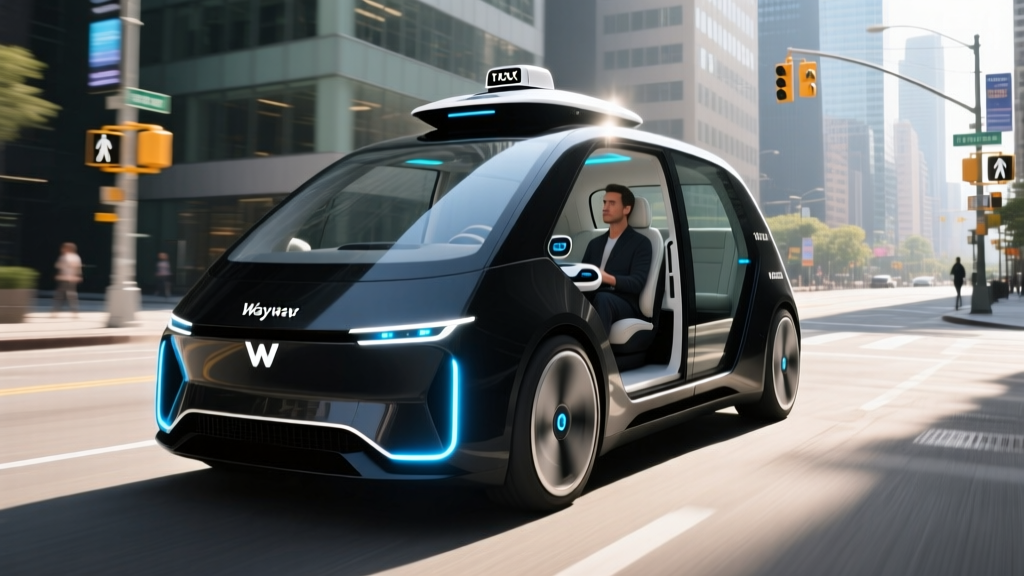
Waymo's current Dallas fleet uses the 6th-generation Waymo Driver hardware suite, integrated into the Zeekr M-Vision vehicle platform (a purpose-built electric robotaxi). This represents a significant upgrade from the earlier Chrysler Pacifica-based fleet.
Sensor Suite — 6th Generation
- LiDAR: Multiple solid-state and spinning LiDAR units providing 360° 3D point-cloud mapping up to 500+ meters. LiDAR is the core sensor — it does not rely on ambient light and works in darkness.
- Cameras: High-resolution camera array (8+ units) for traffic light detection, sign reading, lane marking identification, and object classification. Cameras complement LiDAR with color and texture data.
- Radar: Multiple radar units for velocity detection of moving objects, particularly in rain or fog where LiDAR and cameras degrade.
- Audio sensors: External microphones to detect emergency vehicle sirens and adjust behavior accordingly (pull over, yield).
Software and Mapping
- HD Maps: Centimeter-precision 3D maps of every operational road within the geofence. The vehicle localizes itself within this map in real time — it always knows its position to within centimeters.
- Waymo Driver AI: Machine learning models trained on billions of simulation miles and tens of millions of real-world miles. Handles prediction (what will that pedestrian do?), planning (optimal path), and control (steering, braking, acceleration).
- Geofencing: The system will not operate outside its approved mapped boundary. If a route would take the vehicle beyond the geofence, the ride cannot be booked.
LiDAR vs. Camera-Only: Why It Matters
Tesla's FSD system relies exclusively on cameras (a "vision-only" approach). Waymo uses a multi-sensor fusion approach with LiDAR as the primary depth sensor. The practical difference: LiDAR provides direct distance measurement regardless of lighting conditions, while camera-only systems must infer depth from 2D images — a harder computational problem, especially at night, in direct sun glare, or in fog. Both approaches have trade-offs, but for unsupervised Level 4 operation, every current commercial robotaxi uses LiDAR.
Regulatory Landscape: Who Approves Robotaxi Operations in Texas?
Robotaxi deployment in the U.S. requires navigation of a patchwork of state and local regulations. Texas has been relatively permissive compared to states like California, which has imposed stricter permitting requirements.
- State level: Texas passed autonomous vehicle legislation (HB 3182 and subsequent updates) that permits the operation of fully driverless vehicles on public roads without a human safety operator, provided the vehicle meets federal motor vehicle safety standards and the operator maintains adequate insurance.
- City level: The City of Dallas and Dallas Area Rapid Transit (DART) have cooperated with Waymo on operational agreements covering pickup/dropoff zones, data sharing, and coordination with emergency services.
- Federal level: The NHTSA regulates vehicle safety standards but does not currently issue operational permits for robotaxis. The agency's Standing General Order requires crash reporting from all ADS operators. Broader federal robotaxi regulation remains under discussion as of 2026.
- Insurance and liability: Waymo carries commercial insurance policies covering its driverless operations. In a Level 4 system with no human driver, liability for at-fault incidents falls on the operator (Waymo), not the passenger.
Current Limitations: Where Waymo in Dallas Falls Short
Level 4 autonomy is powerful but bounded. Here are the real-world constraints you will encounter using Waymo in Dallas.
Hard Limitations
- Geofence boundaries: You cannot ride to Plano, Irving, Arlington, Fort Worth, or most suburbs. If your destination is outside the mapped zone, the app will reject the ride.
- Severe weather: Heavy rain, hail, ice storms, or dense fog can trigger service suspension. Waymo's sensors degrade in these conditions, and the system will pull over or refuse to dispatch. Dallas spring storms and occasional winter ice events are real operational risks.
- Construction zones: Major road construction with shifted lanes, temporary barriers, or missing lane markings can confuse the system. Waymo may reroute or, in rare cases, execute a safe pull-over and end the trip early.
- Speed limits: Waymo currently operates on roads with speed limits up to approximately 45 mph in Dallas. Highway driving (I-35, I-635, Dallas North Tollway at 60-70 mph) is not part of the current service area.
- Wait times: Fleet size is limited. During peak hours, expect 5–15 minute wait times. In low-demand periods or at the edges of the geofence, waits can stretch to 20+ minutes — or no vehicles may be available at all.
- No car seats: Waymo vehicles do not provide child safety seats. Children under 8 (or under the height/weight threshold) cannot ride without an appropriate car seat brought by the passenger — and installation in the robotaxi is the rider's responsibility.
- Accessibility: Waymo has been deploying wheelchair-accessible vehicles (WAVs) in select markets, but availability in Dallas is limited. Check the app for WAV options; standard vehicles require the ability to enter a sedan-style seat.
Frequently Asked Questions
Is Waymo truly self-driving, or is there a remote human operator?
Waymo is SAE Level 4 — fully driverless within its geofence. There is no human behind the wheel, and no remote operator controlling the vehicle in real time. Waymo does have a remote assistance team that can provide high-level guidance (e.g., confirming it is safe to proceed past an unusual obstacle), but the vehicle's AI makes all real-time driving decisions. The remote team cannot steer, brake, or accelerate the car directly.
How much does a Waymo ride cost compared to Uber in Dallas?
A typical 5-mile Waymo ride in Dallas costs approximately $11–$14, comparable to UberX's off-peak rate of $9–$12. However, Waymo does not surge-price during high demand, so during rush hour or major events, Waymo can be significantly cheaper than Uber/Lyft. Off-peak, Uber may be $2–$4 less.
Can I take Waymo from Dallas to Fort Worth or DFW Airport?
As of 2026, Waymo's Dallas geofence does not extend to Fort Worth. DFW International Airport service is in a limited/phased rollout — check the Waymo One app for live availability. Dallas Love Field is actively served.
What happens if the Waymo vehicle encounters an emergency?
The vehicle is programmed to execute a Minimal Risk Condition (MRC): it will signal, pull to the side of the road, and stop. Passengers can contact Waymo support via the in-app help button or the in-vehicle screen at any time. Emergency services (911) can be contacted from inside the vehicle. Waymo's remote assistance team monitors the fleet and can dispatch roadside support if needed.
Does Waymo operate at night in Dallas?
Yes. Waymo's LiDAR-based sensor suite does not depend on visible light, so nighttime operation is a strength of the platform. Service hours in Dallas typically run from early morning through late evening, but exact hours vary — check the app for current availability windows.
How is Waymo different from Tesla's Full Self-Driving?
They are fundamentally different systems at different SAE levels. Tesla FSD (Supervised) is Level 2 — a driver-assist system that requires a licensed, attentive human driver who is legally responsible for the vehicle at all times. Waymo is Level 4 — no driver is present, and Waymo assumes liability for the vehicle's operation within its geofence. A Tesla with FSD cannot operate without a human in the driver's seat. A Waymo robotaxi has no driver's seat controls accessible to passengers.
What vehicle does Waymo use in Dallas?
As of 2026, Waymo's Dallas fleet primarily uses the 6th-generation Waymo Driver integrated into the Zeekr M-Vision electric vehicle — a purpose-built robotaxi platform with sliding doors, a spacious rear cabin, no steering wheel, and in-ride screens for trip information and climate control. Some legacy Jaguar I-PACE vehicles from earlier fleet generations may still operate in select markets.