The Reality of Commercial Autonomous Trucking Deployments
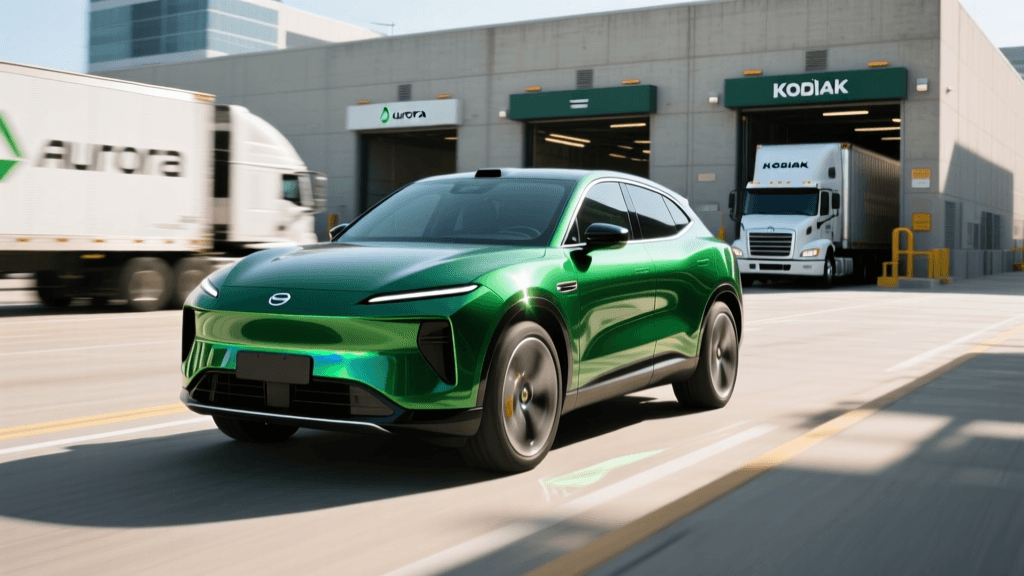
Autonomous trucking has rapidly transitioned from closed-track testing to active, revenue-generating commercial freight operations. Industry leaders like Aurora Innovation, Kodiak Robotics, and Torc Robotics are now deploying SAE Level 4 autonomous systems on Class 8 chassis across major freight corridors in Texas, Arizona, and the Sun Belt. However, for fleet managers and logistics coordinators, scaling these operations introduces a complex web of technical and operational bottlenecks. Unlike passenger robotaxis that operate in dense urban grids, autonomous freight haulers face unique challenges related to heavy-duty vehicle dynamics, massive sensor suites, and the logistics of highway-to-local transfer hubs. Troubleshooting these deployment bottlenecks requires a deep understanding of sensor fusion, yard management, and over-the-air (OTA) diagnostics.
Troubleshooting Sensor Suite Degradation and Calibration Drift
The perception stack of an autonomous Class 8 truck relies on a delicate balance of LiDAR, radar, and high-resolution cameras. Because heavy-duty trucks endure significant vibration, chassis flex, and harsh environmental conditions, sensor misalignment is one of the most frequent causes of operational downtime. When a truck enters a Minimal Risk Condition (MRC) and pulls over due to a perception fault, fleet technicians must follow a structured troubleshooting protocol.
Step-by-Step Diagnostic Protocol for Perception Faults
- Inspect Physical Obstructions: Before assuming a software fault, check for physical blockages. Bug splatter, road tar, and ice can severely degrade camera and LiDAR performance. Verify that the automated pneumatic sensor cleaning systems (a staple in Kodiak Robotics deployments) are maintaining adequate air pressure and fluid levels.
- Verify Extrinsic Calibration: Heavy braking and highway expansion joints can cause micro-shifts in sensor mounting brackets. Run an OTA diagnostic sweep to compare the current LiDAR point cloud overlay against the baseline map. If the extrinsic calibration drift exceeds the manufacturer threshold (typically measured in milliradians), the truck must be routed to a depot for manual recalibration.
- Assess Suspension Health: A degraded suspension system increases the pitch and yaw of the truck cab, which can overwhelm the sensor fusion algorithm's ability to stabilize the horizon line. If a specific chassis repeatedly flags sensor faults, troubleshoot the cab air bags and shock absorbers.
- Check Radar Clutter: The massive front grille of a Class 8 truck can trap debris or ice, causing phantom braking events. Ensure the radar-transparent fascia is intact and free of metallic debris or thick mud buildup.
Resolving Transfer Hub Logistics and Handoff Delays
The dominant business model for autonomous trucking is the hub-to-hub network. Human drivers handle the complex, unpredictable first and last miles, while the autonomous system manages the long-haul highway segments. The transfer hubs—massive staging yards located just outside major highways—are where the most severe deployment bottlenecks occur. Delays here cascade through the entire supply chain.
When autonomous trucks experience handoff delays, the root cause is often a mismatch between the yard management system (YMS) and the truck's localized HD map. If a transfer hub undergoes physical changes—such as repaved asphalt, shifted fencing, or new potholes—the truck's localized mapping may fail to align with its GPS and LiDAR data, preventing it from autonomously navigating to the designated drop lot.
Optimizing Yard Operations
To troubleshoot transfer hub bottlenecks, fleet operators must implement strict change-management protocols for yard infrastructure. Any physical alteration to the hub must be immediately scanned by a mapping vehicle and pushed to the fleet via OTA updates. Furthermore, troubleshooting network latency is critical. Teleoperation handoffs require stable, high-bandwidth 5G or Wi-Fi 6 connections. If a truck is stuck in the staging lane waiting for remote operator clearance, IT teams must audit the local network for packet loss and interference from heavy metal freight containers.
Common Deployment Bottlenecks and Solutions
| Bottleneck Category | Root Cause | Troubleshooting Action |
|---|---|---|
| Highway MRC Events | Sun glare blinding forward-facing cameras | Adjust sensor fusion weighting to rely heavier on LiDAR/Radar during dawn/dusk; update routing to avoid direct east/west sun exposure. |
| Transfer Hub Congestion | Outdated yard HD maps causing localization failure | Deploy mapping vehicle to rescan yard; push OTA map update; reset truck localization node. |
| Phantom Braking | Radar clutter from grille debris or adjacent metal barriers | Clean radar fascia; recalibrate radar elevation angle; update object-tracking algorithm to filter static highway barriers. |
| Trailer Hookup Delays | Kingpin sensor misread or fifth-wheel lock fault | Inspect physical fifth-wheel grease and lock jaws; verify kingpin proximity sensor wiring and voltage. |
Navigating HD Mapping and Geofencing Edge Cases
Autonomous trucks operate within a strictly defined Operational Design Domain (ODD). When the truck encounters an environment outside this domain, such as an unmapped construction zone or a sudden highway closure, it must safely execute an MRC maneuver. Troubleshooting these disengagements requires analyzing the data logs to determine if the issue was a mapping lag or a perception limitation.
Construction zones are the bane of autonomous routing. If a truck frequently disengages in a specific corridor, fleet managers must cross-reference the truck's telemetry with local department of transportation (DOT) construction schedules. Proactive troubleshooting involves manually updating the geofence to route the autonomous fleet around the construction zone entirely, or temporarily suspending autonomous operations on that specific lane until the HD map provider can verify the new traffic patterns. According to the Federal Highway Administration, infrastructure readiness and clear, standardized work zone signage are critical factors in how automated driving systems perceive and navigate temporary road alterations.
Weather and Environmental Edge Cases
While passenger robotaxis often pull over at the first sign of heavy rain, commercial freight cannot afford to stop for every weather event. Troubleshooting weather-related degradation involves understanding how different sensors handle environmental noise. Heavy rain creates LiDAR scatter, making the point cloud look like a solid wall of static. Fog severely reduces camera contrast.
To solve this, developers like Aurora utilize advanced sensor fusion that dynamically adjusts the trust weight of each sensor based on real-time conditions. If a fleet manager notices a spike in weather-related disengagements, they should review the system's weather-threshold parameters. In some cases, the solution is operational rather than technical: integrating real-time hyper-local weather APIs into the dispatch system to hold trucks at the transfer hub until a squall line passes, thereby reducing unnecessary MRC events and keeping the freight moving safely.
Regulatory Compliance and Incident Reporting
As commercial autonomous trucking scales, regulatory scrutiny increases. Fleet managers must troubleshoot not only mechanical issues but also compliance workflows. When an autonomous truck is involved in an incident or executes a hard-braking MRC event, the data must be rapidly compiled for regulatory bodies. The National Highway Traffic Safety Administration (NHTSA) maintains strict Standing General Orders requiring prompt reporting of crashes involving ADS-equipped vehicles. Furthermore, the broader framework established by the U.S. Department of Transportation emphasizes the need for transparent safety cases and rigorous operational guidelines.
To troubleshoot compliance bottlenecks, fleets must automate their data extraction pipelines. Relying on manual log retrieval delays reporting and risks penalties. Implementing an automated telemetry dashboard that instantly flags hard-braking events, geofence violations, and MRC executions ensures that safety officers can review, categorize, and submit required documentation to federal and state authorities within the mandated timeframes.
Conclusion
Troubleshooting autonomous trucking deployments is a multidisciplinary challenge that bridges heavy-duty mechanical maintenance, advanced software diagnostics, and complex logistics management. By implementing rigorous sensor calibration protocols, optimizing transfer hub infrastructure, and maintaining dynamic HD maps, fleet managers can minimize downtime and maximize the efficiency of their driverless corridors. As the technology matures, the fleets that succeed will be those that treat data analysis and proactive troubleshooting as the core pillars of their autonomous operations.