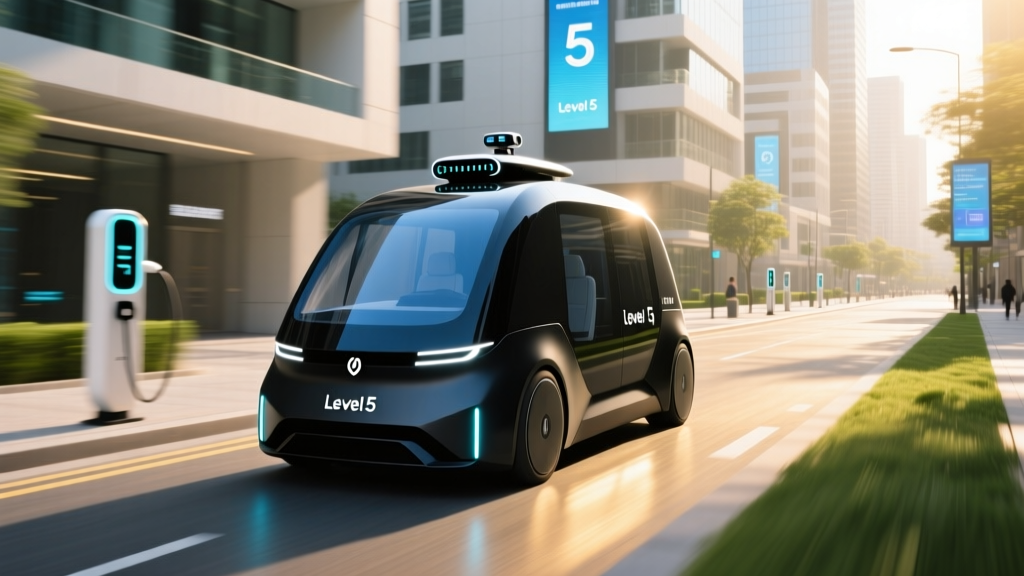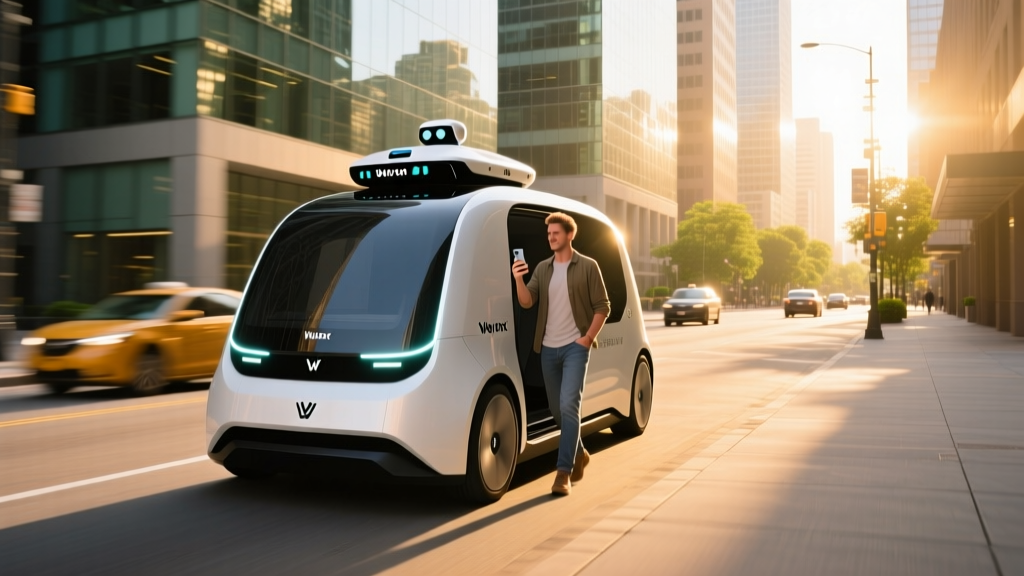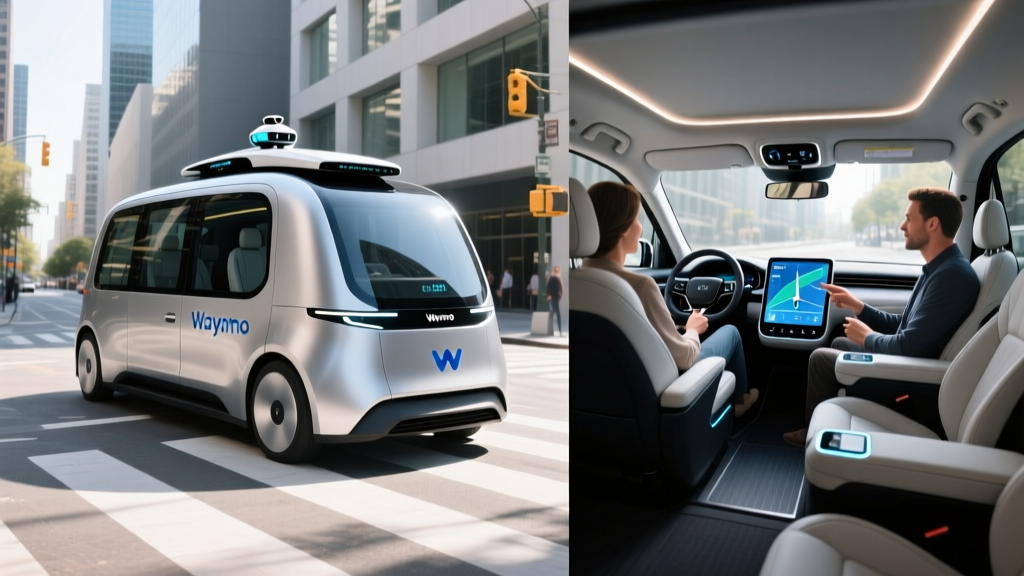
If you have seen a boxy, sensor-laden minivan gliding through Phoenix or San Francisco without anyone behind the wheel, you have likely spotted what riders and locals call the "Waymo blue van." Officially, it is the 6th-generation Waymo Driver installed on the Zeekr RT (a Geely-built electric minivan designed from the ground up for autonomous mobility). Unlike earlier Jaguar I-PACE-based vehicles, this purpose-built EV is taller, roomier, and packed with a redesigned sensor suite. Here is what the data says about where it operates, what a ride costs, and whether the safety record holds up to scrutiny.
What Exactly Is the Waymo Blue Van?
The nickname "Waymo blue van" comes from the distinctive blue Waymo livery applied to the Zeekr RT robotaxi fleet. The vehicle is a fully electric minivan with a flat floor, sliding doors, and an interior configured for passengers rather than a driver. There is no steering wheel, no pedals, and no human operator on board. This is not a driver-assist system like Tesla Autopilot or Ford BlueCruise — it is a commercial driverless service.
The Waymo blue van operates at SAE Level 4 within its geofenced service areas. This means the vehicle performs all driving tasks — steering, braking, navigation, hazard response — without any human intervention in defined conditions. If the system encounters a scenario it cannot handle, it executes a minimal-risk maneuver (pulling over safely) rather than handing control to a rider. This is fundamentally different from Level 2 systems (e.g., GM Super Cruise, Tesla FSD Supervised), which require continuous driver attention and are not self-driving.
Where Can You Ride the Waymo Blue Van Right Now?
Waymo One, the commercial ride-hail service powered by these vehicles, is not available everywhere. The geofenced service areas have expanded steadily, but access depends on your exact pickup and drop-off coordinates within those metro areas.
| Metro Area | Service Status (2026) | Coverage Notes | Vehicle Mix |
|---|---|---|---|
| Phoenix, AZ | Fully open, 24/7 | Metro-wide including Tempe, Scottsdale, Mesa; airport service active | Zeekr RT (blue van) + I-PACE legacy |
| San Francisco, CA | Fully open, 24/7 | Most of SF proper including SFO airport trips; some highway routes enabled | Zeekr RT + I-PACE |
| Los Angeles, CA | Open, expanding zones | Downtown, Hollywood, Santa Monica, Westside; freeway segments being added | Zeekr RT primary |
| Austin, TX | Open (launched 2025) | Central Austin, South Congress, airport corridor; expanding outward | Zeekr RT |
| Atlanta, GA | Announced / early access | Initial zones in Midtown, Buckhead; waitlist-based access | Zeekr RT |
Outside these geofenced zones, you cannot hail a Waymo. The service does not currently operate in rural areas, most suburbs beyond the mapped zones, or any city not listed above. Waymo has announced intentions to expand further, but announced cities are not yet live — always check the Waymo One app for your exact address coverage.
Pricing: Waymo vs. Uber and Lyft
A common question is whether robotaxi rides are cheaper than traditional rideshare. The answer: it depends on distance, time of day, and city. Waymo uses dynamic pricing similar to Uber/Lyft, but without a human driver to pay, the cost structure differs.
| Route Example | Waymo One (est.) | UberX (est.) | Lyft Standard (est.) |
|---|---|---|---|
| 3-mile trip, off-peak (Phoenix) | $8–$12 | $9–$14 | $9–$13 |
| 8-mile trip, off-peak (SF) | $18–$26 | $16–$24 | $15–$22 |
| Airport trip, 15 miles (PHX) | $30–$42 | $28–$38 | $26–$36 |
| Surge pricing, Friday 10 PM (LA) | Moderate surge | 2.0–3.0× surge | 1.8–2.5× surge |
Key takeaways: Waymo pricing is generally comparable to UberX/Lyft for standard trips. The real advantage appears during peak demand — Waymo's surge pricing tends to be less aggressive because fleet supply is not constrained by driver willingness to work late nights. However, Waymo does not yet offer shared/pool rides or budget tiers like Uber Share, so solo short trips can sometimes cost slightly more than a pooled rideshare option.
How to book: Download the Waymo One app (iOS/Android), enter your pickup and drop-off, confirm the fare, and the nearest vehicle drives to you. No tipping is required or possible (there is no driver). Payment is handled in-app via credit card or linked accounts.
Safety Data: What the Numbers Actually Show
Safety is the single most scrutinized aspect of robotaxi operations. Waymo publishes periodic safety reports and is subject to NHTSA standing general orders requiring crash reporting for all vehicles with automated driving systems.
- Autonomous miles driven: Over 50 million fully driverless miles completed across all service cities as of early 2026 (source: Waymo Safety Reports).
- Injury-causing crash rate: Waymo's 6th-gen fleet has reported an injury-causing crash rate approximately 85% lower than human-driven benchmarks in comparable urban environments, based on police-reported crash data per million miles.
- Contact rate: Property-damage-only contact incidents occur at roughly 40% of the human baseline rate in geofenced urban zones.
- NHTSA reporting: All incidents are reported under NHTSA's Standing General Order 2021-01 for ADS-equipped vehicles. Individual incident reports are publicly accessible via NHTSA's ADS crash database.
- No fatalities: As of early 2026, no fatalities have been attributed to Waymo driverless operations in any service city.
Context matters. Waymo operates in geofenced, mapped areas at moderate speeds (typically under 45 mph in urban settings). The comparison benchmark — human drivers in the same cities — includes impaired, distracted, and fatigued driving. The robotaxi never texts, never drinks, and never gets drowsy. That said, Waymo vehicles have been involved in minor low-speed contacts (typically sideswipes in parking scenarios or being rear-ended by human drivers). The IIHS has not yet crash-tested the Zeekr RT specifically, so occupant protection ratings for this platform remain pending.
Tech Stack: Lidar, Cameras, and the Sensor Array
The 6th-generation Waymo Driver on the Zeekr RT represents a significant hardware evolution from the 5th-gen system on the Jaguar I-PACE. Waymo uses a multi-modal sensor fusion approach — this is not a camera-only system like Tesla's vision-based FSD.
6th-Gen Waymo Driver — Sensor Suite
| Lidar | Multiple roof-mounted solid-state and mechanical lidar units providing 360° 3D point-cloud mapping to 500+ meters. Significantly improved resolution and range over 5th-gen. |
| Cameras | High-resolution external cameras covering 360° with improved low-light and high-dynamic-range performance. Used for traffic-light state detection, signage, lane markings, and object classification. |
| Radar | Multiple imaging radar units for velocity detection of moving objects, performance in fog/rain, and redundancy when lidar/camera visibility is degraded. |
| Audio sensors | External microphones to detect emergency vehicle sirens and adjust behavior (pulling over, yielding). |
| Compute | Custom Waymo-designed compute platform (6th-gen) with reduced power consumption and improved inference speed versus prior generations. |
| HD Maps | Pre-built centimeter-accuracy maps of every service area, updated continuously. The vehicle localizes within these maps in real time. |
The lidar-first approach is the defining differentiator versus Tesla's camera-only FSD. Lidar provides direct depth measurement independent of lighting conditions — critical for night driving, direct sun glare, and featureless environments. The trade-off is cost and complexity: each Zeekr RT carries tens of thousands of dollars in sensor hardware, which is viable for a commercial fleet but not for consumer vehicles at current pricing.
The system also relies on geofencing: Waymo vehicles only operate within areas that have been exhaustively mapped and validated. This is not a system that can drive anywhere on any road — it operates within a known, maintained operational design domain (ODD).
Regulatory Landscape: Who Approves Robotaxi Operations?
Robotaxi deployment in the United States involves a patchwork of state and local approvals. There is no single federal license to operate a driverless vehicle commercially.
- California (CPUC + DMV): Waymo holds a California DMV driverless testing permit and a California Public Utilities Commission (CPUC) permit for commercial passenger service. Both require ongoing safety reporting and incident disclosure.
- Arizona (ADOT + state executive orders): Arizona has taken a permissive regulatory approach via executive orders, allowing commercial driverless operations without the layered permit structure of California. This is why Phoenix was Waymo's first commercial market.
- Texas (TxDOT + city agreements): Austin operations launched under local agreements and state-level ADS legislation permitting commercial deployment with safety reporting requirements.
- Federal (NHTSA): NHTSA does not currently "approve" ADS operations but mandates crash reporting under Standing General Orders and retains recall authority over automated driving systems. NHTSA has opened investigations into specific incident patterns across the ADS industry.
The regulatory environment is evolving. Proposed federal ADS legislation could create a unified framework, but as of 2026, state-by-state approval remains the reality. This is why Waymo's expansion is city-by-city rather than nationwide.
Current Limitations: Where the Waymo Blue Van Cannot Go
Level 4 autonomy is powerful within its domain, but that domain has hard boundaries. Here are the real-world constraints riders encounter:
- Geofence boundaries: If your trip crosses outside the mapped service area, Waymo will not accept the ride request. The geofence is invisible to riders until the app rejects a route.
- Heavy rain and flooding: While the 6th-gen sensor suite handles light rain and fog better than predecessors, severe monsoon conditions in Phoenix or heavy Bay Area atmospheric rivers can trigger service slowdowns or temporary suspensions in affected zones.
- Snow and ice: Waymo does not currently operate in snow-belt cities. The system is not validated for snow-covered lane markings, black ice, or whiteout conditions.
- Construction zones: Major, unmapped construction reroutes can cause the vehicle to pull over and wait for remote guidance rather than navigating through temporary lane shifts.
- Unpaved roads: Dirt roads, gravel driveways, and unmapped private property are outside the operational design domain.
- Pickup/drop-off precision: In dense urban areas, the vehicle may stop a short walk from your exact pin if the curb space is obstructed by delivery trucks, fire hydrants, or bus stops.
- No highway driving (most markets): Limited freeway segments are enabled in SF and Phoenix, but most rides are surface-street only. Cross-city highway routes may not be available.
- Accessibility: The Zeekr RT features a ramp-equipped configuration for wheelchair access in select markets, but availability is limited and must be requested in the app. Not all vehicles in the fleet are WAV-configured.
The Zeekr RT as an Electric Vehicle: Battery, Range, and Charging
Beyond the autonomy story, the Zeekr RT is a battery-electric minivan, and its EV specs matter for fleet uptime and operational efficiency.
| Specification | Zeekr RT (Waymo Config) |
|---|---|
| Battery (estimated) | ~100 kWh usable, NMC chemistry |
| EPA range (estimated) | ~230–250 miles (heavy sensor/compute load reduces range vs. consumer EVs) |
| DC fast charge rate | Up to ~150 kW peak (CCS connector); fleet depots use dedicated chargers |
| Drivetrain | Rear-wheel drive, single motor (fleet-optimized for efficiency, not performance) |
| Interior config | No steering wheel/pedals; rear-facing or forward-facing lounge seating; touchscreens for ride info |
| Consumer availability | Not sold to consumers — fleet-only vehicle built for Waymo |
The energy overhead of running lidar, radar, cameras, and high-performance compute continuously means the Zeekr RT's real-world range is lower than a comparable consumer EV with the same battery. Waymo manages this through fleet logistics: vehicles cycle between rides and depot charging, ensuring no rider gets a low-battery vehicle. You will never see a state-of-charge percentage in the Waymo One app — fleet management handles all of this behind the scenes.
Frequently Asked Questions
Is the Waymo blue van truly self-driving or just driver-assist?
It is genuinely driverless — SAE Level 4. There is no steering wheel, no pedals, and no human in the vehicle. This is fundamentally different from Level 2 driver-assist systems like Tesla Autopilot, GM Super Cruise, or Ford BlueCruise, all of which require an attentive human driver ready to take over at any moment. Waymo's system handles the full driving task within its geofenced service area without any human fallback.
How much does a Waymo ride cost compared to Uber or Lyft?
For typical urban trips, Waymo One pricing is comparable to UberX and Lyft Standard — usually within a few dollars either way. The advantage shows during peak hours: Waymo's surge pricing tends to be less extreme because fleet supply does not depend on gig workers choosing to drive. A 5-mile off-peak trip in Phoenix typically costs $10–$16. There is no tipping.
Where can I use Waymo One right now?
As of 2026, fully open commercial service operates in Phoenix (metro-wide), San Francisco (city proper plus SFO), Los Angeles (select zones, expanding), and Austin (central areas). Atlanta is in early-access/waitlist status. You must be within the geofenced service area for both pickup and drop-off. Check the Waymo One app for exact address coverage.
How safe are Waymo robotaxis compared to human drivers?
Waymo reports over 50 million driverless miles with zero fatalities and injury-causing crash rates approximately 85% below human benchmarks in comparable urban environments. All incidents are reported to NHTSA under Standing General Orders. The context matters: Waymo operates in mapped, geofenced areas at moderate speeds and avoids the impairment, distraction, and fatigue that cause a large share of human crashes. That said, minor low-speed contacts do occur, and the system is not infallible in complex construction zones or severe weather.
What happens if the Waymo van encounters something it cannot handle?
The vehicle executes a minimal-risk maneuver — typically pulling over to a safe stop at the nearest legal curb. It does not hand control to the passenger (there are no controls to hand over). Waymo's remote assistance team can then evaluate the situation and either guide the vehicle through the scenario or dispatch a replacement vehicle or alternative resolution.
Can I buy a Zeekr RT / Waymo blue van for personal use?
No. The Zeekr RT in Waymo configuration is a fleet-only vehicle not available for consumer purchase. The sensor suite, compute platform, and interior (no steering wheel) are designed exclusively for commercial robotaxi service. Zeekr may sell consumer versions of the RT platform in other markets, but without the Waymo Driver system.
Does the Waymo blue van work in bad weather?
Light rain and fog are handled by the 6th-gen sensor suite. However, heavy monsoon rain, flooding, snow, and ice can trigger service slowdowns or suspensions. Waymo does not operate in snow-belt cities. If conditions degrade during your ride, the vehicle may pull over safely and wait until conditions improve or the ride is rerouted.
The Waymo blue van — the Zeekr RT with 6th-gen Waymo Driver — represents the most widely deployed Level 4 robotaxi in the United States. Its expansion from Phoenix to four additional metro areas demonstrates that commercial driverless service is no longer theoretical. But the geofenced, weather-limited, city-by-city reality also shows that ubiquitous self-driving is still a long way off. For riders within those service zones, it is a practical, competitively priced, and data-backed transportation option today.