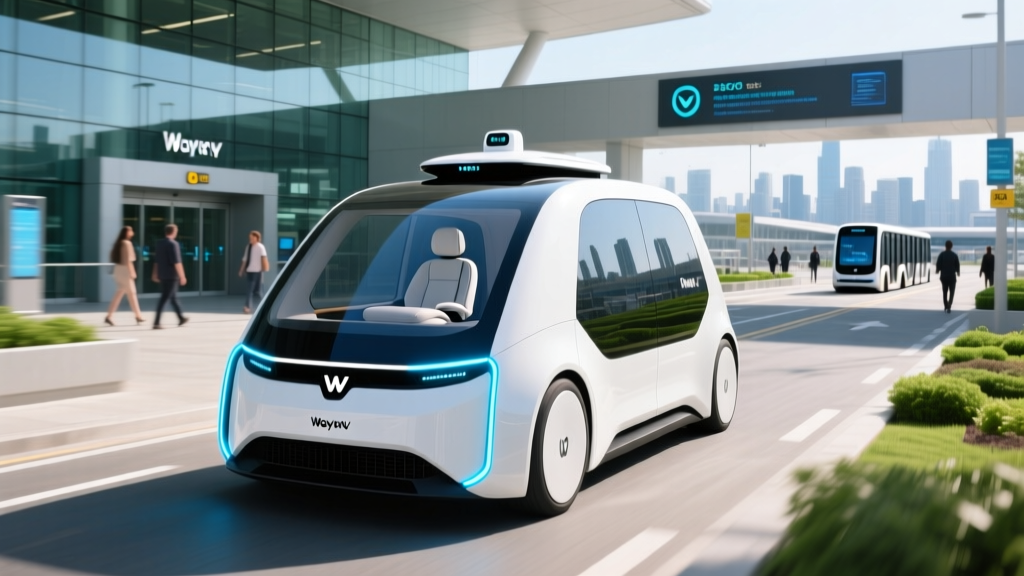
For frequent flyers in select U.S. cities, hailing a fully driverless ride to the terminal is no longer a futuristic concept — it's a Tuesday morning commute. Waymo, the Alphabet-backed autonomous vehicle company, has been steadily expanding its Waymo One robotaxi service, and airport trips represent one of the most practical and high-demand use cases for Waymo's commercial operations. But availability remains tightly geofenced, and not every major hub is covered yet.
This guide breaks down exactly where you can catch a Waymo airport ride today, what it costs compared to Uber and Lyft, the real safety data behind Level 4 autonomy, and the limitations you need to know before booking your next flight-day ride.
Where Can You Take a Waymo Airport Ride Right Now?
As of early 2026, Waymo One operates commercially in four primary metro areas, but airport-specific service is a subset of those zones. Not every airport within a Waymo city is automatically included in the geofence.
| City | Airport(s) Served | Service Status | Geofence Notes |
|---|---|---|---|
| Phoenix, AZ | Phoenix Sky Harbor (PHX) | Live — open to all Waymo One riders | Terminals 3 & 4 pickup/drop-off zones active; service area covers most of metro Phoenix |
| San Francisco, CA | San Francisco Intl (SFO) | Live — open to all Waymo One riders | SFO designated pickup zone; SF metro geofence expanded to cover most neighborhoods |
| Los Angeles, CA | LAX (Los Angeles Intl) | Limited / expanding | LAX access announced; coverage depends on specific pickup zones and may require waitlist |
| Austin, TX | Austin-Bergstrom (AUS) | Announced / early access | Austin operations ramping; airport geofence not yet fully open to general public |
Phoenix was Waymo's first airport market and remains the most mature. San Francisco's SFO service launched commercially after an extended testing phase with airport authorities. If you're flying out of PHX or SFO today, you can open the Waymo One app, enter the airport as your destination (or origin), and be matched with a driverless Jaguar I-PACE — no waitlist required in most cases.
| Level | Name | Who Drives? | Example |
|---|---|---|---|
| Level 2 | Partial Automation | Human (always) | Tesla Autopilot, GM Super Cruise, Ford BlueCruise |
| Level 3 | Conditional Automation | System in limited conditions; human on standby | Mercedes Drive Pilot (selected markets, low-speed) |
| Level 4 | High Automation | System fully (within geofence/ODD) | Waymo One, Zoox (limited areas) |
| Level 5 | Full Automation | System everywhere, all conditions | Does not exist commercially |
Waymo Pricing vs. Uber and Lyft: What Does an Airport Ride Cost?
One of the most common questions from first-time robotaxi riders: is Waymo cheaper than a traditional rideshare? The answer depends on distance, time of day, and demand — but Waymo's pricing model has some structural advantages.
| Route | Waymo One | UberX / Lyft Standard | Notes |
|---|---|---|---|
| Downtown Phoenix → PHX (~5 mi) | $12–$18 | $14–$22 | Waymo avoids surge pricing spikes common during peak flight times |
| Downtown SF → SFO (~15 mi) | $30–$45 | $35–$65 | Uber/Lyft surge can push SFO runs above $70+ during rush hour |
| Santa Monica → LAX (~8 mi) | $18–$28 (when available) | $20–$40 | LAX corridor heavily surcharged on rideshare apps |
Waymo's pricing is generally comparable to a standard UberX or Lyft ride during off-peak hours, but the gap widens during surge periods. Because Waymo doesn't employ human drivers, it doesn't face the same supply-demand imbalance that triggers 2x or 3x surge multipliers. However, Waymo does implement modest peak pricing during high-demand windows — just not at the magnitude of rideshare surge.
There's also no tipping. Your quoted fare is your final fare. For budget-conscious travelers making regular airport runs, this predictability is a meaningful advantage.
How Safe Are Waymo Robotaxis? The Real Data
Safety is the single biggest concern for prospective robotaxi riders, and it should be. Waymo has published more safety data than any other Level 4 operator, and the numbers tell a nuanced story.
- 30+ million fully driverless miles completed on public roads
- 85% reduction in injury-causing crash rates compared to human benchmarks in comparable operating areas (per Waymo's published safety studies)
- 57% fewer police-reported crashes of any severity vs. human drivers in the same geographies
- Most recorded incidents are low-speed contact events (e.g., minor sideswipes in parking areas or with stationary objects)
Source: Waymo safety reports and NHTSA Standing General Order crash data
It's important to contextualize these figures. Waymo vehicles operate primarily in well-mapped urban environments at moderate speeds, which naturally reduces exposure to high-speed highway collisions. The comparison benchmarks use human driver crash rates in the same cities and road types — a fair but not exhaustive comparison.
Notable incidents have occurred, including collisions with pedestrians near crosswalks and interactions with emergency vehicles. Each prompted software updates and, in some cases, temporary service pauses for investigation by NHTSA and state regulators. Waymo's response to these events — pulling vehicles for analysis rather than pushing through — is itself a safety signal.
Under the Hood: Waymo's Technology Stack
Waymo's 6th-generation autonomous driving system, deployed on the Jaguar I-PACE fleet, uses a sensor-fusion approach that differs sharply from camera-only systems.
Waymo 6th-Gen Sensor Suite
- LiDAR: Multiple roof-mounted units providing 360° 3D point-cloud mapping up to 500+ meters; operates in darkness and most weather conditions
- Cameras: High-resolution surround cameras for lane detection, traffic signal recognition, and object classification
- Radar: Short- and long-range radar units for velocity detection and redundancy in low-visibility conditions
- External audio receivers: Detect sirens from emergency vehicles to trigger yielding behavior
- HD mapping: Pre-scanned centimeter-accurate maps of every operational road, updated continuously
Geofencing: The system operates only within its mapped and validated Operational Design Domain (ODD). If a requested trip falls outside this boundary, the ride simply cannot be booked.
This multi-sensor approach contrasts with Tesla's camera-only FSD (Supervised) system. The practical trade-off: Waymo's LiDAR and radar give it superior performance in low-light and partial-occlusion scenarios, but the hardware cost is significantly higher per vehicle. That's why Waymo scales city by city with intensive mapping, while camera-based systems can theoretically deploy anywhere — though they remain Level 2 requiring human supervision.
Current Limitations: What Waymo Airport Rides Can't Do Yet
Level 4 autonomy is powerful within its domain, but the domain has hard edges. Here's what to expect:
- Weather restrictions: Heavy rain, dense fog, or flooding can trigger service suspension. Waymo vehicles will pull over safely and end the trip if conditions degrade beyond system capability mid-ride.
- Geofence boundaries: You cannot book a ride to an address outside the mapped service area. For airport trips, this means your home or hotel must be within the geofence — check the app before relying on Waymo for a 4 AM flight.
- No highway intercity trips: While Waymo vehicles use highways within metro areas (e.g., the 101 between SF and SFO), they do not offer intercity service. A Phoenix-to-Tucson trip is not bookable.
- Wait times: During peak demand (early morning airport rushes, post-holiday returns), wait times can extend to 10–20 minutes. Fleet size in each city is finite.
- Accessibility: The Jaguar I-PACE is an SUV with a standard ride height. Waymo has been working on wheelchair-accessible vehicle options, but availability varies by city and is not universal at airport pickup zones.
- No multi-stop trips: You cannot add a stop to pick up a fellow traveler on the way to the airport. One origin, one destination.
Regulatory Landscape: Who Approves Robotaxi Operations?
Robotaxi deployment in the U.S. involves overlapping layers of state and federal oversight — there is no single "robotaxi license."
At the federal level, NHTSA regulates vehicle safety standards and investigates incidents through its Standing General Order, which requires automated driving system operators to report crashes. The Federal Motor Vehicle Safety Standards (FMVSS) were originally written assuming a human driver, and Waymo has worked within exemption frameworks and updated interpretations to deploy vehicles without steering wheels or pedals in future platforms.
At the state level, approval varies significantly:
- Arizona: The most permissive regulatory environment. Waymo has operated commercially in Phoenix since 2020 with minimal state-imposed restrictions. The Arizona Department of Transportation oversees testing permits.
- California: The California Public Utilities Commission (CPUC) issues commercial deployment permits, while the DMV handles testing permits. San Francisco operations required approval from both agencies plus coordination with SF Mayor's office and SFO airport authority.
- Texas: Austin operations fall under a newer regulatory framework established by the Texas Department of Licensing and Regulation and local city ordinances.
Airport-specific access adds another layer: each airport authority (PHX, SFO, LAX) negotiates commercial ground transportation agreements directly with robotaxi operators, including designated pickup zones, fees, and operational requirements.
How to Book a Waymo Airport Ride: Step by Step
- Download the Waymo One app (iOS/Android) and create an account with payment information.
- Confirm your city is live — the app will show your current service area on a map.
- Enter your airport terminal as the destination (or origin for return trips). The app will confirm whether the address is within the geofence.
- Review the upfront fare — no surge multiplier surprises, just a fixed price before you confirm.
- Walk to the designated pickup point — at airports like PHX and SFO, Waymo uses specific curbside zones marked in the app with walking directions.
- Verify the vehicle — the app shows the car's license plate, make/model, and a unique identifier on the roof display. Unlock by tapping your phone or entering a PIN on the door handle.
- Start your ride — buckle up and press "Start Ride" on the rear-seat screen. The vehicle handles all driving. You can adjust climate and music but cannot override the route.
Frequently Asked Questions
Is Waymo truly self-driving, or is there a remote human operator?
Waymo One vehicles are SAE Level 4 — fully driverless with no one in the driver's seat. Remote support agents can assist with routing decisions or customer service issues, but they do not "joystick" the vehicle in real time. The car's onboard AI handles all steering, braking, and navigation decisions independently.
Can I take a Waymo to any airport in the U.S.?
No. As of 2026, confirmed Waymo airport service is live at Phoenix Sky Harbor (PHX) and San Francisco International (SFO). LAX access is expanding but not fully open. Other airports are not yet served. Check the Waymo One app for your specific city's coverage map.
What happens if the Waymo vehicle encounters a problem during my airport trip?
If the system detects a fault or encounters a scenario it cannot handle, the vehicle will execute a safe stop — typically pulling to the curb or stopping in a low-risk position. A remote support agent will communicate with you through the in-car screen. For mechanical issues, Waymo dispatches roadside assistance. You will not be stranded without support, but the trip may end earlier than planned.
Is Waymo cheaper than Uber for airport rides?
Generally comparable during off-peak hours ($12–$45 depending on distance), but Waymo tends to be cheaper during peak demand because it doesn't implement the aggressive surge multipliers that Uber and Lyft use. For a 15-mile trip to SFO during morning rush, Waymo might quote $38 while UberX surges to $55–$65.
Can I bring luggage in a Waymo?
Yes. The Jaguar I-PACE has a rear cargo area (approximately 25.3 cu ft behind the rear seats, expandable to 51 cu ft with seats folded). Standard carry-ons and checked bags fit easily. However, there's no driver to help you load — you handle your own luggage.
Does Waymo operate at night for early-morning flights?
Yes, Waymo One operates 24/7 in its live service areas, including overnight hours. The LiDAR and radar sensor suite does not depend on daylight. However, fleet availability may be lower at 3–4 AM, so expect potentially longer wait times.