Why $16 Billion Matters for the Robotaxi Race
In mid-2024, Alphabet's self-driving subsidiary Waymo closed a massive $16 billion funding round — a capital injection that valued the company at over $45 billion and signaled the largest-ever private investment in autonomous vehicle technology. By early 2026, that capital is actively deploying: new cities are coming online, fleet sizes are scaling past 1,500 vehicles, and the technology stack powering the sixth-generation Waymo Driver is reaching maturity.
For consumers, the question isn't about venture capital — it's about whether a robotaxi can actually replace your next Uber, how safe the technology really is, and where you can hail one today. This guide breaks down the Waymo One service with the specificity you need to decide whether to download the app or wait.
SAE Automation Level: What Waymo Actually Is (and Isn't)
SAE Level 4 — High Automation (Geofenced)
Waymo operates at SAE Level 4, meaning the vehicle handles all driving tasks within its defined operational design domain (ODD) — specific geofenced urban areas — with no human driver present. This is fundamentally different from Level 2 systems like Tesla Autopilot or GM Super Cruise, which require continuous driver supervision. If a Waymo vehicle encounters a scenario it cannot handle, it executes a minimal risk maneuver (pulling over safely) rather than handing control to a passenger.
| Level | Name | Driver Required? | Examples |
|---|---|---|---|
| Level 2 | Partial Automation | Yes — hands on, eyes on | Tesla Autopilot, Ford BlueCruise, GM Super Cruise |
| Level 3 | Conditional Automation | Yes — but can disengage in approved conditions | Mercedes Drive Pilot (limited markets) |
| Level 4 | High Automation | No — within ODD | Waymo One, Zoox (limited) |
| Level 5 | Full Automation | No — anywhere, any condition | None currently deployed |
Where Can I Use Waymo One Right Now?
As of early 2026, Waymo One — the company's commercial ride-hailing service — operates in the following metro areas. The Waymo 16 billion funding round is specifically earmarked for expanding beyond these initial markets, but availability remains geofenced and city-specific.
| City | Status | Coverage Area | Service Hours |
|---|---|---|---|
| Phoenix, AZ | Fully Open | ~300 sq mi (Chandler, Tempe, Mesa, Scottsdale, Gilbert) | 24/7 |
| San Francisco, CA | Fully Open | ~65 sq mi (citywide including downtown, Sunset, Richmond) | 24/7 |
| Los Angeles, CA | Fully Open | ~80 sq mi (Santa Monica, Hollywood, Downtown LA, Beverly Hills) | 24/7 |
| Austin, TX | Launched 2025 | ~50 sq mi (Downtown, South Austin, Airport corridor) | 6 AM – 2 AM |
| Atlanta, GA | Announced / Early Access | Limited geofence (Buckhead, Midtown, Airport) | Limited hours |
Important: Atlanta service is in early access with invited riders only — it is not yet open to the general public. Waymo has also announced mapping and testing operations in additional cities, but testing with safety drivers is not commercial service.
How Much Does Waymo Cost vs. Uber and Lyft?
Waymo One uses a pricing model similar to standard rideshare: you get an upfront fare quote before confirming your ride, with no surge pricing during peak demand. Here's how typical fares compare in markets where both services operate.
| Route Example | Waymo One | UberX | Lyft |
|---|---|---|---|
| SF: Mission → Financial District (~4 mi) | $14–$18 | $12–$22 | $11–$20 |
| Phoenix: Scottsdale → Airport (~8 mi) | $22–$28 | $18–$32 | $17–$30 |
| LA: Santa Monica → LAX (~7 mi) | $20–$26 | $16–$28 | $15–$26 |
Key pricing takeaways:
- No surge pricing: Waymo does not implement demand-based multipliers, so fares stay consistent during rush hour or events — a real advantage over Uber/Lyft.
- Comparable base fares: Off-peak, Waymo is typically within $2–$4 of an UberX or Lyft ride on the same route.
- No tipping expected: There is no driver to tip, which effectively saves riders 15–20% on total trip cost.
- Wait times vary: In Phoenix, average pickup is 3–5 minutes. In San Francisco and LA, expect 5–10 minutes during peak hours due to fleet density constraints.
How Safe Are Robotaxis? The Real Data
Waymo Safety Record (Through 2025)
- Cumulative fully autonomous miles driven: Over 10 million driverless miles (Waymo's published milestone as of late 2024, with continued growth through 2025)
- Fatality rate: Zero passenger fatalities in driverless commercial operations
- Injury-causing crash rate: Waymo's published analysis claims 85% reduction in injury-causing crashes compared to human benchmarks in comparable urban environments
- Contact rate: Property-damage-only contact incidents occur at roughly 5.3 per million miles — lower than human baselines but not zero
Sources: Waymo Safety Reports, NHTSA AV Safety Data
Safety data for autonomous vehicles requires careful interpretation. Waymo publishes periodic safety reports comparing its crash rates to human benchmarks, but direct comparison is complicated by different operating conditions (geofenced urban areas, fair-weather bias, lower average speeds).
What the data shows clearly:
- Waymo vehicles are involved in fewer severe crashes per million miles than human drivers in equivalent urban settings.
- Most reported incidents involve low-speed contact — typically being rear-ended at stoplights or minor sideswipes in complex intersections, not at-fault collisions caused by the autonomous system.
- The NHTSA Standing General Order requires all AV operators to report crashes, providing a more complete public record than exists for human drivers.
What the data does not yet prove:
- Long-term reliability across billions of miles — current sample sizes, while growing, remain small relative to the ~3 trillion miles Americans drive annually.
- Performance in severe weather, rural highways, or construction zones outside the geofence — these scenarios are largely excluded from current operations.
The Technology Stack: Lidar, Cameras, and the 6th-Gen Driver
Waymo's Sensor Suite vs. Camera-Only Approaches
Unlike Tesla's camera-and-neural-network-only approach (used in FSD Supervised), Waymo employs a redundant multi-sensor stack:
| Sensor Type | Function | Range |
|---|---|---|
| Lidar (custom-built, roof-mounted) | 3D point cloud mapping, object detection regardless of lighting | Up to ~500 meters |
| Cameras (high-resolution, multi-directional) | Traffic light state, signage reading, lane markings, color context | Up to ~500 meters |
| Radar (forward and side-facing) | Velocity measurement, penetration through fog/rain/light occlusion | Up to ~350 meters |
| External audio sensors | Emergency vehicle siren detection and localization | Directional |
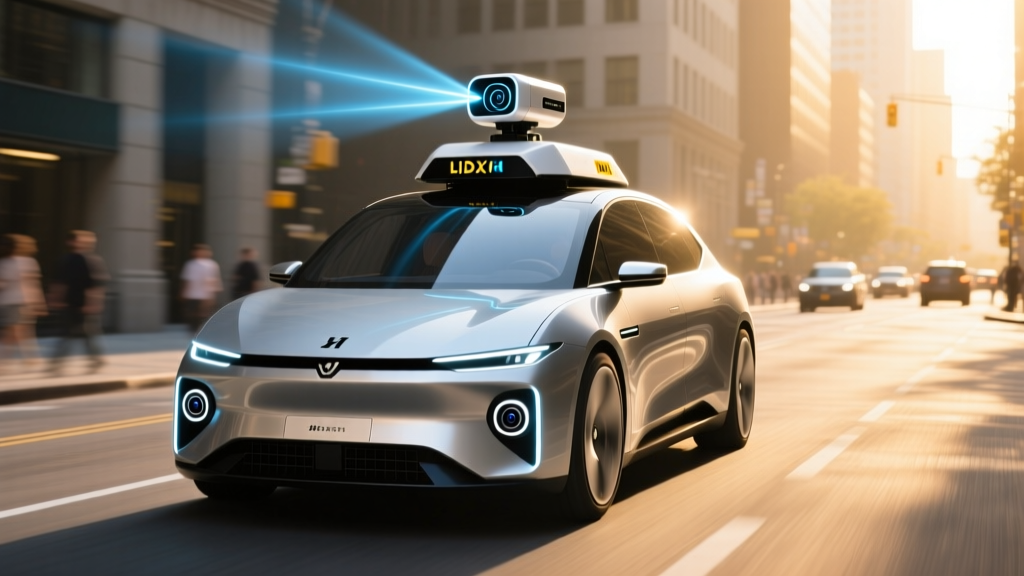
The 6th-generation Waymo Driver, which began deployment in late 2024 and powers the expanding 2025–2026 fleet, features improved lidar with higher resolution at longer range, better rain and fog performance, and reduced per-unit cost — critical for fleet economics. The system runs on custom computing hardware housed in the vehicle trunk, processing sensor data in real time.
Geofencing is the key constraint: Waymo maps every road in its service area at centimeter-level precision before operating driverlessly. The vehicle always knows exactly where it is relative to lane boundaries, crosswalks, and speed zones. If the vehicle drifts toward the edge of its geofence, it will refuse the trip or reroute — it cannot operate outside mapped territory.
Current Limitations: What Waymo Cannot Do Yet
Operational Limitations — Know Before You Ride
Despite Level 4 capability within its ODD, Waymo has significant constraints that riders must understand:
- Weather restrictions: Heavy rain, fog, or snow can cause service suspension. Phoenix operations are occasionally paused during monsoon storms. San Francisco fog can slow operations. The system does not currently operate in heavy snowfall conditions.
- Geofence boundaries: You cannot hail a Waymo to or from an address outside the mapped service area. In Phoenix, this means no trips to Sedona or the Grand Canyon. In LA, the Valley and most suburbs remain outside the zone.
- No highway driving (most markets): Waymo primarily operates on surface streets. Limited highway segments are included in some geofences (e.g., Phoenix freeway on-ramps and short freeway segments), but long-distance highway trips are not supported.
- Construction zones: Unmapped lane closures or temporary traffic patterns can cause the vehicle to pull over and wait for remote assistance, adding minutes to your trip.
- Accessibility: The current fleet (Jaguar I-PACE based) requires passengers to enter a standard vehicle. Wheelchair-accessible vehicle options remain limited in availability.
- No stops or multi-destination trips: Unlike Uber, you cannot add a mid-trip stop at a store. The ride is point A to point B only.
- Child seats: Waymo does not provide child safety seats, and riders cannot bring their own and expect proper installation verification. Children under certain age/height thresholds cannot ride.
Regulatory Landscape: Who Approves Robotaxi Operations?
Robotaxi deployment in the United States is governed by a patchwork of state-level regulations rather than a unified federal framework. Understanding who controls what is essential for tracking where Waymo can expand next.
| Authority | Jurisdiction | Role |
|---|---|---|
| State DMV / PUC | California (CPUC), Arizona (no permit required), Texas (TxDOT) | Issues commercial driverless permits, sets safety reporting requirements |
| NHTSA | Federal | Vehicle safety standards, crash investigation, Standing General Order for AV incident reporting |
| City/County Governments | Local | Road access agreements, curb management, emergency response coordination |
California's CPUC (California Public Utilities Commission) has been the most scrutinizing regulator, requiring phased permits — first with safety drivers, then limited driverless hours, then full 24/7 commercial operations. San Francisco's expansion was delayed multiple times due to incidents and public comment periods. Arizona, by contrast, has maintained a permissive regulatory environment since 2015, which is why Phoenix became Waymo's first fully commercial market. Texas passed enabling legislation in 2023, paving the way for Austin operations.
How the $16 Billion Funding Shapes What Comes Next
The Waymo 16 billion funding round — led by Alphabet with participation from external investors including Andreessen Horowitz, Silver Lake, and Tiger Global — is being deployed across three priorities:
- Fleet scaling: Moving from hundreds to thousands of 6th-gen vehicles across active markets. More vehicles means shorter wait times, which directly drives ridership.
- Geographic expansion: Atlanta is the next major market, with additional cities expected to be announced. Each new city requires 12–18 months of mapping, testing with safety drivers, regulatory approval, and phased launch.
- Cost reduction: The 6th-gen hardware is significantly cheaper per vehicle than the 5th-gen Jaguar I-PACE fleet. Waymo has stated publicly that its goal is to reach unit economics where each vehicle generates positive contribution margin — a milestone the $16 billion war chest is designed to accelerate.
For riders, the practical implication is that throughout 2026 and into 2027, existing markets will see shorter wait times and slightly expanded geofences, while one or two new cities will enter early access. Full nationwide availability remains years away.
Frequently Asked Questions
Is Waymo truly self-driving, or is there a human monitoring remotely?
There is no human driver in the vehicle. Waymo operates at SAE Level 4 — the vehicle handles all driving tasks within its geofenced area autonomously. Waymo does employ remote fleet responders who can assist the vehicle if it encounters an unusual scenario (e.g., an unmapped construction zone), but these responders do not "drive" the car in real time. They provide high-level guidance (e.g., confirming it's safe to proceed around an obstacle), and the vehicle executes the maneuver itself.
How do I hail a Waymo, and do I need a special app?
Download the Waymo One app (iOS/Android), create an account, and enter your pickup and drop-off locations. If both are within the service geofence, you'll receive an upfront fare and estimated pickup time. The vehicle arrives, you unlock it via the app by tapping a button when you're at the curb, and the ride begins automatically. No driver interaction is needed because there is no driver.
What happens if the Waymo vehicle gets confused or encounters an emergency?
The vehicle is programmed to execute a minimal risk maneuver — typically pulling to the side of the road and stopping. It will not continue driving in a scenario it cannot handle. Remote fleet support is notified and can provide guidance. In the event of a collision or medical emergency, the vehicle automatically contacts emergency services and Waymo's incident response team.
Can I use Waymo for airport rides?
Yes, in some markets. Phoenix Sky Harbor (PHX) airport rides are supported. San Francisco International (SFO) service launched in 2024. LAX service is available in Los Angeles. However, airport pickups often have designated zones rather than curbside terminal access — the app will guide you to the correct pickup point.
How does Waymo compare to Cruise or Zoox?
Cruise (GM's robotaxi subsidiary) suspended all driverless operations in late 2023 following a serious incident in San Francisco and has been slowly relaunching with safety drivers in limited markets as of 2025. Zoox (Amazon's AV subsidiary) operates its purpose-built bidirectional vehicle in limited testing in Las Vegas and Foster City, CA, but has not yet launched a broad commercial ride-hailing service. Waymo is currently the only robotaxi service operating commercially at scale across multiple US cities.
Is Waymo safe at night?
Yes. Waymo's lidar and radar systems are not dependent on visible light, so nighttime operation does not degrade sensor performance the way it affects human drivers. The vehicle's cameras also use high-dynamic-range imaging. Waymo operates 24/7 in Phoenix, San Francisco, and Los Angeles with no safety-performance distinction between day and night trips.